Summary
Analysis score
Average of the criteria rated below
Is the MAXSHOT worth the money?
Design, folding, and everyday practicality
Range, charging, and battery management
Build quality, solid tires, and long-term prospects
Speed, handling, and real-world limits
What the MAXSHOT scooter offers on paper
Pros
- 500W motor with up to 22 mph speed and solid real-world commuting performance
- 10-inch solid honeycomb tires and dual suspension reduce maintenance and improve comfort for a budget scooter
- Good value feature set: app control, cruise control, UL 2272 certification, dual braking, lights, and foldable design
Cons
- Not ideal for long heavy-load rides; one report of significant motor heating under sustained use
- Solid tires and mid-range suspension are less comfortable than premium pneumatic setups, especially on rough surfaces
- Limited off-road capability; struggles on grass and requires slower speeds over bumps and road seams

Specifications
View full product page →| Brand | MAXSHOT |
A budget commuter scooter that’s getting a lot of attention
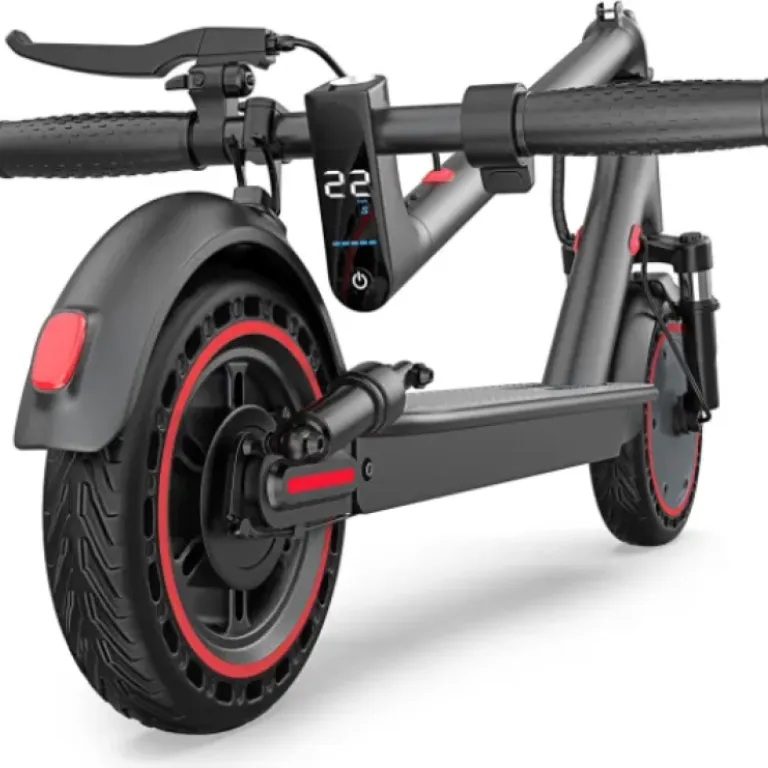
The MAXSHOT electric scooter sits in a crowded category: mid-range commuter scooters that promise decent speed, a practical folding design, and a range long enough for daily trips. On paper, it checks a lot of boxes: a 500W brushless hub motor, up to 22 mph advertised top speed, a claimed 22-mile max range for this 10-inch solid tire / 10.5Ah version, and a 265 lb weight limit. It also has app connectivity, dual suspension, dual braking, and a non-slip deck, all in a package that weighs about 37 lb.
In the Amazon comments, the tone is mostly positive. The scooter sits at 4.3/5 from more than 700 reviews, which is fairly strong for this type of product. Buyers often highlight the value for money, saying that at around the mid-$200 range (one review cites $265), the performance and features are more than decent for commuting and fun rides. People mention using it both for daily trips and recreational rides, which suggests it hits a practical/sporty balance that many casual riders look for.
There are, however, some caveats. One buyer reports that a roughly 5-mile ride with a combined load around 180 lb caused the motor area to get very hot and uncomfortable underfoot, and they had to stop and get a car ride back. Others point out that while it can handle light sand and puddles, it struggles on grass and needs slower speeds over bumps and seams. So, it’s not a rough-terrain machine; it’s more of an urban or suburban pavement commuter with some margin for imperfect surfaces.
Overall, this scooter looks like a practical mid-range option aimed at adults and older teens who want a foldable, app-connected ride with real commuting potential but don’t need premium-level components. It’s not flawless, and there are clear limits in terms of long heavy-load trips and off-road use, but for short to medium urban rides, the combination of specs and user feedback suggests it gets the job done for most people who buy it.
Is the MAXSHOT worth the money?
Value is where this MAXSHOT scooter seems to stand out. One verified buyer explicitly says they paid around $265 for the 10-inch version and calls it a good value for adults or teens. Looking at the feature set—500W motor, up to 22 mph speed, dual suspension, 10-inch solid tires, app connectivity, cruise control, dual braking, UL 2272 certification, and a claimed 22-mile range—this is a fairly loaded spec sheet for that kind of price bracket. Many similarly priced scooters either skip suspension, use smaller wheels, lack app integration, or have lower power motors.
The 4.3/5 rating across more than 700 reviews backs up the idea that most buyers feel they got their money’s worth. Reviews praise the combination of speed, range, and folding convenience. People like that it’s fast enough for commuting and fun, folds quickly into a trunk, and can carry up to around 250 lb without feeling underpowered on flat ground. The addition of a seat and seat bag on some configurations adds extra perceived value, as those accessories are often sold separately with competing scooters.
However, there are some trade-offs that explain why it’s not priced like a premium model. The brakes are not hydraulic, the tires are solid rather than pneumatic, the build is sturdy but not high-end, and the scooter is not designed for heavy-duty hill climbing or off-road use. The one report of serious motor heating under load also hints that you’re working within budget constraints on motor and controller thermal design. If you need a scooter for long, daily 10–15 mile high-speed commutes with hills and heavy riders, you might be better off with a more expensive model with a larger battery and stronger motor.
In my opinion, for short to medium commutes, campus use, or neighborhood rides, the MAXSHOT offers strong value. You get legitimate commuting performance, a proper app, practical lights, and a decent warranty at a price that’s accessible to many people. It’s not the best choice for extreme mileage, rough terrain, or heavy riders who want to push it to the limit, but for everyday urban use, the cost/benefit ratio looks solid. If you keep your expectations aligned with its mid-range positioning, you’re likely to feel that the money was well spent.
Design, folding, and everyday practicality
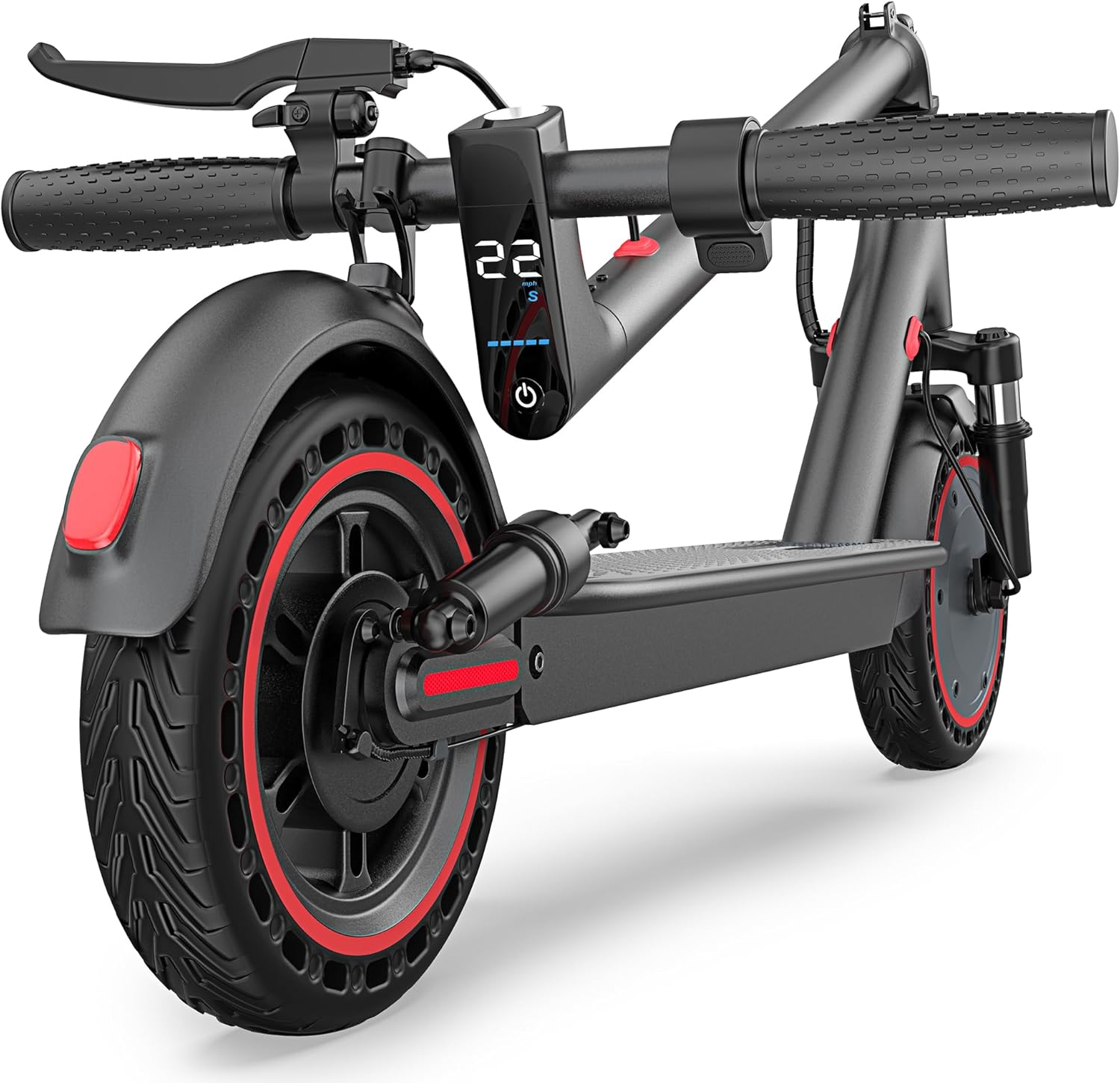
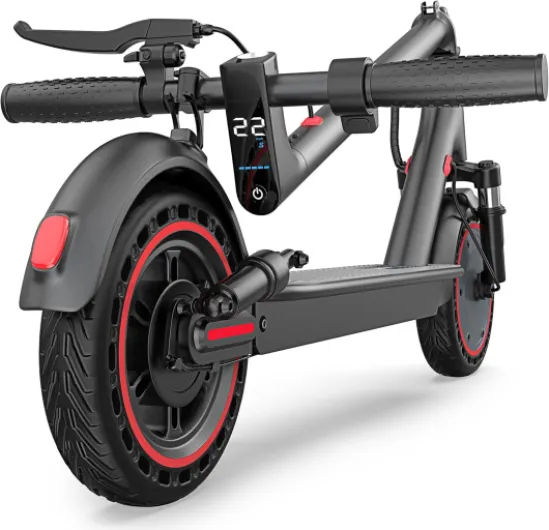
From a design perspective, the MAXSHOT scooter goes for a straightforward black aluminum frame with a folding stem. The folding mechanism allows it to collapse down to 44.5 x 16.9 x 24.4 inches, which buyers say is easy enough to put into a car trunk or carry into an office. At around 36–37 lb, it’s not featherweight, but for a 500W motor and dual suspension, that weight is typical. People in the reviews mention that they can lift it into a trunk without too much trouble, but it’s not something you’d want to carry up several flights of stairs every day if you’re not reasonably fit.
The scooter uses 10-inch honeycomb solid tires, which are a big part of the design story. Solid tires mean no flats and no tube changes, which many commuters appreciate. To counter the usual harshness of solid tires, MAXSHOT includes dual suspension. Several buyers highlight that the ride feels relatively smooth for a solid-tire scooter, especially on city streets and sidewalks, though they still advise slowing down over bumps, patches, and bridge seams. The deck is described as non-slip, which is important when riding in light rain or crossing puddles, and comments suggest it feels stable once you get used to the scooter’s power.
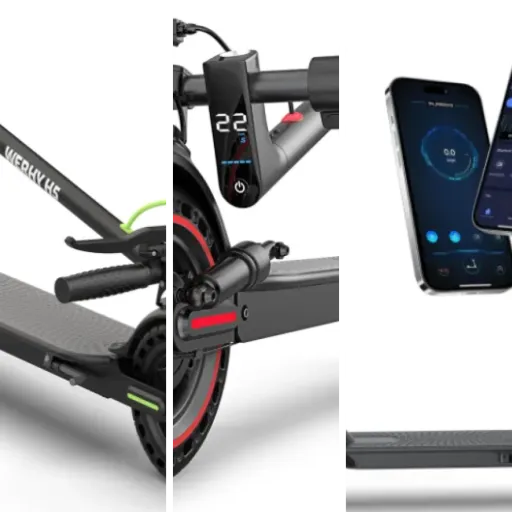
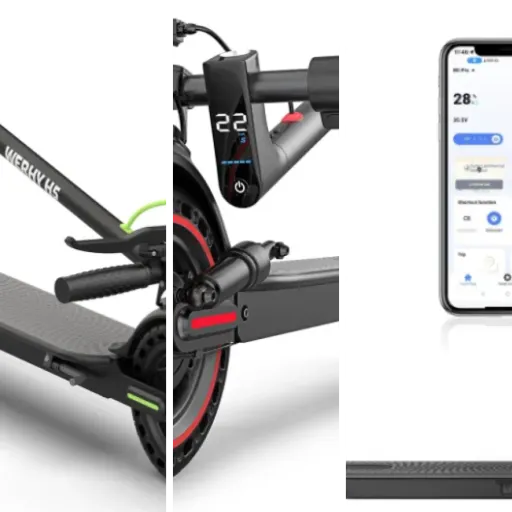
Lighting and controls are fairly modern. There’s a digital LED display on the handlebar that shows speed, mode, and battery level. The scooter also integrates with a smartphone app (for iOS and Android) that lets you adjust cruise control, check speed and distance, and lock or unlock the scooter. Riders like the clarity of the display and the practicality of the app, especially being able to track trips and tweak settings. The handlebar height of 48.8 inches is good for adults; one could expect younger or shorter riders to maybe find it a bit tall, but the product is clearly aimed at adults and older teens anyway.
Overall, the design is functional rather than flashy. There’s no folding handlebar, no fancy integrated turn signals, and no wildly unique frame shapes. Instead, you get a typical commuter layout that focuses on foldability, basic safety (lights, dual brakes, UL certification), and a relatively compact footprint when folded. In my opinion, it’s a sensible design for someone who wants a no-nonsense scooter they can stash under a desk or in a car, with enough comfort features (suspension, non-slip deck, app display) to cover daily use on regular roads and sidewalks.
Range, charging, and battery management
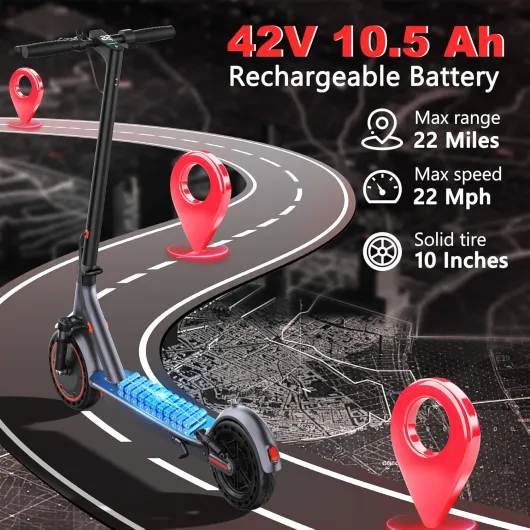
The battery setup is one of the main selling points of this MAXSHOT version. It uses a 42V / 10.5Ah pack, and the brand advertises a maximum range of 22 miles. As always with scooters, that figure is under “certain conditions,” typically meaning a relatively light rider, flat terrain, moderate speed, and mild weather. In the Amazon comments, several buyers say they can go “over 20 miles” on a single charge, which suggests that for average-weight riders at sensible speeds, the advertised range is not wildly inflated. Others talk about using it for daily commuting and weekend rides without worrying too much about constantly recharging.
Charging time is listed at around 4 hours, with a specific warning: the first charge should be 6 hours, and subsequent charges should stay under 5 hours. The brand also recommends not charging in unventilated or flammable environments and regularly checking the battery and charger condition. That’s basic safety advice, but seeing it spelled out shows they’re at least aware of common e-mobility concerns. A 4-hour full charge for roughly 20 miles of real-world range is pretty reasonable in this price bracket and makes overnight or office charging very practical.
The battery is described as rechargeable and replaceable, which is a big plus for long-term use. Many cheaper scooters have sealed, non-replaceable packs that turn the whole scooter into e-waste when the battery degrades. Here, in theory, you could swap the pack if it wears out, assuming MAXSHOT or third parties actually provide spare batteries at a sensible cost. That part is not detailed in the listing or reviews, but the fact that it’s designed to be replaceable is already better than some competitors.
One thing to keep in mind is how range will drop with higher speeds, heavier riders, hills, and cold weather. A 500W motor pulling a 200+ lb rider at close to 22 mph will drain 10.5Ah faster than a casual 15 mph cruise. The one rider who reported severe motor heating on a 5-mile ride with a combined 180 lb load also indirectly hints that sustained heavy-load riding may push the system closer to its limits, which would likely reduce range as well. In my opinion, if you plan for 10–15 miles of reliable daily range at mixed speeds and normal rider weights, you’ll probably be satisfied. Expecting a consistent 22 miles at full speed under real-world conditions is optimistic, but that’s true for almost every scooter in this class.
Build quality, solid tires, and long-term prospects
Durability on this scooter comes mainly from three design choices: an aluminum frame, 10-inch solid honeycomb tires, and relatively simple, proven components like a 500W hub motor and mechanical dual brakes. Aluminum keeps things light enough while resisting rust, and solid tires eliminate flats, punctures, and tube replacements. In the reviews, buyers often mention that the scooter feels “sturdy” and “well-made,” and that it holds up well under daily commuting and fun rides. One user explicitly praises the durability and cushion of the 10-inch wheels, which is a nice sign given that solid tires can sometimes feel harsh.
The UL 2272 certification is another durability and safety signal. It mainly deals with electrical and fire safety standards, but products that pass it have at least gone through a more serious design and verification process than completely generic no-name scooters. The scooter also uses a dual braking system and a non-slip deck, which help with safe use over time. If the deck grip wears slowly and the brakes are easy to maintain, that typically extends the practical life of the scooter. There’s no mention of hydraulic brakes here, so they are almost certainly mechanical, which are cheaper and simpler to service but may need more regular adjustment.
The 1-year limited warranty is standard for this kind of product. It’s not particularly generous, but it’s also not terrible. For a scooter that seems often bought in the roughly $250–$300 range, a one-year warranty on manufacturing defects is about what you’d expect. Among the published reviews, you don’t see a flood of early-failure complaints; instead, most riders focus on performance and ride quality rather than broken parts. That doesn’t guarantee long-term robustness, but it’s at least a good sign that early units are not failing in large numbers.
Where durability may be less ideal is in extreme or improper use: heavy two-person riding, frequent long-distance full-speed runs, or off-road use on grass and rough terrain. The one report of serious motor heat during a 5-mile ride already shows that pushing the scooter hard under load can stress the components. Also, solid tires, while immune to punctures, can eventually develop cracks or lose some elasticity, especially if constantly slammed into potholes or curbs. In my opinion, if you treat this scooter as a daily commuter on normal roads and sidewalks, respect the load limit, and avoid constant abuse, the design choices (solid tires, aluminum frame, basic suspension) give it decent durability for the price. Just don’t expect it to shrug off heavy off-road abuse or multi-year courier-level mileage without maintenance.
Speed, handling, and real-world limits
On paper, the MAXSHOT’s 500W brushless hub motor and claimed top speed of up to 22 mph put it in the mid-range commuter category. In the reviews, several buyers confirm that it feels brisk: one mentions easily cruising and another says they see about 22 mph on level ground, which lines up with the spec. Another reviewer even claims speeds up to around 30–35 mph, but that sounds optimistic compared to the official numbers and is likely due to speedometer differences, downhill riding, or misreading. Still, the general impression is that this scooter is genuinely fast enough for urban commuting and fun rides, not just a slow toy.
Acceleration is described as smooth and not too abrupt, which is important for new riders and teens. One owner explicitly appreciates that it accelerates slowly rather than jerking forward, which suggests the controller is tuned conservatively. Handling-wise, people say it feels stable at moderate speeds, especially around 20–22 mph, and corners are manageable around 15 mph. However, at higher speeds, you clearly need to watch for road imperfections: the advice from one review is to slow down significantly for bumps, road patches, and bridge seams, and to ease off the throttle rather than grab the brake hard when hitting rough spots.
Terrain capability is limited but reasonable for a commuter. Comments say it works well on city streets, sidewalks, and light sand, and can handle rain and puddles to some extent, but it cannot go on grass in a satisfying way. That’s consistent with 10-inch solid tires and a 500W motor: good for asphalt and concrete, okay for slightly rough surfaces, but not built for off-road or thick grass. The dual suspension and honeycomb tires help, but they don’t turn it into an all-terrain scooter. The motor is also described as able to handle a 250 lb rider on flat ground, which fits the 265 lb weight limit, though hill-climbing performance is not heavily discussed in the reviews.
There is one notable negative performance anecdote: a user riding about 5 miles with a combined load around 180 lb reports that the motor area under their feet got extremely hot and uncomfortable, forcing them to quit the ride and find a car ride back. That suggests that under continuous load and possibly at higher speeds, the motor and controller can heat up more than ideal. This doesn’t appear across many other comments, so it may be a combination of riding conditions, ambient temperature, and unit variation, but it’s a reminder that this is still a budget commuter scooter, not a heavy-duty long-distance machine. In my view, performance is strong for short to medium rides on pavement and daily commuting, but you should keep expectations realistic for long, high-speed runs or heavy two-person loads.
What the MAXSHOT scooter offers on paper
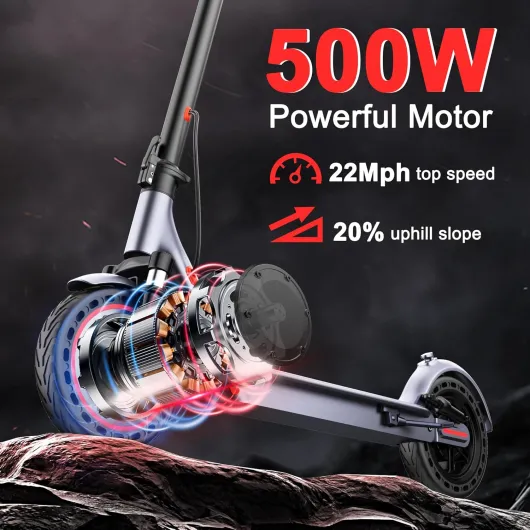
The MAXSHOT in this configuration is the 10-inch solid tire, 10.5Ah battery version. The key numbers are straightforward: a 500W brushless hub motor, a top speed advertised at up to 22 mph, and a maximum distance range listed as 22 miles. The battery is a 42V / 10.5Ah pack, rechargeable and replaceable, which is a strong point for long-term ownership if spares are available. The scooter supports riders up to 265 lb, which covers most adults and many teens, and it’s positioned as a commuting tool rather than a toy, with features like cruise control and an app for configuration and locking.
In terms of size, it measures 44.5 x 16.9 x 48.8 inches unfolded, and 44.5 x 16.9 x 24.4 inches folded, with an item weight around 37 lb. That’s not ultra-light, but it’s in the normal range for a 500W commuter scooter with dual suspension. The frame is made of aluminum, and the wheels are 10-inch solid rubber honeycomb tires. The scooter comes with dual suspension (front and rear), a dual braking system, LED headlight and brake tail light, and a non-slip deck. It’s UL 2272 certified, which is important for electrical safety and is often required in some buildings or cities.
The package is fairly minimal: scooter, charger, and user manual. There’s mention of a seat and seat bag as part of the concept, which some reviews appreciate for added comfort and storage of small items, though this specific listing focuses more on the core scooter specs. The handlebar is fixed at about 48.8 inches height, which suits most adults but may feel tall for smaller kids. The brand advertises a 1-year limited warranty, which is standard but not generous; at least there is some formal backing if defects show up early.
From the Amazon feedback, buyers generally see it as a good value mid-range scooter. The comments highlight the speed options (16–22 mph modes), app integration for speed and locking, and the fact that it can handle a 250 lb rider without feeling underpowered on flat ground. At the same time, you can see the boundaries: it’s not meant for long, heavy two-person trips or demanding off-road use. In my opinion, the presentation is honest enough: solid commuting specs, decent safety features, and a reasonable warranty, all aiming to deliver a practical everyday scooter at a relatively accessible price point.
Pros
- 500W motor with up to 22 mph speed and solid real-world commuting performance
- 10-inch solid honeycomb tires and dual suspension reduce maintenance and improve comfort for a budget scooter
- Good value feature set: app control, cruise control, UL 2272 certification, dual braking, lights, and foldable design
Cons
- Not ideal for long heavy-load rides; one report of significant motor heating under sustained use
- Solid tires and mid-range suspension are less comfortable than premium pneumatic setups, especially on rough surfaces
- Limited off-road capability; struggles on grass and requires slower speeds over bumps and road seams
Conclusion
Analysis score
The MAXSHOT 10-inch solid tire / 10.5Ah scooter comes across as a practical mid-range commuter with a strong focus on value. On paper, the 500W motor, up to 22 mph speed, and claimed 22-mile range put it squarely in everyday-usable territory. In the Amazon comments, most riders are satisfied with the real-world performance: they highlight smooth acceleration, stable handling on city streets, and enough range for daily commutes and weekend rides. The folding design, 37 lb weight, and app-based lock and settings make it easy to integrate into a car-plus-scooter commute or bring into an office.
It’s not without limits. The solid tires and dual suspension help with comfort, but this is still a scooter best kept on asphalt and concrete, not grass or rough off-road paths. The report of significant motor heating on a 5-mile, 180 lb load ride is a reminder that continuous heavy-load, high-speed use pushes it close to its design boundaries. Braking is functional but not high-end, and the one-year warranty is standard rather than generous. If you expect it to behave like a premium $800–$1000 scooter, you will probably find the limits quickly.
In my opinion, this scooter fits best for adults and older teens who need a reasonably quick, foldable scooter for short to medium daily trips—commuting a few miles, getting around campus, or running local errands. It offers a good mix of speed, range, safety features, and app functionality for the price, backed by a generally positive user rating. People who are heavier, have long hilly commutes, or plan to ride off-road should look at more powerful, more expensive models. For everyone else who wants a straightforward, capable e-scooter without spending a fortune, the MAXSHOT looks like a sensible choice.