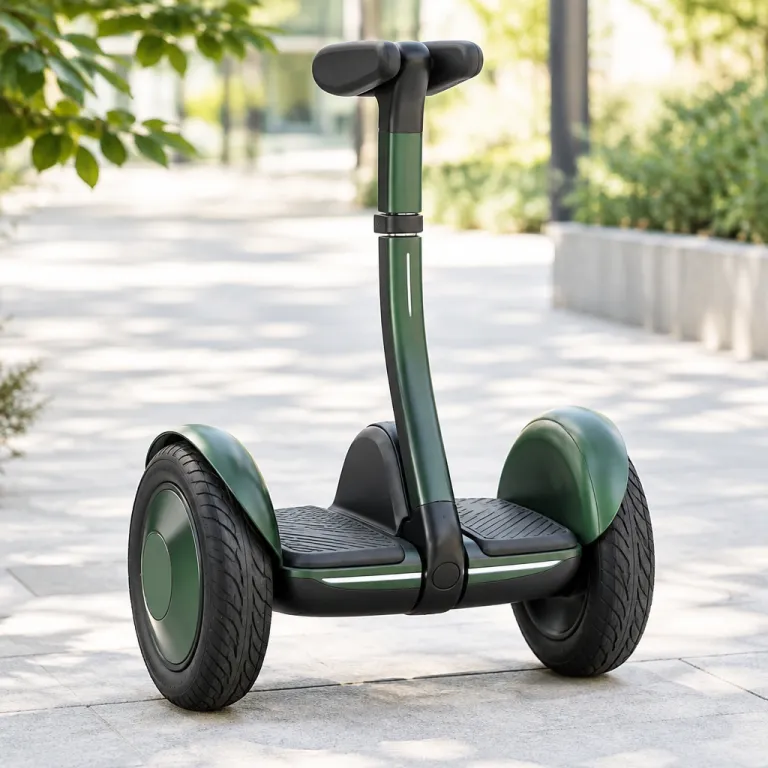
Segway Ninebot S Max as a compact alternative to larger electric scooters
The Segway Ninebot S Max sits between a classic kick scooter and a full size electric scooter. It offers a compact wheel base yet provides extra stability that many larger scooters lack, especially for new riders. This balance of portability and comfort makes the Segway Ninebot S Max attractive for dense urban environments.
Unlike taller electric scooters, the Segway Ninebot S Max uses knee based balancing rather than a traditional steering wheel. Riders lean gently to guide the wheel direction, while the hand control bar supports balance and fine control steering. This leansteer technology reduces arm fatigue over time and encourages a more intuitive ride for both beginners and experienced users.
The Segway Ninebot S Max shares core technology with the Ninebot Max and other Segway Ninebot platforms, but it focuses on maneuverability. Its compact electric drive and integrated battery keep the item weight manageable while preserving a practical range. For commuters who already own larger scooters, the S Max can serve as a secondary item for short range miles trips.
Many riders compare the Segway Ninebot S Max to kick scooters and self balancing scooters. The S Max stands out because it can pair with the Ninebot Gokart kit, transforming the same electric base into a seated gokart. This dual use design helps justify the item cost and extends the time you actually ride instead of leaving the scooter unused.
From a safety perspective, the Segway Ninebot S Max encourages controlled speed rather than chasing the absolute top speed. Its max speed is sufficient for city paths yet low enough to keep braking distances manageable. For people who value control over raw speed, this balance is often more important than headline numbers.
Speed, range and battery management on the Segway Ninebot S Max
When evaluating the Segway Ninebot S Max, riders usually start with speed and range. The max speed is designed for urban routes, keeping the electric scooter stable on mixed surfaces while still feeling brisk. This moderate top speed also helps the battery deliver consistent range miles without sudden voltage drops.
The integrated electric battery in the Segway Ninebot S Max is optimized for repeated stop and go use. Frequent kick style starts, short hills and tight corners all affect range, so real world figures differ from lab tests. Riders who already own Ninebot Max scooters often report that the S Max feels more efficient on short trips because of its lighter item weight.
Battery care strongly influences how long any electric scooters fleet will last. Avoid storing the Segway Ninebot S Max fully empty, and keep the battery between roughly forty and eighty percent for long idle time. This practice reduces cell stress and helps preserve both range and max speed performance over the years.
Urban riders should also understand how local rules treat an electric scooter at different speeds. In some regions, an electric scooter that exceeds a certain max speed may fall under stricter traffic regulations. It is wise to review guidance on DUI laws for electric scooter riders before relying on the Segway Ninebot S Max for late night trips.
Because the Segway Ninebot S Max can connect to the Ninebot app, riders gain more precise insight into battery health. The Ninebot app logs ride time, average speed and estimated remaining range miles, which supports better planning. Over time, this data helps you adapt your riding style to protect the battery and maintain reliable performance.
Balancing, steering and control on the Segway Ninebot S Max
The defining experience of the Segway Ninebot S Max is its balancing behavior. Instead of a tall steering wheel, riders use a padded knee bar for leansteer technology. This design keeps the center of gravity low and provides extra stability compared with many narrow deck scooters.
Balancing on the Segway Ninebot S Max feels natural after a short learning period. The electric control system constantly adjusts each wheel to keep the scooter upright, even when the rider shifts weight. Subtle lean movements translate into smooth steering, which reduces the need for aggressive hand control inputs.
For riders used to a classic kick scooter, the Segway Ninebot S Max initially feels different. There is no traditional handlebar steering wheel, yet the control steering remains precise through the knee bar. Those who prefer more familiar ergonomics can explore guidance on choosing the right handlebars for an electric scooter when comparing the S Max with other models.
The Segway Ninebot S Max also integrates hand control elements for braking and mode selection. These controls complement the leansteer technology, allowing riders to fine tune speed without upsetting balance. Over time, the combination of body leaning and hand control inputs becomes almost automatic, which enhances both comfort and safety.
Because the Segway Ninebot S Max shares components with the Ninebot Max and other Segway Ninebot scooters, maintenance is relatively straightforward. Many service centers already understand the electric drive, wheel hubs and control boards used across these scooters. This shared platform reduces downtime and helps ensure that balancing performance remains consistent throughout the product life.
Segway Ninebot S Max, Ninebot Max and the gokart ecosystem
The Segway Ninebot S Max does not exist in isolation, but within a broader Ninebot ecosystem. Riders often compare it directly with the Ninebot Max and with compact kick scooters from other brands. Each item targets slightly different needs, from long range miles commuting to playful weekend rides.
The Ninebot Max focuses on extended range and a higher max speed, making it a strong choice for longer electric scooter commutes. By contrast, the Segway Ninebot S Max emphasizes balancing agility and extra stability at moderate speed. Many households eventually own both a Ninebot Max and an S Max, using each scooter for different time and distance profiles.
A unique strength of the Segway Ninebot S Max is its compatibility with the Ninebot Gokart kit. When attached, the same electric base powers a seated ninebot gokart that uses a steering wheel and pedal based control steering. This configuration changes the ride character completely, turning a practical electric scooter into a recreational gokart for closed tracks or private areas.
Families appreciate that one electric battery platform can support both scooters and gokarts. The Segway Ninebot S Max base can serve as a stand up scooter during the week, then as a ninebot gokart on weekends. This dual role improves the overall value of the item and encourages more active outdoor time for both adults and teenagers.
Because the Segway Ninebot S Max and Ninebot Max share the Ninebot app, managing multiple scooters becomes easier. The app can show each scooter, its remaining range miles and recent ride time in a single interface. For multi rider households, this central control helps coordinate charging and reduces conflicts over which scooter is ready to ride.
Digital control, safety accessories and technical nuances for informed riders
Modern electric scooters like the Segway Ninebot S Max rely heavily on software. The Ninebot app acts as a digital dashboard, allowing riders to adjust max speed limits, check battery status and update firmware. These updates can refine balancing behavior, improve control steering and occasionally extend effective range miles.
Within the Segway Ninebot ecosystem, internal configuration fields such as pdpsecondarynavigatorobj, righttabitem itemlabel, item uservoiceproductname and uservoiceproductscore item are used for product management. While riders never see pdpsecondarynavigatorobj or righttabitem itemlabel directly, they influence how the Segway Ninebot S Max appears in online menus. Similarly, item uservoiceproductname and uservoiceproductscore item help the brand track feedback about the scooter and related scooters over time.
Safety accessories also matter for a balanced Segway Ninebot S Max experience. A quality helmet, reflective clothing and reliable lighting are essential at any speed, especially near the max speed of the scooter. For riders adding cameras or communication devices, a well designed adapter can secure audio and video links, as explained in this guide to a female to female adapter for electric scooters.
Because the Segway Ninebot S Max uses dual wheel drive and sensitive balancing sensors, regular inspection is important. Check tire pressure, wheel alignment and the condition of the electric connectors at least once a month. These simple checks help maintain extra stability and reduce the risk of sudden control loss during a ride.
Riders who transition from traditional kick scooters to the Segway Ninebot S Max should plan a gradual learning period. Start at low speed in an open area, practicing gentle kick starts, controlled braking and smooth leaning. This deliberate approach builds confidence and ensures that the scooter’s balancing system can support you effectively in real traffic.
Practical guidance for people seeking information about the Segway Ninebot S Max
For someone evaluating the Segway Ninebot S Max as a first electric scooter, context matters. Consider how far you typically travel, what max speed feels comfortable and whether you value extra stability over raw acceleration. The S Max suits riders who prioritize controlled balancing, compact size and the option to convert into a ninebot gokart.
When comparing the Segway Ninebot S Max with other electric scooters, list your daily constraints. If your commute involves long flat paths, a Ninebot Max or similar scooters with greater range miles may be more efficient. If you mainly cover short distances with frequent stops, the S Max offers agile control steering and easy storage.
Maintenance planning should include both the electric battery and mechanical parts. Schedule periodic checks of the wheel bearings, braking system and hand control switches to keep the scooter responsive. Use the Ninebot app to monitor ride time patterns and adjust charging habits so the battery avoids extreme full or empty states.
People who share a Segway Ninebot S Max within a family should agree on basic rules. Set a conservative max speed for younger riders, and ensure everyone understands how leansteer technology responds to sudden movements. Clear guidance about where and when to ride reduces conflicts and supports safer use of the scooter.
Ultimately, the Segway Ninebot S Max, the Ninebot Max and other Segway Ninebot scooters illustrate how electric mobility is diversifying. Each item, from compact kick scooter to full size electric scooter and gokart, serves a slightly different role. By aligning your needs with the strengths of the S Max, you can make an informed, confident choice in the growing world of electric scooters.
Key statistics about Segway Ninebot S Max and electric scooters
- Global electric scooter sales have grown by double digit percentages in recent years, driven by urban commuters seeking compact mobility.
- Average urban trip distances for electric scooters typically fall between 3 and 8 km, which aligns well with the practical range of compact models like the Segway Ninebot S Max.
- Studies show that riders who maintain moderate max speed can extend effective battery range by up to 20 percent compared with frequent full throttle use.
- Surveys of shared scooter users indicate that extra stability and intuitive balancing are among the top three factors influencing perceived safety.
- Data from several European cities suggest that electric scooters can replace between 10 and 20 percent of short car trips under 5 km.
Common questions about Segway Ninebot S Max and electric scooters
Is the Segway Ninebot S Max suitable for complete beginners ?
The Segway Ninebot S Max can suit beginners because its balancing system assists with stability at low speed. New riders should practice in a safe, open area and start with reduced max speed settings. Protective gear and gradual learning are essential for a confident first ride.
How does the Segway Ninebot S Max compare with the Ninebot Max for commuting ?
The Ninebot Max generally offers longer range miles and a slightly higher top speed, which benefits longer commutes. The Segway Ninebot S Max is more compact and agile, making it easier to store and maneuver in tight spaces. Your choice depends on whether distance or portability matters more in daily use.
Can the Segway Ninebot S Max handle rough urban surfaces ?
The Segway Ninebot S Max is designed for typical city pavements, small bumps and moderate imperfections. Its wheel size and balancing system provide extra stability, but it is not intended for off road terrain. Riders should reduce speed on damaged surfaces to protect both comfort and the electric components.
What role does the Ninebot app play for Segway Ninebot S Max owners ?
The Ninebot app allows owners to monitor battery status, adjust speed limits and track ride time. It also delivers firmware updates that can refine control steering and balancing behavior. For households with multiple scooters, the app simplifies managing each item from a single interface.
Is the Ninebot Gokart attachment worth considering with the Segway Ninebot S Max ?
The Ninebot Gokart attachment can be worthwhile for riders who value both practical commuting and recreational use. It transforms the Segway Ninebot S Max base into a seated gokart with a steering wheel, offering a very different ride experience. Families and enthusiasts often appreciate this versatility, which increases overall usage of the electric platform.