Summary
Analysis score
Average of the criteria rated below
Value for money: strong zoom and features, but not cheap
Design and handling: compact, practical, but a few shortcuts
Battery and charging: USB‑C convenience, but accessories are on you
Build quality and durability: mostly solid, with a few weak points
Image quality and autofocus: strong in daylight, more limited at the extremes
What the LUMIX DC-TZ99 brings to the table
Pros
- Very wide 24–720 mm equivalent zoom range in a compact 322 g body
- 4K 30p video, 4K Photo mode and HD 120 fps slow motion for travel clips
- Tilting 3" LCD and Wi‑Fi/Bluetooth with dedicated Send Image button for easy sharing
Cons
- Small 1/2.3" sensor with limited low‑light performance and softness at full 30x zoom
- No USB‑C cable, AC adapter or case included; some parts like the battery/card door feel flimsy according to reviews

Specifications
View full product page →| Brand | Panasonic |
A pocket camera that tries to replace your travel zoom lens
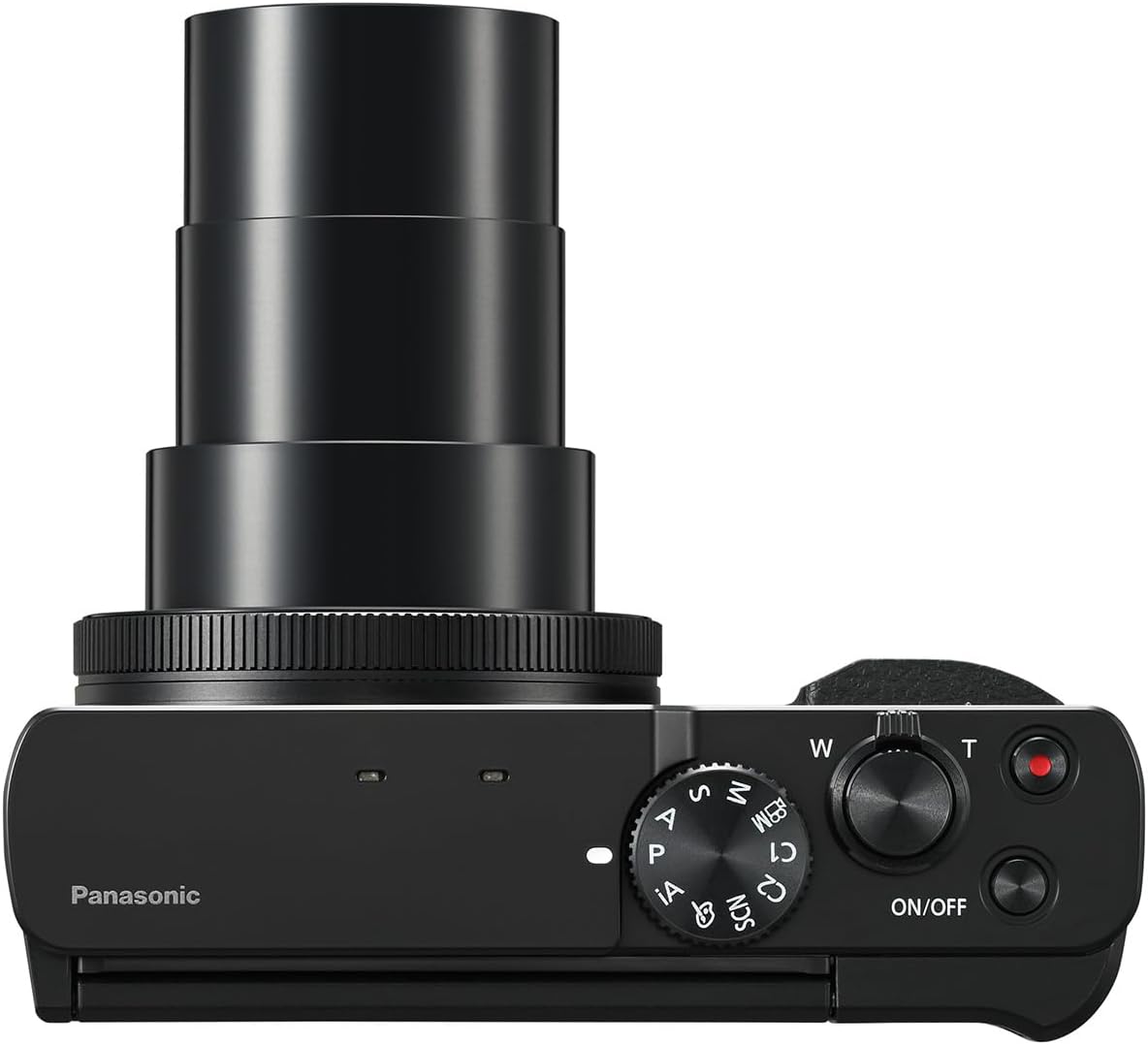
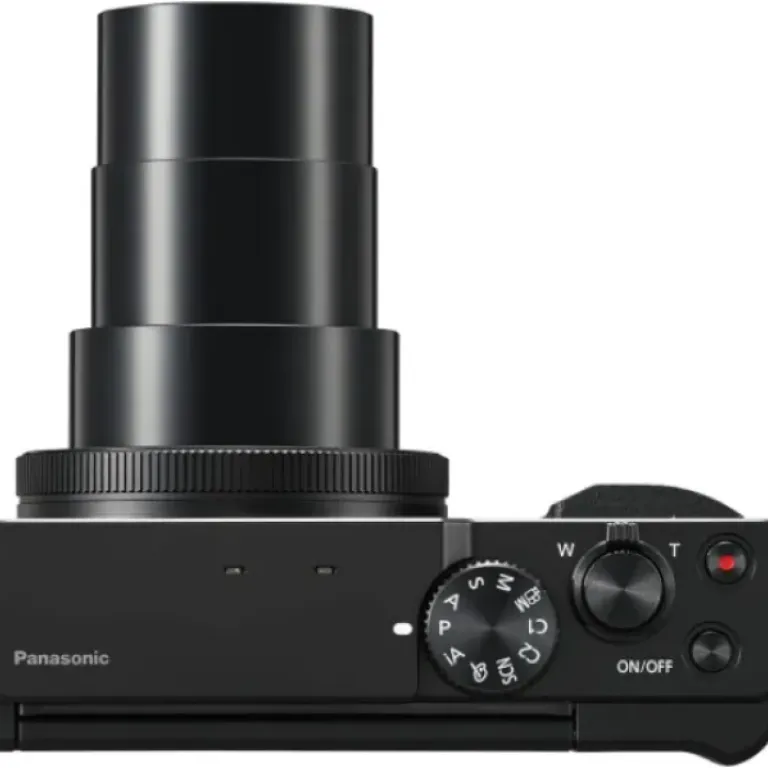
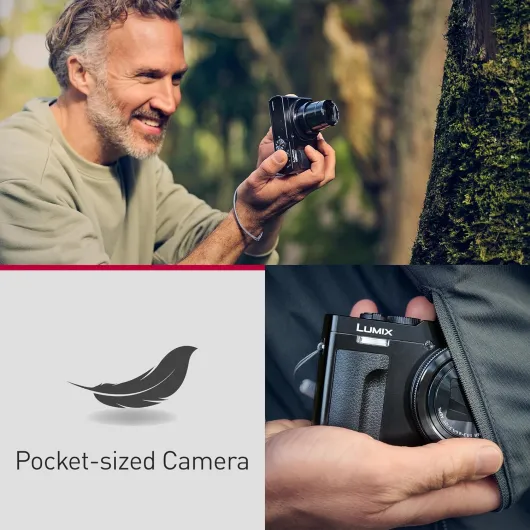
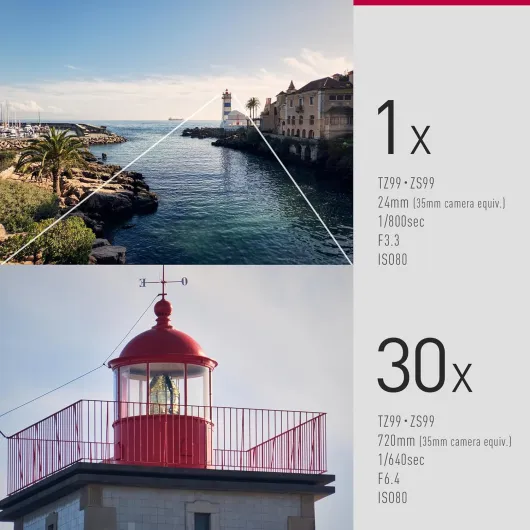
The Panasonic LUMIX DC-TZ99E-K sits in a category that still makes sense in 2026: compact travel zoom cameras for people who don’t want to rely only on a phone. On paper, this model tries to cover a lot of ground: a 20.3 MP 1/2.3" MOS sensor, a 24–720 mm equivalent LEICA DC lens with 30x optical zoom, 4K video at 30p, 5-axis HYBRID OIS+, and a tiltable LCD for selfies or vlogging. All that in a body of around 322 g that you can still slip into a jacket pocket.
Among the Amazon comments, the tone is mostly positive: a 4.1/5 average over more than 400 reviews suggests that buyers are generally satisfied, especially with the zoom reach and the overall ease of use. Several buyers highlight the "point and shoot" side of it: set it to auto, zoom, press the shutter, and you get decent travel photos without fiddling too much with settings. At the same time, some users mention that low-light performance and long-zoom image quality are more limited, which is expected with a small 1/2.3" sensor and a lens that only opens to f/3.3–6.4.
Panasonic also leans on the connectivity and convenience angle: Wi‑Fi and Bluetooth for quick sharing, USB‑C charging, and a dedicated "Send Image" button. There is a clear push toward smartphone-style usage: shoot, send to the phone, post. In my opinion, this camera is mainly aimed at travelers, casual photographers and beginners who want more optical zoom than any phone can offer, without jumping into interchangeable-lens systems.
It’s not a miracle solution: the spec sheet makes it clear that it’s still a small-sensor compact, with the usual compromises in low light, depth of field control and dynamic range. Some buyers also raise concerns about build details and the absence of accessories in the box. But if you look at it as a travel zoom with strong reach, decent 4K options and simple operation rather than a mini-DSLR, it starts to look like a realistic proposition. The rest of this analysis breaks down where it shines and where it feels a bit behind for its price bracket.
Value for money: strong zoom and features, but not cheap
With a 4.1/5 average rating over 437 Amazon reviews and a ranking around 40 in All-in-One Digital Cameras, the DC‑TZ99 clearly has a market. It’s positioned as a later-generation model in the TZ series, with a long 30x zoom, 4K video, tilting LCD, Wi‑Fi/Bluetooth and USB‑C charging. That feature list is quite full for a compact. However, at its typical price level, some buyers find it "very expensive" compared with older models like the TZ70, especially when they feel the real-world image quality is similar and certain build details have regressed.
One reviewer explicitly states that they have had "a lot cheaper cameras giving equal results" and that they were disappointed given the high cost. This kind of comment shows a gap between expectations and what a small-sensor compact can deliver in 2026, when smartphones have made huge progress. On the other hand, several 5‑star reviews emphasize that the camera does exactly what they wanted: compact size, strong zoom, simple operation and decent image quality for travel. For those users, the price seems justified by the convenience of having 24–720 mm in the pocket, something no phone currently matches optically.
There are also some hidden costs to factor in: no USB‑C cable or AC adapter in the box, no included case, and probably only one battery. If you need a cable, a charger, a spare battery and a pouch, the full investment goes up quickly. At the same time, the camera brings 4K 30p, 4K Photo, HD 120 fps, optical stabilization and a LEICA-branded lens, which is not common on entry-level compacts. For a traveler who wants a single small device capable of framing a wide landscape at 24 mm and isolating a detail far away at 720 mm, the flexibility has a real, concrete value.
In my opinion, the value for money is decent but not spectacular. You pay for zoom reach and convenience more than for pure image quality per euro. If your main goal is the absolute best image quality and low-light performance, a larger-sensor compact or an entry-level mirrorless with a standard zoom will give better files, often at a similar or slightly higher total cost. If you specifically want a long zoom in a pocket-sized body, accept some compromises in low light and at full telephoto, and already own USB‑C chargers, the DC‑TZ99 still holds its own as a travel companion.
Design and handling: compact, practical, but a few shortcuts
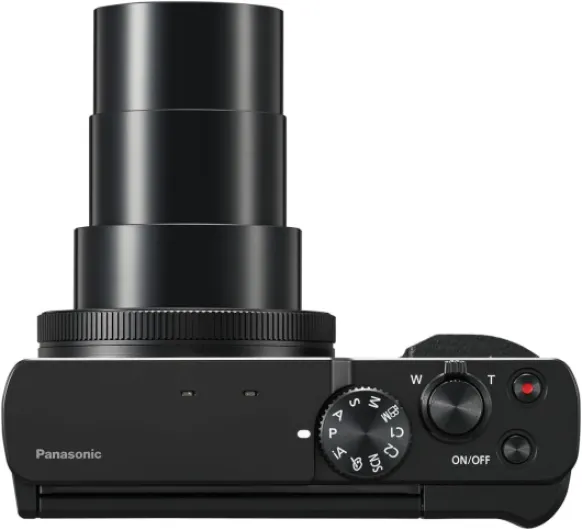
From a design angle, the DC‑TZ99 plays the classic travel compact card: around 322 g, a 3-inch tilting LCD with 1.84M dots, and a body that is still pocketable. Reviews often mention that it is "compact", "small" and "easy to carry", which matches the spec sheet. This is not a camera that will take over a backpack; it’s meant for a coat pocket, a small pouch or a corner of a handbag. The tiltable screen is a key element of the design: it can flip up for selfies, low-angle or high-angle framing, and vlogging-style framing. Buyers highlight that this screen is "nice and clear", which fits with the relatively high dot count for this category.
Panasonic has chosen a fairly simple, functional look: black finish, compact form factor, and typical Lumix button layout with an emphasis on direct controls for zoom and shooting modes. One review points out that the camera "feels nice and solid", suggesting that the body does not come across as toy-like despite the small size. However, not all comments go in that direction: one buyer complains about a "very flimsy plastic compartment cover", referring to the battery or card door. That detail shows that the brand has probably saved some cost on certain parts of the chassis, which is common in compact cameras but still worth knowing if you are rough on gear.
A controversial point in the Amazon comments is the viewfinder. One positive review mentions the "lack of a viewfinder" as a downside, while the spec sheet lists an electronic viewfinder type. The most likely explanation is that the DC‑TZ99 variant in some markets drops the built-in EVF that existed in older TZ models, or that the EVF implementation is limited enough that some users ignore or dismiss it. In any case, several buyers clearly rely mainly on the rear screen, and some miss having a clear, bright viewfinder in strong sunlight.
Overall, the design direction is clear: prioritize compact size, zoom range and screen versatility over ruggedness or high-end materials. In my opinion, for a travel camera this is a reasonable compromise, but people coming from earlier TZ models like the TZ70 may feel it as a step sideways or even a step back on specific points like the viewfinder or door solidity. If you need weather sealing, chunky grip or a very robust door mechanism, this line is not built for that. If you want a pocket camera with a big zoom and a flip screen, the design is aligned with that use case.
Battery and charging: USB‑C convenience, but accessories are on you
The power side of the LUMIX DC‑TZ99 is built around a removable battery of around 40 g, with in‑camera charging via the USB‑C port. Panasonic has clearly chosen to lean on "universal charging": the camera uses a standard USB‑C connector, but does not include a USB cable or AC adapter in the box. The official line is environmental impact reduction and reuse of existing accessories. In real life, that means you either already have a USB‑C cable and charger (phone, laptop, tablet) or you have to buy them separately. For a camera in this segment, some buyers may see this as a cost-saving move, others as no big deal.
One review positively notes that the battery "charges in camera via USB, so no need to remove it", which is convenient for travel: you can plug the camera into a power bank, a laptop or a wall charger at the hotel and recharge overnight, without carrying a separate external charger. On the flip side, another buyer points out that they "can't speak to battery life" because they didn’t shoot much due to bad weather, which shows that battery endurance is not a dominant theme in the comments, neither very praised nor heavily criticized. That usually means it’s acceptable for casual use but not spectacular.
On paper, with 4K video, Wi‑Fi, Bluetooth and a high‑resolution LCD, you should not expect miracles from a compact camera battery. Intensive 4K recording, lots of zooming and heavy screen use will drain it faster. For a typical tourist day with a mix of photos and short 4K clips, most people will probably get by, but more demanding users or heavy video shooters would be wise to plan on a spare battery. The camera does include one battery in the "Camera Kit", so at least you’re not forced to buy that separately from day one.
In my opinion, the battery and charging setup is practical for modern usage: USB‑C is the right choice, and in‑camera charging simplifies travel. The downside is the missing cable and charger, which adds a hidden cost if you don’t already have the right accessories. Also, the lack of precise, widely cited endurance figures from users suggests that the battery is fine for amateurs but nothing more. If long days of non-stop shooting are your thing, budgeting for at least one extra battery is a safe move.
Build quality and durability: mostly solid, with a few weak points
Durability is often where compact cameras show their compromises, and the DC‑TZ99 is no exception. Several buyers describe the camera as "nice and solid" and praise the overall feel of the body. That matches what you’d expect from a 322 g compact with a retractable zoom lens and a midrange price point: not a tank, but not a toy either. The lens itself is a LEICA DC design with aspherical and ED elements, which suggests a certain level of optical engineering, but that doesn’t necessarily translate into high shock resistance or weather protection.
The most critical comment about build quality comes from a buyer who compares this model to their older TZ70. They mention being "bit disappointed" by the replacement, pointing to "no view finder" and a "very flimsy plastic compartment cover". That compartment cover is presumably the door that protects the battery and SD card. A flimsy door can become a long-term weak spot, especially for travel gear that goes in and out of bags, pockets and backpacks all the time. It doesn’t mean the door will necessarily break, but it’s a part to treat with care rather than abuse.
There is no mention of weather sealing, dust protection or ruggedization in the specs. That alone is a clear indicator: this is not a camera to use in heavy rain or dusty environments without some protection. The retractable 30x lens is also a moving mechanism that is vulnerable to sand, shocks and accidental impacts. Among the reviews, there are no massive waves of complaints about the camera failing early, which is reassuring, but there is also no strong praise for exceptional ruggedness. The general tone is: fine for normal travel and everyday handling, not built for harsh conditions.
In my opinion, the durability profile is typical for this segment: sufficient for careful users, risky for those who are rough on gear. The weak point seems to be small external parts like the battery/card door, while the rest of the body is described as reasonably solid. If you intend to carry it daily in a bag with keys, coins or sand, a small padded case is a smart investment. If you come from older TZ models with slightly sturdier parts, you may feel that Panasonic has shaved a bit of build quality to keep size and cost under control.
Image quality and autofocus: strong in daylight, more limited at the extremes
On the performance side, the LUMIX DC‑TZ99 is very typical of high-zoom compacts built around a 1/2.3" sensor. In good light, the combination of a 20.3 MP MOS sensor and a LEICA-branded 24–720 mm lens can deliver sharp, detailed images, especially at shorter focal lengths. Several positive reviews underline "great quality" and "solid image quality" for holiday shots, landscapes and everyday scenes, especially when left in auto mode. The lens construction with aspherical and ED elements is designed to control aberrations and maintain decent sharpness across the zoom range, at least for casual use and normal viewing sizes.
Where things get trickier, and buyers notice it, is at the long end of the zoom and in low light. One reviewer explicitly complains that at full 30x zoom, the camera "needs a tripod" and that picture quality is "awful" until corrected in software. That’s a bit harsh, but it highlights a reality: 720 mm equivalent on a small sensor, with a maximum aperture of f/6.4, is a tough combination. Even with optical stabilization, small movements, atmospheric haze and high ISO noise can seriously reduce fine detail. Another common point in the comments is that low-light performance is not its strong suit, with visible noise in darker conditions. For a 1/2.3" sensor packing over 20 MP, this is not surprising.
Autofocus performance on paper is decent for this category: contrast detection with DFD, 49-area AF, single-servo AF, and 30 fps bursts in 4K Photo. In practice, reviews describe the camera as "easy to use" and "point and shoot", which suggests that focus is generally reliable for static or moderately moving subjects in good light. This is not a sports camera or a wildlife specialist, but for travel, city walks, family events and tourist shots, the focusing system seems to get the job done. The 5-axis HYBRID OIS+ in video and optical stabilization in stills help keep images usable at telephoto, as long as expectations stay realistic.
For video, the presence of 4K 30p and 1080p plus 120 fps HD high-speed mode is a real bonus at this level. You can film detailed clips in 4K, then slow down action with the high-speed HD mode for simple slow-motion effects. Several buyers mention the 4K option as a "nice bonus", not a professional tool, which seems like the right mindset. In my opinion, the performance package is coherent: good daylight photos, strong zoom versatility, usable 4K for travel videos, but with the usual compact-camera limits at high ISO and at the very end of the zoom range. People expecting DSLR-level detail and clean night photos will be disappointed; people wanting better reach than a phone for daytime travel use should be satisfied, as long as they manage their expectations at 720 mm.
What the LUMIX DC-TZ99 brings to the table
The LUMIX DC-TZ99 is part of Panasonic’s long-running TZ/ZS series: compact cameras built around a long zoom. The core of the product is the 24–720 mm equivalent LEICA DC lens with 30x optical zoom and 60x "Intelligent Zoom" (digital extension). Behind it, you get a 20.3 MP 1/2.3" MOS sensor, which is standard for this type of compact. The camera records stills in JPEG and video in MP4, up to 4K (2160p) at 30p, with a 4K Photo mode that pulls 8 MP frames from short video bursts. Continuous shooting is advertised at up to 30 fps in 4K Photo mode, which is handy for capturing a fast subject and choosing the right frame after the fact.
On the focusing side, the specs list contrast-detection AF with Panasonic’s DFD (Depth From Defocus) technology, 49-area focus and modes like AF-S. For an amateur-level travel camera, that’s more than enough for everyday use, especially in good light. The lens is stabilized with 5-axis HYBRID OIS+ in video, which should help make full use of the 30x zoom without every small movement turning into shake in the footage. The shutter runs from 1/4000 s (approx. 0.00025 seconds) to 30 seconds, giving some flexibility for low-light and long-exposure experiments, within the limits of the small sensor.
Connectivity is one of its selling points: built‑in Wi‑Fi and Bluetooth, USB‑C port that handles data and in-camera battery charging, and compatibility with smartphones and computers via USB. Panasonic clearly wants this camera to work as a companion to a phone, not as a completely separate system. According to several reviews, the dedicated button to send images to a phone is appreciated by people who don’t want to dive into menus each time they want to share a photo.
In terms of positioning, the camera targets adults with amateur skills who want a compact, travel‑friendly alternative to big mirrorless or DSLR setups. The box content is reduced to "Camera Kit" with battery included, but no USB cable or charger block, in line with the brand’s environmental messaging about reusing existing accessories. In my opinion, that choice is coherent on paper but can feel a bit stingy at this price level, especially for buyers coming from older compacts that often included a charger and sometimes a basic case.
Pros
- Very wide 24–720 mm equivalent zoom range in a compact 322 g body
- 4K 30p video, 4K Photo mode and HD 120 fps slow motion for travel clips
- Tilting 3" LCD and Wi‑Fi/Bluetooth with dedicated Send Image button for easy sharing
Cons
- Small 1/2.3" sensor with limited low‑light performance and softness at full 30x zoom
- No USB‑C cable, AC adapter or case included; some parts like the battery/card door feel flimsy according to reviews
Conclusion
Analysis score
The Panasonic LUMIX DC‑TZ99E‑K is a typical but competent travel zoom compact: 20.3 MP 1/2.3" sensor, 24–720 mm equivalent LEICA lens with 30x optical zoom, 4K 30p video and a tilting LCD in a 322 g body. According to the published reviews, its main strength is clear: you get a lot more optical reach than any phone, in a camera that is still easy to slip into a pocket. Many buyers are happy with the daylight image quality and the simplicity of point‑and‑shoot operation, while the 4K and slow‑motion options are seen as useful extras rather than pro features.
On the downside, this is still a small‑sensor compact. Low‑light shots and images at full 30x zoom are the weak points, with noise and softness appearing faster than some users expected, especially those coming from older TZ models. Build quality is generally seen as solid enough, but specific parts like the battery/card door draw criticism for feeling flimsy. The lack of included USB‑C cable, charger and case also hurts the perceived value, and at its current price level there are alternatives with better pure image quality, though not necessarily with the same zoom range.
In my opinion, this camera makes sense for travelers, beginners and casual shooters who want: a big zoom in a genuinely compact body, straightforward auto modes, 4K video as a bonus, and quick sharing to a smartphone via Wi‑Fi/Bluetooth. People who mostly shoot in daylight and care about reach more than pixel‑peeping will likely be satisfied. Those who prioritize low‑light quality, robust build, or an integrated viewfinder should look at larger‑sensor compacts or entry‑level mirrorless kits instead. Viewed as a pocket travel zoom with modern connectivity rather than a mini‑DSLR, the DC‑TZ99 delivers a reasonable overall package.