Summary
Analysis score
Average of the criteria rated below
Value for money: where this renewed Lumix makes sense
Design and handling: travel-friendly, with some compromises
Battery and connectivity: USB‑C is a plus, endurance is just okay
Durability and reliability: renewed status and what buyers report
Image and video performance: strong zoom, small-sensor limits
What the Lumix DC-TZ99 offers on paper
Pros
- 30x optical zoom (24–720 mm equivalent) with 5‑Axis HYBRID O.I.S.+ in a compact body
- 4K 30p video, 4K Photo modes, and 120 fps HD slow motion for flexible shooting
- USB‑C charging plus Wi‑Fi and Bluetooth with Send Image button for easy sharing
Cons
- Small 1/2.3" sensor and f/3.3–6.4 lens limit low‑light performance and depth of field control
- Renewed status adds some risk of unit variability compared to brand‑new stock

Specifications
View full product page →| Brand | Panasonic |
A compact zoom camera that tries to replace your phone (and your big camera)
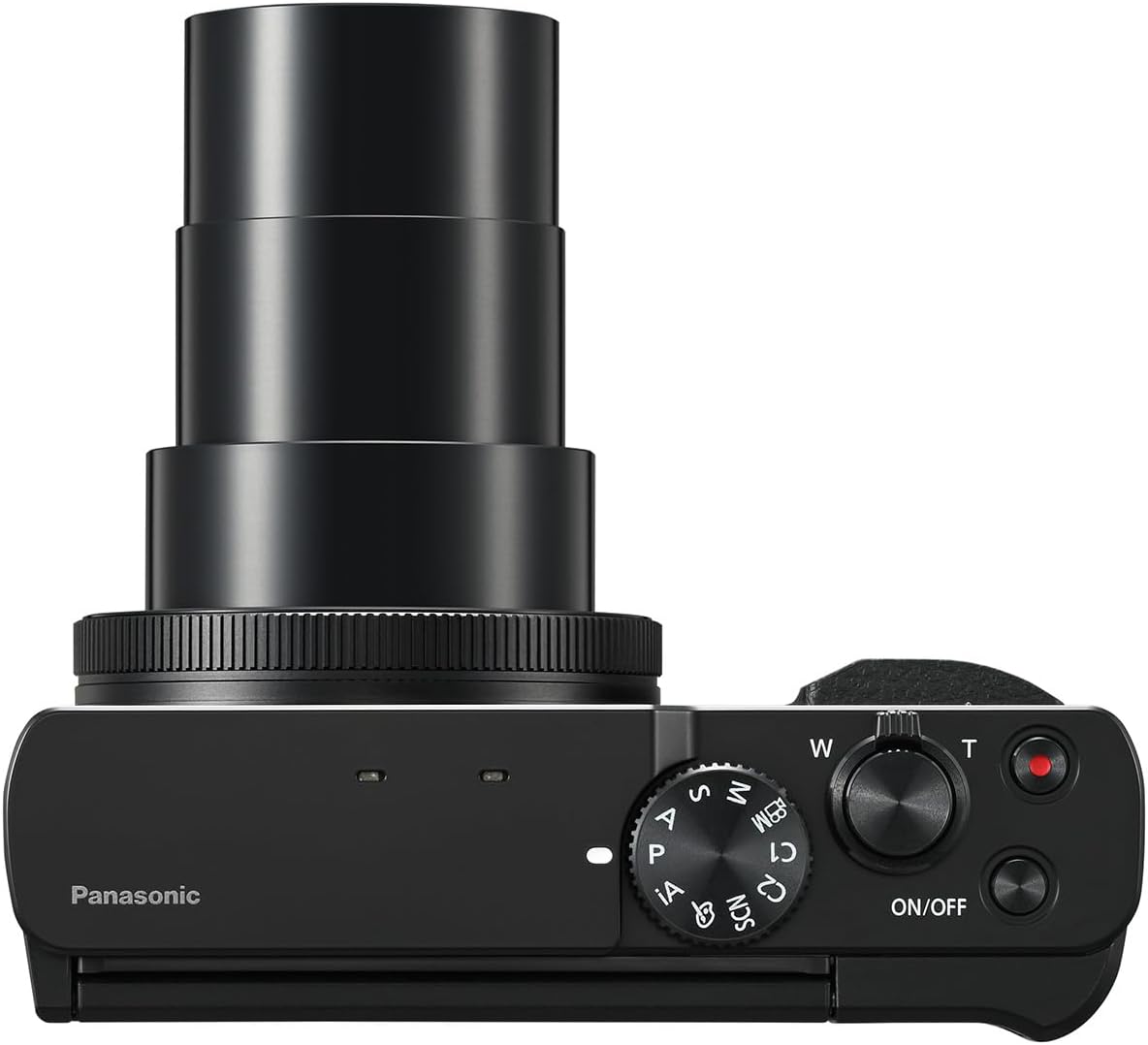
The Panasonic Lumix DC-TZ99 (also known in some regions as part of the TZ / ZS travel zoom line) is clearly aimed at people who want more reach and control than a smartphone, without dragging around a DSLR or mirrorless kit. On paper, it combines a 20.3 MP 1/2.3" MOS sensor with a 24–720 mm equivalent LEICA DC lens and 30x optical zoom, in a body that stays in the compact category. This version is a renewed product, which means it’s refurbished with a 1‑year limited warranty rather than brand‑new stock.
The spec sheet leans heavily on versatility: 4K 30p video, 4K Photo modes, 5‑Axis HYBRID optical image stabilization, Wi‑Fi and Bluetooth for sharing, plus USB‑C charging. In theory, this makes it a decent fit for travel, events, and casual vlogging where you want reach and stabilization more than shallow depth of field or pro‑level low‑light performance. Buyers in the Amazon comments often compare it to using only a phone and say the zoom range is the big reason they picked it up.
There are trade‑offs though. The lens is f/3.3–6.4, which is pretty standard for a long‑zoom compact but not bright, and the 1/2.3" sensor is small by today’s standards. Several reviewers point out that this type of camera does well in daylight and struggles more as light drops. Being renewed also means some units may show light cosmetic wear or have had parts replaced, and a few comments bring up that risk, even if most say their copy works fine.
In my opinion, this camera targets a very specific user: someone who travels, likes the idea of a real zoom lens and separate camera, but doesn’t want to learn a full mirrorless system or spend mirrorless money. If you fit that profile and you accept the limits of a small sensor compact, the DC‑TZ99 looks like a practical tool. If you’re chasing cinematic background blur or pro‑grade low‑light video, the spec sheet already suggests you should look higher up the range.
Value for money: where this renewed Lumix makes sense
The key argument for this camera is the combination of 30x optical zoom, 4K video, and compact size at the price point of a renewed unit. The listing doesn’t show a fixed price here, but in general, refurbished TZ/ZS models tend to undercut brand‑new equivalents by a noticeable margin. For people who want more reach and control than a phone but don’t want to invest in a mirrorless system, that price gap is the whole point. In the Amazon rankings, this model sits around the mid‑pack in Renewed Camera & Photo and All‑in‑One Digital Cameras, which suggests it sells steadily without dominating the category.
Compared to buying a new long‑zoom compact, the main trade‑off is renewed status vs. savings. Among published reviews, many buyers say they are satisfied with the condition and performance they got for the money, and they highlight the 1‑year warranty as a reassuring factor. The occasional complaint about a problematic unit or early failure is there, which is normal for refurbished electronics, but it seems to be the exception rather than the rule. The overall tone of the comments leans towards "good value if you understand what you’re buying".
Feature‑wise, you are getting: 20.3 MP stills, 4K 30p, 120 fps HD, Wi‑Fi and Bluetooth, USB‑C charging, a tilting screen, and an EVF. On paper, that’s a fairly complete feature set for a compact travel zoom. What you’re not getting is a large sensor, bright constant‑aperture lens, phase‑detect AF, or weather sealing. In my opinion, that’s a fair compromise at this tier. A larger‑sensor travel camera with similar reach and 4K would jump significantly in price and bulk.
In my view, the value is solid for three user profiles: travelers who want more zoom than a phone, casual vloggers who like the tilt screen and 4K without chasing pro quality, and families who want a straightforward camera with good reach for events. People who might feel short‑changed are those expecting mirrorless‑level low‑light performance or who are very risk‑averse about refurbished products. If you’re okay with the idea of a renewed unit and you mainly shoot in decent light, the cost‑to‑features balance looks pretty good.
Design and handling: travel-friendly, with some compromises
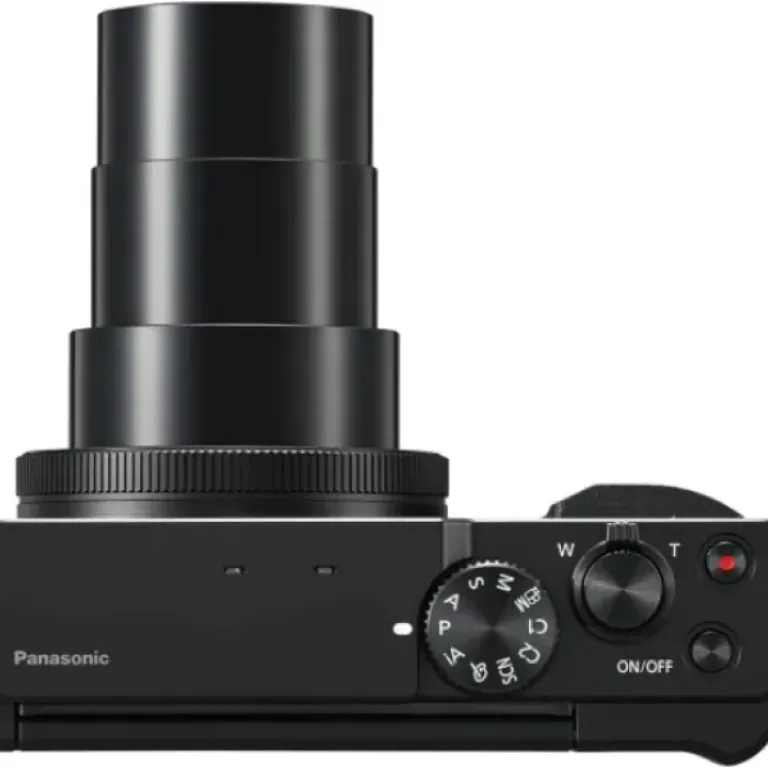
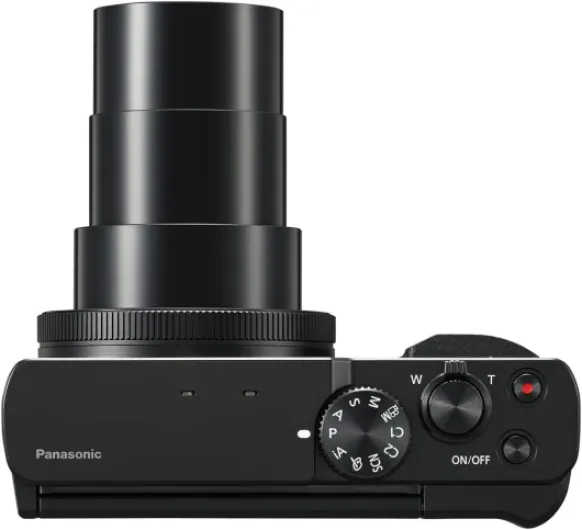
From a design standpoint, the Lumix DC‑TZ99 sticks to the classic travel zoom formula: a compact rectangular body, retractable zoom lens, and a rear tilting LCD. The color here is black, which keeps it discreet for street and travel use. The camera includes an electronic viewfinder in addition to the rear screen, which is an important detail; many cheaper compacts skip the EVF entirely. According to several buyers, the EVF is especially useful in bright environments where the rear LCD can be harder to see.
The rear screen is a 3‑inch class tilting LCD with 1,840k‑dot resolution. Panasonic highlights that it tilts upward for selfies and vlogging, which fits the "travel + vlog" positioning. A tilting design also helps with low and high angle shots without having to crouch or stretch too much. The body layout follows Panasonic’s usual approach: mode dial on top, zoom rocker around the shutter, and several buttons on the back for quick access to settings. Buyers familiar with older TZ/ZS models generally say in comments that the layout feels familiar and relatively straightforward, though newcomers might need a bit of menu time.
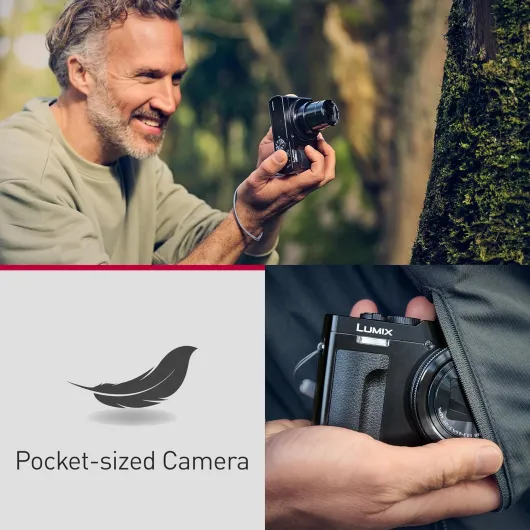
At about 1.08 pounds, it’s not ultra‑light, but it’s still much smaller than any interchangeable‑lens kit that can cover 24–720 mm. On paper, that weight suggests a balance between compactness and a lens that has to extend quite a bit when zoomed in. Some reviewers point out that it fits in a jacket pocket rather than tight jeans, which is normal for this category. The built‑in flash sits above the lens, and there’s no mention of a hot shoe, so this is clearly not aimed at people who want to mount external flashes or microphones.
In my opinion, the design is practical rather than exciting. You get the essentials for travel: EVF, tilting screen, compact footprint, integrated flash, and simple controls. The lack of a hot shoe and likely absence of weather sealing limit it for more serious field work, but that’s not really the target here. For someone who wants a camera that can live in a small bag and be ready for anything from wide landscapes to long‑reach shots of landmarks or wildlife, the design choices make sense, even if they’re not particularly original.
Battery and connectivity: USB‑C is a plus, endurance is just okay
The DC‑TZ99 uses a lithium‑ion battery (included) and, importantly, supports USB‑C charging. For travel, that’s a real practical advantage: one cable can handle your phone, power bank, and camera, which several buyers appreciate in their comments. You don’t have to carry a proprietary charger or hunt for wall sockets as often; you can top it up from a power bank on the go. Panasonic doesn’t state a detailed CIPA shot count in the data shown here, but reviews generally describe the battery life as adequate rather than impressive.
Among the published reviews, a recurring theme is that for a full day of heavy shooting – especially if you use 4K video, Wi‑Fi transfer, and the LCD at high brightness – one battery can feel limiting. A few users mention that they ended up buying a spare battery to be safe on long outings. This is not surprising for a compact with a small body and a power‑hungry zoom and EVF. Continuous shooting at up to 30 fps in 4K Photo also adds strain if used a lot. On the other hand, more casual users who shoot mostly stills and only occasional clips report that the battery lasts them through typical sightseeing days.
Connectivity is one of the stronger points: Wi‑Fi and Bluetooth are built in, with a dedicated Send Image button to push photos to your phone. Buyers say this makes sharing to social media faster and reduces the need to pull out a laptop or card reader. Bluetooth also helps with maintaining a low‑energy link for features like automatic image transfer or geotagging when supported by the app. The camera also communicates via USB for file transfer, which is handy if you don’t want to rely on wireless.
In my opinion, the battery situation is classic compact‑camera territory: fine for moderate use, borderline for heavy 4K and all‑day shooting. The presence of USB‑C shifts the balance slightly in its favor, because it’s so easy to top up from a power bank or car charger. If you’re planning serious travel or vlogging days, I’d assume you’ll want a spare battery and a power bank. For more occasional use – family events, short trips, weekends – the combination of USB‑C and built‑in wireless makes the overall experience reasonably convenient.
Durability and reliability: renewed status and what buyers report
This particular listing is for a renewed (refurbished) Panasonic Lumix DC‑TZ99, which changes the durability discussion a bit compared to a brand‑new unit. The product comes with a 1‑year limited warranty, which is decent coverage for refurbished gear and suggests some level of confidence from the refurbisher and Panasonic. The camera is made in China, like many consumer imaging products, and the TZ series has a long history, so the basic design and components are not unproven.
In Amazon comments, most verified buyers describe their unit as arriving clean and functioning properly, with only minor or no visible cosmetic wear. That’s fairly typical for renewed electronics. One notable report mentions a camera that developed zoom errors and lens jamming after some months, leading to unusable focusing and the need for a return under warranty. This kind of failure can happen with any compact that relies on a complex retractable zoom mechanism, and long‑zoom travel compacts in general are more exposed to this kind of mechanical issue than fixed‑lens or rugged models.
On paper, the materials and construction are standard for a compact: plastic and metal shell, extending lens barrel, and an internal stabilizer system. There is no mention of weather sealing, shock resistance, or dustproofing. That means you should assume it’s not meant to handle heavy rain, sand, or drops without risk. Some buyers mention using a small case and being careful with dust and impacts, which is sensible for this type of camera. The extending lens is the most fragile part; a hard knock when it’s out can cause problems on any similar model.
In my opinion, durability here is "normal consumer compact" level: fine if you treat it with care, not ideal if you plan to shoot in harsh environments. The renewed status adds a layer of uncertainty – you’re relying on the refurb process having properly checked and, if needed, replaced worn parts – but the 1‑year warranty is there as a safety net. If you’re rough on gear or want something that can handle rain and dust, this is not the right category. If you use a protective case, avoid lens impacts, and don’t push it into bad weather, the feedback suggests most units hold up reasonably well.
Image and video performance: strong zoom, small-sensor limits
The performance story of the DC‑TZ99 is built around three pillars: the 30x optical zoom, the 20.3 MP MOS sensor, and 4K 30p video. On the zoom side, going from 24 mm wide angle to 720 mm telephoto in one compact camera is hard to match with any phone. In Amazon comments, many buyers say this reach is the main reason they bought it, especially for wildlife at a distance, concert stages, and far‑away travel details. Paired with 5‑Axis HYBRID O.I.S.+ stabilization, the camera should handle handheld shots at longer focal lengths better than older, non‑stabilized compacts.
For stills, the 1/2.3" 20.3 MP sensor is typical of compact zooms. On paper, this size is fine in daylight but will not compete with larger sensors when light drops. Some reviewers mention that photos look sharp and clean in good light, but noise and smearing appear at higher ISOs, which lines up with expectations for this sensor class. The autofocus system uses contrast detection with Panasonic’s DFD logic and 49 focus areas. Comments usually describe autofocus as reasonably fast and accurate for travel and casual action, though not at the level of modern phase‑detect systems found in more expensive mirrorless bodies.
Video performance tops out at 4K 30p, which is still plenty for most non‑professional users. The camera also offers HD 120 fps for slow motion, which a few buyers highlight as fun for sports and kids. 4K Photo modes allow capturing 30 fps bursts at 8 MP equivalent, which can be handy for action sequences where timing is tricky. The spec sheet lists MP4 and MOV formats, which keeps it compatible with most editing software. Reviews suggest that video quality in 4K is crisp in daylight, but low‑light footage can show noise and some focus hunting, again consistent with the small sensor and contrast AF.
In my opinion, the performance is decent for the category: very useful zoom, solid 4K options, and stabilization that should make travel shooting more forgiving. The flip side is clear: small sensor, modest aperture (f/3.3–6.4), and contrast AF mean you should not expect miracles in dim bars, indoor sports, or fast night scenes. If you mostly shoot outdoors, sightseeing, and family events in reasonable light, the spec sheet and reviews suggest it gets the job done. If low‑light action is your priority, you’re bumping up against the limits of this type of camera.
What the Lumix DC-TZ99 offers on paper
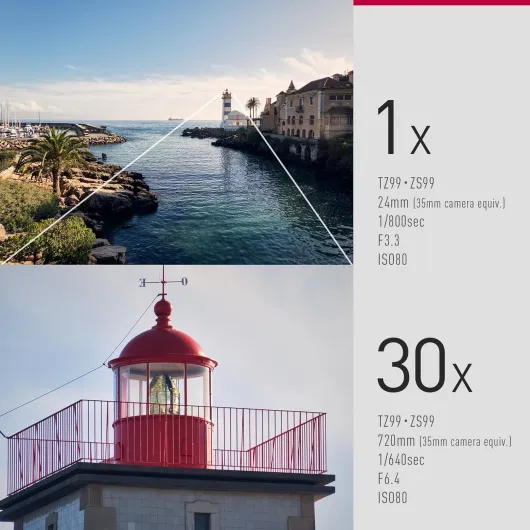
The Lumix DC‑TZ99 is part of Panasonic’s TZ travel zoom series, built around the idea of "one compact camera that covers almost any focal length you’ll need on a trip." The headline spec is the 24–720 mm equivalent LEICA DC lens with 30x optical zoom, supported by 5‑Axis HYBRID O.I.S.+ stabilization. On top of that, Panasonic advertises up to 60x iZoom, which is a form of digital zoom intended to extend reach while trying to preserve detail from the 20.3 MP sensor. For stills and video, this is clearly the main selling point.
On the imaging side, you get a 20.3 MP MOS sensor (1/2.3" type), continuous shooting up to 30 fps using 4K Photo modes, and an autofocus system based on contrast detection with Panasonic’s DFD (Depth from Defocus) logic and 49‑area focus. The camera records video up to 4K 30p (2160p) in MP4 or MOV, and also offers HD high‑speed video at 120 fps for slow‑motion clips. For framing, there’s a tiltable 1,840k‑dot LCD screen plus an electronic viewfinder, which many buyers appreciate when shooting in bright sunlight where phone screens tend to wash out.
Connectivity is modern enough: Wi‑Fi and Bluetooth are built in, with a dedicated "Send Image" button to push photos to a smartphone. Charging is via USB‑C, which is much more practical than older proprietary or micro‑USB ports, especially when traveling with multiple devices. The camera weighs around 1.08 pounds, so it’s not feather‑light but still falls in the pocketable / small bag category. Panasonic lists it with standard exposure modes (Auto, Program, Manual, Landscape) and manual exposure control for those who want more than full auto.
In my opinion, the overall package is coherent: long zoom, 4K, stabilization, wireless sharing, and USB‑C in a compact body. Nothing here screams pro gear, but for a travel zoom compact, the combination of features looks solid. The renewed status plus 1‑year warranty gives some reassurance, but it also explains why the price tends to be lower than a brand‑new equivalent, and that trade‑off is part of the appeal for many buyers in the comments.
Pros
- 30x optical zoom (24–720 mm equivalent) with 5‑Axis HYBRID O.I.S.+ in a compact body
- 4K 30p video, 4K Photo modes, and 120 fps HD slow motion for flexible shooting
- USB‑C charging plus Wi‑Fi and Bluetooth with Send Image button for easy sharing
Cons
- Small 1/2.3" sensor and f/3.3–6.4 lens limit low‑light performance and depth of field control
- Renewed status adds some risk of unit variability compared to brand‑new stock
Conclusion
Analysis score
The Panasonic Lumix DC‑TZ99 in renewed form is a practical travel zoom camera rather than a prestige object. Its strengths are clear: a 24–720 mm equivalent 30x zoom, 4K 30p video, usable stabilization, and a tilting LCD with an EVF, all in a compact body that fits easily in a small bag. Add Wi‑Fi, Bluetooth, and USB‑C charging, and you get a device that integrates fairly well into a modern travel or everyday setup. According to most buyers, it delivers good results in daylight and gives them shots that their phones simply can’t reach.
The weak points are just as clear: small 1/2.3" sensor, modest f/3.3–6.4 lens, contrast‑detect AF, no visible weather sealing, and the uncertainty that comes with any refurbished product. Low‑light performance and fast action tracking are not its strong suits, and a few users have run into unit‑specific issues typical of long‑zoom compacts. In my opinion, this camera makes sense if you mainly shoot travel, sightseeing, family events, and casual vlogs in reasonable light, and you want serious zoom without a big interchangeable‑lens kit. If you care most about night performance, background blur, or pro‑grade reliability, you should look at larger‑sensor alternatives, even if that means spending more.