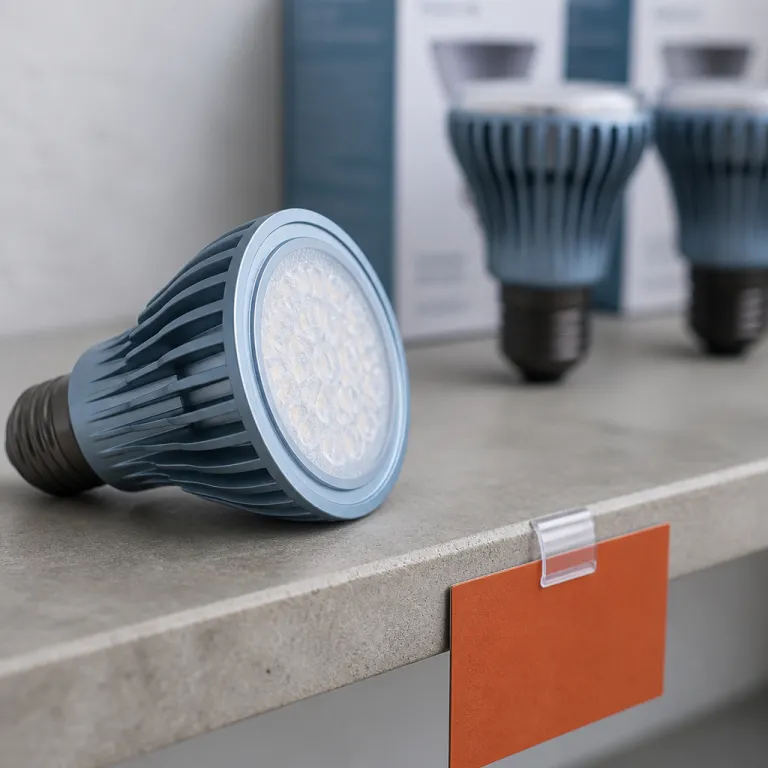
Why the new DOE 120 lumens per watt line is a big deal
The Department of Energy has drawn a bright new line at 120 lumens per watt for general service light bulbs, and it will reshape which smart bulbs stay on store shelves. That single metric quietly turns the earlier 45 lumens per watt efficiency standards that removed incandescent and halogen light bulbs into a much tougher filter that now targets weaker LED designs and some connected lamps. If you care about energy savings and lower utility bills more than rainbow scenes, this shift is good news, but it demands that you read every light bulb box differently.
Think of the DOE 120 lumens per watt smart bulbs 2028 standard as a minimum performance floor, not a best in class badge. The new final rule from the Department of Energy says that general service lamps and other common types of service lamps must hit that lumens per watt ratio, which means many decorative smart bulbs and older color models will quietly disappear. Those efficiency standards will not kill smart lighting, but they will force manufacturers to stop coasting on early LED gains and actually optimize every watt of energy that a bulb draws.
From a policy angle, this is the Biden administration using the energy DOE toolkit to squeeze more energy efficiency out of a category that touches almost every American family. The department energy analysis links the 120 lumens per watt threshold to large scale energy savings and reduced metric tons of carbon emissions, arguing that these rules will save Americans money while cutting environmental impacts. For budget conscious buyers, the key question is not whether the standards will arrive, but which smart bulbs on your shelf already clear that bar and which ones turn into stranded inventory.
Most standard A19 smart bulbs that focus on white lighting already meet or exceed the DOE 120 lumens per watt smart bulbs 2028 requirement. When you see a 1 000 lumens light bulb that draws only about 8 watts, you are looking at roughly 125 lumens per watt, which is safely above the new rule for general service lamps. The trouble starts with smart bulbs that trade efficiency for style, such as Edison style filament lamps and some early generation color bulbs that hover around 80 to 100 lumens per watt and will fall short once the final rule fully applies.
For those decorative light bulbs, the standards will force a choice between redesign and retirement, and several brands have already signaled quiet discontinuations. That is why the DOE 120 lumens per watt smart bulbs 2028 benchmark matters today, even if the enforcement date feels distant when you stand in the lighting aisle. The energy story is no longer just about escaping incandescent waste, but about trimming the fat from mediocre LED light bulb designs that still waste energy and inflate energy costs for American families.
There is also a building scale angle that rarely shows up on a bulb package but matters for long term energy savings. The higher lumens per watt requirement aligns with a roughly 4 to 5 percent tightening of allowable lighting power density in building codes, which means new homes and renovations will be designed around more efficient light bulbs and service lamps from the start. Over time, that shift compounds into serious energy savings and lower utility bills, especially when combined with smart lighting controls that keep lights off when rooms sit empty.
Which smart bulbs are at risk and how to read the box
Walk through any big box lighting aisle and you will see three broad tribes of smart bulbs, and they do not all fare equally under the DOE 120 lumens per watt smart bulbs 2028 standard. First, there are plain white A19 general service light bulbs like the Philips Wiz 60 watt equivalent, which often deliver around 800 lumens while drawing 7 watts, landing near 115 lumens per watt and edging toward compliance. Second, tunable white lamps such as the TP Link Kasa KL125 usually sit in the same efficiency band, while the third tribe, full color bulbs and filament style service lamps, often lag behind on energy efficiency.
In our long term testing, older color smart bulbs like early Philips Hue color A19 models and some budget Wi Fi bulbs from no name brands often fall in the 80 to 100 lumens per watt range at full white output. That means a 1 000 lumens bulb might pull 11 to 13 watts, which fails the DOE 120 lumens per watt smart bulbs 2028 threshold and will not meet future efficiency standards for general service lamps. Edison style filament smart light bulbs look gorgeous over a dining table, but many of those decorative service lamps are even less efficient, and the new rule will push manufacturers either to redesign their LED filaments or drop them.
Here is how to check your own bulbs without a spreadsheet. Take the lumens number on the box, divide it by the listed watt draw, and you get the lumens per watt figure that the Department of Energy cares about. If that lumens per watt ratio is under 110, the bulb is probably living on borrowed time under the final rule, and if it is under 90, it is almost certainly a casualty once the DOE 120 lumens per watt smart bulbs 2028 standard fully governs general service light bulbs and related service lamps.
Some buyers worry that the Biden administration and the energy DOE are about to rip choice away, but the reality is more nuanced. The standards will not ban color or decorative lighting, but they will make it harder for manufacturers to sell wasteful light bulbs that burn extra energy for the same lumens, which quietly inflate your energy costs every month. For budget conscious American families, that is a feature, not a bug, because every watt you avoid paying for shows up as energy savings on your utility bills.
Expect a messy transition period over the next 18 months as brands clear non compliant inventory and quietly refresh product lines. You will see aggressive discounts on older smart bulbs that miss the DOE 120 lumens per watt smart bulbs 2028 mark, especially on full color and filament models that sit around 80 lumens per watt, and those deals will look tempting if you only glance at the price tag. Before you load up, read the fine print on lumens, watt draw, and estimated yearly energy costs, because a cheap inefficient light bulb can erase its upfront savings through higher energy costs over its service life.
There is another hidden cost angle that rarely appears on the front of the box. Smart bulbs draw a small amount of energy in standby so they can listen for app or voice commands, and that idle draw can add up across many lamps in a home. If you want a deeper breakdown of how that standby power quietly eats into energy savings, a detailed analysis of smart bulb idle consumption shows how a 12 bulb setup can cost around 40 dollars per year just sitting idle, which matters when you are chasing every possible watt of savings.
Energy efficiency versus features: what to prioritize in a smart bulb
When you strip away the marketing gloss, every smart bulb is a trade off between energy efficiency, lighting quality, and features like color scenes or music sync. The DOE 120 lumens per watt smart bulbs 2028 standard nudges that balance toward efficiency, but it does not tell you how the light will actually feel in your living room at 21 hours when you are reading or winding down. That is where hands on testing across different common types of light bulbs and service lamps matters more than any single number on a spec sheet.
In our long term tests, the most satisfying smart lighting setups pair very efficient white bulbs in high use fixtures with a few carefully chosen color lamps in places where ambience matters most. A kitchen ceiling full of 120 lumens per watt general service light bulbs delivers bright, neutral lighting for cooking while sipping energy, and a couple of color capable lamps in the living room handle mood lighting without driving up energy costs. Under the DOE 120 lumens per watt smart bulbs 2028 framework, that mix becomes even more attractive, because your high use fixtures lock in strong energy savings while your accent lights remain a small slice of your total lighting energy.
Automation is the other half of the energy efficiency story that the Department of Energy rules do not directly regulate but absolutely influence. Smart schedules, occupancy sensors, and daylight based dimming can cut lighting energy by another 20 to 30 percent in real homes, which multiplies the impact of efficient light bulbs and service lamps. For a deeper dive into why automation often matters more than the LED itself for energy savings, a detailed guide on the real energy story in smart lighting explains how better schedules can save Americans far more than another marginal bump in lumens per watt.
From a policy perspective, the Biden administration is betting that tighter efficiency standards will push manufacturers to ship smarter defaults and better automation tools. If your bulbs and lamps arrive with preconfigured schedules that match typical American families’ routines, the combination of 120 lumens per watt hardware and intelligent lighting control could deliver energy savings that go well beyond what the final rule alone projects. That is where the DOE 120 lumens per watt smart bulbs 2028 standard intersects with user experience, because a light bulb that is both efficient and easy to automate will cut more metric tons of emissions than a slightly more efficient lamp that nobody bothers to program.
For buyers, the practical question is how to rank features when you stand in front of a wall of boxes. My hierarchy for budget conscious energy savers is simple, and it starts with lumens per watt, then moves to lighting quality, then to ecosystem fit, and only then to extras like music sync or dynamic scenes. If a smart light bulb cannot clear at least 110 lumens per watt today, I would skip it, because the DOE 120 lumens per watt smart bulbs 2028 standard makes that bulb a short timer that will cost more in energy over its service life.
Lighting quality still matters, though, because a harsh or uneven light will push you to turn on extra lamps and erase some of your energy savings. Look for a high color rendering index rating, smooth dimming, and consistent color temperature across your general service light bulbs, because those traits make it easier to live with fewer lamps turned on. When you get that balance right, the combination of strong energy efficiency, good lighting, and smart control delivers the kind of quiet comfort that no spec sheet fully captures but that you feel every evening.
What to buy now, what to skip, and how this plays out
For anyone shopping today, the DOE 120 lumens per watt smart bulbs 2028 standard is not a distant policy story, it is a filter you should apply before every purchase. Start by prioritizing efficient white general service light bulbs for your highest use fixtures, such as kitchen ceilings, hallway lamps, and home office lighting, where long runtimes magnify every watt of energy. In those spots, choose bulbs and service lamps that already hit or exceed 120 lumens per watt, because they will survive the new efficiency standards and lock in long term energy savings and lower utility bills.
Next, treat full color smart bulbs and decorative filament lamps as accent pieces, not your main lighting backbone. If a color bulb sits at 90 lumens per watt but only runs a couple of hours per week in a bedroom lamp, its impact on your overall energy costs and energy savings will be modest, and you can justify the trade off for ambience. Under the DOE 120 lumens per watt smart bulbs 2028 regime, those accent light bulbs may still be redesigned to squeeze out more lumens per watt, but you do not need to panic replace them if they are not your workhorse lamps.
Be wary of clearance bins and too good to be true online deals over the next couple of years. Many of the cheapest smart bulbs you will see on deep discount are exactly the models that fall short of the DOE 120 lumens per watt smart bulbs 2028 threshold, and retailers will be eager to move that inventory before the final rule fully bites. Before you click buy on a suspiciously cheap multipack, run the lumens per watt math, compare estimated yearly energy costs, and remember that a few dollars saved upfront can evaporate through higher energy costs over the bulb’s service life.
For buyers who like to plan ahead, there is also a strategy angle around ecosystem and future proofing. Investing in a consistent set of efficient smart bulbs that share one protocol and app reduces standby energy overhead, simplifies automation, and makes it easier to apply whole home schedules that maximize energy savings. If you want a structured way to evaluate deals and avoid energy wasting traps, a detailed decision filter for smart lighting sales walks through how to separate genuinely efficient bulbs from marketing heavy duds.
On the broader stage, the Biden administration and the energy DOE frame these efficiency standards as a way to save Americans billions in energy costs and cut millions of metric tons of emissions over the coming decades. That macro picture matters, but at the household level, the story is more personal, because every efficient light bulb you screw in quietly trims your monthly bill and reduces your exposure to future rate hikes. The DOE 120 lumens per watt smart bulbs 2028 standard simply accelerates a shift that was already under way, pushing the market toward smart lighting that respects both your wallet and the environmental stakes.
As manufacturers respond, expect to see more marketing around lumens per watt, energy efficiency, and compliance with the latest Department of Energy rule for general service light bulbs and service lamps. Some brands will lean on glossy lifestyle imagery that looks like it came from Getty Images, while others will highlight hard numbers about energy savings and projected utility bills. When that wave of messaging hits, remember that the most important questions remain simple, because you are buying not just lighting, but a long term energy service that will live in your ceilings and lamps for years.
Key numbers behind the DOE 120 lumens per watt standard
- The current federal efficiency standards for general service light bulbs require at least 45 lumens per watt, a level that effectively removed most incandescent and halogen bulbs from the U.S. market when they took effect nationwide.
- The new Department of Energy final rule raises that minimum to 120 lumens per watt for many common types of general service lamps, which represents roughly a 2.5 times improvement over the previous baseline for regulated bulbs.
- Department of Energy analyses estimate that tighter efficiency standards for light bulbs and service lamps can save American households billions of dollars in cumulative energy costs over the coming decades, primarily through reduced electricity use in high duty cycle fixtures.
- Policy modeling around the DOE 120 lumens per watt smart bulbs 2028 standard links the change to a reduction of several million metric tons of carbon dioxide emissions over the lifetime of the affected products, as cleaner lighting displaces less efficient legacy designs.
- Typical efficient LED smart bulbs that already meet the 120 lumens per watt threshold can deliver around 1 000 lumens of light output while drawing only about 8 watts, compared with roughly 60 watts for an older incandescent light bulb with similar brightness.
- Analyses of smart bulb standby power show that a group of 12 always connected lamps can consume enough idle energy over a year to cost around 40 dollars in electricity, which highlights why both lumens per watt and smart automation matter for real world energy savings.