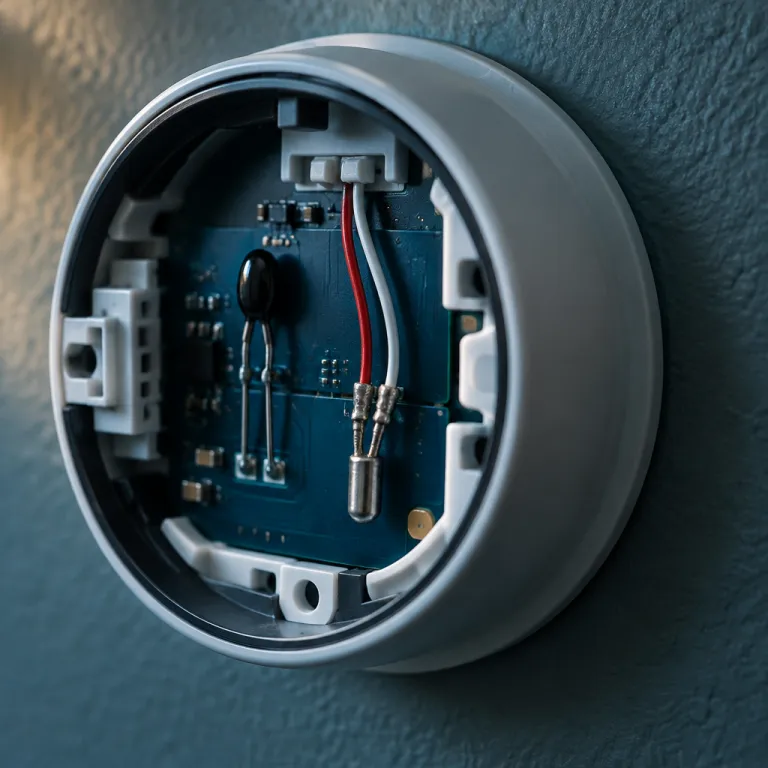
How temperature sensors work in smart thermostats
How Smart Thermostats Detect and Manage Temperature
Smart thermostats rely on advanced temperature sensors to monitor and control the climate in your home. These sensors, which include thermistors, thermocouples, and sometimes RTDs (Resistance Temperature Detectors), play a crucial role in ensuring precise temperature measurement and efficient temperature control. The type of sensor used can affect the accuracy, response time, and stability of your thermostat, making it important to understand how each sensor type works and their typical applications.
At the core, a temperature sensor detects changes in the environment and converts them into an electrical signal. This signal is then interpreted by the thermostat to adjust heating or cooling systems. The most common sensor types in smart thermostats are:
- Thermistors – These sensors change their resistance with temperature changes. NTC thermistors (Negative Temperature Coefficient) are especially popular for their high sensitivity and accuracy in the typical temperature range of residential applications.
- Thermocouples – These generate a voltage when there is a temperature difference between two different metals. They are known for their wide temperature range and fast response times, making them suitable for certain specialized applications.
- RTDs – Resistance Temperature Detectors use the principle of resistance change in metals, offering high accuracy and stability, but are less common in consumer smart thermostats due to cost.
Each sensor type has its own strengths and weaknesses in terms of accuracy, response time, and temperature range. For example, thermistors are valued for their high sensitivity and precise temperature readings within a limited range, while thermocouples can handle a broader range of temperatures but may sacrifice some accuracy at lower temperatures.
Understanding the differences between these sensors is essential for choosing the right smart thermostat for your needs. If you want a deeper dive into how these temperature sensors work inside popular models, check out this detailed guide on understanding the Honeywell thermostat sensor.
What is a thermistor and how does it function?
Understanding the Role of Thermistors in Temperature Measurement
Thermistors are a common sensor type used for temperature measurement in smart thermostats. They operate on a simple principle: their electrical resistance changes in response to temperature changes. This makes them highly sensitive and effective for precise temperature control in home applications.
How Thermistors Work
Most thermistors used in smart thermostats are NTC (Negative Temperature Coefficient) thermistors. In these, resistance decreases as temperature increases. This predictable relationship allows the thermostat to accurately monitor and adjust to temperature changes. The sensor detects the resistance, and the thermostat’s electronics convert this into a temperature reading.
- High sensitivity: Thermistors respond quickly to temperature changes, making them ideal for applications where fast response times are important.
- Accuracy: They offer good accuracy within a limited temperature range, which is typically sufficient for home heating and cooling systems.
- Stability: Thermistors maintain stable performance over time, which is crucial for reliable temperature control.
Thermistors vs Other Temperature Sensors
Compared to other temperature sensors like thermocouples and RTDs, thermistors are valued for their high sensitivity and quick response times. However, their temperature range is more limited. They are best suited for applications where precise temperature measurement is needed within a moderate range of temperatures, such as in smart thermostats.
For homeowners interested in expanding the capabilities of their smart thermostat, using an external sensor can further enhance temperature control. Learn more about enhancing home comfort with an external sensor for your thermostat.
What is a thermocouple and how does it function?
How a thermocouple generates a temperature reading
Thermocouples are a common type of temperature sensor used in various applications, including some smart thermostats. Unlike thermistors, which rely on changes in resistance, thermocouples work by generating a small voltage when two different metals are joined together and exposed to temperature differences. This voltage is directly related to the temperature at the junction, allowing the sensor to measure a wide range of temperatures.
When current flows through the thermocouple, the voltage produced changes as the temperature changes. This makes thermocouples suitable for environments where a broad temperature range is required. They are often chosen for their durability and ability to handle extreme temperatures, which is why they are found in industrial settings as well as some advanced home temperature control systems.
Key features of thermocouples in temperature measurement
- Wide temperature range: Thermocouples can measure temperatures from below freezing to several hundred degrees Celsius, making them versatile for different applications.
- Fast response time: Their design allows for quick detection of temperature changes, which is valuable for precise temperature control.
- Durability: Thermocouples are robust and can withstand harsh conditions, but their accuracy can be lower than other sensor types like RTDs or NTC thermistors.
- Simple construction: With just two wires of different metals, thermocouples are straightforward and cost-effective for many uses.
However, thermocouples are not always the best choice for smart thermostats in homes. While their broad temperature range and quick response times are advantages, their accuracy and stability at typical household temperatures may not match that of thermistors or RTDs. For most home applications, precise temperature measurement and stability are more important than extreme temperature range.
Thermocouples also require specialized electronics to interpret the small voltage changes, which can add complexity to the thermostat design. For those interested in maintaining their smart thermostat, understanding the battery replacement process is also essential for ensuring consistent sensor performance.
Comparing thermistor vs thermocouple: key differences
Performance Differences: Sensitivity, Accuracy, and Range
When comparing thermistors and thermocouples as temperature sensors for smart thermostats, several performance factors come into play. Thermistors, especially NTC thermistors, are known for their high sensitivity to temperature changes. This means they can detect small shifts in temperature quickly, making them ideal for precise temperature control in home environments. Thermocouples, on the other hand, excel in measuring a much wider temperature range. They are often used in industrial applications where extreme temperatures are common, but their accuracy at lower, household temperatures is generally lower than that of thermistors.Electrical Properties and Response Times
Thermistors operate based on changes in resistance as temperature varies. NTC thermistors decrease in resistance as temperature rises, allowing for accurate and stable temperature measurement in the typical range of smart thermostats. Thermocouples generate a voltage when there is a temperature difference between their two junctions. This voltage is then interpreted as a temperature reading. While thermocouples respond quickly to temperature changes, their output can be affected by electrical noise, which may impact stability and accuracy in sensitive applications like smart thermostats.Stability, Longevity, and Application Suitability
Thermistors generally offer better long-term stability and repeatability in the temperature ranges relevant to home heating and cooling. Their resistance temperature characteristics are well-suited for the precise temperature measurement required in smart thermostat sensors. Thermocouples, while robust and capable of withstanding harsh environments, may drift over time and require periodic recalibration, especially in the lower temperature ranges typical of residential applications.Cost, Size, and Integration
Thermistors are typically more cost-effective and compact, making them easier to integrate into the small form factors of modern smart thermostats. Thermocouples, due to their construction and the need for reference junction compensation, can be more complex and expensive to implement for the same application. For most smart thermostat designs, the sensor type is chosen based on a balance of accuracy, response time, stability, and cost.- Thermistors: High sensitivity, accurate at household temperatures, stable, cost-effective, ideal for smart thermostats.
- Thermocouples: Wide temperature range, robust, fast response, better for industrial or extreme temperature applications.
Understanding these differences helps clarify why thermistors are commonly found in smart thermostat sensors, while thermocouples are reserved for applications requiring measurement across a broader range of temperatures or in more demanding environments.
Which sensor is better for smart thermostats?
Choosing the Right Sensor for Smart Thermostats
When it comes to selecting the best temperature sensor for smart thermostats, the decision often comes down to thermistors and thermocouples. Each sensor type brings its own strengths and limitations, especially in terms of temperature measurement, accuracy, and application. Thermistors are widely used in smart thermostats due to their high sensitivity and precise temperature control within the typical range of home environments. NTC thermistors, in particular, offer excellent resistance changes in response to temperature changes, making them ideal for applications that demand accurate and stable readings. Their resistance temperature relationship is predictable, which helps ensure reliable temperature measurement and fast response times. Thermocouples, on the other hand, are valued for their broad temperature range and durability in more extreme environments. However, for most residential applications, the range temperatures required are well within the capabilities of thermistors. Thermocouples generate a voltage based on the temperature difference between two metals, which can introduce more complexity and sometimes less accuracy at lower temperatures compared to thermistors or RTDs.| Sensor Type | Accuracy | Temperature Range | Response Time | Stability | Best Application |
|---|---|---|---|---|---|
| NTC Thermistor | High | -50°C to 150°C | Fast | Very Stable | Home, HVAC, precise temperature control |
| Thermocouple | Moderate | -200°C to 1750°C (type dependent) | Fast | Good | Industrial, wide temperature range |
| RTD | Very High | -200°C to 600°C | Moderate | Excellent | Laboratory, industrial, high accuracy |
Factors to consider when choosing a smart thermostat sensor
Key points to weigh before picking a temperature sensor
When choosing the right sensor type for your smart thermostat, several factors can influence your decision. Each sensor—whether thermistor, thermocouple, or even RTDs—offers different strengths for temperature measurement and control. Here are some important aspects to consider:- Temperature range: Think about the range of temperatures your application will encounter. Thermocouples are known for handling a wide range of temperatures, making them suitable for extreme conditions. Thermistors, especially NTC thermistors, are ideal for the typical range temperatures found in homes.
- Accuracy and stability: If precise temperature readings are crucial, thermistors and RTDs generally provide higher accuracy and stability compared to thermocouples. This is important for applications where even small temperature changes matter for comfort or energy savings.
- Response time: Fast response times are essential for effective temperature control. Thermistors are recognized for their high sensitivity and quick reaction to temperature changes, which can help your thermostat adjust more efficiently.
- Durability and environment: Consider the environment where the sensor will be used. Thermocouples are robust and can withstand harsh conditions, while thermistors might be more sensitive to environmental factors like humidity or mechanical stress.
- Cost and application: For most residential applications, thermistors offer a good balance of cost and performance. Thermocouples, while versatile, may be more expensive and are often reserved for industrial or specialized uses.
- Electrical characteristics: Thermistors work by changing resistance with temperature, while thermocouples generate a voltage based on temperature differences. The choice may depend on your thermostat’s circuitry and how it processes sensor signals.