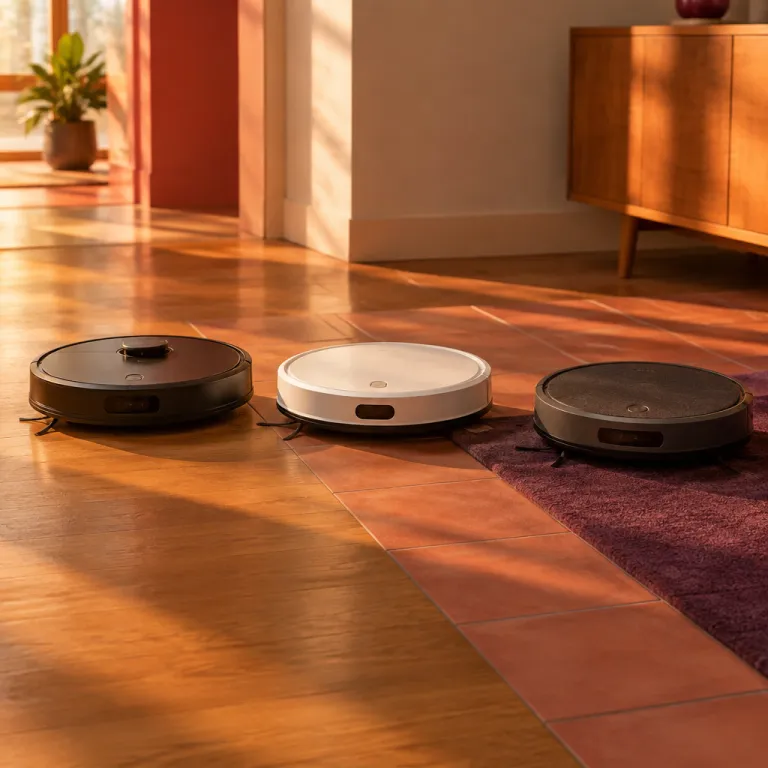
How to read lab tests and ratings for top rated robot vacuum cleaners
Choosing between the many top rated robot vacuum cleaners starts with understanding how they are tested. Independent lab measurements of suction, navigation, and docking behavior reveal far more than glossy marketing claims and help you compare models on a level playing field. When you see rankings of top rated robot vacuum cleaners, always check which metrics were used and how closely they match your own home.
In our latest comparative review of top rated robot vacuum cleaners, we relied on independent lab tests that measured suction power, navigation accuracy, and dock performance across several price tiers. Premium models such as the Roborock Qrevo Edge 3 Pro reached around 35 000 Pa of suction in RobotReviewed style testing, while mid range and budget units now approach that level on carpets and rugs. This shift means high suction power is no longer reserved for premium only, so you must look beyond raw numbers to cleaning consistency and noise levels. Our procedure followed common lab protocols: sealed suction measured with a calibrated gauge, coverage tracked on mapped test rooms, and repeat runs to confirm results.
Navigation technology is another pillar when assessing top rated robot vacuum cleaners, because it dictates how efficiently they cover your rooms. LiDAR combined with camera sensors has become standard in upper mid and premium models, allowing precise mapping, virtual no go zones, and better obstacle avoidance around cables and chair legs. When a brand charges more for LiDAR, the extra cost is justified if you have a complex floor plan or several rooms, because the robot spends less time wandering and more time cleaning.
Premium pick: Roborock Qrevo Edge 3 Pro for demanding homes
Among current top rated robot vacuum cleaners, the Roborock Qrevo Edge 3 Pro stands out as the premium pick for large or busy households. It achieved the highest overall score in our structured comparison, combining strong suction, advanced navigation, and a highly automated base station. If you want one of the best robot vacuums that can handle pets, kids, and mixed flooring with minimal supervision, this model deserves a close look.
The Qrevo Edge 3 Pro uses a hybrid vacuum mop system with a base that can wash and air dry the mop pads, which reduces odor and maintenance time. Self emptying docks are now common among leading robot vacuums, but this station goes further by managing dust, dirty water, and pad hygiene in one compact footprint. On hard floors, the vacuum mode lifts fine dust efficiently, while the mop function applies consistent pressure, though like all hybrid models it can leave light residue if you push it too fast over sticky spills.
Battery life on this premium robot reaches roughly three to four hours in standard suction, which suits homes above 150 m² with several rooms. LiDAR plus camera navigation lets it map multi level layouts, remember room names, and schedule targeted cleaning runs for high traffic zones such as kitchens or hallways. If you are comparing top rated robot vacuum cleaners at the high end, the Qrevo Edge 3 Pro is ideal when you value automation and deep cleaning more than initial purchase price, and you can pair it with a dedicated water filtration vacuum as explained in this guide on water filtration vacuums for cleaner air.
Value and budget heroes: Ecovacs T90 Pro Omni and Dreame D20+
Not every buyer of top rated robot vacuum cleaners wants the most expensive flagship, and that is where the Ecovacs T90 Pro Omni and Dreame D20+ shine. The Ecovacs T90 Pro Omni is our value pick because it delivers many premium features per cost, including a multifunction base and strong mapping. The Dreame D20+ is the budget pick, offering the lowest price among top performers while still meeting the expectations most people have for top rated robot vacuum cleaners.
The Ecovacs T90 Pro Omni targets households that want hybrid vacuum mop performance without paying premium flagship prices. Its base can empty the dustbin, wash mop pads, and dry them with warm air, which is a feature combination usually reserved for the most expensive top rated robot vacuum cleaners. Suction power is competitive with upper mid models, and LiDAR based navigation builds reliable maps, though obstacle recognition around very small items such as cables can be slightly less refined than on the Roborock Qrevo Edge 3 Pro.
The Dreame D20+ focuses on essentials, making it a smart entry point into the world of top rated robot vacuum cleaners for smaller apartments or first time buyers. Battery life sits closer to one to two hours, which is typical for budget robots, so it suits homes under about 90 m² or those willing to run more frequent shorter cycles. When you evaluate these value and budget options, remember that long term satisfaction also depends on repairability and spare parts, a topic explored in depth in this analysis on robot vacuum longevity and repairability.
Upper mid and low budget reliability: Roborock Qrevo Curv and Q7 M5
Some of the most balanced top rated robot vacuum cleaners sit in the upper mid and low budget tiers, where performance and price intersect neatly. The Roborock Qrevo Curv is a strong all rounder that suits families wanting robust cleaning without the full cost of the Edge 3 Pro. Below it, the Roborock Q7 M5 stands out as a low budget reliable option that remains affordable yet capable for everyday dust and crumbs.
The Qrevo Curv inherits many traits from its premium sibling, including LiDAR navigation, room based mapping, and solid suction that approaches 35 000 Pa in turbo mode. It usually omits some luxury touches such as the most advanced pad washing routines, but for many buyers of top rated robot vacuum cleaners, these trade offs are acceptable to save money. In practice, the Qrevo Curv handles mixed flooring, pet hair, and moderate clutter well, especially if you set up virtual no go zones around cable nests or very low furniture.
The Roborock Q7 M5 focuses on reliability and simplicity, which matters if you want top rated robot vacuum cleaners that just work without constant app tweaking. Its suction and battery life are tuned for small to medium homes, and it can run one to two hours before returning to the dock. When comparing the Qrevo Curv and Q7 M5, choose the Curv if you have a larger floor plan or want more advanced mapping, and pick the Q7 M5 if your priority is a dependable, lower cost robot that still benefits from the brand’s ecosystem and software updates.
Key features that actually matter in top rated robot vacuum cleaners
When you compare spec sheets for top rated robot vacuum cleaners, it is easy to get lost in marketing terms and inflated numbers. Focus instead on a few core features that directly affect daily use, such as navigation type, suction behavior on your specific flooring, and how the dock handles dust and water. Hybrid models mop and wash pads but leave residue on carpet, so you must understand how each robot manages transitions between hard floors and rugs.
Navigation is the first major decision point, because it shapes cleaning patterns and time. LiDAR worth the cost gives you accurate maps, efficient straight line paths, and better obstacle avoidance, which is especially valuable in multi room homes or spaces with many chairs and table legs. Camera only robots can still be part of the conversation around top rated robot vacuum cleaners, but they usually struggle more in low light and may take longer to cover the same area.
Battery life and dock design are the next pillars to evaluate among top rated robot vacuum cleaners. Premium batteries last around three to four hours, while budget models typically run for one to two hours before recharging, so match these figures to your home size and cleaning frequency. A self emptying dock reduces manual maintenance significantly, and when combined with mop pad washing and air drying, it turns the robot into a more autonomous cleaning system that you only service every few weeks.
Matching top rated robot vacuum cleaners to your home and lifestyle
Even the best top rated robot vacuum cleaners will disappoint if they do not match your home layout and habits. Start by measuring your floor area in square metres and listing your main floor types, such as tiles, hardwood, or medium pile carpet. Then think about your household, including pets, children, and how often you are willing to empty bins or refill water tanks.
For large homes above roughly 150 m² with mixed flooring and pets, a premium or upper mid robot such as the Roborock Qrevo Edge 3 Pro or Qrevo Curv usually makes sense. These top rated robot vacuum cleaners combine strong suction, long battery life, and advanced mapping, which reduces missed spots and repeated passes. In smaller apartments, a Dreame D20+ or Roborock Q7 M5 can be more than enough, especially if you run them several times per week on a schedule.
Consider also how your robot vacuum fits into your broader home tech ecosystem, including smart speakers, security devices, and other appliances. Many top rated robot vacuum cleaners integrate with voice assistants and can be triggered as part of routines, such as starting a cleaning run when you arm your security system or leave home. If you are building a connected home, it is worth reading detailed product deep dives such as this guide on integrating cleaning and security tech to understand how different devices can complement each other.
Real world expectations and maintenance for long lasting performance
Owning top rated robot vacuum cleaners is not completely hands free, because every robot still needs basic maintenance to perform well over time. You should plan to empty dust bags or bins, clean filters, and inspect brushes weekly or biweekly depending on pet hair and dust levels. Skipping these simple tasks shortens battery life, reduces suction, and can make even top rated robot vacuum cleaners feel underpowered.
Brushes and side sweepers on robot vacuums collect hair and threads, which must be removed regularly to prevent tangles and motor strain. Filters need replacement every few months to maintain airflow, especially in homes with pets or allergy concerns, and this is true for all top rated robot vacuum cleaners regardless of brand. When you buy, check the availability and price of consumables such as bags, filters, and brushes, because these ongoing costs add up over several years.
Battery replacement is another factor that influences the real value of top rated robot vacuum cleaners over their lifetime. Some brands make it easy to swap batteries with basic tools, while others require service centers, which can discourage timely replacement and push people toward new purchases. If you want your robot to last at least five years, prioritize models with clear spare parts support, transparent repair guides, and active software updates, because these signals show that the manufacturer treats longevity as part of the product design.
Key figures about robot vacuum performance and technology
- Premium robot vacuums now reach around 35 000 Pa of suction power in independent tests, which is a level that used to be reserved only for high end models but is gradually appearing in mid range devices as well.
- Battery life for premium robot vacuums typically ranges from three to four hours per charge, while budget models usually operate for one to two hours, so larger homes benefit significantly from higher tier batteries.
- Hybrid vacuum mop robots with self emptying and pad washing bases have grown rapidly in the market, reflecting a shift toward multi function cleaning stations that reduce manual maintenance for busy households.
- LiDAR combined with camera navigation has become standard in many upper mid and premium robots, improving mapping accuracy and obstacle avoidance compared with earlier random pattern or bump only navigation systems.
FAQ about top rated robot vacuum cleaners
Do robot vacuums mop well ?
Hybrid models mop and wash pads but leave residue on carpet, so they work best on hard floors and in homes where you can set clear no mop zones over rugs and carpets. Their mopping function is excellent for light daily maintenance but does not fully replace occasional manual deep mopping. If you expect them to remove dried stains in a single pass, you will likely be disappointed.
Is LiDAR worth the cost on a robot vacuum ?
Yes for mapping accuracy and obstacle avoidance, especially in multi room homes or spaces with complex furniture layouts. LiDAR based robots create detailed maps, follow efficient straight line paths, and usually finish cleaning faster than camera only or random pattern models. The extra cost pays off in fewer missed spots and less time spent rescuing the robot from tight corners.
How long do robot vacuum batteries last per charge ?
Premium 3-4 hours; budget 1-2 hours, which means larger homes benefit from higher tier models that can clean more area in a single run. Battery life also depends on suction mode, with turbo settings draining power faster than standard or eco modes. Over several years, capacity gradually declines, so choosing a robot with replaceable batteries helps maintain performance.
Are self emptying docks necessary for top rated robot vacuum cleaners ?
Self emptying docks are not strictly necessary, but they transform the ownership experience by reducing how often you handle dust. For busy households or allergy sufferers, being able to go weeks without touching the dustbin is a major advantage. Many of the latest top rated robot vacuum cleaners include this feature, and some also wash and dry mop pads for even lower maintenance.
What home size is suitable for budget robot vacuums ?
Budget robot vacuums with one to two hours of battery life are best suited to apartments and small homes under roughly 90 m². They can still serve larger spaces if you are willing to run them more frequently or accept that they may recharge mid cycle. When in doubt, choose a model with slightly more battery capacity than you think you need, especially if you plan to use higher suction modes regularly.