Summary
Analysis score
Average of the criteria rated below
Local storage versus subscriptions: is it worth it?
Power, connectivity, and network behavior
Setup experience and ecosystem integration
Reliability, encryption, and long-term use
AI features, recognition, and alarm behavior
What the HomeBase S380 actually does in a eufy setup
Pros
- Local storage included (16 GB) with expansion up to 16 TB and no mandatory monthly fee
- Strong encryption (AES‑256 and RSA‑1024) and privacy‑focused design
- BionicMind AI with facial recognition and a 100 dB siren for proactive deterrence
Cons
- Full potential requires buying and installing your own hard drive
- Compatibility and behavior can change with firmware updates, frustrating some users

Specifications
View full product page →| Brand | eufy Security |
A security hub built around local storage and AI
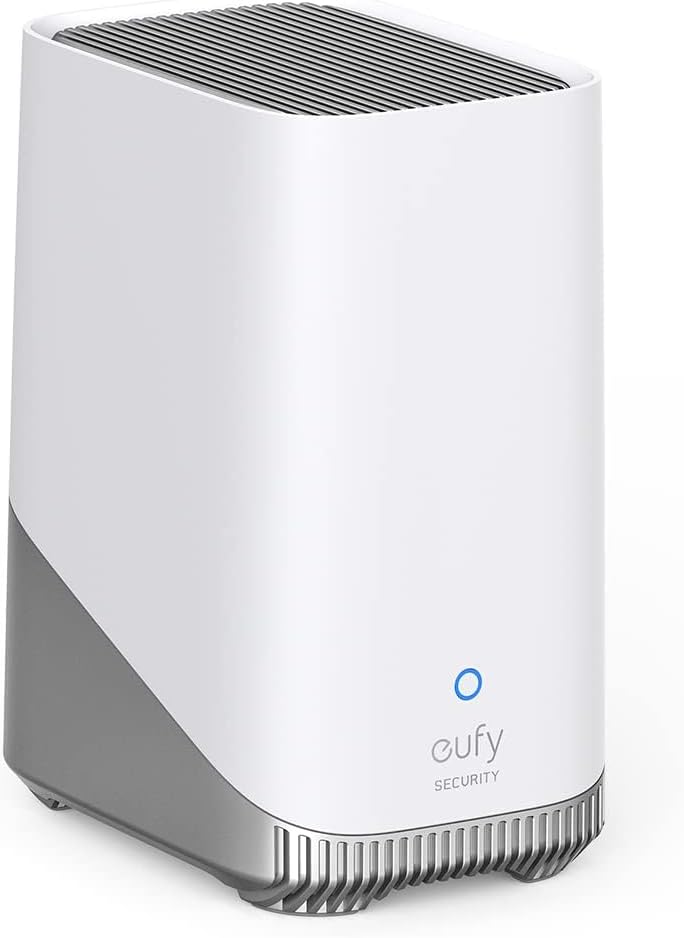
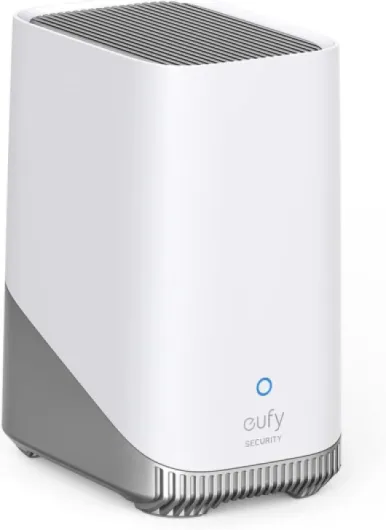
The eufy Security HomeBase S380, also called HomeBase 3, is basically the brain of the eufy ecosystem. It is sold as a central hub that handles video storage, AI features like facial recognition, and communication with your cameras and other eufy devices. The big promise is clear: local storage up to 16 TB and no mandatory subscription, at a time when many security brands push users into monthly cloud fees. With an Amazon rating of around 4.4/5, buyers are mostly satisfied, but there are also some recurring complaints that are worth knowing before jumping in.
On paper, the HomeBase S380 focuses on a few key pillars: local expandable storage (16 GB built in, up to 16 TB with your own drive), AI features branded as BionicMind for 99.9% facial recognition accuracy, and strong encryption with AES‑256 and RSA‑1024. It also integrates a 100 dB siren that can be triggered by motion events from compatible eufy devices, turning the base into more than just a hard drive on your network.
Among published reviews, some users praise the fact that once the box is bought, they can store a lot of footage without paying a monthly bill. Others are more critical about compatibility limits with older eufy products, firmware updates that change behavior, or the setup process. In my opinion, the concept is solid: a local NVR-like hub with decent AI and privacy focus. The real question is whether the current state of the software and ecosystem is mature enough for your specific use case.
If you are looking at this product, you are likely comparing it to cloud‑focused systems like Ring, Arlo, or Google Nest, or to traditional NVR kits. The HomeBase S380 sits somewhere in between: consumer‑friendly app, but with local storage like a small NVR. It is not perfect, but for people who care about avoiding subscriptions and keeping video files at home, it looks like one of the more serious options in the consumer price range.
Local storage versus subscriptions: is it worth it?
Value is where the HomeBase S380 becomes interesting. The main argument is simple: local expandable storage up to 16 TB with no mandatory monthly fee. For people who hate paying subscriptions for security cameras, this is a strong point. Many competing ecosystems push you toward paying every month if you want long video history or advanced AI features. Here, the idea is that you pay for the hardware once, maybe invest in a decent hard drive, and then store years of footage locally if you manage retention wisely.
However, value is not just about avoiding subscriptions. You need to consider the total cost of the ecosystem. To really benefit from the HomeBase S380, you need multiple compatible eufy cameras or doorbells. Several reviewers say that, once they added up the price of the hub plus several cameras, the bill started to approach or exceed that of other brands with bundled NVR kits. The difference is that with eufy, you get a more user‑friendly app and strong privacy claims, but not necessarily the lowest cost per camera.
On the positive side, buyers often highlight that the 4.4/5 rating reflects solid satisfaction for a smart home product that depends heavily on software. Many appreciate that they can share access with family, fine‑tune notifications, and expand storage later when needed rather than paying for cloud tiers. On the negative side, some comments mention feeling like beta testers when firmware updates introduce bugs or alter behavior. That can hurt perceived value if you expect a perfectly stable, appliance‑like device.
In my opinion, the HomeBase S380 offers good value for a specific profile: users who care about privacy, want to avoid recurring fees, and are willing to invest time to configure and maintain a smart ecosystem. If you just want something cheap and simple, an all‑in‑one camera with microSD or a basic kit with a dumb NVR might be more cost‑effective. But if you like the idea of smart AI on your own hardware and long‑term storage under your control, the S380 makes financial sense over a few years compared to paying cloud fees for multiple cameras.
Power, connectivity, and network behavior
Even though the spec sheet does not list a battery, it is clear that the HomeBase S380 is intended as a stationary, mains‑powered hub, not a portable device. So there is no autonomy figure to discuss here. The important technical element is connectivity: the product highlights 2.4 GHz Wi‑Fi, which is standard for smart home hubs. Some buyers mention also using Ethernet where possible for better stability, although that detail is not spelled out strongly in the brief description.
Using 2.4 GHz Wi‑Fi means the hub should have a longer range through walls than a pure 5 GHz device, but with potentially lower maximum bandwidth. For security cameras that send compressed video streams and motion events, this trade‑off is usually fine. In practice, reviews often note that placement of the HomeBase matters: putting it near the router or centrally in the home tends to improve connection quality with cameras at the edge of the property. Some users complain about dropped connections with more distant cameras, which is pretty typical for Wi‑Fi‑based systems, not something unique to eufy.
Another side of "battery" for this hub is how it interacts with battery‑powered eufy cameras. The HomeBase offloads some processing from the cameras, which on paper should help camera battery life because AI detection happens in the hub rather than on each device. A few reviews claim they saw better endurance on compatible cameras after moving to HomeBase 3 compared to older bases, while others say the difference is small. Since there are many camera models, the effect is not consistent for everyone.
In my opinion, power and connectivity are straightforward: assume you will plug this into a surge‑protected outlet near your router and leave it there. If your Wi‑Fi coverage is weak at the edges of your property, you might need to invest in a better router or mesh system for stable camera links. There is no built‑in backup battery mentioned, so if power cuts are common at your place and you want continuous recording, pairing the hub with a UPS would be the sensible move.
Setup experience and ecosystem integration
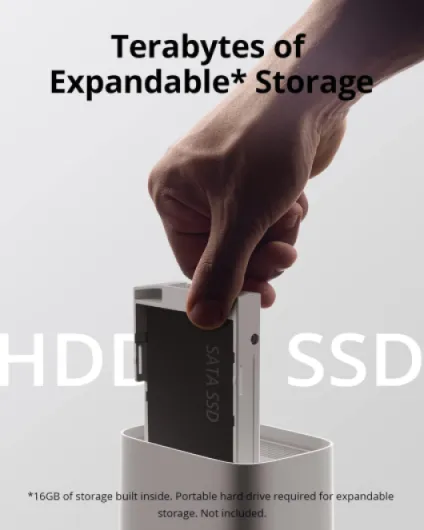
Packaging for a hub like this is more about what is included to get started than about aesthetics. Typical buyers mention that the HomeBase S380 comes with the necessary power adapter and basic documentation, but you need to provide your own storage if you want to go beyond the 16 GB internal memory. There is no bundled hard drive to reach the advertised 16 TB max, which is important to understand: the 16 TB figure is a capability, not what you get by default.
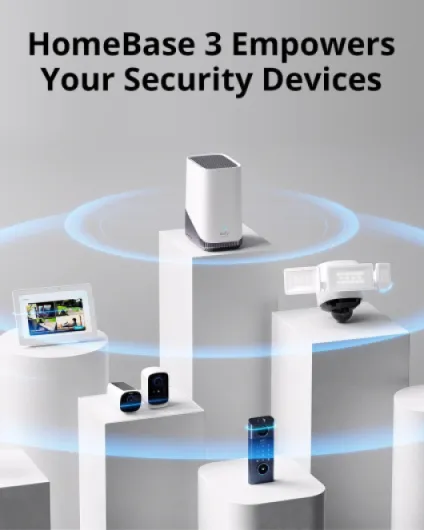
Where things get more interesting is "packaging" at the ecosystem level. The hub is meant to sit at the center of a compatible eufy Security setup. Some reviewers are pleased that once the HomeBase 3 is in place, adding cameras, doorbells, or sensors through the app is relatively straightforward. Others complain that not all older eufy products are supported or that some features they expected (based on marketing for the ecosystem) are not available with their particular devices. This mismatch between expectations and actual compatibility shows up in several comments.
The eufy Security app acts as the digital packaging: it is how you see the system, tweak AI settings, manage users, and access recordings. Many buyers say the app is clean and easy enough to navigate, while a noticeable minority finds it cluttered or confusing when dealing with advanced rules. There are also mentions of firmware updates pushed through the app that change how things work. For someone who likes to tinker and improve the setup over time, that is acceptable. For a user who wants a "set once and never touch" approach, it can feel like the product is constantly shifting.
In my opinion, you should treat the HomeBase S380 as a platform rather than a closed, finished product. The physical box is just part of the story; the rest is the app, firmware, and the specific cameras and doorbells you pair with it. Before buying, it is wise to double‑check the current compatibility list for your existing eufy devices and be ready to spend some time in the app during the first days to configure permissions, AI profiles, and alarm behavior properly.
Reliability, encryption, and long-term use
Durability on a hub like this is less about surviving drops and more about long-term reliability and data safety. The HomeBase S380 is designed to sit indoors, plugged in, and quietly run 24/7. The key promise here is not just hardware lifespan but secure storage and encryption. With AES‑256 and RSA‑1024 encryption, the hub aims to keep recordings protected even if someone accesses your network or steals the drive. Several users say that the privacy angle was a decisive factor for them, with the reassurance that their home footage is not constantly traveling to external servers.
As for the physical side, the spec sheet does not go into materials or ruggedness, which suggests a standard plastic enclosure typical of consumer electronics. Reviews rarely complain about the casing itself; instead, "durability" discussions focus on software updates and compatibility over time. One detailed customer report describes how, after a firmware update, some previously supported functions with older eufy cameras changed or broke, forcing them to adjust their setup and leading to frustration about long-term support for legacy devices. That kind of story shows that with smart hubs, the weak point is often software policy rather than the hardware box.
There is also the question of the added hard drive if you expand to 16 TB. The durability of storage will depend heavily on the quality of the drive you install. Some tech‑savvy buyers recommend using a surveillance‑grade HDD rather than a random desktop drive, to handle constant write cycles better. That advice seems reasonable: the hub itself is just the controller; the disk you pick will determine a big chunk of your long‑term reliability.
In my opinion, the HomeBase S380 looks fine as a physical product for long‑term indoor use. The main risk is future software decisions: changes in app behavior, AI models, or compatibility could impact your experience years down the line. If you are okay with that and you choose a good hard drive, the local storage approach still feels safer for long‑term access to your own footage than relying entirely on cloud subscriptions that can change pricing or features at any time.
AI features, recognition, and alarm behavior
Performance on this kind of hub is mainly about how well it handles detection, AI analysis, and notifications. The HomeBase S380 pushes its BionicMind AI as a central feature. The brand claims up to 99.9% facial recognition accuracy, with the idea that the system can distinguish known family members from strangers and reduce false alerts. Several Amazon comments report that person detection and familiar face recognition are generally solid once the system has "learned" the regular people in the house, though some users mention a learning period where misidentifications are more frequent.
Beyond faces, the hub is supposed to handle smart AI tracking from connected devices, which then can trigger the integrated 100 dB siren. This siren is meant as a proactive deterrent: if the cameras detect a suspicious person lingering or moving in a defined zone, the siren can be set to go off automatically. Buyers often appreciate having the siren inside the house rather than only on the camera, as it centralizes the alarm. However, a few reviews mention that configuration can be a bit tricky, especially when trying to avoid false alarms from known visitors or neighbors passing by.
On the software side, the hub relies heavily on the eufy Security app. Performance here is about responsiveness: how fast notifications arrive, how quickly you can access live view or recorded clips. Comments are mixed but generally positive: many users say alerts arrive quickly enough to be useful, while some complain about occasional delays or missed notifications after updates. That is typical for app‑based systems, but it is still something to keep in mind if you expect instant alerting every single time.
In my opinion, the performance angle is both the strength and the weak spot. The hardware capabilities (AI on the edge, siren, local storage) look decent on paper. But the real‑world behavior clearly depends on firmware and app stability, which can change with updates. Reviews suggest that when things are configured correctly, the hub can significantly cut down on useless motion alerts and focus on meaningful events. On the other hand, if you want a "set and forget" system that never needs tuning, you might find the AI options a bit fiddly and will have to spend time in the app to get it right.
What the HomeBase S380 actually does in a eufy setup
The HomeBase S380 is marketed as an "Edge Security Center", which is a fancy way of saying it processes and stores your security footage locally instead of sending everything to the cloud. It comes with 16 GB of internal storage, which is enough for some event clips but not long history. The spec sheet highlights that users can expand storage up to 16 TB, typically by adding a compatible hard drive. That puts it in the same ballpark as many basic NVRs in terms of capacity, but with a more app‑driven, consumer interface.
Its job is to connect to your home network via 2.4 GHz Wi‑Fi and act as the central point for compatible eufy Security cameras, doorbells, and sensors. The description emphasizes a "seamless security ecosystem", meaning you monitor everything from the eufy Security app, and the HomeBase coordinates AI detection, recording rules, and notifications. Reviews often mention that once everything is paired, the app view of multiple devices is convenient, especially for those already invested in eufy hardware.
On the security side, eufy pushes the idea of dual‑layered AES‑256 and RSA‑1024 encryption. In simple terms, that means video and data are encrypted both in transit and at rest, and only your account should be able to decrypt them. For people wary of cloud leaks, this is a strong selling point. Several buyers explicitly say they chose HomeBase 3 to keep footage at home and reduce exposure to external servers, even if some optional cloud features exist.
In my opinion, the positioning is clear: this is not a standalone camera, it is the control and storage hub that makes the eufy ecosystem interesting. If you already own compatible eufy devices or are planning a multi‑camera setup, it starts to make sense. If you just want a single camera and don’t care about local recording, then the S380 looks like overkill and adds cost and complexity compared to simpler Wi‑Fi cameras with built‑in storage or pure cloud storage.
Pros
- Local storage included (16 GB) with expansion up to 16 TB and no mandatory monthly fee
- Strong encryption (AES‑256 and RSA‑1024) and privacy‑focused design
- BionicMind AI with facial recognition and a 100 dB siren for proactive deterrence
Cons
- Full potential requires buying and installing your own hard drive
- Compatibility and behavior can change with firmware updates, frustrating some users
Conclusion
Analysis score
The eufy HomeBase S380 (HomeBase 3) is a solid central hub for people who want local storage, decent AI features, and a unified app for multiple security devices. On paper, it checks important boxes: expandable storage up to 16 TB, strong AES‑256 and RSA‑1024 encryption, and BionicMind facial recognition that reviews generally describe as accurate once trained. The integrated 100 dB siren and app‑driven ecosystem give it more flexibility than a basic NVR, while avoiding the constant drain of cloud subscriptions.
It is not without drawbacks. Some buyers are frustrated by evolving compatibility with older eufy devices, by firmware updates that change behavior, and by the need to spend time tweaking AI rules to avoid false alarms. There is no built‑in backup battery, and Wi‑Fi coverage can limit how far you can place cameras. Also, you need to budget for an extra hard drive if you actually want to use that 16 TB potential.
In my opinion, the HomeBase S380 suits users who are privacy‑conscious, willing to invest a bit of time in configuration, and planning a multi‑camera eufy setup over the long term. If you want plug‑and‑forget simplicity or you are already tied into another ecosystem with cloud features you like, it may feel overcomplicated or redundant. For the right user, though, it offers a good balance between functionality, local control, and long‑term cost savings.