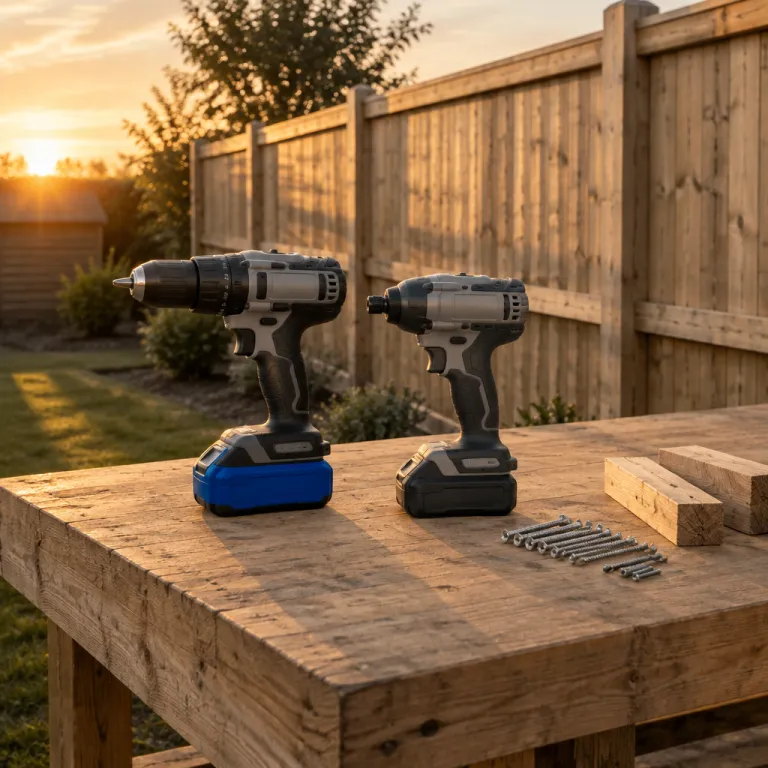
Understanding the real difference between a drill and an impact driver
A cordless drill is a versatile power tool designed for controlled drilling and light screwdriving. When people ask about the difference between a drill and an impact driver, they are really comparing smooth, continuous rotation with sudden rotational blows that boost torque. Both tools look similar in many cordless drill sets, yet their internal mechanisms, bit holders, and ideal applications are very different.
The standard drill uses a motor that delivers steady speed and moderate torque through a keyless chuck that grips different drill bits and driver bits. An impact driver adds a spring, hammer, and anvil mechanism that creates rapid rotational impact pulses, which dramatically increases effective torque without transferring as much twist to your wrist. This is why impact drivers feel more comfortable when you drive screws into dense materials such as hardwood, structural timber, or thick metal fasteners.
When you compare a driver drill with an impact driver, think about whether you mainly need to drill accurate holes or drive long screws all day. A drill driver excels at precise drilling and gentle driving into softer materials, while impact drivers shine for heavy-duty fastening tasks like driving long structural screws or loosening stubborn bolts. Understanding how these tools overlap in basic capability but differ in power delivery, bit interface, and control helps you choose the right cordless tools for your real work instead of buying oversized drill–impact bundles you will barely use.
How torque, speed, and power shape your choice
Torque is the twisting force that lets a drill or impact driver turn a bit under load. A typical 18 V cordless drill offers adjustable clutch settings that limit torque to protect screws, screw heads, and delicate materials during light driving tasks, often topping out around 40–70 Nm (350–620 in-lb) in high gear. In contrast, many 18 V impact drivers skip the clutch and rely on their internal hammering action to deliver bursts of high torque, commonly in the 150–220 Nm (1,300–1,950 in-lb) range when driving long fasteners into demanding work surfaces.
Speed on drills is usually controlled by a two-speed gearbox and a variable trigger, which gives you low speed for drilling holes in metal and high speed for drilling in wood or for fast driving. Impact drivers often have electronic speed modes instead of a mechanical gearbox, allowing you to match speed and impact frequency to different tasks such as driving long deck screws or shorter cabinet fasteners. When you compare the difference between a drill and an impact driver, remember that drills prioritize smooth speed control and clean holes while impact drivers prioritize torque under resistance and rapid screw driving.
Power ratings on cordless power tools are often expressed in volts and sometimes in watts or newton metres of torque, and these numbers can be confusing when you compare drills, driver drills, and impact drivers in a crowded aisle. A higher voltage power tool can usually deliver more sustained power, but an efficient brushless motor in a compact drill–impact combo can outperform an older brushed design with a bigger battery. Independent lab tests, such as Consumer Reports’ 2023 cordless drill and impact driver evaluations (figures approximate and subject to change), report that modern 18–20 V brushless kits often drive 3–4 inch deck screws noticeably faster than older brushed tools while using less energy per screw, so look beyond voltage alone when judging real performance.
Drilling holes versus driving screws in real materials
Most people first meet a cordless drill when they need to drill holes for wall plugs, hinges, or furniture assembly. The chuck on a drill driver grips round shank drill bits securely, which is ideal for accurate drilling in wood, metal, or masonry when paired with the right bit and speed. Because the drill delivers smooth rotation without impact, the holes stay clean, the bit is less likely to wander on hard materials, and you can start holes precisely on marks or punch points.
Impact drivers use a hex collet that accepts 1/4 inch hex shank bits, which are perfect for driving screws but less suited to precision drilling unless you buy special hex shank drill bits. When you are driving screws into hardwood joists or composite decking, the impact mechanism helps the bit bite into the screw head and reduces cam-out, which means fewer stripped fasteners and less frustration. This is where the contrast between a conventional drill and an impact driver becomes obvious, because the impact driver keeps turning even when resistance suddenly increases and a regular drill might stall or twist in your hand.
For mixed tasks around the home, many cordless drill sets now include both a compact drill driver and a small impact driver so you can switch between drilling and driving without constantly changing bits. If you expect to work mainly on furniture, plasterboard, and light DIY, a good drill with quality drill bits may cover most tasks while an impact driver becomes a luxury. Before you commit to any battery platform, read advice on choosing a cordless ecosystem you will not regret, because your first drill–impact purchase often locks you into one brand for years and determines which batteries and chargers you will keep buying.
Essential features to look for in a cordless drill set
When you shop for a cordless drill set, start by checking whether it includes both a drill driver and an impact driver or only a single multi-purpose drill. A balanced kit for a person seeking information should offer at least two batteries, a charger, and a selection of drill bits and driver bits that match the materials you actually work with. Look for clear torque ratings, multiple speed settings, and a comfortable grip, because these details matter more in daily work than flashy marketing about heavy-duty power tools or unrealistic maximum torque claims.
A good drill driver should have a metal chuck, a wide clutch range, and a low-speed gear that delivers enough torque for driving screws without stripping their heads. The impact driver in the same kit should offer variable speed, at least two impact modes, and enough high torque to handle long screws or coach bolts without stalling; many mid-range 18 V models from well-known brands list around 150–200 Nm, which is ample for deck building and framing. When you compare different driver–drill bundles, pay attention to whether the included tools feel balanced in your hand, because fatigue quickly builds when you drive screws overhead or drill impact holes into tough materials.
Some cordless drill sets also include a hammer drill function on the main drill, which adds a light percussion action for drilling holes in masonry with suitable bits. This hammer drill feature is useful for occasional wall anchors but does not replace a dedicated rotary hammer for structural concrete work or for heavy-duty drilling tasks. If you mainly need to drive screws and drill in wood or metal, prioritize a strong impact driver and a reliable drill driver over extra tools you will rarely use, and consider guides such as the best cordless drill for home use when matching power to your real projects.
When an impact driver, hammer drill, or impact wrench makes sense
Once you understand the difference between a drill and an impact driver, the next question is when to add a hammer drill or an impact wrench to your cordless line-up. A hammer drill combines rotation with a forward hammering motion, which helps drill bits chip away at masonry when you need to drill holes for anchors or conduits. This tool still behaves like a regular drill in wood and metal, but the hammering mode is noisy and should be reserved for brick, block, or light concrete where a standard drill would struggle or overheat.
An impact wrench is a different power tool that uses a square drive instead of a hex collet, and it is designed to drive screws with sockets or loosen nuts and bolts on vehicles, machinery, and structural steel. While an impact driver excels at driving long wood screws and general fasteners, an impact wrench delivers even higher torque for heavy-duty tasks such as wheel nuts or large anchors, often exceeding 400 Nm on mid-range 18 V models. Most people who mainly work with timber and household projects will use drills and impact drivers far more often than an impact wrench, so prioritize those tools in your first cordless drill set.
If you frequently drive screws into dense engineered lumber, build decks, or assemble outdoor structures, a compact impact driver will save time and reduce fatigue compared with relying only on a drill driver. For renovation work in older masonry homes, a hammer drill function on your main drill is more valuable than a second light-duty drill–impact body. Always match the power, torque, and tool type to the real materials and fasteners you face, rather than chasing the biggest numbers on a box of power tools or assuming that more voltage automatically means better results.
Practical buying tips for people comparing drills and impact drivers
Choosing between a drill and an impact driver starts with listing the tasks you actually perform in a typical month. If your work is mostly flat-pack furniture, light repairs, and occasional drilling holes for shelves, a quality drill driver with good drill bits and driver bits will handle almost everything. People who regularly drive long screws into decking, fencing, or framing will benefit from adding an impact driver to their cordless tools because it handles driving long fasteners with less strain and fewer stripped heads.
When you compare cordless kits, avoid being seduced by the highest torque figures without considering control, because too much power can snap small screws or damage delicate materials. Look for tools with multiple speed modes, responsive triggers, and clear markings on the clutch, which help you switch from driving screws into softwood to drilling metal without guesswork. A balanced set that includes both a drill driver and an impact driver often costs less than buying separate bare tools later, especially once you factor in batteries and chargers and compare total kit prices rather than just tool bodies.
Think about ergonomics as seriously as raw power, because a lighter power tool with a shorter head length can reach tight spaces and reduce fatigue during overhead work. Test how the drill, impact driver, and any extra driver–drill bodies feel in your hand, and check whether the bit changes are quick and secure when you move from drilling to driving screws. By focusing on real-world comfort, appropriate torque, and the specific functional gap between a drill and an impact driver, you will assemble a cordless drill set that supports your projects instead of slowing you down.
Key figures on drills, impact drivers, and cordless buying trends
- According to data summarized by the Power Tool Institute (consult the latest publications for current figures), cordless power tools now account for well over half of many drill and driver sales worldwide, reflecting a steady shift away from corded models as lithium-ion battery technology improves cycle life and charge times.
- Independent testing by organizations such as Consumer Reports and similar reviewers has shown that impact drivers can deliver roughly two to three times the effective torque of comparable drills when driving long screws into dense lumber, while often weighing less than traditional heavy-duty drills with similar output.
- Market research from firms like Statista (numbers vary by region and year) indicates that combo kits including both a drill driver and an impact driver represent a growing share of DIY purchases, because buyers increasingly recognize the functional difference between a drill and an impact driver for mixed household tasks and want both tools in one box.
- Battery platform studies from major brands report that users who commit to a single 18 volt or 20 volt ecosystem typically own at least four compatible tools within a few years, which makes the first drill–impact or driver–drill purchase strategically important for long-term cost and compatibility.
FAQ about drills and impact drivers
Is a drill or an impact driver better for beginners ?
For beginners, a cordless drill driver is usually the best starting tool because it can both drill holes and drive screws with a protective clutch. The clutch helps prevent over-driving screws into soft materials, which reduces damage while you learn. An impact driver is an excellent second tool once you start driving long screws or working with tougher materials.
Can an impact driver replace a drill for all tasks ?
An impact driver cannot fully replace a drill because it is optimized for driving screws and fasteners rather than precise drilling. While you can buy hex shank drill bits for light drilling, the lack of a traditional chuck and the pulsing action make it less accurate for clean holes. For best results, use a drill for drilling holes and an impact driver for heavy driving tasks.
Do I need both a drill driver and an impact driver at home ?
Many homeowners find that owning both a drill driver and an impact driver makes projects faster and easier, especially when alternating between drilling and driving screws. Having two tools means you can keep a drill bit in one and a driver bit in the other without constant changes. If your projects are very light, a single good drill may still be enough.
When should I choose a hammer drill instead of a regular drill ?
You should choose a hammer drill if you frequently drill into brick, block, or light concrete for anchors, conduits, or fixings. The hammering action helps masonry drill bits chip away at hard materials more efficiently than a standard drill. For mostly wood and metal work, a regular drill driver without hammer mode is usually quieter, lighter, and more comfortable.
How much torque do I really need from my cordless tools ?
The torque you need depends on the materials and fasteners you use most often, rather than on chasing the highest number on the box. Light DIY tasks with small screws in softwood can be handled by modest torque drills, while structural work with long screws in dense timber benefits from the high torque of impact drivers. Aim for a balanced cordless drill set where both the drill and the impact driver provide enough torque for your toughest planned tasks without becoming hard to control.
Quick comparison: drill driver vs impact driver
| Feature | Drill driver | Impact driver |
|---|---|---|
| Main use | Drilling precise holes, light to medium screwdriving | Driving long or stubborn screws, heavy-duty fastening |
| Typical torque (18–20 V) | 40–70 Nm (350–620 in-lb) | 150–220 Nm (1,300–1,950 in-lb) |
| Bit holder | Keyless chuck for round and hex shank bits | 1/4" hex quick-change collet |
| Best for materials | Wood, metal, plastics, light masonry with hammer mode | Timber framing, decking, engineered lumber, fixings into metal |
| Typical kit price range | US$80–US$150 for mid-range drill with 2 batteries (prices vary by brand and region) | US$150–US$250 for mid-range drill + impact combo kit (approximate street pricing) |