Summary
Analysis score
Average of the criteria rated below
Value for money compared with other mobile ACs
Compact footprint and mobile design, with a window‑kit compromise
Build, warranty and long‑term prospects
Noise, energy use and everyday operation
What this 4‑in‑1 unit actually offers
Cooling, dehumidifying and sleep mode: does it get the job done?
Pros
- Strong cooling performance for small to medium rooms with 7000 BTU capacity
- 4‑in‑1 functions (cooling, fan, dehumidifier, sleep mode) with remote and 24h timer
- Compact size with wheels and side handles for easy movement between rooms
Cons
- Noise level around 55 dB may be too high for light sleepers, especially on high speed
- Window vent kit optimized for sash/sliding windows; casement windows may need DIY sealing

Specifications
View full product page →| Brand | JYMIPA |
Portable AC aimed at small rooms and heatwaves
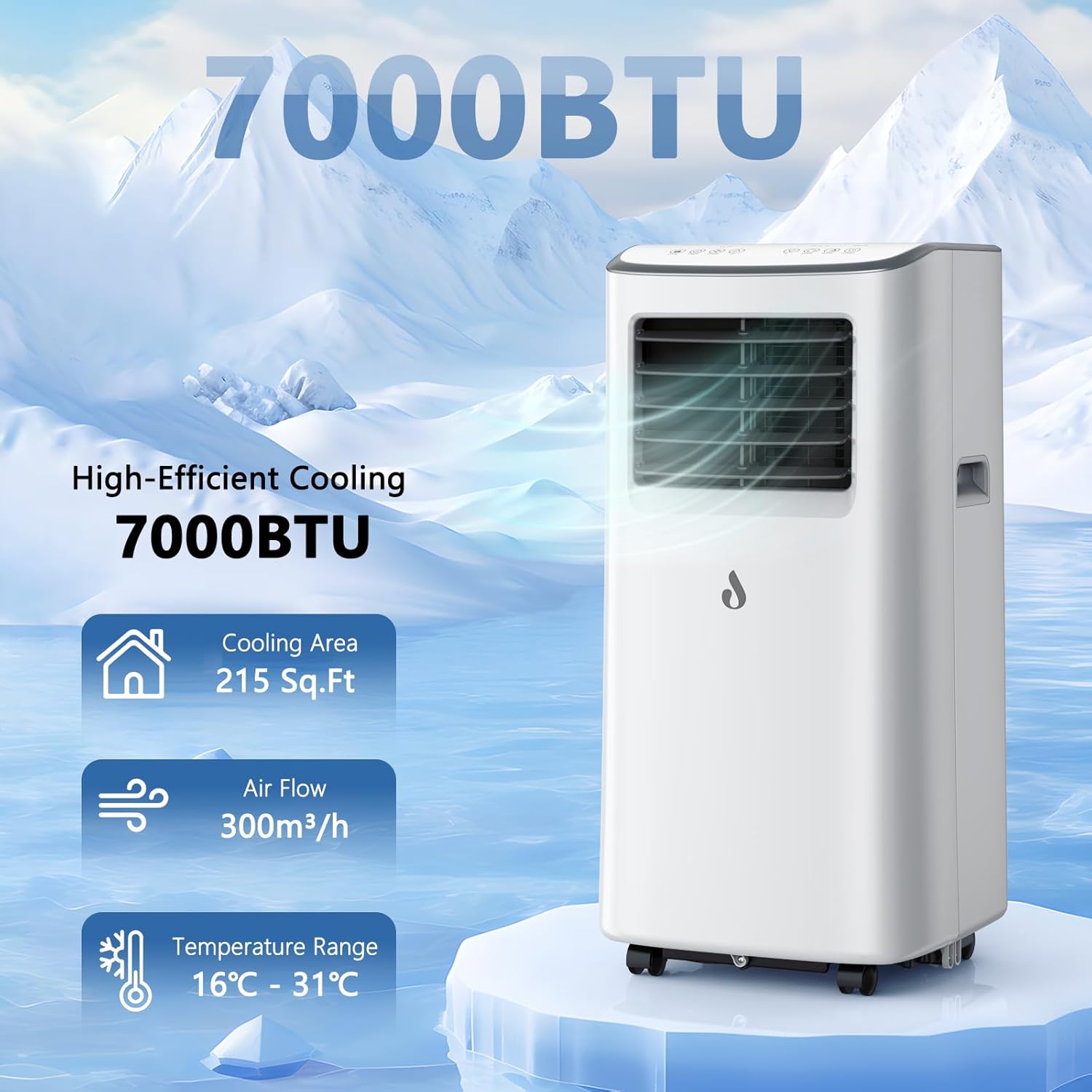
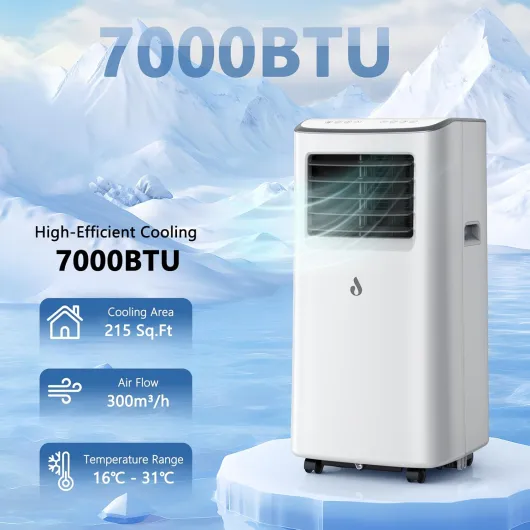
The JYMIPA portable air conditioner JHS-A019-07KR2/J targets people who want simple cooling for a small to medium room without permanent installation. On paper, it delivers 7000 BTU of cooling power, which the brand positions as suitable for spaces up to about 215 ft² (≈20 m²). That covers a typical bedroom, a small living room, a home office, or a studio. It also comes with fan, dehumidifier and sleep modes, trying to be a 4‑in‑1 climate tool rather than just a seasonal gadget you forget in the corner.
Among the Amazon comments, the general tone is positive: the unit sits at around 4.5/5 over roughly 146 reviews. Several buyers say it cools rooms quickly and call it good value for money, which is usually the main concern with portable ACs. A few users also highlight that it comes on wheels and is easy to move around, which matters when you want to push it from the living room to the bedroom during a heatwave.
On the flip side, not everything is rosy. One of the recurring remarks is noise: at a listed 55 dB, this model is not silent in absolute terms, and at least one buyer warns that light sleepers may struggle with it at night. Another point raised is the window kit: it is geared towards sliding or sash windows, so people with side‑hinged casement windows sometimes have to improvise a less neat setup.
In my opinion, this JYMIPA model positions itself as a straightforward, compact mobile AC with a few comfort features (sleep mode, 24h timer, child lock) and a relatively modest cooling capacity that should fit small rooms well. It is not pretending to cool an entire big house, and the reviews mostly confirm that in its realistic usage zone, it gets the job done. The rest of the analysis looks at how solid that impression is when you dig into design, performance, noise, and value.
Value for money compared with other mobile ACs
The exact price is not quoted here, but buyer comments like “great value for the price” and “one of the best purchases I’ve made” give a clear indication of how the market perceives this model. With its 7000 BTU output and roughly 20 m² coverage, it competes in the lower‑to‑mid power segment of portable ACs. In that range, you can often find units from big brands with similar cooling but sometimes fewer comfort features, and others with Wi‑Fi and smart control but at a higher price. This JYMIPA focuses on core functions and a few practical extras (child lock, sleep mode, dehumidifier) while staying relatively compact.
One strong argument for its value is the 4‑in‑1 functionality. Instead of buying a separate dehumidifier or fan, you get those modes built into the same appliance. For people in humid climates, the dehumidifier mode can be useful outside the hottest months. The energy efficiency class A and at least one review noting a smaller‑than‑expected impact on the electricity bill also weigh in its favor. Portable ACs are never cheap to run compared with passive cooling, but within this category, being reasonably efficient matters for long‑term cost of ownership.
On the downside, there are a couple of things that slightly weaken the value proposition. The noise level is average for portable ACs, not especially low, and at least one user clearly calls it loud at night. People looking specifically for ultra‑quiet operation may need to spend more on a different technology (e.g., split units) or accept this compromise. The window kit limitation to sash/sliding windows can also mean additional spending or DIY work for those with casement windows, which indirectly affects perceived value.
In my opinion, considering the 4.5/5 average rating, the positive remarks about cooling power, and the feature set (timer, sleep mode, child lock, remote, dehumidifier), the overall value for money is solid. It is not the most powerful portable AC on the market, but for small rooms and typical European bedrooms or living rooms, it seems to deliver what people expect without unnecessary extras. If the selling price in your region is competitive against other 7000–8000 BTU units, this JYMIPA looks like a sensible purchase. If it is priced close to stronger 9000–12000 BTU models, it might be worth comparing carefully before deciding.
Compact footprint and mobile design, with a window‑kit compromise
The JYMIPA portable AC aims to be as space‑saving as possible. The dimensions are given as 32 × 30 × 60 cm (D × W × H), which makes it relatively compact compared with many 9000–12000 BTU units that often exceed 70–80 cm in height. This smaller footprint makes sense given the 7000 BTU rating: it is easier to tuck into a corner of a modest bedroom or under a window in a small office. At around 21 kg, it is not lightweight, but that is standard for a compressor‑based appliance.
Mobility is handled by omnidirectional casters and invisible side handles. Several buyers mention the wheels specifically and say the unit is easy to move around the house. That is important if you want to cool a living room during the day and a bedroom at night. The overall form factor is classic tower‑style portable AC: intake and exhaust grilles, a top control panel, and the hose connection at the back. Reviews describe it as looking like the product photos, which suggests no unpleasant surprises in real life regarding bulk or shape.
The main design compromise is clearly the window venting system. The supplied kit is optimized for sash/sliding windows with a minimum and maximum opening both listed as 30 cm. One user explicitly points out that for standard hinged windows the fit is not ideal. In practice, that means people in Europe with typical tilt‑and‑turn or casement windows may need to improvise with foam, cardboard, or aftermarket sealing kits to avoid hot air leaking back into the room. The unit will still function, but efficiency and aesthetics may suffer a bit.
In my opinion, the design is consistent with its category: compact, neutral, and clearly built around practicality rather than style. The plug storage area at the back is a small but useful touch if you plan to store the unit in winter. The main thing to check before buying is whether your window type can accommodate the included kit cleanly. If you have large or atypical windows, factor in the potential cost and hassle of a better sealing solution.
Build, warranty and long‑term prospects
The durability picture here has to be built from the technical choices and the general tone of user feedback. The JYMIPA portable AC uses a rotary/scroll compressor with R‑290 refrigerant. R‑290 is a modern choice increasingly used in portable units; it is efficient and has a lower environmental impact than some older gases. Rotary compressors are common and usually reliable if not abused. The appliance is manufactured by Zhejiang Oulun Electric Co., Ltd. in China, and the model line’s start year is listed as 2007, which implies the brand has some years of experience in this category, even if this exact model is more recent.
The spec sheet mentions a limited warranty, but the exact duration is not spelled out here. In the Amazon comments, there is no obvious wave of complaints about early breakdowns or leaks, which is a good sign. With around 146 reviews and a 4.5/5 average, one would typically expect negative experiences to surface if there were widespread reliability problems. The comments that are visible focus more on noise and window kit limitations than on parts failing or units dying after a short time.
From a physical standpoint, the 21 kg weight and typical plastic casing suggest a standard build for this segment. The omnidirectional wheels and side handles make moving the unit easier, which also reduces the risk of damage from awkward lifting. The plug storage area at the back is a minor but useful feature for storage, reducing strain on the cord. Proper maintenance will still matter: like any portable AC, the long‑term health of the compressor and airflow depends on regularly cleaning or replacing filters, ensuring the exhaust hose is not kinked, and managing condensate correctly in dehumidifier mode.
In my opinion, nothing in the specs screams premium industrial‑grade durability, but nothing raises a big red flag either. This looks like a typical residential portable AC that, if used during summer seasons and maintained sensibly, should last several years. People looking for 24/7 heavy‑duty use might want a more robust semi‑pro solution, but for seasonal home use in bedrooms or living rooms, the combination of a known compressor type, mainstream refrigerant and lack of widespread complaints points to a reasonable durability expectation.
Noise, energy use and everyday operation
From a performance standpoint, three aspects stand out: noise, energy efficiency and control flexibility. The listed noise level is 55 dB. That number is typical for portable ACs in this power range: not whisper‑quiet, but not a jet engine either. The reviews reflect this middle ground. One buyer states clearly that the unit is “quite loud” and warns that light sleepers may struggle, especially if the AC runs on high fan speed in the bedroom. On the other hand, another verified reviewer describes it as “impressively quiet” and says that even on high, the noise is minimal and acceptable for bedroom use. So perception is split, which is common with this type of product.
Energy‑wise, the unit is labelled with Efficiency: A (according to the spec sheet). One reviewer mentions being pleasantly surprised by the electricity bill and says the unit used less power than expected. There are no detailed kWh figures in the comments, but that kind of feedback suggests that, for typical home use, the running costs stay within a reasonable range if you use the timer and appropriate temperature settings. The 24‑hour timer is useful here: you can program it to run only during the hottest hours or to switch off automatically after you fall asleep.
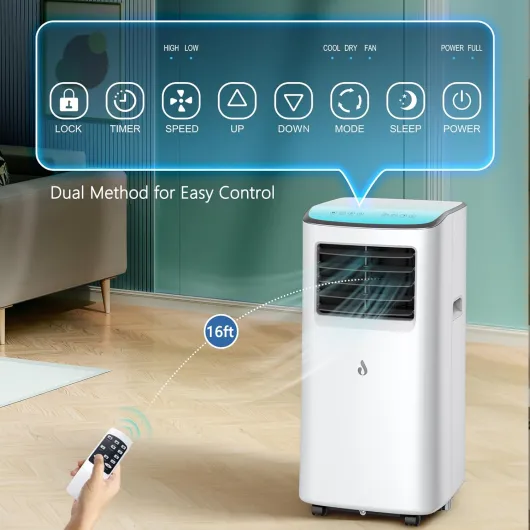
Control and usability also contribute to overall performance. The combination of touch controls on the top panel and a remote control is praised repeatedly. Users like the straightforward way to change modes, adjust temperature, and set the timer from across the room. The real‑time temperature display helps you see at a glance how the room is doing. Features like child lock and sleep mode (with dimmed LEDs and lower fan speed) target specific use cases: families and night usage.
In my opinion, the performance profile is typical of a mid‑range portable AC: decent energy label, standard noise level, and enough control options to adapt to different times of day. If silence is your absolute priority, this kind of compressor‑based unit is rarely ideal, and you may need to combine it with good insulation, pre‑cooling and perhaps earplugs. If your main goal is to cool down a hot room quickly and you can tolerate fan‑like noise, this JYMIPA seems to strike an acceptable balance, especially when making use of sleep mode and the timer.
What this 4‑in‑1 unit actually offers
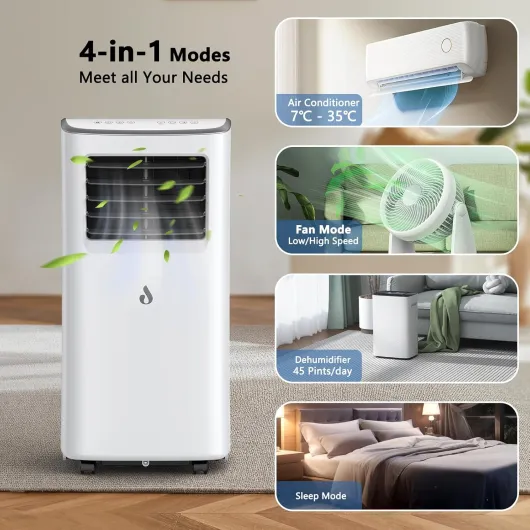
On paper, the JYMIPA JHS-A019-07KR2/J is a 4‑in‑1 portable climate appliance. It combines: a cooling mode (classic air conditioning), a fan mode, a dehumidifier mode, and a dedicated sleep mode. The manufacturer advertises that it can lower the temperature down to 16 °C and claims that it can do so in about 10 minutes in a typical use scenario. The rated coverage is up to 215 ft², which corresponds to a 7000 BTU compressor – a modest but coherent figure for small rooms.
The control side is split between a top digital panel with LED display and a remote control. Users can adjust temperature, switch modes, change fan speed, and set the 24‑hour on/off timer. Buyers regularly mention in their comments that the remote is easy to use and that being able to tweak settings from the sofa or bed is a real everyday benefit. There is also a child lock, which is reassuring for households with kids or curious pets.
Installation is meant to be as light as possible for a portable AC. The unit comes with a window venting kit designed mainly for sliding/sash windows. The brand insists no drilling is required. One reviewer confirms that it works with a normal side‑opening window but calls the arrangement “not great”, which suggests that people with such windows may need tape, foam, or DIY panels to seal properly. There is also a plug storage area at the back to keep the cord tidy during storage or moves.
In my opinion, the product positioning is clear: this is not a high‑end smart AC with Wi‑Fi and app control. It is a basic, relatively compact, corded electric unit (220 V, R‑290 refrigerant, non‑inverter rotary/scroll compressor) with simple physical and remote controls. For someone who just wants quick relief in a bedroom or home office without calling an installer, the spec sheet looks coherent. People who want integration with home automation or coverage for large open‑plan spaces should look elsewhere.
Cooling, dehumidifying and sleep mode: does it get the job done?
On the effectiveness front, the JYMIPA unit is rated at 7000 BTU, with the brand recommending it for rooms up to 215 ft². That figure is reasonable for a small to medium room, but it is not meant for big open‑plan spaces. Among the Amazon reviews, several buyers say the cooling power is strong for its size. One verified purchase specifically mentions that it cools a large living room within minutes and maintains a steady temperature even during very hot days. Another user says it cooled down the upstairs area of a three‑bedroom detached house when used on high fan speed, which suggests that in some homes, leaving doors open can spread the effect beyond a single room.
There is also positive feedback on how quickly it cools. Comments such as “cools the air quickly and efficiently” come up, and the general sentiment is that users feel a clear temperature drop in a short time, especially in rooms that match the recommended size. On paper, the claim of hitting 16 °C in about 10 minutes will obviously depend on insulation, sun exposure and starting temperature, but the reviews do not contradict the idea that this model responds fast enough for comfort during a heat spike.
The dehumidifier mode and fan mode are less detailed in the comments, but the fact that multiple reviewers list them among the useful features indicates that they are not just marketing bullets. The dehumidifier should help in muggy weather or in slightly damp rooms like some basements, while fan‑only mode lets you circulate air without cooling, which can cut energy use on milder days. The sleep mode In my opinion, the effectiveness is one of the strong points relative to the product’s size and price bracket. It is not a monster unit and will not replace a split system in a large house, but for a bedroom, office or modest living room, it seems to deliver the level of cooling most buyers expect. The key is to respect the recommended surface and to manage expectations: if you try to cool an entire large floor through open doors, it will help but not perform miracles. For targeted cooling of one main room, the balance between power and compactness looks solid.
Pros
- Strong cooling performance for small to medium rooms with 7000 BTU capacity
- 4‑in‑1 functions (cooling, fan, dehumidifier, sleep mode) with remote and 24h timer
- Compact size with wheels and side handles for easy movement between rooms
Cons
- Noise level around 55 dB may be too high for light sleepers, especially on high speed
- Window vent kit optimized for sash/sliding windows; casement windows may need DIY sealing
Conclusion
Analysis score
The JYMIPA JHS-A019-07KR2/J comes across as a straightforward, compact portable air conditioner that focuses on doing the basics well for small to medium rooms. With 7000 BTU and a recommended coverage up to about 215 ft², it fits bedrooms, home offices and modest living rooms rather than big open‑plan spaces. The overall user feedback is clearly positive: around 4.5/5 from roughly 146 reviews, with many buyers praising the fast cooling, the convenience of the wheels and remote, and the 4‑in‑1 versatility (AC, fan, dehumidifier, sleep mode).
It is not without compromises. The official 55 dB noise level is in line with other portable ACs, but at least one reviewer finds it too loud for light sleepers, while others call it quiet enough. The supplied window kit is mainly suited to sash/sliding windows; owners of hinged casement windows often have to improvise, which can affect both looks and efficiency. There is no Wi‑Fi or smart control, and the design is functional rather than stylish.
In my opinion, this model suits people who want simple, effective cooling for a single room, appreciate the extra dehumidifier and fan modes, and can tolerate typical portable‑AC noise. It is a good fit for renters or anyone who cannot install a fixed split system. Those who need to cool large areas, demand near‑silence at night, or insist on a perfectly sealed window kit out of the box should either step up to a more powerful or more refined solution, or budget for extra accessories. Overall, as a compact seasonal workhorse for small rooms, it offers good value and a well‑balanced feature set.