Summary
Analysis score
Average of the criteria rated below
Value for money: who this camera makes sense for
A compact, travel‑oriented design with long zoom reach
Battery and connectivity: living with a renewed travel compact
Durability and reliability of this renewed Sony compact
Image and autofocus performance: what to expect
What the Sony DSC-HX60 offers on paper
Pros
- 30x optical Sony G zoom with optical stabilisation in a compact 272 g body
- 20.4 MP Exmor R CMOS sensor and BIONZ X processor for detailed JPEGs in good light
- Positive renewed-unit feedback with all accessories, plus Wi‑Fi/NFC and electronic viewfinder
Cons
- Small 1/2.3-inch sensor and JPEG-only shooting limit low-light and post-processing potential
- Fixed screen, no weather sealing and an older feature set compared with modern mirrorless cameras

Specifications
View full product page →| Brand | Sony |
A travel zoom that still makes sense in the smartphone era
The Sony DSC-HX60 sits in that category of compact travel cameras that try to do one thing well: give you a long zoom in a small body. On paper, it targets people who find their phone too limited for distant subjects but don’t want the bulk or complexity of an interchangeable-lens camera. With a 30x optical zoom (4.3–129 mm), a 20.4 MP Exmor R CMOS sensor and optical stabilisation, it clearly aims at holidays, city trips, family events and casual photography rather than studio work.
The spec sheet shows a camera that is not brand new but still fairly complete. There’s Wi‑Fi and NFC for wireless transfer, an electronic viewfinder, and a 3-inch LCD. The BIONZ X engine is supposed to handle noise reduction and detail, and the camera shoots both stills and MP4 video, with a claimed 4K UHD 2160p video resolution. It sticks to JPEG only, no RAW, which says a lot about the intended audience: people who want usable photos straight from the camera, not heavy post-processing.
Customer feedback is limited in volume but clearly positive. The average rating is 4.7/5 from a handful of Amazon reviews, with buyers stressing that it “works perfectly”, is “very good for beginners” and offers “value for money”. One reviewer also highlights that their renewed unit arrived in near-mint condition with all accessories, which is relevant here because this listing is part of the Amazon Renewed program rather than a brand-new retail box.
In my opinion, this model is interesting today mainly if you specifically want a pocketable camera with much more zoom reach than any phone, and you’re fine with JPEG-only shooting and an older interface. It’s not a cutting-edge hybrid, and there are more modern sensors around, but the combination of 30x zoom, optical stabilisation, low weight (272 g) and simple automatic exposure still gives it a place for travel and everyday use.
Value for money: who this camera makes sense for
The Sony DSC-HX60 in this configuration is sold as a renewed product, with an average Amazon rating of 4.7/5 based on four reviews. While the number of reviews is small, the tone is consistently positive: buyers talk about “very good” performance, “wonderful value for money”, and accurate condition descriptions such as “item was as advertised”. For people who are comfortable buying refurbished electronics, that combination of brand reputation (Sony), long zoom, and relatively low cost can be attractive.
On the feature side, you get a 20.4 MP sensor, 30x optical zoom, optical stabilisation, Wi‑Fi + NFC, an electronic viewfinder, and a 3-inch high‑resolution screen. The camera handles both stills and MP4 video, with a quoted 4K UHD resolution. Storage is flexible (SD, SDHC, SDXC, microSD, microSDHC), and you have PlayMemories support to add features. For a compact camera aimed at adults and listed as suitable even for beginners, that’s a fairly complete set of tools. The main technical compromises are the small 1/2.3-inch sensor and JPEG‑only shooting, which limit image quality margin and post‑processing flexibility compared with larger‑sensor mirrorless cameras.
In terms of competition, many modern smartphones offer strong image quality and computational tricks, but they usually don’t match a true 30x optical zoom. If you often shoot distant subjects—wildlife at a distance, details on buildings, aircraft, ships—this is where the DSC-HX60 keeps its relevance. For someone who mainly takes close‑range social photos, a recent phone may be enough, and the camera would bring less added value. Also, the interface and feature set reflect its generation: no RAW, no cutting‑edge autofocus tracking, and likely more limited video options than the latest hybrids.
In my opinion, the value is good if you specifically want: a compact body, a long zoom, and you’re fine with JPEG output and refurbished condition. People looking for an all‑round content creation device with advanced video and high ISO performance might be better served by a newer 1‑inch sensor compact or an entry‑level mirrorless kit, even if that means spending more. Here, the strength is a low entry price (not displayed but implied by the “value for money” comments), brand‑name optics, and a proven travel‑zoom formula that still gets the job done for many casual users.

A compact, travel‑oriented design with long zoom reach
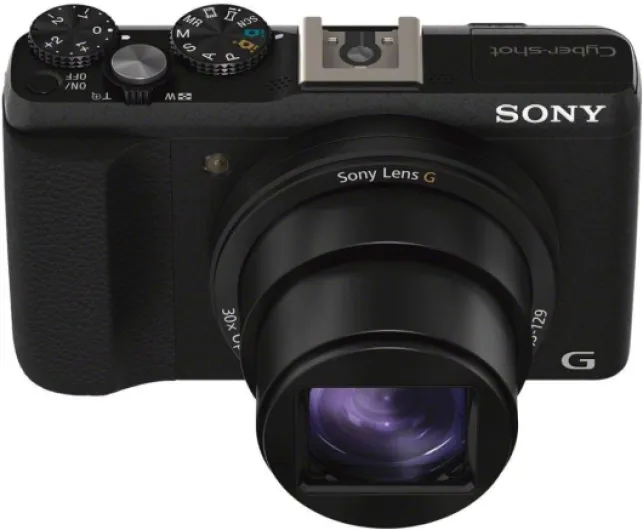
From the numbers and description, the DSC-HX60 is clearly built as a compact travel camera. At 272 grams, it’s light enough to carry all day compared with any DSLR or mirrorless combo with equivalent reach. The form factor is listed simply as "Compact", and the lens range (4.3–129 mm) retracts into the body, so it should slip into a small bag or jacket pocket. This is the main argument versus an interchangeable-lens setup: you get 30x zoom without changing lenses or carrying extra glass.
The camera includes a 3-inch LCD with 1,400,000 dots, which is quite a high resolution for this class, and an electronic viewfinder. The display is described as fixed, so no flip or tilt mechanism. For vlogging or shooting from awkward angles, that’s a limitation compared to more recent models with vari-angle screens. On the other hand, a fixed screen usually means fewer moving parts that can break, and it keeps the body simpler and slightly more compact.
The control layout isn’t fully detailed here, but the presence of features like manual focus (MF), exposure control listed as automatic, and several flash modes (Auto, Flash Off, Flash On, Slow Sync) suggests a camera biased toward auto modes with some limited control for users who want to tweak settings. The design also supports accessories via a shoe cap, indicating a multi-interface shoe on top for external flash or other add-ons, although the spec also mentions "Camera Flash Type: external" which implies that you’ll rely on that shoe for more serious lighting.
In the Amazon comments, one buyer mentions that the camera is “easy to use” and appreciates the case that came with their renewed unit. That matches what this design suggests: a straightforward, travel‑ready compact with a long zoom, not an enthusiast body full of manual dials. In my opinion, if you want a simple camera you can hand to a non‑expert family member without lots of training, this layout looks appropriate. If you enjoy direct control wheels and customizable buttons, it might feel a bit basic, but that’s consistent with its target audience and age.
Battery and connectivity: living with a renewed travel compact
The spec sheet does not give a precise CIPA battery life figure, but there are a few clues. The camera uses a rechargeable battery (included) and has a battery weight of 28 grams, which is typical for compact camera packs in this range. Charging is handled through the supplied AC adapter and micro‑USB cable with AC power cord, so you can top it up either from a wall socket or, in many setups, from a power bank via USB. For travel, that’s practical: you don’t need a proprietary dock, just the supplied cable and adapter.
One Amazon buyer mentions that the battery in their renewed unit needed a four‑hour charge and then caused no issues afterward. This is the only concrete feedback about power in the comments. It doesn’t give an exact number of shots, but it suggests that, at least for that user, the battery behaved as expected for a refurbished compact camera. Since this listing is part of Amazon Renewed, the battery will usually be checked or replaced in the refurbishment process, but with any renewed device, I’d still consider budgeting for a spare battery if you plan long days of shooting.
On the connectivity side, the DSC-HX60 is rather well equipped for its generation. It offers Wi‑Fi and NFC for wireless transfer to compatible devices. The description even lists “Compatible Devices: Devices with USB, WiFi and NFC support”, which basically means you can connect it to smartphones, tablets or computers for transferring images. Sony’s PlayMemories Camera Apps can extend the camera’s functions, such as remote control or special shooting modes, assuming the services are still supported on your platform.
In my opinion, the combination of standard USB charging, wireless transfer, and light weight makes this camera fairly convenient for trips, even if the actual battery capacity is not cutting-edge by modern mirrorless standards. For a day of sightseeing, a reasonable expectation would be to bring a spare if you’re a heavy shooter or record a lot of video. For occasional family photos or short outings, the single pack should be enough. The key point is that the infrastructure—USB cable, AC adapter, Wi‑Fi—keeps the camera usable without extra accessories, which fits its travel‑friendly positioning.
Durability and reliability of this renewed Sony compact
Durability here has two aspects: the original build quality of the Sony DSC-HX60 as a product, and the fact that this specific listing is part of the Amazon Renewed program. There’s no detailed mention of ruggedisation or weather sealing, so this is a standard compact camera, not a tough or waterproof model. You’ll want to treat it like any other electronic device: avoid heavy rain, sand, and shocks. The lens has a multi‑element construction and optical stabilisation, which usually implies fragile moving parts, so a proper case or pouch is a good idea if you plan to carry it in a bag.
In terms of components, the camera uses a fixed 3-inch LCD (no hinge), which tends to be less prone to mechanical failure than fully articulated screens. The body weight of 272 grams suggests a mix of metal and plastic, typical for this range. There is no explicit description of magnesium or high‑end materials, so I’d consider it a reasonably solid consumer product, but not built like a pro DSLR. The presence of an external flash shoe (with a supplied shoe cap) adds versatility but also another point to protect from impacts.
The interesting part is the user feedback on the renewed condition. One verified purchaser states that their camera arrived “complete with all accessories”, “looked almost mint”, and that “even the flash worked as it should” after a full charge. They were “highly delighted” and would “recommend this seller 100%”. This is the most detailed comment about real‑world condition and reliability, and it paints a positive picture for the refurbishment quality, at least for that unit. Another buyer mentions they like the case, which suggests the package in their case included a protective accessory that helps with everyday wear.
In my opinion, for a non‑weather‑sealed compact of this age, the main durability risks are physical shock, dust in the extending zoom mechanism, and general wear of buttons and dials over time. The 1‑year limited warranty listed for this product provides a safety net, especially for early issues. If you are careful with storage and don’t abuse the zoom barrel, there’s no specific red flag in the comments or spec sheet that would suggest a reliability problem. It’s just not a rugged camera, so expectations should match that.
Image and autofocus performance: what to expect
On paper, the performance package of the DSC-HX60 is built around three key elements: the 20.4 MP Exmor R CMOS sensor, the BIONZ X processor, and the 30x Sony G Lens with optical stabilisation. The Exmor R branding indicates a back‑illuminated sensor design, which typically improves light capture versus older front‑illuminated chips of the same size. Combined with BIONZ X, Sony’s processing engine, the camera is supposed to deliver good detail and controlled noise, especially in daylight and moderate ISO. With 20.4 MP on a 1/2.3" sensor, pixel density is high, so I wouldn’t expect miracles in very low light, but for travel photos and outdoor scenes it should be more than adequate.
The autofocus system is described as hybrid AF with 19 autofocus points and features such as lock‑on autofocus. That’s fairly advanced for a compact in this category. Lock‑on AF is designed to keep moving subjects in focus, which is useful for kids, pets, or casual sports. Several buyers praise the camera for taking “long shot pictures” and say it’s “very good for beginners”, which suggests that, in real usage, the AF and auto exposure manage to get sharp, usable photos at the long end of the zoom without too much fuss. The presence of manual focus mode also allows some extra control if the AF struggles in specific scenarios.
Continuous shooting is listed at 30 FPS, but that figure looks more like a video or special mode spec than a realistic full‑resolution stills burst for this class of camera. Typical travel zooms of this generation sit closer to 10 fps or below in real operation. So I’d treat 30 FPS as a best-case, mode‑dependent number. More important is the stabilisation: optical image stabilisation is essential when you’re at 30x zoom and trying to shoot distant subjects handheld. On paper, this should help you get sharper shots at slower shutter speeds, especially in daylight or early evening.
In the comments, users don’t go into technical detail but do describe the camera as “very good” and say it “works perfectly”. There are no complaints about blurry images or focus hunting, which is a good sign for casual performance. In my view, this is not a camera for pixel‑peeping or professional work, but for holidays, wildlife at the zoo, and general family use, the combination of long zoom, stabilisation, and automatic operation looks solid and consistent with its positive feedback.
What the Sony DSC-HX60 offers on paper
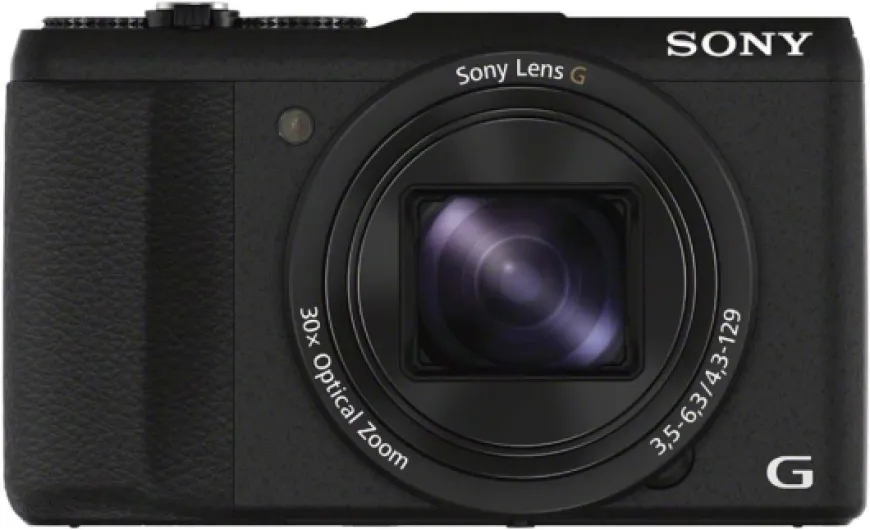
The DSC-HX60 is a compact camera from Sony’s HX travel zoom series. The core of the device is a 1/2.3-inch 20.4 MP Exmor R CMOS sensor paired with the BIONZ X image processor. This sensor size is typical for compact cameras, so you shouldn’t expect miracles in low light, but the resolution is high enough for prints and cropping. The camera records stills as JPEG at up to 5184 × 3888 pixels, with an 8-bit depth and a "Fine" JPEG quality mode. There is no mention of RAW, so this is clearly designed as a point-and-shoot device where the camera does the processing.
The lens is a Sony G zoom covering 4.3–129 mm, which corresponds to a 30x optical zoom. There’s also a huge quoted digital zoom (486x), but in my view that’s more of a marketing number; digital zoom simply crops and upscales, so the useful part is the 30x optical range. The maximum aperture is f/3.5 at the wide end, which is decent for a compact, though it will likely close down a lot when you zoom in. The camera includes optical image stabilisation, crucial with such a long zoom, and a hybrid autofocus system with 19 AF points and lock-on AF.
On the video side, the spec sheet mentions MP4 recording and even 4K UHD 2160p resolution. Given the age and category, I would double-check actual frame rates and modes in the official manual, but at least you get video recording that should be fine for casual clips. Continuous shooting is listed at 30 fps, which sounds more like a specification quirk than a real-world burst for full-resolution stills; most likely it refers to video frame rate or a specific mode, so I wouldn’t build a purchase decision solely on that number.
The camera integrates Wi‑Fi and NFC for wireless connectivity, and supports Sony’s PlayMemories Camera Apps to expand features. Storage is flexible: SD, SDHC, SDXC plus microSD and microSDHC cards are all supported, with U3 speed class listed. The box contents are fairly complete: instruction manual, hand strap, shoe cap, AC adapter, micro-USB cable, and AC power cord. Batteries are included, and the product comes with a 1‑year limited warranty. Overall, the feature set is solid for a travel compact: long zoom, stabilisation, wireless, and an electronic viewfinder, at a weight of just 272 grams.
Pros
- 30x optical Sony G zoom with optical stabilisation in a compact 272 g body
- 20.4 MP Exmor R CMOS sensor and BIONZ X processor for detailed JPEGs in good light
- Positive renewed-unit feedback with all accessories, plus Wi‑Fi/NFC and electronic viewfinder
Cons
- Small 1/2.3-inch sensor and JPEG-only shooting limit low-light and post-processing potential
- Fixed screen, no weather sealing and an older feature set compared with modern mirrorless cameras
Conclusion
Analysis score
The Sony DSC-HX60 is a straightforward travel zoom compact that still makes sense for a specific type of user. It combines a 20.4 MP Exmor R CMOS sensor, 30x optical Sony G zoom and optical stabilisation in a 272 g body, with Wi‑Fi, NFC and an electronic viewfinder. The camera is clearly aimed at adults who want simple operation and strong zoom reach rather than deep manual control or RAW workflows. The Amazon Renewed listing, backed by a 1‑year limited warranty, adds an attractive price angle, and the small pool of reviews (4.7/5) is consistently positive about condition and ease of use.
It’s not perfect: the small 1/2.3" sensor, JPEG‑only output and older interface mean it won’t compete with modern mirrorless bodies or high‑end compacts in low light or flexibility. The fixed screen and lack of weather sealing also limit it for more demanding creators. But if your priority is a pocketable camera that can grab distant subjects your phone simply can’t reach, and you’re fine with refurbished gear, this model still has a clear role. I’d recommend it to travelers, families and beginners who want better zoom and dedicated-camera ergonomics without spending big. Enthusiasts chasing RAW files, fast continuous shooting and top video features should look higher up the range or toward more recent mirrorless alternatives.