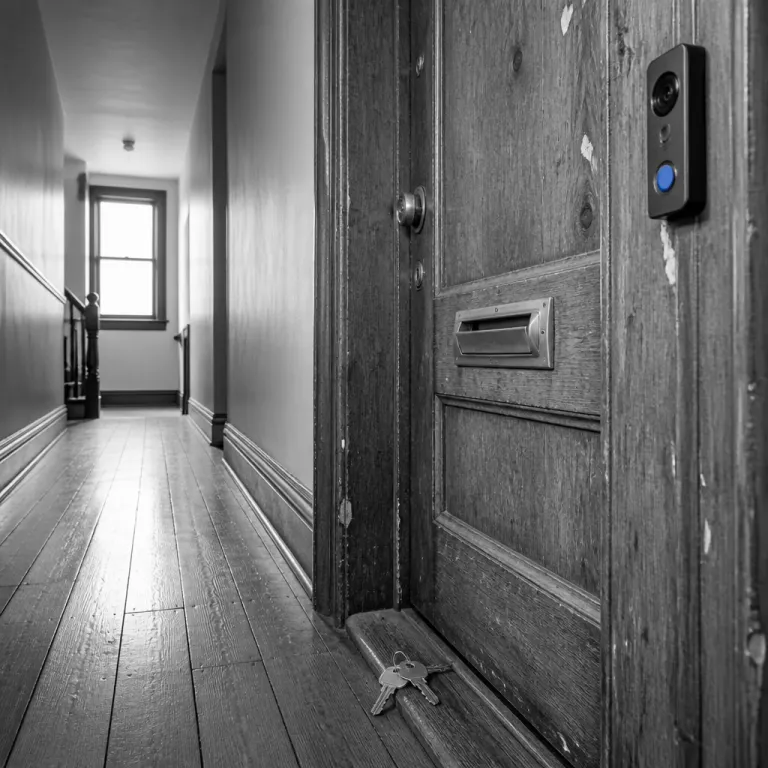
When a landlord installs a Ring: who controls the camera and the clips
When a landlord installs a Ring doorbell on a rental property, the first question is simple but crucial. Who actually controls the cameras, the surveillance settings, and the data that flows through this smart device at your front entry. That question sits at the heart of landlord Ring doorbell tenant privacy rights and shapes every legal and practical decision you make.
If the landlord owns the Ring account, they usually control the footage, the data retention period, and any shared user access for tenants. In that landlord tenant scenario, the device is part of the real estate infrastructure of the property, much like wired security cameras in common areas or a building intercom. Yet tenant privacy and tenant rights do not vanish just because the hardware belongs to landlords or to a property management company.
When a tenant buys and installs a Ring on a rental property, the legal balance flips. The tenant owns the account, manages the data, and decides who can view or download clips from the cameras at the entry door. In that case, landlord Ring doorbell tenant privacy rights debates focus more on where the device points and whether it records shared spaces or neighboring rental properties.
Across the United States, privacy laws and landlord tenant rules treat interior spaces differently from exterior common areas. A landlord cannot place smart surveillance devices inside a tenant’s private living area without clear consent, because that would violate basic privacy rights and often explicit state law. Exterior entry points, driveways, and shared hallways sit in a grey zone where tenant privacy and security interests collide with broader property management duties.
In multi unit rental properties, landlords often argue that cameras at the main entry improve safety and help manage real estate risks. Tenants counter that constant surveillance of every entry and exit can chill daily life and expose sensitive data about visitors, deliveries, and routines. The law tries to balance these rights, but landlord Ring doorbell tenant privacy rights disputes usually turn on whether the monitoring is reasonable and properly disclosed.
Ownership of the Ring account also determines who can share footage with law enforcement or neighbors. A landlord with full administrative access can respond to police requests or neighborhood surveillance programs without consulting tenants, even when clips show the tenant’s front entry. By contrast, a tenant controlled account gives the resident more leverage over how their data and images leave the rental property ecosystem.
Some property management firms now standardize smart cameras and Ring style devices across their rental properties. They pitch this as a modern amenity, bundling smart locks, cameras, and sensors into a single landlord tenant technology package. For tenants, that convenience comes with a tradeoff in data protection and control, especially when privacy policies are buried in long digital leases.
In cities like San Francisco and across the wider Bay Area, the debate over landlord Ring doorbell tenant privacy rights is especially sharp. Dense real estate markets, high turnover in rental properties, and tech savvy landlords mean more smart surveillance at every entry. Tenants in San Francisco, San José, and other parts of California increasingly ask not just whether cameras exist, but who holds the keys to the data vault.
Even the timing of lease cycles can matter for privacy laws and expectations. A tenant who moved in during august July or september August might have signed a lease before a landlord added smart cameras to the property. When new devices appear around october September or november October, the tenant can reasonably argue that fresh notice and perhaps new consent are required.
For long term residents, the pattern can repeat across february January, january December, and december November lease renewals. Each renewal is a chance to clarify landlord Ring doorbell tenant privacy rights, data access rules, and any changes to surveillance in common areas. Treat those dates as checkpoints, not paperwork chores, and insist that privacy rights and tenant rights are spelled out in writing.
State laws, biometric data, and how Ring footage becomes a legal record
Once a Ring doorbell is mounted on a rental property, the video and audio it captures become potential legal evidence. Every clip is a piece of data that can be requested in disputes between landlord and tenant, or in broader real estate conflicts. That is why landlord Ring doorbell tenant privacy rights are inseparable from state privacy laws and data protection rules.
California offers a useful reference point because its privacy laws are among the strongest in the country. Under the California Consumer Privacy Act and related laws, residents have specific rights to know what data is collected, how it is used, and when it is shared with third parties. For tenants in California, that framework reinforces tenant privacy expectations even when landlords control the cameras and the surveillance accounts.
Biometric data raises the stakes further, especially in multi tenant properties where many faces pass a single entry camera. A class action filed in June accuses Ring of collecting facial recognition data via its Familiar Faces feature without meaningful consent, and that allegation resonates strongly in cities like San Francisco. When a landlord deploys such smart features on a rental property, the line between basic security and biometric tracking of tenants and visitors becomes dangerously thin.
Some states restrict how biometric data can be captured, stored, and shared, while others focus more on notice and consent. In practice, this means landlord Ring doorbell tenant privacy rights will look different in California than in states without explicit biometric privacy laws. Tenants should ask whether Familiar Faces or similar tools are enabled, and whether any biometric templates are being generated from their daily comings and goings.
Shared user settings inside the Ring app create another legal fault line. A landlord who adds a tenant as a shared user can still retain full administrative control, including the power to revoke access or silently download data. That imbalance matters when footage from cameras at the entry becomes evidence in landlord tenant disputes over alleged lease violations or property damage.
Because Ring increasingly positions its ecosystem as a broader home security platform, the legal questions extend beyond the doorbell itself. When landlords integrate Ring sensors for fire, flood, or air quality throughout a rental property, the volume of data about tenant life multiplies quickly. Guides that explain how Ring sensors go beyond the doorbell for whole house monitoring can help tenants understand the scope of surveillance before they sign.
Another emerging issue is how third party services inside the Ring app ecosystem handle tenant data. As the Ring appstore style marketplace grows, more apps can plug into cameras, notifications, and motion events at the entry. Analyses of what it means when the Ring appstore turns your doorbell into a platform are not abstract for tenants, because every integration can shift where their data travels.
Landlords sometimes argue that because the property is theirs, they have broad rights to collect and store footage from cameras on the exterior. Courts, however, often look at whether surveillance is reasonable, whether clear notice was given, and whether tenant privacy is respected in semi private spaces like patios or balconies. The more intrusive the monitoring, the more likely a judge is to see a violation of privacy rights or tenant rights under state law.
For tenants, the safest approach is to treat Ring footage as a permanent record, not a casual stream. Ask who can access the data, how long it is stored, and whether it can be shared with law enforcement without a warrant or subpoena. Those questions are not just theoretical ; they determine how landlord Ring doorbell tenant privacy rights play out when conflicts reach a courtroom.
If your landlord or property management company resists clear answers, document your requests and their responses. Written records about cameras, surveillance policies, and data retention can be invaluable if a dispute arises months later, perhaps around a february January renewal or a december November move out. In the era of smart surveillance, paper trails about digital trails are a form of self defense for tenants.
Shared access, visitor privacy, and what your landlord can really see
Even when the legal framework is clear, the daily reality of a landlord controlled Ring can feel unsettling. Many tenants worry that landlords are quietly watching every entry and exit, building informal dossiers on their routines and visitors. That anxiety is not paranoia ; it is a rational response to powerful cameras and always on surveillance at the front door.
In practice, what a landlord can see depends on how the Ring account is configured and where the device is mounted on the property. A camera aimed tightly at the entry may capture only the doorway and a small slice of the hallway, while a wide angle lens can sweep across common areas, neighboring doors, and even parts of other rental properties. For tenants, landlord Ring doorbell tenant privacy rights hinge on whether the camera view is reasonably limited or functionally omniscient.
Shared user roles inside the Ring app can give tenants some visibility without real control. A landlord might grant a tenant access to live view and notifications while retaining exclusive rights to download, delete, or share clips from the cameras. That arrangement can create a false sense of tenant privacy, because the real power over data and surveillance remains with the landlord or property management team.
Visitor privacy adds another layer of complexity, especially in dense urban real estate markets like San Francisco and the wider Bay Area. Friends, delivery drivers, and gig workers may appear repeatedly in footage from a single rental property entry, creating detailed patterns of movement. When landlords share clips with neighbors or online groups, those visitors become part of a neighborhood surveillance archive they never agreed to join.
Some Ring features blur the line between helpful community tools and intrusive monitoring. For example, services that help find lost pets by analyzing footage can also function as neighborhood surveillance by another name, especially when shared across multiple cameras and properties. Tenants should ask whether their landlord participates in such programs, because landlord Ring doorbell tenant privacy rights extend to how visitor data is repurposed.
Audio recording is another underappreciated issue in landlord tenant disputes over smart cameras. In some states, recording conversations without consent can violate wiretapping laws, even when the device is mounted on a rental property entry. Tenants who regularly chat with neighbors or delivery workers at the door may find their voices captured and stored without any meaningful notice.
For multi unit buildings, the placement of cameras in common areas like lobbies, mailrooms, and shared garages is especially sensitive. A single Ring at the main entry can log every tenant’s arrivals and departures, effectively creating a timestamped attendance sheet for the entire property. When landlords use that data to question guest policies or enforce curfews, tenant rights and privacy rights are quickly put to the test.
Tenants who feel over monitored should start by requesting a copy of the written surveillance policy for the rental property. Ask whether there are limits on how long data is stored, who can access it, and whether footage from cameras can be used for anything beyond basic security. If the answers are vague, that is a sign that landlord Ring doorbell tenant privacy rights have not been fully thought through.
In some cases, tenants can negotiate practical compromises, such as adjusting motion zones, disabling audio, or slightly repositioning cameras away from neighboring doors. These small technical tweaks can significantly reduce the impact on tenant privacy while preserving reasonable security for the property. The goal is not to eliminate surveillance entirely, but to keep it proportionate and respectful of tenant rights under applicable law.
Where negotiations fail, tenants may need to consult local tenant advocacy groups or legal aid organizations, especially in cities like San Francisco where privacy laws are evolving quickly. Documenting patterns of intrusive monitoring over time, perhaps across october September, november October, and january December, can help show that a landlord has crossed the line from security into harassment. In the age of smart surveillance, persistence and documentation are often as important as any single statute.
When you disagree with a landlord Ring install and renter friendly alternatives
Sometimes the conflict is not abstract at all ; your landlord has already installed a Ring on your door, and you are uncomfortable. Maybe the camera points directly into your living room when the door is open, or perhaps it covers a shared balcony where you and other tenants relax. In those moments, landlord Ring doorbell tenant privacy rights stop being theory and become a daily friction at the entry.
Your first move should be a calm, written request asking the landlord to explain the purpose of the cameras and the surveillance policy for the property. Ask specifically who owns the Ring account, who can access the data, and how long footage from the rental property will be stored before deletion. Refer to your tenant rights and privacy rights under state law, and mention any local privacy laws or ordinances that apply to rental properties in your city.
If the landlord insists the device is non negotiable, propose concrete adjustments rather than an outright ban. Suggest narrowing the field of view so the cameras cover only the entry threshold, or disabling audio recording to reduce the capture of conversations in common areas. These changes can bring landlord Ring doorbell tenant privacy rights closer to a fair balance without stripping the property of basic security.
When compromise fails, tenants in strong tenant privacy jurisdictions like California may have more leverage. In cities such as San Francisco and across the Bay Area, local tenant rights groups often track how landlords use smart surveillance in real estate and can point to relevant case law. Bringing those resources into the conversation signals that you take both privacy and data protection seriously.
Some tenants choose to install their own renter friendly Ring devices instead of relying on landlord hardware. Battery powered models and peephole style cameras can often be mounted without drilling into the property, making them suitable for rental property situations where lease terms restrict alterations. Because the tenant controls the account and the data, landlord Ring doorbell tenant privacy rights questions become more about camera placement than data ownership.
Portable devices also travel with you when you move, whether that is in august July, september August, or another busy relocation window. That portability matters in high churn rental markets where tenants rarely stay in one property for more than a few years. Owning your own smart camera means your security setup is not tied to a single landlord or piece of real estate.
Even with tenant owned devices, you still need to respect the privacy rights of neighbors and visitors. Aim cameras at your own entry rather than at shared hallways, and avoid pointing them directly at other rental properties or private windows. Clear, posted notice about cameras can also help align your personal security habits with broader privacy laws and social expectations.
For tenants who want extra safety without extra video, non camera sensors and alarms can be a lower impact alternative. Door and window sensors, smart locks, and monitored alarms can protect a rental property interior without constant visual surveillance of common areas. In many cases, these tools offer a better balance between security and tenant privacy than another camera at the entry.
Whatever path you choose, treat each lease cycle as a chance to reset expectations with your landlord. During february January renewals or january December negotiations, ask for written clauses that define how cameras, surveillance, and data will be handled on the property. Clear language today can prevent painful disputes tomorrow over landlord Ring doorbell tenant privacy rights and the ownership of sensitive footage.
Ultimately, the goal is not to win a philosophical argument about technology, but to live in a rental property where you feel both safe and respected. That balance requires landlords to see tenants as partners in security, not just subjects of surveillance. When both sides understand the law, the technology, and the human stakes, a Ring at the door can fade into the background instead of becoming a constant source of tension.
Key figures on Ring, rental surveillance, and tenant privacy
- According to Amazon disclosures, Ring had millions of active users worldwide, meaning that a significant share of rental properties now include at least one Ring device at the entry or in common areas, which amplifies landlord Ring doorbell tenant privacy rights questions for tenants.
- A report from the Electronic Frontier Foundation noted that Ring had facilitated thousands of law enforcement requests for user footage in a single year, showing how quickly doorbell data can become part of legal processes that affect tenant rights and privacy rights.
- Research by the Pew Research Center found that a majority of Americans express concern about constant surveillance in public and semi public spaces, a sentiment that directly maps onto tenant privacy worries when landlords install cameras on rental property exteriors.
- Surveys by tenant advocacy organizations in California and the Bay Area indicate that complaints about smart surveillance in rental properties have risen steadily over recent years, particularly in dense real estate markets like San Francisco where cameras are common in shared entry spaces.
References
- Electronic Frontier Foundation (EFF)
- American Civil Liberties Union (ACLU)
- Pew Research Center