Summary
Analysis score
Average of the criteria rated below
Value for money: strong performance with a filter caveat
Design: compact, discreet, but not tiny
Durability and filter management: the real long-term question
Performance: CADR, coverage, noise and smart features
What the Philips 900 Series AC0951/13 actually offers
Effectiveness: how well does it actually clean the air?
Pros
- Good CADR (250 m³/h) and coverage for typical bedrooms and medium rooms
- Very quiet Sleep mode around 20.5 dB and low power consumption (around 21–23 W)
- Effective 3‑layer HEPA + activated carbon filtration with strong user feedback on odours and allergens
Cons
- Concerns about long‑term availability of genuine FY0910 filters and possible stock shortages
- Bulkier than some expect and no integrated handle for easy moving

Specifications
View full product page →| Brand | Philips |
A compact purifier that’s climbing the rankings
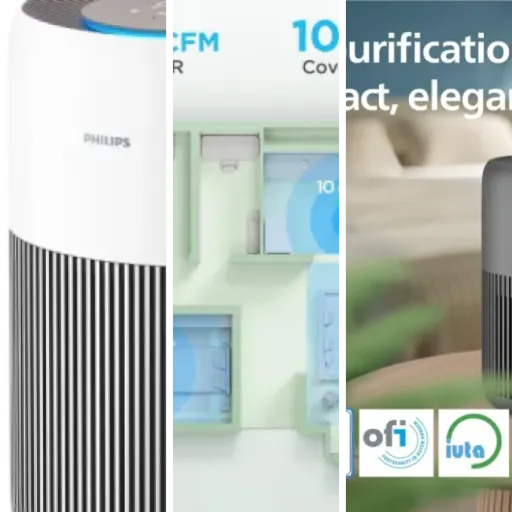
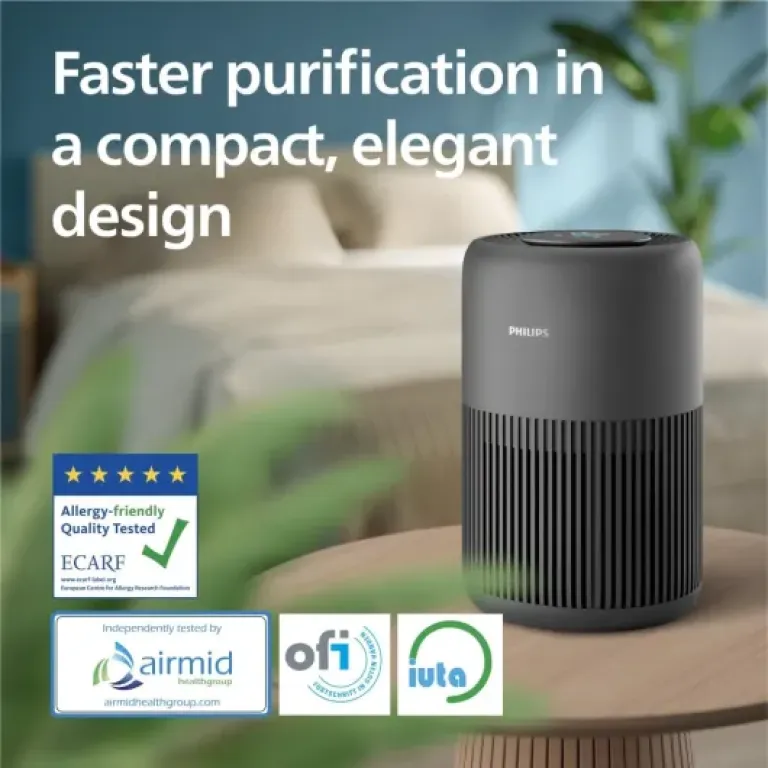
The Philips Air Purifier 900 Series AC0951/13 sits in a crowded category, yet it has already climbed to around the top 5 in air purifiers on Amazon, with a 4.5/5 average from more than 2,300 reviews. On paper, it targets people who want cleaner indoor air without dealing with a bulky tower or a noisy fan. It combines a HEPA NanoProtect filter, an activated carbon layer, and app connectivity in a 3.5 kg body that’s roughly the size of a small pedal bin.
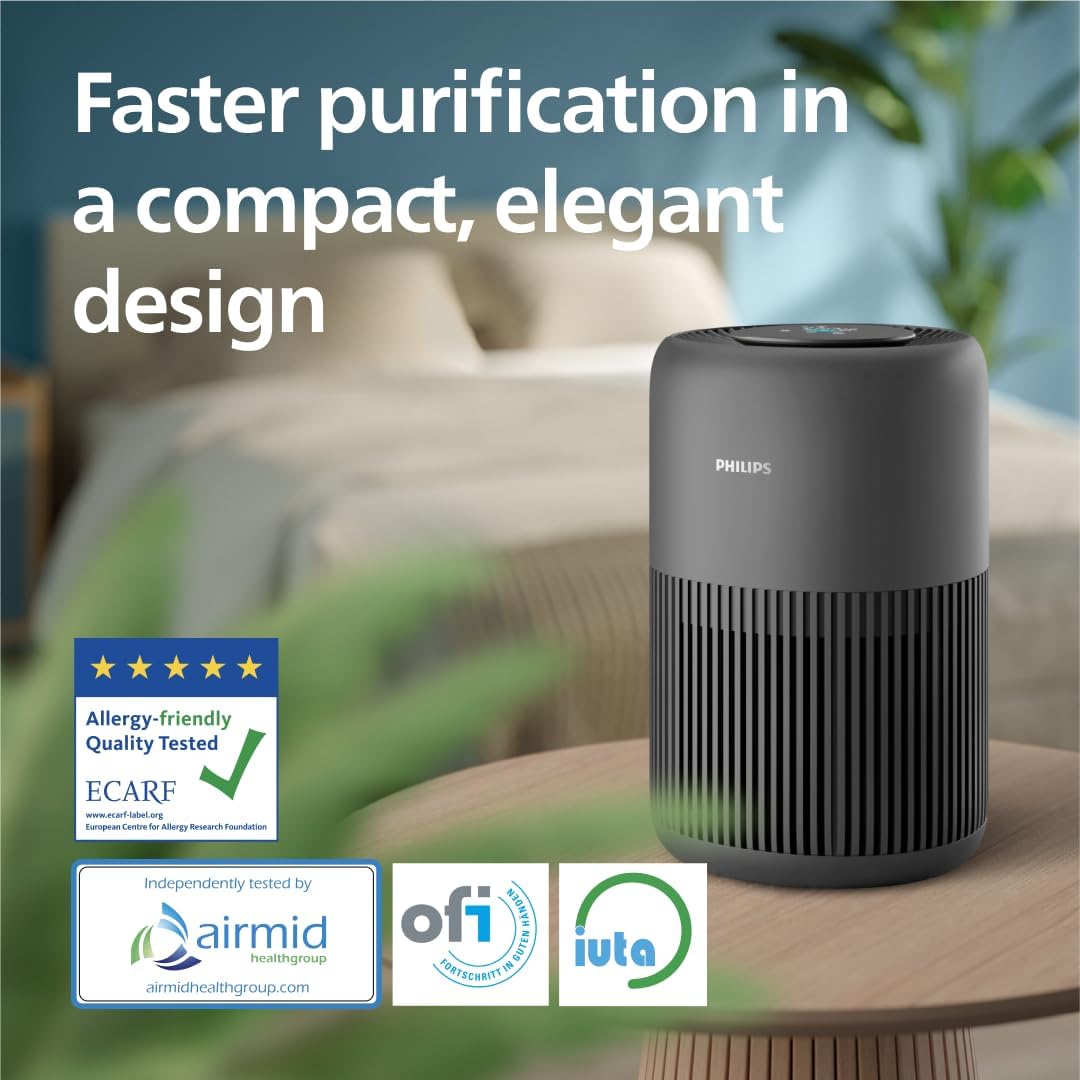
The brand promises coverage up to 65 m² thanks to a CADR of 250 m³/h, which is respectable for this footprint and price segment. It’s clearly aimed at bedrooms, living rooms, and small apartments, not huge open-plan spaces. Philips also puts a lot of emphasis on allergy relief: ECARF certification, claimed removal of 99.99% of common allergens, and 99.9% of airborne viruses and bacteria. That positions it as a daily comfort device rather than a niche gadget.
What stands out from the published reviews is the mix of practicality and tech: many buyers highlight the automatic mode, the real-time air quality indicator with color and numbers, and the Air+ app for remote control and scheduling. At the same time, comments show very down-to-earth use cases: dealing with paint and furniture VOCs after moving, cutting cooking smells, or helping with pet dander and cigarette smoke. That’s the real benchmark for this type of product: does it change the feel of a room in everyday scenarios.
It’s not flawless. Several comments raise concerns about long-term availability of genuine filters and the fact that Philips struggles to keep them in stock, which is ironic for a product that depends entirely on its filter. Some also find it bulkier than expected and would have liked a handle. Overall though, the mix of specs and feedback points to a solid mid-range purifier that focuses on quiet operation and ease of use rather than fancy design or extreme power.
Value for money: strong performance with a filter caveat
The AC0951/13 positions itself as a mid‑range purifier with features usually found a level up: app connectivity, automatic mode, detailed air quality readout, very low noise, and a solid CADR for typical rooms. The fact that it sits high in the sales rankings and holds a 4.5/5 average over more than 2,300 ratings suggests that most buyers feel they got good value. Several comments explicitly mention buying it on sale and calling the price/performance ratio very good, especially when comparing the impact on air quality to the relatively modest purchase cost.
In daily use, the value shows up in small, practical wins: less lingering cooking smell, fewer allergy symptoms in some households, cleaner‑looking filters at maintenance time, and the comfort of leaving it on auto without needing to fiddle with settings. Low power consumption (around 21 W at max) also adds hidden value over time; running it for hours a day won’t cost much compared to less efficient appliances. For people who care about sleep, the 20.5 dB Sleep mode that users describe as almost silent is another strong argument, since many cheaper purifiers cut corners on noise control.
The main factor that drags the value down is the filter situation. Genuine filters are quoted around £40, with a one‑year lifespan under typical conditions. That’s acceptable if they’re easy to find, but reviews complaining about long‑term stock shortages and concerns about discontinuation make the total cost of ownership less predictable. If you end up forced into generic filters of uncertain quality, you lose part of what you paid Philips for: guaranteed performance and certification. On top of that, the worry about long‑term support can be a deal‑breaker for cautious buyers.
In my opinion, if you can buy it at a discounted price and you verify that FY0910 filters are readily available, the value is strong: good performance, quiet operation, smart features, and high user satisfaction. At full price with uncertain filter supply, the equation becomes less clear, and you might want to compare with other brands that guarantee longer support for consumables. So the value here is not just in the device itself, but in the confidence you have in the filter pipeline over the next few years.
Design: compact, discreet, but not tiny
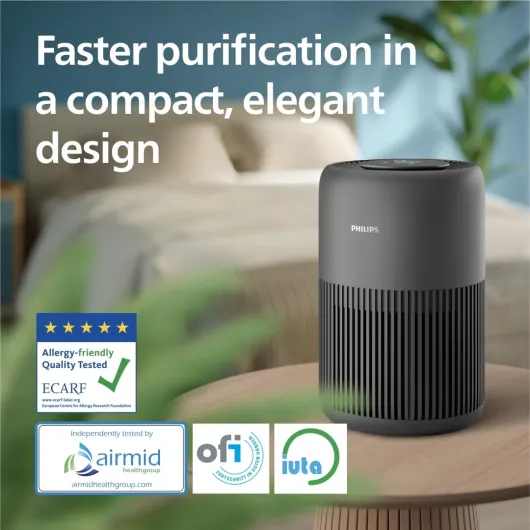
The AC0951/13 goes for a simple, functional design rather than something flashy. The black body, rounded edges and compact footprint (24 x 23.8 cm) make it fairly easy to tuck into a corner or next to a piece of furniture. One reviewer compares its size to a medium pedal bin, which is a good mental image: not a small desktop gadget, but also not a tall tower taking up visual space. At 36.4 cm high, it should fit under windowsills or next to a bedside table without dominating the room.
The air quality indicator with both color ring and numeric value is a strong point mentioned in comments. Buyers seem to like seeing the number jump when they start cooking or blow out a candle, then watch it drift back down as the purifier ramps up and clears the air. This kind of visual feedback is useful to understand how polluted your home actually gets, and it’s more informative than a simple three‑color LED. In Sleep mode, the display dims, which is important if the unit sits in a bedroom.
On the downside, at least one review points out that the device is larger than expected and that a built‑in handle would have been useful. At 3.5 kg it’s not heavy, but moving it between rooms would indeed be easier with a proper grip. There’s no mention of wheels or advanced cable management, so you’re probably just picking it up from the sides and dragging the cord along. A few brands in the same segment offer more obvious portability features; Philips seems to prioritize a clean look over ergonomics here.
In my view, the design does the job: it’s neutral, relatively compact, and the interface seems clear with automatic mode, speed settings, and Sleep mode easily accessible. If you want something that doubles as décor, this isn’t it; if you just want a black box that quietly works in the background and shows you a color ring when the air gets dirty, this approach is perfectly reasonable. Just don’t underestimate its physical size if you live in a very small room or plan to move it around several times a day.
Durability and filter management: the real long-term question
Durability on a purifier like this is less about the plastic shell and more about the filter ecosystem and maintenance. Philips advertises a long‑lasting filter (FY0910) with up to one year of use, depending on pollution levels and runtime. The machine tracks filter life and alerts you when replacement is needed, which is convenient and should prevent people running it with a clogged filter. Owners mention vacuuming the pre‑filter monthly as part of normal upkeep, and one comment points out how much dust builds up between cleanings, which suggests the filter is doing real work.
The weak spot is clearly filter availability. At least one buyer states that Philips has had issues stocking replacement filters for months, forcing them to consider third‑party filters that may not perform as well. Another comment raises a concern that the model might be discontinued, which leads to doubts about whether genuine filters will still be produced in the long term. This is a critical point: if original filters become hard to find or too expensive, the value of the purifier drops sharply, and people either run it with worn filters or abandon it altogether.
In terms of build, there aren’t many negative reports about physical failures, cracks, or electronics dying early. The housing is plastic, but that’s standard in this price segment. At 3.5 kg, the device is light enough that it’s unlikely to suffer from its own weight, and there are no moving parts beyond the fan. If used normally and kept clean, the hardware itself should last several years. The most mechanical stress will come from opening and closing the filter compartment, which doesn’t seem to be a point of complaint in the comments.
In my opinion, the long‑term durability is decent on the hardware side but uncertain on the consumable side. The purifier itself is likely to keep working; the question is whether Philips will maintain a steady supply of FY0910 filters at a sensible price for several years. If you’re thinking of buying, it’s worth checking current filter availability and maybe grabbing a spare when you can. Without that, the otherwise good performance and user feedback won’t matter much after the first year.
Performance: CADR, coverage, noise and smart features
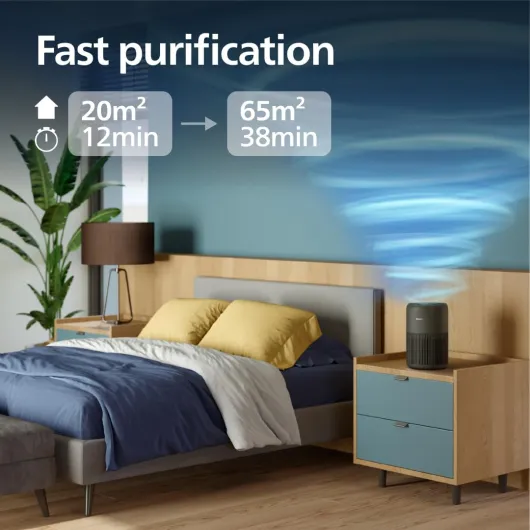
From a pure numbers perspective, the AC0951/13 sits in the mid‑range. A CADR of 250 m³/h and claimed coverage up to 65 m² put it in the category of purifiers that can handle a medium‑sized living room or bedroom, but not a huge open‑plan loft. Philips also states it can purify 20 m² in under 12 minutes, which matches the CADR figure reasonably well. For many users, that’s enough for one room; some reviews mention buying two units, one for the living room and one for the bedroom, which is a realistic way to cover a whole house.
Noise and energy consumption are strong points. The noise level is advertised at only 20.5 dB in Sleep mode, which is extremely quiet on paper, and multiple owners confirm that the device is almost inaudible at night with the lights off. On higher speeds, users acknowledge that it can be clearly heard, but that’s expected when it’s working hard to clear a pollution spike. One comment even says they like the sound as a kind of white noise, which implies that while audible, it isn’t described as harsh or annoying. Power draw at maximum is 21–23 W, less than a traditional light bulb, so running it several hours a day shouldn’t have a big impact on the electricity bill.
The smart performance layer comes from the Air+ app and automatic mode. Reviews note that once connected to Wi‑Fi, the purifier can be monitored and controlled remotely, schedules can be set, and you can see both indoor air quality and local outdoor air information. One buyer mentions that the app took about an hour to fully sync and update the purifier status, but after that, setup and daily use were straightforward. Auto mode seems to be the default for many owners: the machine runs quietly most of the time and only ramps up when pollution is detected, which balances cleanliness, noise and energy use.
In my view, the performance proposition is clear: for a compact machine, you get decent air turnover, very low noise in Sleep mode, low power consumption, and a responsive automatic system backed by a reasonably useful app. It’s not the most powerful device in its category, but it’s efficient enough for one room and optimized for continuous use without micromanagement. The only caution is that if you expect to handle very large spaces or heavy smoke across an entire flat with a single unit, the CADR figure suggests you might be pushing it beyond its comfort zone.
What the Philips 900 Series AC0951/13 actually offers
On paper, the Philips 900 Series AC0951/13 is a fairly straightforward package: a compact purifier with a 3-layer HEPA NanoProtect system plus activated carbon, a CADR of 250 m³/h, and coverage up to 65 m². That means it should be comfortable in a typical bedroom or medium living room and can refresh 20 m² in less than 12 minutes according to the brand. Item weight is 3.5 kg, dimensions are 24 x 23.8 x 36.4 cm, and the power draw is listed at 21–23 W at maximum, which is very low for continuous operation.
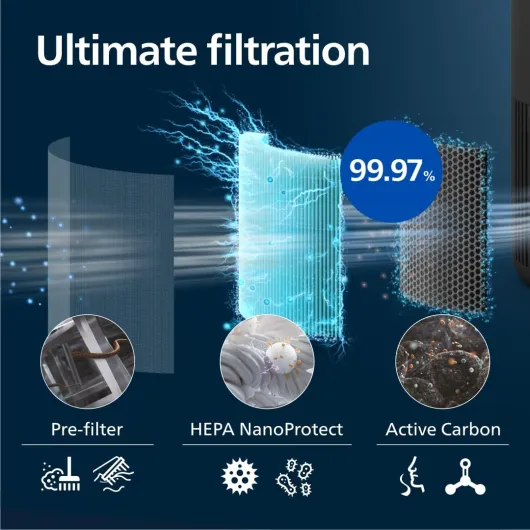
The filtration stack is the central promise. Philips claims 99.97% capture of particles as small as 0.003 microns, plus 99.9% removal of airborne viruses and bacteria and 99.99% of allergens like pollen, dust mites and pet dander. There is also an activated carbon layer for gases and smells, which shows up clearly in user comments about cooking odours, cigarette smoke and general household smells. The filter unit (compatible reference FY0910) is advertised to last up to one year, with the purifier calculating remaining life and warning when replacement is due.
On the smart side, the Air+ app is a selling point. Owners mention Wi‑Fi setup, remote control, scheduling, and indoor/outdoor air quality information. The machine can run in automatic mode where it adjusts fan speed based on detected pollution; several reviews insist this is where the product makes the most sense, as you just leave it on and watch it ramp up when you cook, blow out a candle, or bring in new furniture. ECARF certification for allergy sufferers adds a bit of third‑party credibility for people with hay fever or pet allergies.
In my opinion, the overall presentation is that of a practical, mid-range purifier: not the most powerful on the market, but efficient enough for normal rooms, low on energy use, and oriented toward set‑and‑forget use. The main weakness visible at this level is the ecosystem dependency: without regular and reasonably priced filters, the whole concept falls apart, and several reviews already flag shortages and doubts about long‑term availability. If Philips manages this properly, the product line makes sense; if not, the value drops quickly.
Effectiveness: how well does it actually clean the air?
Effectiveness is where this Philips model gets the most praise. Multiple verified buyers report noticeable reductions in cooking smells, cigarette smoke, and general household odours. One comment explains that cooking smells no longer travel beyond the kitchen door, and that smokiness from cigarettes or burned food doesn’t linger on clothes anymore. Another buyer who had just moved into a freshly painted home with new furniture notes that the purifier reacts quickly to VOC sources like paint, new furniture, or even a new washing machine’s first cycle, and that the device brings the air quality back into the “blue zone” within a short time.
For allergies, reviews are also fairly positive. A parent mentions that their adult son developed an allergy to his long‑time cat and that symptoms like snorting and sneezing eased when the purifier was in use, suggesting that it helps with pet dander at least in that household. Another owner uses it in the bedroom and remarks how much dust the filter collects between vacuuming sessions, which is consistent with the advertised HEPA filtration down to 0.003 microns and the ECARF allergy certification. Of course, this isn’t a medical device, and results will vary, but the feedback points toward real relief for some users.
What’s interesting is how often people mention the automatic mode and sensor reactivity. Several comments describe the purifier ramping up as soon as a candle is blown out or cooking starts, with the numeric PM value and color ring changing in real time. That doesn’t prove lab‑grade accuracy, but it does show the sensors are sensitive enough to detect typical household pollution spikes and adjust fan speed accordingly. This is key for everyday effectiveness: if the machine responds quickly, the room spends less time in the “dirty” state.
In my opinion, for a device with a CADR of 250 m³/h, the effectiveness described by owners lines up with the spec sheet: very good for bedrooms and medium rooms, good support for odours thanks to the carbon layer, and real benefits for people sensitive to dust or pet hair. It’s not a heavy‑duty unit for large open‑plan spaces or serious smoke problems across an entire flat, but for the typical 15–25 m² room, it seems to get the job done convincingly.
Pros
- Good CADR (250 m³/h) and coverage for typical bedrooms and medium rooms
- Very quiet Sleep mode around 20.5 dB and low power consumption (around 21–23 W)
- Effective 3‑layer HEPA + activated carbon filtration with strong user feedback on odours and allergens
Cons
- Concerns about long‑term availability of genuine FY0910 filters and possible stock shortages
- Bulkier than some expect and no integrated handle for easy moving
Conclusion
Analysis score
The Philips Air Purifier 900 Series AC0951/13 looks like a solid choice for people who want cleaner air in bedrooms and medium‑sized living spaces without a lot of fuss. The combination of a decent 250 m³/h CADR, HEPA NanoProtect plus activated carbon, and a genuinely quiet Sleep mode hits the right points for everyday use. Published reviews back this up with concrete examples: less cooking smell, better comfort for some allergy sufferers, and a noticeable amount of dust caught on the filter between cleanings. The automatic mode and clear air quality indicator make it a “set and forget” device for most households.
It’s not perfect. The unit is a bit bulkier than some expect, there’s no handle, and the long‑term story around replacement filters is the biggest concern. If Philips can’t guarantee stable FY0910 supply at a fair price, the long‑term value drops, because the hardware itself is only half the product. In my opinion, this purifier suits users who want a quiet, connected, mid‑range machine for one room, are comfortable with app‑connected devices, and are ready to keep an eye on filter availability. People with very large open spaces or those who hate dealing with proprietary consumables might want to look at higher‑CADR units or models with clearer long‑term support.