Summary
Analysis score
Average of the criteria rated below
Value for money: where the Q7 L5 fits in the lineup
Design and usability: classic Roborock approach
Battery life and charging: decent but not limitless
Build, maintenance, and long-term use
Vacuum and mop performance: strong suction, basic mopping
What the Roborock Q7 L5 offers on paper
Pros
- Very strong advertised suction (8,000 Pa) with carpet boost for deeper cleaning
- LiDAR navigation with multi-floor mapping and no-go zones for efficient, targeted cleaning
- Dual anti-tangle brushes and washable filter that reduce maintenance and running costs
Cons
- Mopping system is basic and requires manual attachment/removal of the module
- 150-minute battery can be limiting for large homes or intensive deep-clean modes

Specifications
View full product page →| Brand | roborock |
A mid-range Roborock that leans on mapping and suction
The Roborock Q7 L5 sits in that popular zone between cheap random-bounce robots and high-end dock monsters with scrubbing stations. On paper, it tries to tick a lot of boxes: 8,000 Pa suction, LiDAR navigation, multi-level mapping, vacuum and mop combo, and a bunch of smart app features. The brand positions it as an upgrade over the Q5 Pro, especially on suction power and hair management with its dual anti-tangle system.
The overall Amazon rating sits around 4.1/5 from more than 20,000 reviews across the Roborock range, which suggests a generally solid reputation with some recurring complaints. In the user comments, a consistent pattern appears: people praise the cleaning performance and mapping, but there are mixed feelings about mopping convenience, battery limits in big houses, and the learning curve of the app for less tech‑oriented buyers.
This model is clearly aimed at users who want a robot that can handle pet hair, hard floors and carpets, and who are willing to spend a bit of time in the app to set up rooms, schedules, and no‑go zones. With 150 minutes of advertised runtime, 2.4 GHz Wi‑Fi, and app control via smartphone or tablet, it tries to fit into a modern connected home without going overboard on accessories or a huge docking station.
It’s not a budget robot, and it’s not the most advanced model either. In my opinion, the strength of the Q7 L5 is its spec balance: good suction, proper LiDAR mapping, and dual anti‑tangle brushes, all in a relatively compact and lightweight body. On the downside, the mopping system remains basic and manual, and some users will hit the limits of the battery on large or very dirty surfaces. The following sections dig into how it looks on paper and what buyers say in practice.
Value for money: where the Q7 L5 fits in the lineup
The Q7 L5 sits in a crowded segment where many brands offer robot vacuums with LiDAR, app control, and some form of mopping. Its spec mix is strong for a mid-range model: 8,000 Pa suction, LiDAR navigation, multi-floor mapping, dual anti-tangle brushes, and simultaneous vacuuming and mopping. The overall 4.1/5 rating with tens of thousands of reviews across the Roborock range suggests that most buyers feel they get what they paid for, even if there are some frustrations here and there.
Compared with cheaper, random-navigation robots, the Q7 L5 brings a clear upgrade: proper mapping, zone cleaning, no-go zones, and better obstacle handling. One buyer comparing to an older non-mapping robot describes the mapping experience as “like living in the future” and emphasizes how much more efficient it feels. That type of feedback supports the idea that paying more for LiDAR and a good app does translate into real day-to-day gains, especially in larger or more complex homes.
Where the value becomes more debatable is against higher-end robots with self-emptying bases and advanced scrubbing mops. The Q7 L5’s dock is a simple charging station, and the mopping is basic and manual. Some users say that if they end up not using the mopping module because it’s a hassle to attach and remove, they would rather buy a model without mopping and maybe invest the difference elsewhere. In other words, if mopping automation and bin auto-emptying are priorities, the Q7 L5 may feel limited.
In my opinion, the Q7 L5 offers good value if your main goal is strong, reliable vacuuming with smart navigation, and you see mopping as a light bonus. The dual anti-tangle system and washable filter also help reduce running costs over time. It’s less convincing for people who want a fully automated floor-care system with minimal intervention. For them, bumping up to a model with a self-empty base and more advanced mopping could be smarter, even at a higher price.
Design and usability: classic Roborock approach
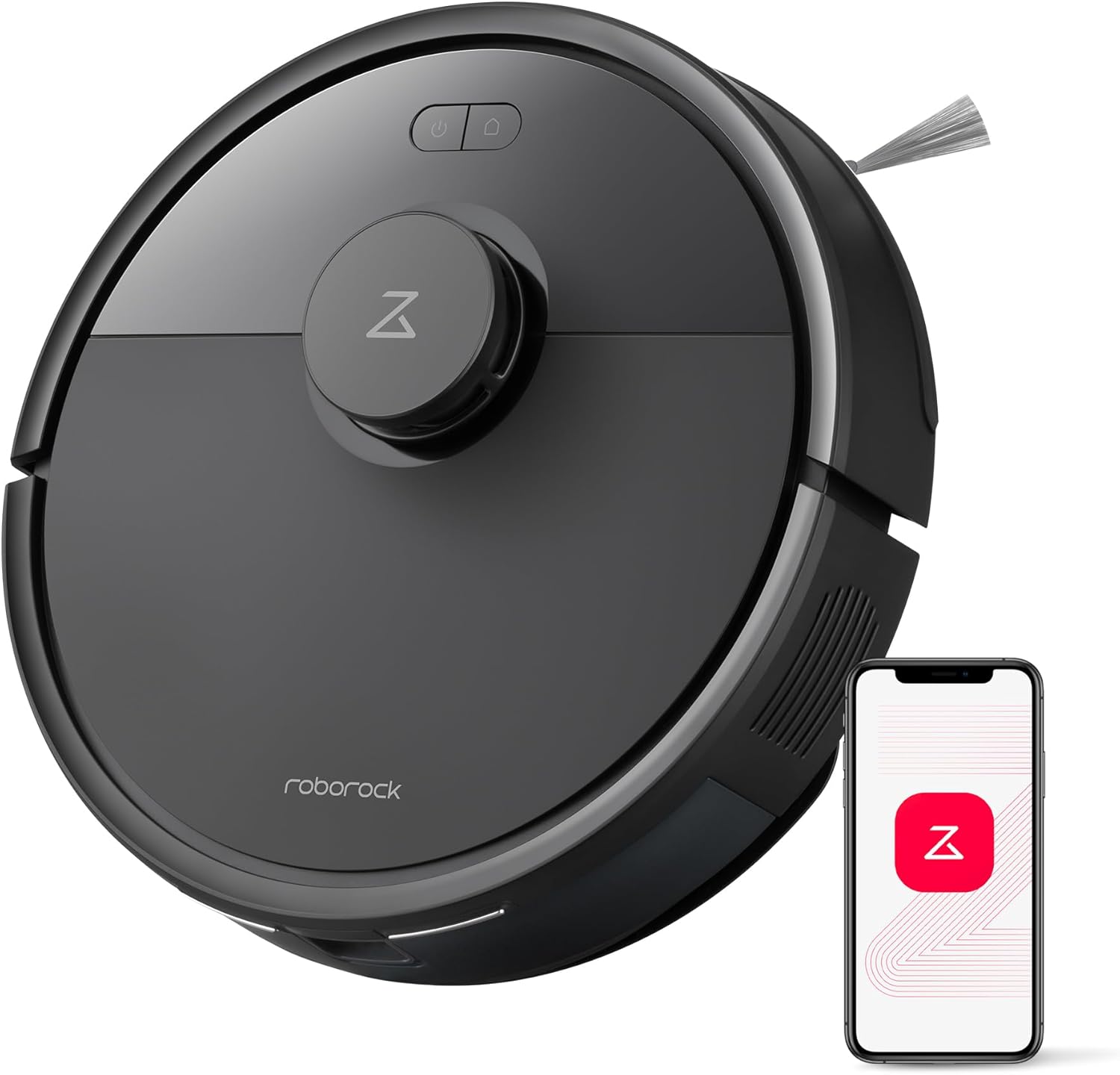
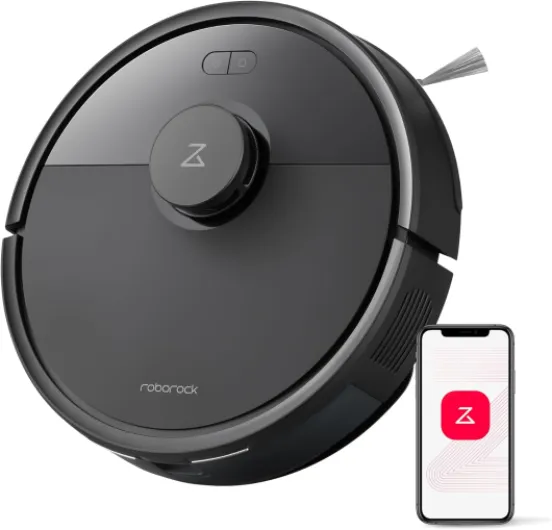
The Q7 L5 follows the typical Roborock design language: a round, low-profile black robot with a LiDAR turret on top. The dimensions (13.8 inches in diameter and 3.89 inches high) put it in the standard range for mapping robots, which should let it pass under many pieces of furniture while still housing a decent dustbin and water tank. The color choice is simple and discreet, which helps it blend into most interiors without screaming for attention.
From a functional point of view, the design is centered on ease of navigation and maintenance. The LiDAR turret is clearly visible on top, which is what enables the 360° laser scanning and multi-level mapping. Around the body, there are anti-collision and anti-fall sensors, so the robot can avoid stairs and reduce hard bumps into furniture. Roborock also highlights smart suggestions for no‑go zones: when the robot identifies tricky areas like cable nests or tight spaces around table legs, it can propose them in the app, making it easier to refine the map without manually drawing every restricted zone.
The dual anti-tangle system is another key design aspect. Instead of a single standard brush plus a basic side brush, the Q7 L5 includes a specially shaped main brush and a side brush designed to limit hair wrapping. This is obviously targeted at homes with pets or long hair, where brush maintenance can quickly become annoying. Several reviews of Roborock models point out that hair management is better than older competitors, even if it doesn’t completely eliminate the need to clean the brushes from time to time.
The dock is fairly compact compared to self-emptying towers. One buyer of a similar Roborock model even praised the feeling of living “like in the future” thanks to auto‑emptying on their unit, but the Q7 L5 itself is sold with a basic charging dock in the listed components. That means less visual bulk in your hallway but also more frequent manual bin emptying. In my opinion, the overall design is practical and focused on everyday use: small footprint, clear sensor layout, and a body that should be easy to pick up and move if needed, even though the product stays primarily app-driven.
Battery life and charging: decent but not limitless
The Roborock Q7 L5 is advertised with up to 150 minutes of runtime, which is fairly standard for a mid-range LiDAR robot. On paper, this should be enough to handle small and medium-sized homes in one go, especially if you mainly have hard floors and run it in a balanced or quiet mode rather than max suction. The robot automatically returns to its dock when the battery is low, and the auto‑docking feature takes care of charging without user input.
However, comments on similar Roborock models give a more nuanced picture. One user with a very demanding environment — white tiles, two heavy-shedding animals, mud from frequent rain, and a lot of kitchen mess — reports that their unit could mop about 100 m² in deep clean mode on a full charge, and vacuum a similar area in balance mode. They mention that they cannot vacuum and mop the whole area in a single run because the battery needs to be fully charged for each job. This shows the typical limitation: when you push cleaning intensity (deep mop or high suction), runtime drops, and bigger homes may require multiple cycles.
For most apartments and average-sized houses, 150 minutes should still be workable, especially if you split cleaning by rooms or floors in the app. The multi-floor mapping feature helps here: you can define which zones to clean at which time, and the robot doesn’t waste battery wandering randomly thanks to its LiDAR route planning. In my opinion, the battery spec is good but not exceptional; it matches what you’d expect in this price bracket rather than standing out.
One thing to keep in mind is that there is no mention of a quick-charge or “top-up then resume” feature in the provided details, although many mapping robots do offer some form of resume cleaning after charging. Even with that, heavy users who want daily deep cleaning on large surfaces will bump into the runtime ceiling. For smaller homes or people who are okay with the robot doing sections in stages, the battery performance should be perfectly acceptable, but buyers expecting to cover a large, dirty 2,500+ sq ft space in one intense pass might find it a bit underwhelming.
Build, maintenance, and long-term use
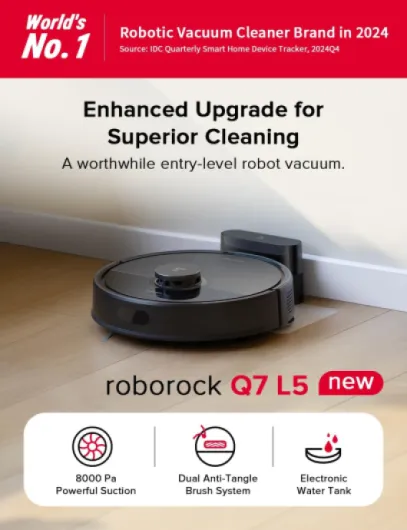
There is no detailed breakdown of materials like specific plastics or metals, but the Q7 L5 keeps to a lightweight 7.27 lb construction, which usually means a mix of robust plastic shell and standard internal components. Roborock as a brand has a solid reputation for robots that last several years when maintained properly, and the washable filter and dual anti-tangle brushes clearly aim to reduce wear and tear from clogged parts and hair jams.
The dual anti-tangle design is important for durability, because hair wrapping around the main brush or side brush is one of the most common causes of stress on the motor and moving parts. Roborock advertises a specially designed main brush and a zero-tangle side brush to limit this. In Amazon feedback on Roborock units, several pet owners mention that maintenance is easier and less frequent than with older Roombas, even if they still have to occasionally cut hair from the brushes. Less friction and fewer blockages should logically help the robot last longer and keep performance closer to its original level.
Another positive point is the washable filter, which reduces the need for constant replacement and helps keep suction steady. Buyers who run their robots daily often comment that regular cleaning of the filter and sensors avoids most navigation or suction issues. The Q7 L5 also has built-in anti-collision and anti-fall sensors, which protect both the robot and furniture from hard impacts. That said, as with any robot, sensor windows and bumpers need to be wiped now and then to stay effective.
On the downside, some reviews across Roborock’s catalog highlight that these robots still require a bit of tech awareness and regular basic maintenance. People who ignore alerts or never clean the brushes and filter can run into errors or degraded performance over time. In my opinion, the Q7 L5 looks solidly built for its class, but it’s not a maintenance-free appliance. With normal care — emptying the bin, rinsing the filter, checking brushes — it should hold up well for several years. Those who want a fully hands-off experience with automatic self-maintenance will need to look at more expensive dock systems.
Vacuum and mop performance: strong suction, basic mopping
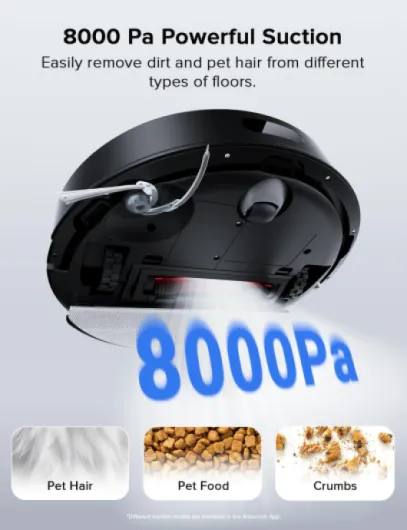
The big highlight of the Q7 L5 on paper is its 8,000 Pa suction power, which is significantly higher than many older mid-range robots that sat around 2,000–3,000 Pa. In theory, that level of suction should help pull dust and debris from cracks in hard floors and from deeper inside carpets. The spec sheet also mentions Auto Boost on Carpet, which means the robot increases suction when it detects carpet, then drops back down on hard floors to save battery and noise.
Among Amazon comments on comparable Roborock models, several buyers underline how effective the vacuuming is, especially with pet hair and sand. One verified buyer with three dogs, including a golden retriever, describes being impressed by how much hair and dirt the robot picked up every night on a mix of hardwood and carpet. The bin was reportedly full of dog hair after runs, and the floors looked good the next morning. That kind of feedback suggests that the Q7 L5, with even higher advertised suction, should be well-suited for homes with shedding pets and mixed surfaces.
On the mopping side, expectations need to be realistic. The vacuum can vacuum and mop simultaneously using the 270 ml water tank and removable mop pad. There are three water levels, which is decent, but the system is still a simple drag-mop design, not a scrubbing or oscillating plate. One buyer of a similar Roborock unit explains that for tough stains, they still rely on a manual solution like a Swiffer, while the robot is more for everyday light messes and dust. Another comment notes that the mop module needs to be manually attached and removed, which some users find a bit tedious.
In my opinion, the Q7 L5 should be treated primarily as a vacuum robot with bonus mopping, not as a full mop replacement. For daily maintenance on tiles, laminate, or hardwood, the electronic mopping function will likely keep things fresher, but dried-on kitchen stains or mud brought in by pets will probably still require human intervention. Where the Q7 L5 really shines on paper is in regular vacuum cleaning cycles: strong suction, carpet boost, and dual anti-tangle brushes form a package that, according to many Roborock owners, handles everyday dirt reliably.
What the Roborock Q7 L5 offers on paper
The Roborock Q7 L5 is a robot vacuum and mop combo with a form factor that stays classic: round body, docking station, and a removable mop module. Its key promise is strong cleaning performance without constant babysitting, thanks to HyperForce 8,000 Pa suction and LiDAR navigation. The brand advertises support for multi-floor maps, no‑go zones, advanced custom cleaning, and automatic adjustment of suction on carpets. In short, it tries to behave more like a mid/high-end mapping robot than a random bumper bot.
The spec sheet lists a 270 ml water tank integrated with the dustbin, enabling vacuuming and mopping at the same time. There are three water levels and a removable mop pad, which should allow users to adapt to different floor types and dirt levels. However, a key detail appears in customer feedback: the mopping module must be manually attached and detached, so this is not a fully automated scrubber. It’s more of a light maintenance mop than a deep floor-washing solution.
On navigation, the Q7 L5 uses 360° LiDAR scanning to map the home in real time. It can save multiple floor maps, which is useful for multi-story houses or apartments. Several Roborock buyers mention how fast and precise mapping feels across the brand’s range, and the Q7 L5 should behave similarly: it identifies furniture, cables and obstacles and can propose no‑go zones directly in the app for trouble spots. This is a clear step above older robots that just bounce around and hope for the best.
The robot weighs 7.27 lb and measures about 13.8 x 13.8 x 3.89 inches, which is relatively compact for sliding under many sofas and beds. It’s battery powered, with an advertised 150 minutes of runtime, and returns automatically to its auto‑docking charging base. The control method is mainly via app (smartphone/tablet), with features like scheduling, temporary cleaning, child lock, and off‑peak charging. In my opinion, the positioning is clear: solid mid-range robot for people who care more about mapping and suction than about having a giant base station with water tanks and self-washing mops.
Pros
- Very strong advertised suction (8,000 Pa) with carpet boost for deeper cleaning
- LiDAR navigation with multi-floor mapping and no-go zones for efficient, targeted cleaning
- Dual anti-tangle brushes and washable filter that reduce maintenance and running costs
Cons
- Mopping system is basic and requires manual attachment/removal of the module
- 150-minute battery can be limiting for large homes or intensive deep-clean modes
Conclusion
Analysis score
The Roborock Q7 L5 looks like a solid mid-range robot focused on strong vacuuming and smart navigation rather than flashy docking stations. The combination of 8,000 Pa suction, LiDAR mapping, multi-floor maps, and dual anti-tangle brushes makes it particularly appealing for homes with pets, mixed floors, and people who appreciate being able to fine-tune cleaning zones and schedules in an app. The general tone of Amazon reviews around Roborock devices lines up with this: people are usually very satisfied with everyday cleaning and mapping, once they get through the initial setup.
It’s not perfect. The advertised 150-minute battery is decent but can feel tight in large or very dirty spaces, especially if you insist on deep mopping or high suction. The mopping function is basic and manual, more for daily light maintenance than for scrubbing dried stains. And users who are not comfortable with smartphone apps may find the configuration a bit daunting at first. Still, for many households, this model hits a good balance: strong cleaning, smart navigation, and a manageable price point without going into full premium territory.
In my opinion, the Q7 L5 is a good fit if you want a reliable robot vacuum first, with mapping and pet-hair handling as priorities, and you’re okay with doing a bit of maintenance and attaching the mop when needed. If you mainly care about heavy-duty mopping or want a robot that empties and manages itself almost entirely, it makes sense to look higher up the range or at models with more advanced docks.