Summary
Analysis score
Average of the criteria rated below
Price positioning and who gets the best deal
Compact body and practical layout, with some trade-offs
Runtime, charging behaviour and noise management
Build, reliability signals and after-sales support
Cleaning power, navigation and real-world behaviour
What the Vexilar W9 offers on paper
Pros
- LiDAR navigation with multi-floor mapping and up to 15 no-go zones at a budget-friendly price
- Strong claimed suction (up to 8000Pa) and positive buyer feedback on performance on carpets and hard floors
- Long runtime with smart recharge-and-resume plus 2-year full warranty and lifetime technical support
Cons
- Mopping function is more for light maintenance than deep cleaning
- Requires floor prep to avoid cables, socks and tasselled rugs despite the smart navigation

Specifications
View full product page →| Brand | Vexilar |
A budget LiDAR robot vacuum that looks more high-end than its price
The Vexilar W9 lands in a crowded robot vacuum market with a spec sheet that looks closer to mid-range and even some high-end models than to its sub-£220 price bracket mentioned in the reviews. You get LiDAR navigation, multi-floor mapping, 3-in-1 vacuum/sweep/mop, claimed 8000Pa suction, app control with Alexa/Google/Siri, and a long 150-minute max runtime. On paper, that’s a lot of features for what several buyers describe as a relatively low price.
What really stands out in the public comments is the very high user satisfaction: a 4.9/5 average from around 85 ratings is not common for this type of product. Verified buyers highlight the mapping quality, the convenience of scheduling, and the cleaning efficiency on both carpets and hard floors. People with pets seem particularly positive about how it deals with hair and daily debris, which is usually a tough area for cheaper robot vacuums.
Of course, a spec sheet and reviews do not turn this into a premium flagship. The dustbin is 0.52 L, the noise is advertised at about 50–55 dB in quieter modes, and you still have to prepare the floor by clearing cables and loose items, as several reviewers remind. The mopping is also closer to maintenance wiping than to deep scrubbing, which is typical for this style of robot.
In my opinion, the interesting question with the Vexilar W9 is not whether it is the most advanced robot on the market – it clearly is not – but whether it offers a smart balance between price, mapping, suction, and real-world convenience. Looking at the published reviews and the technical details, it seems aimed at people who want serious automation and LiDAR navigation without paying the premium prices of the big brands.
Price positioning and who gets the best deal
One reviewer explicitly calls the Vexilar W9 “good value for money as sub £220 robot cleaner”, which gives a rough idea of its market position. At that level, many competitors are basic random-navigation units with modest suction and no advanced mapping. The W9, by contrast, brings LiDAR navigation, multi-floor mapping, up to 15 no-go zones, a 3‑in‑1 vacuum/sweep/mop system, and what appears to be a bagless self-emptying dock, plus a 2‑year warranty. On paper, that is a very dense feature set for the price bracket.
The 4.9/5 average rating from 80+ reviews also suggests that most buyers feel they are getting a good deal. Several comments use phrases like “great value”, “fantastic bit of kit for the price”, and “solid, no fuss cleaner that does what it promises”. People appreciate that they can reduce manual vacuuming significantly, schedule automatic runs, and rely on the robot to move between carpeted living rooms and hard-floor kitchens without constant supervision. For time-poor households or pet owners, that time saved is often more important than having the absolute best deep-cleaning performance.
There are, however, some trade-offs that come with this pricing. The mopping is light-duty and should not be seen as a replacement for a proper mop on stubborn stains. You still need to declutter floors, especially cables and soft obstacles. There is no mention of advanced AI obstacle recognition or camera-based identification of socks and toys, features that now appear in much more expensive models. If you want top-tier carpet agitation, anti-tangle roller designs, or fully hands-off maintenance for months, you will likely have to spend more.
In my opinion, the W9 offers strong value for a specific profile: people who want LiDAR mapping, app zoning, and decent suction without spending premium-brand money. If you are okay with doing some basic prep (cables, small objects) and treating the mop as an extra rather than a miracle worker, the feature set and user satisfaction make the price look very reasonable. Those who already own a high-end robot with advanced AI navigation will not see this as an upgrade, but for a first robot vacuum or an upgrade from a random-navigation budget model, the W9 looks like a financially sensible jump.
Compact body and practical layout, with some trade-offs
From a design point of view, the Vexilar W9 sticks to the classic round robot vacuum format, with a low profile of around 9.8 cm. On paper, that height should allow it to pass under many beds, sofas, and cabinets, and one buyer explicitly points out that it manages to clean under bed frames that are usually annoying to reach with a traditional vacuum. The 35 cm diameter is pretty standard and should give a decent compromise between coverage and the ability to navigate between chair legs and furniture.
The colour is a simple black, which is practical and discreet in most interiors. There is no mention of flashy RGB lighting or decorative elements; the focus seems to be on function rather than style. The LiDAR sensor module sits on top (as with most LiDAR robots), which means the effective height includes that turret. That is something to keep in mind if you have very low furniture: on paper, the 9.8 cm figure is already relatively compact for a LiDAR-equipped model, but not as low as some camera-based robots.
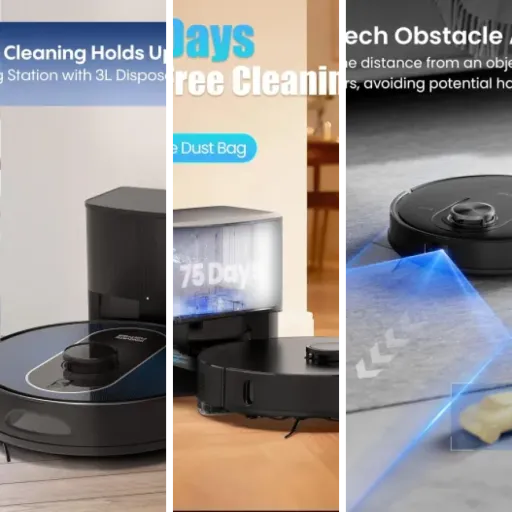
Several reviews mention the convenience of the control options: you can use the app, voice assistants, or the included remote. For households where not everyone wants to bother with a smartphone, the remote is a practical detail. The layout also seems to integrate a docking station that some reviewers describe as having a bagless self-emptying system. That is not heavily detailed in the spec sheet, but buyers talk about a multi-cyclone dock that can hold dust for weeks and empties the robot automatically, which would be a strong plus in terms of everyday convenience and design thinking.
In my opinion, the W9’s design is very much about blending into the background: a compact black disc with a LiDAR turret, docked against a wall, quietly doing its job. It does not try to stand out visually, but focuses on being low enough to reach under furniture and simple enough to operate for different members of the household. The trade-off is that you don’t get ultra-slim height like some non-LiDAR robots, and the dock will still need a bit of dedicated floor and wall space.
Runtime, charging behaviour and noise management
The Vexilar W9 is powered by four 2600 mAh batteries, which is quite a bit of capacity for a robot in this price band. The manufacturer advertises runtimes of up to 150 minutes in Eco mode, 110 minutes in Standard, and around 70 minutes in Max mode. For a typical apartment or an average-sized home, that kind of runtime in Standard mode should be enough to cover a full level in one go, especially with LiDAR route planning that avoids pointless overlaps.
One of the key functional features is the smart recharge-and-resume behaviour. When the battery drops below 15%, the robot automatically returns to its dock, charges, and then resumes cleaning from the exact point it left off. This is particularly useful for larger homes or multi-room cleaning tasks. In theory, you could set it to clean an entire floor, let it manage its own charging cycles, and not worry about areas being skipped because the battery ran low mid-job.
The noise level is quoted around 50 dB in Quiet mode, with some spec text mentioning 50 dB and the overall product sheet listing 55 dB. In any case, that places it in the relatively quiet range for robot vacuums. The brushless motor should also help keep the sound more uniform and potentially reduce long-term wear. One review mentions that Quiet mode does not disturb the household and is suitable for families with kids and pets, which lines up with the advertised figures.
From my point of view, the battery and noise profile of the W9 look well balanced. It is not a monster battery system like some flagship robots, but the combination of 110 minutes in standard mode and recharge-resume is more than enough for most users. If you frequently run it in Max suction, you will obviously see shorter runtimes, but that is the same with any robot. Where it stands out is that you get strong suction claims, quiet operation in low mode, and smart power management without jumping into a very expensive segment.
Build, reliability signals and after-sales support
There is limited detailed information about the internal build materials of the Vexilar W9 beyond its weight (around 3 kg) and the standard plastic shell typical of robot vacuums. However, the user feedback and the brand’s support promises give some hints about durability and reliability. The product comes with a 2‑year full warranty and so-called lifetime technical support, along with a claimed 24‑hour response time from the after-sales team. For a robot in this price range, that is a relatively generous warranty, which suggests the brand has some confidence in the product’s reliability.
Among the customer reviews visible so far, there are no widely reported early failures or structural issues being highlighted. Instead, the comments focus more on performance, mapping, and convenience. One user mentions that the auto extraction system (bagless self-emptying) works well and that the vacuum starts each cycle empty, which indirectly indicates that the mechanics between robot and dock are at least functioning as intended for them. Another review talks about using it daily for cleaning the entire flat and specifically notes being relieved from constant manual vacuuming, again with no complaint about breakdowns up to that point.
Of course, these are still relatively early impressions in the life cycle of the product, and robot vacuums are moving devices with motors, sensors, brushes, and wheels, so long-term durability is always a question mark. Consumable parts like brushes, filters, and mop pads will need periodic replacement, as with any competitor. There is no detailed information here about the price or availability of spare parts, which is something potential buyers might want to check before committing, especially if they plan to keep the robot for several years.
In my opinion, the main reassurance on the durability side is the 2‑year full warranty and the lifetime tech support statement. For a sub‑£220 robot (as one buyer mentions), that is a strong point. The absence of recurring complaints about build quality or early failure in the current reviews is another positive signal, even if it does not guarantee long-term robustness. If you treat it like any robot vacuum – keep the brushes clear, clean the sensors, and avoid water where it should not go – there is no reason, on paper, to expect worse durability than other products in the same price bracket.
Cleaning power, navigation and real-world behaviour
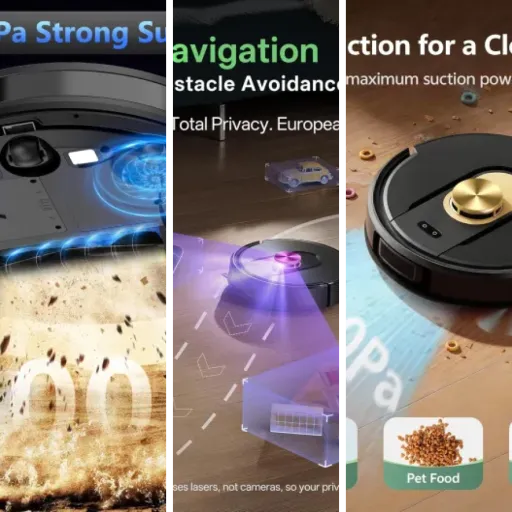
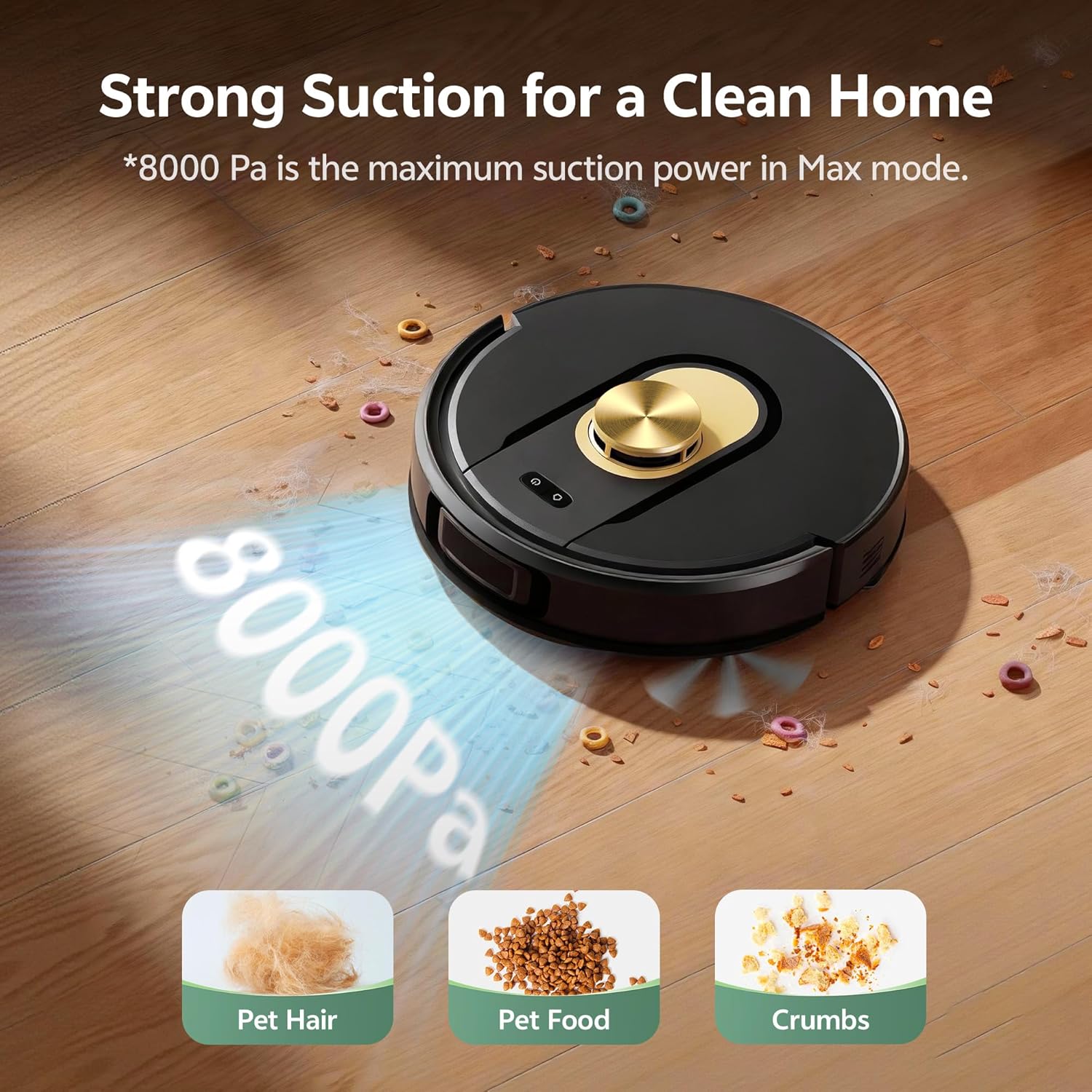
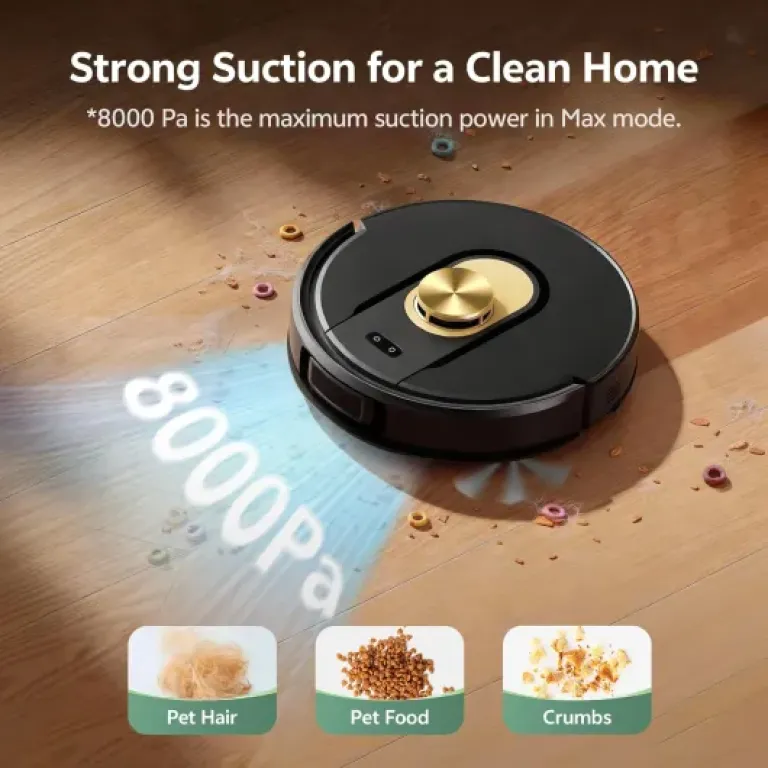
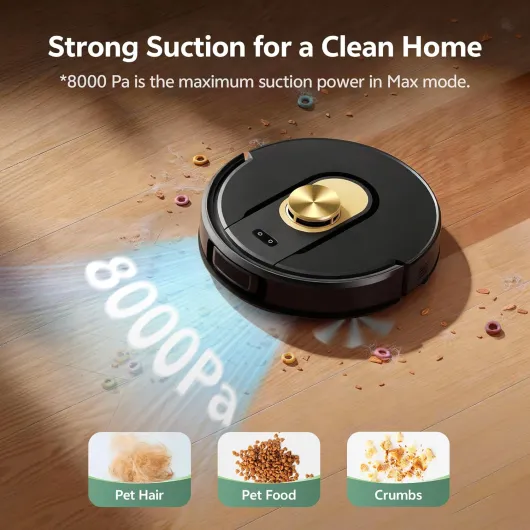
On the performance front, the W9 is clearly positioned as a strong suction, smart-mapping robot. The manufacturer claims up to 8000Pa suction (with some documentation referencing 6000Pa, but always in the “high suction” bracket). Several buyers comment that it handles pet hair, crumbs, and general household dirt well on both hard floors and carpets. One review explicitly calls out “excellent suction for dirt, crumbs, and pet hair” and notes that it performs solidly on carpets, which are often a weak point for lower-powered robots.
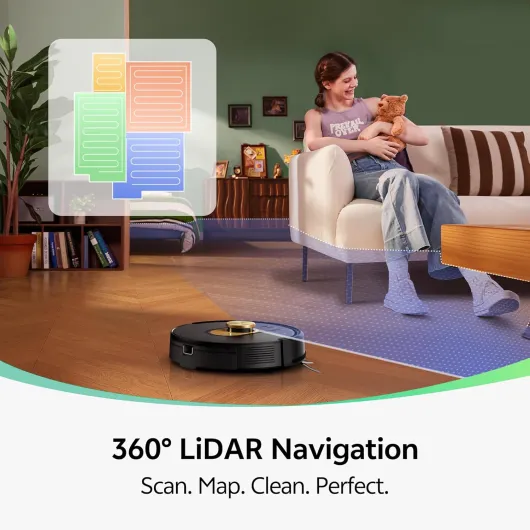
The LiDAR navigation is one of the main selling points. According to the brand, the W9 can complete a full map in about 15 minutes and then uses that to plan efficient routes. Reviews mention accurate room mapping, reliable obstacle avoidance, and effective use of no-go zones to keep the robot away from problematic areas like rug tassels or cable nests. Users also appreciate features like live tracking in the app, room-based cleaning, and the ability to choose cleaning order and modes per room. This suggests that, in practice, the navigation and mapping tools are not just marketing buzzwords, but genuinely used.
For mopping, expectations should stay realistic. The W9 uses a 2‑in‑1 dustbin and water tank, with three water levels. This kind of system is designed more for light maintenance – picking up fine dust and refreshing hard floors – rather than deep stain removal. One review calls the mop feature a “nice bonus”, which is probably the right way to think about it. You can adjust suction and water output per room, which on paper is helpful if you want more water on tiles and less on wood, for example.
There are some limits and conditions mentioned by buyers. Several comments remind that you still need to tidy the floor, especially cables and small objects, because the robot can get stuck like any competitor. For carpets with long tassels or fringes, people rely on no-go zones to avoid trouble. In my opinion, this is standard for the category: the W9 seems to deliver solid cleaning performance and smart navigation for the price, but it does not magically solve the typical constraints of robot vacuums. Compared to similarly priced random-navigation models, though, the combination of LiDAR, zone control, and strong suction makes it look clearly above average on paper.
What the Vexilar W9 offers on paper
The Vexilar W9 is a round robot vacuum and mop combo with a diameter of about 35 cm and a height of roughly 9.8 cm. It weighs around 3 kg, which is fairly standard for this category. It combines a 0.52 L dustbin with a 2-in-1 water tank, allowing it to vacuum, sweep, and mop at the same time. The manufacturer advertises three suction levels and three water flow levels, so in theory you can tune it for tiles, hardwood, or low-pile carpets without soaking your floors.
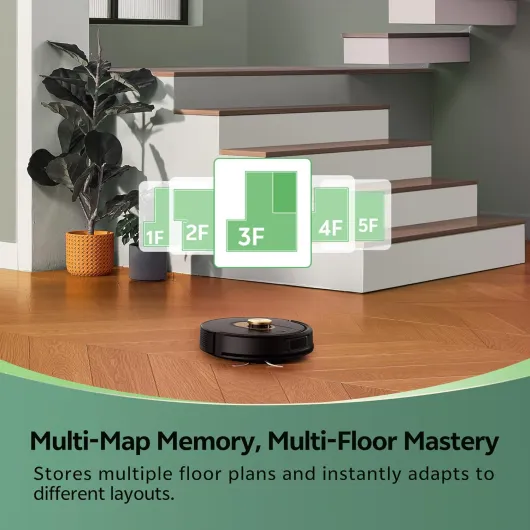
The navigation is handled by a 360° LiDAR sensor system, which is a big step up from basic bump-and-go models that rely on random movement. The W9 can build maps of up to five floors, supports room naming and zoning, and lets you set up to 15 no-go zones via the app. Buyers mention that they can assign different cleaning modes and mop settings per room, and trigger room-specific or spot cleaning. The app used is Vactidy, which some reviews describe as stable and fairly intuitive.
On the power side, the W9 uses four 2600 mAh batteries, for a claimed runtime of up to 150 minutes in Eco mode, 110 minutes in Standard, and about 70 minutes in Max. It returns to the dock automatically when the battery drops below 15%, recharges, and resumes cleaning where it left off. The manufacturer claims up to 8000Pa suction (some descriptions also mention 6000Pa; in any case, it is positioned as high suction for this price range) with a brushless motor and a quoted noise level around 50–55 dB in quiet mode.
Connectivity is fairly complete: the W9 works over 2.4 GHz Wi‑Fi, supports Alexa, Google Assistant, and Siri, and also comes with a physical remote control for those who do not want to rely only on the app or voice. The brand backs it with a 2‑year full warranty and lifetime technical support, plus a 24‑hour customer service response promise. In my opinion, that warranty offer and the multi-floor LiDAR mapping are the two main arguments that differentiate this model from many other budget robot vacuums.
Pros
- LiDAR navigation with multi-floor mapping and up to 15 no-go zones at a budget-friendly price
- Strong claimed suction (up to 8000Pa) and positive buyer feedback on performance on carpets and hard floors
- Long runtime with smart recharge-and-resume plus 2-year full warranty and lifetime technical support
Cons
- Mopping function is more for light maintenance than deep cleaning
- Requires floor prep to avoid cables, socks and tasselled rugs despite the smart navigation
Conclusion
Analysis score
The Vexilar W9 positions itself as a budget-friendly robot vacuum that borrows several features from higher-end models: LiDAR navigation, multi-floor mapping with up to 15 no-go zones, a 3‑in‑1 vacuum/sweep/mop system, and strong claimed suction. The user feedback is very positive overall, with a 4.9/5 average rating and repeated praise for cleaning performance, mapping accuracy, and general ease of use. In my opinion, the combination of LiDAR, app control, voice assistant support, and a generous 2‑year warranty is the core of its appeal.
It is not perfect. The mopping is light, not a full replacement for manual scrubbing, and you still need to clear cables and small obstacles for smooth runs. There is no mention of advanced camera-based obstacle recognition, and the long-term durability of parts and the cost of consumables remain open questions. But for a robot that some buyers report purchasing for under £220, those limits are understandable.
If you are looking for your first robot vacuum, live in a flat or an average-sized house, and want strong suction, smart mapping, and a decent mop function without paying flagship prices, the W9 looks like a solid candidate. Pet owners and busy households seem particularly satisfied. On the other hand, if you already own a high-end robot with AI obstacle detection, or if you expect the mop to replace regular floor cleaning entirely, this model may feel a bit basic. Overall, weighing the spec sheet and the published reviews, the value for money looks very good for the feature set offered.