Summary
Analysis score
Average of the criteria rated below
Value for money: strong feature list if the price stays low
Compact design aimed at portability and selfies
Battery life: generous claims, mixed real‑world feedback
Build quality and reliability: fine for light use, but not rugged
Image and video performance: solid on paper, with realistic limits
What this DGVDO compact camera actually offers
Pros
- Strong feature set for the price: 4K video, 64MP stills (interpolated), dual lenses and digital stabilisation
- Comes with 2 batteries, 32 GB SD card, charger, strap and bag, so you can start shooting immediately
- Simple, compact design and interface that many beginners and gift buyers find easy to use
Cons
- Small 1/2.3-inch sensor, digital-only 16x zoom and JPEG-only output limit image quality and flexibility
- No weather resistance and at least one report of serious battery/quality issues suggest modest durability and quality control

Specifications
View full product page →| Brand | DGVDO |
A cheap way into 4K vlogging and casual photography?
The DGVDO 4K 64MP compact camera targets a very specific crowd: people who want something better than a phone for simple photos and videos, but who don’t want to pay big-brand prices or deal with bulky gear. On paper, it ticks a lot of boxes: 4K video, 64MP stills, autofocus, dual lenses for selfies and vlogging, a 3-inch screen, included 32 GB card, and two batteries. The average Amazon rating sits around 4.5/5 from a few dozen reviews, which suggests many buyers feel they got decent value for the money.
This is clearly not aimed at enthusiasts who obsess over sensor sizes and lens sharpness. The 1/2.3-inch CMOS sensor, 16x digital zoom and JPEG-only capture put it firmly in the budget compact category. Still, the spec sheet mentions 6-axis digital stabilisation, webcam mode, Wi‑Fi and a pile of creative modes (slow motion, loop recording, filters), which could be handy for social-media content or family memories.
Comments from buyers often mention ease of use and a good starter experience, with several people buying it for kids, teens or as a secondary travel camera. At the same time, there is at least one very negative review describing serious battery and quality problems, which shows quality control may not be flawless. So this is not a miracle device, but more of a “does the job if your expectations are realistic” kind of product.
In my opinion, the interest of this camera is simple: if the price stays well under typical entry-level models from Canon, Sony or Nikon, and if you just want something straightforward for casual shooting or basic vlogging, it can make sense. If you expect true 4K cinema quality, strong low-light performance or fast action tracking, you are likely looking at the wrong category.
Value for money: strong feature list if the price stays low
The main selling point of this DGVDO 4K 64MP camera is clearly its value proposition. Buyers repeatedly mention that it offers “Top Notch quality at a very good price” and “Good value at under £100.” For that kind of money, you’re getting a compact body, 4K video, high‑resolution stills, autofocus, digital stabilisation, dual lenses for selfies and vlogging, a 3‑inch IPS screen, built‑in flash, two 1050 mAh batteries, a 32 GB SD card, a charger, a neck strap, and a camera bag. That is a long accessory list; big‑name brands often charge extra for half of those items.
Of course, some of the specs are more marketing than miracle. The 64MP figure on a 1/2.3‑inch sensor is unlikely to rival a larger‑sensor camera with a lower megapixel count. The 16x zoom is digital only, so it won’t match an optical zoom lens for clarity at long focal lengths. JPEG‑only capture and automatic white balance limit how much serious editing you can do afterward. But for a beginner, a teenager, or someone just wanting an easy holiday camera, those trade‑offs might be perfectly acceptable, especially when the alternative is paying two to three times more for an entry‑level mirrorless plus lens.
The Amazon rating around 4.5/5 from over 50 reviews suggests that most buyers feel they got their money’s worth. The isolated complaint about severe battery issues and poor quality shows there is some risk, but it doesn’t dominate the feedback. The brand also advertises a 2‑year warranty and 12‑month replacement policy, which, if honoured properly, improves the value equation a bit more by reducing the risk of being stuck with a dud.
In my opinion, the value is good as long as your expectations stay aligned with the price and category. It’s a budget compact, not a pro camera. If you need reliable autofocus in fast sports, strong low‑light performance, RAW files, or robust weather sealing, spending more on a known photography brand makes sense. If you mostly want a simple, all‑in‑one camera for casual use, vlogs, and social media, and you catch this DGVDO at a sub‑£100 price point, the feature set and included accessories make it a reasonable deal.
Compact design aimed at portability and selfies
From the available details and buyer comments, the DGVDO camera leans heavily into portability and casual use. It’s described as compact and lightweight, with several reviewers calling it a “lovely little camera” and “great little camera” that’s easy to throw in a bag or wear around the neck. The included neck strap and camera bag are mentioned positively, which suggests the brand knows this will often be used on holidays, days out, or quick walks where you don’t want to lug a big DSLR.
The 3‑inch IPS LCD is the main interface, and the spec sheet highlights an “intuitive mode dial” for quick access to functions. That kind of layout is typical of entry‑level point‑and‑shoots: a rotating dial for modes (auto, movie, scene presets), plus buttons around the screen for settings and playback. For vloggers and selfie fans, the dual‑lens design and front‑facing capability are key. Reviews talk about the selfie function being handy on holidays, and the camera’s compact footprint means you can probably hold it at arm’s length without too much strain.
The built‑in pop‑up flash is another design choice that matters for casual users. You don’t have to think about external flashes or accessories; everything is integrated. On paper, that makes it simpler for kids or photography beginners: just point, let the autofocus lock, and let the camera decide whether to fire the flash. The body is black and fairly classic; nothing here screams premium, but the goal is clearly practicality rather than showy design.
In my opinion, the design brief is straightforward and coherent: make it small, simple, and self‑contained. There is no mention of weather sealing, no rugged claims, and it’s explicitly “not water resistant”, so this is not a camera to abuse in harsh environments. For home use, city trips, and school holidays, though, the design choices look aligned with the target audience: easy to carry, all features built in, and controls that won’t intimidate someone coming from a smartphone.
Battery life: generous claims, mixed real‑world feedback
The spec sheet claims a 1050 mAh lithium‑polymer battery and an average life of about 8 hours, with two batteries included in the box. On paper, that’s quite generous for a compact camera, especially if you’re mostly shooting photos or short clips rather than continuous 4K recording. Having two swappable batteries, plus a separate charger according to some reviews, is a clear advantage over many budget devices that include only one cell or rely entirely on in‑body USB charging.
Several positive reviews highlight the dual‑battery setup as a strong point. One buyer mentions that it’s nice to have one in the camera and a spare in the bag, which fits typical use on a day trip or holiday. For a beginner or teenager, being able to just swap the battery and keep shooting instead of hunting for a power bank is practical. If the 8‑hour figure refers to mixed stills and standby rather than constant 4K capture, that would be in line with what small‑sensor compacts usually achieve.
However, not all feedback is rosy. There is at least one verified buyer who reports the battery draining in about five minutes on a full charge and describes the product as poor quality and not as described. That’s a serious complaint and points to either a defective unit or very inconsistent quality control. This same comment also mentions issues with return and refund communication, which is worth keeping in mind if you’re risk‑averse.
In my opinion, the reality is probably somewhere in between: most units seem to deliver acceptable battery life for casual use, especially with two batteries available, but there is a non‑zero risk of getting a bad battery or faulty electronics. The presence of a 2‑year warranty and 12‑month replacement policy is reassuring on paper, yet the isolated negative case shows after‑sales service might not always be perfectly smooth. If you buy it, assume it should handle a day of light shooting with both batteries, but check both batteries early and don’t wait months to confirm they hold a charge properly.
Build quality and reliability: fine for light use, but not rugged
The DGVDO camera is built as a simple compact, with no claims of ruggedness or weather resistance. The spec sheet explicitly says “Not Water Resistant”, and there’s no mention of shock resistance or reinforced housing. The body is likely standard plastic, which is typical for this price. That doesn’t automatically mean it will fall apart, but it does mean you should treat it as an electronic device, not as an action camera. A basic camera bag and neck strap are included, which should help reduce accidental drops and scratches during everyday use.
Most buyers who comment on build quality seem satisfied. They call it “nice size camera” and “great little camera”, and there are no widespread reports of buttons failing, hinges breaking, or ports becoming loose. Several people have bought it for kids or grandchildren, which suggests the camera can survive normal family handling when used with a bit of care. The pop‑up flash and moving zoom mechanism are integrated, so you’ll want to avoid forcing anything or exposing it to sand, rain, or heavy impacts.
On the downside, that very negative review about the battery dying in minutes and the product being “poor quality” raises questions about long‑term reliability and quality control. While it’s an isolated case among the comments, it still signals that you’re not getting the same level of testing and consistency you’d expect from major camera brands. The origin listed as China and the relatively low price point are consistent with a budget‑oriented manufacturing approach.
In my opinion, this camera should be treated as a light‑duty device: fine for holidays, school trips, and home use, but not for extreme environments or rough handling. If you want something to strap to a bike, take skiing, or use in heavy rain, you’d be better off with a dedicated action cam or a rugged compact. For normal, careful use, the overall feedback does not show a pattern of breakage, but it’s sensible to keep expectations realistic and to store and transport it properly to avoid avoidable damage.
Image and video performance: solid on paper, with realistic limits
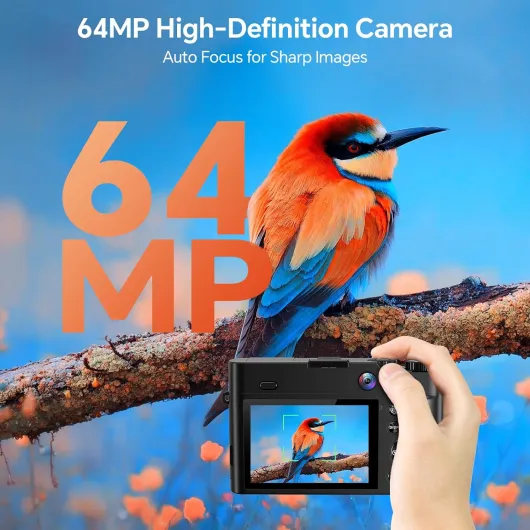
On the performance side, the headline numbers are 64MP photos and 4K video. These specs look impressive at first glance for a budget compact, but it’s important to put them in context. The small 1/2.3‑inch sensor and JPEG‑only output tell you this camera is not competing with larger‑sensor mirrorless systems. The advertised 64MP is very likely the result of interpolation or heavy pixel‑binning from a 13MP CMOS sensor (explicitly mentioned), so the real gain over a 16–24MP phone or basic DSLR may be limited in practice.
Still, several buyers comment positively on picture quality, calling it “good picture quality” and praising the results for holidays and casual shots. For someone moving up from a very old phone or a toy camera, the jump in clarity, especially in good light, can feel noticeable. The autofocus is described as quick in at least one review, and with contrast‑detect AF and AF‑A mode, the camera should handle everyday scenes, portraits, and landscapes reasonably well as long as the light is decent and subjects aren’t moving too fast.
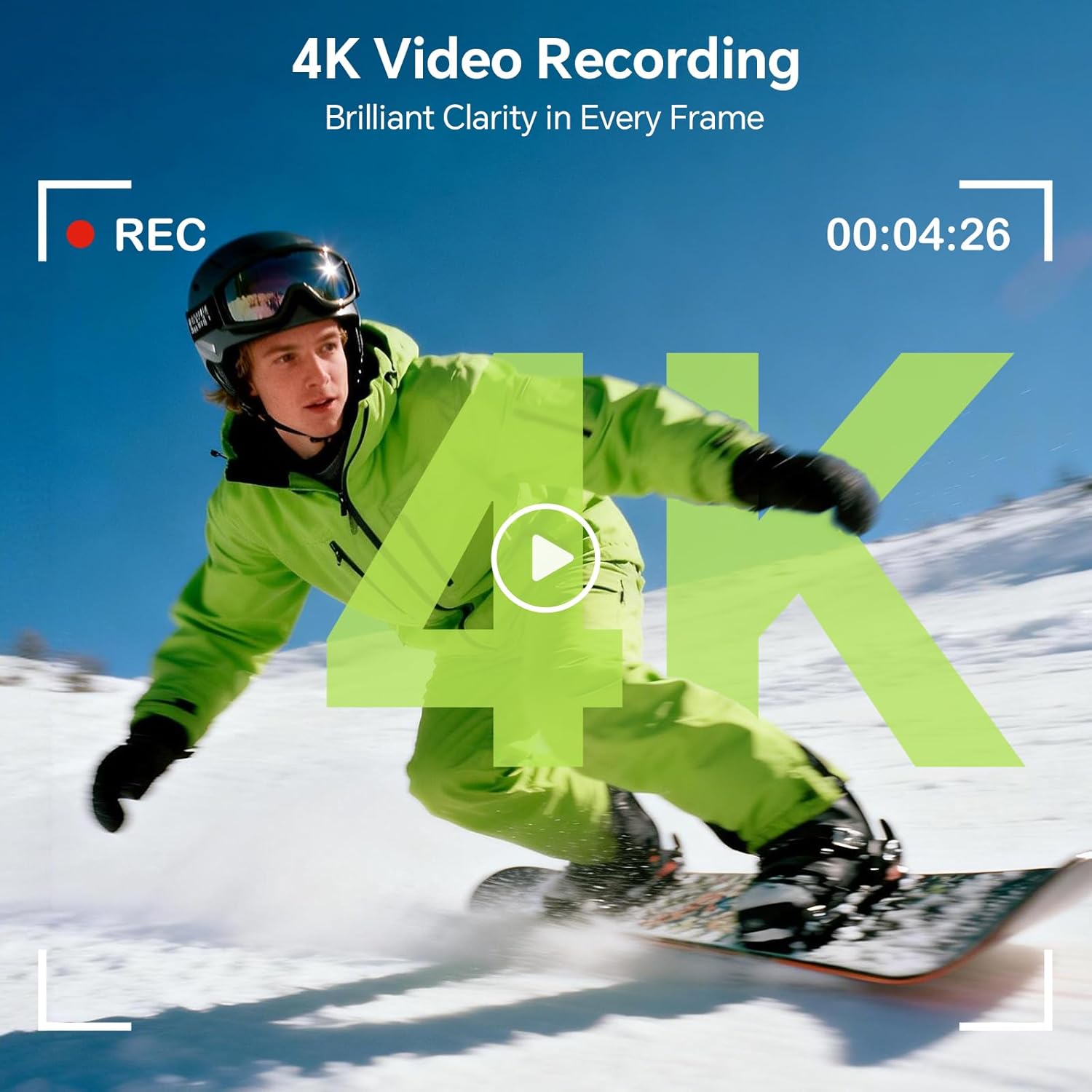
Video performance is where the 4K label matters. The camera records 2160p MP4, with frame rates listed up to 60 fps (likely at 1080p or 720p). Digital 6‑axis stabilisation and an anti‑shake mode are meant to smooth out handheld shots. Reviews mention that anti‑shake “works great for both photos and video” for casual use. For TikTok, YouTube, or family clips, that’s usually enough. If you’re expecting cinema‑grade dynamic range or clean low‑light 4K, this is probably not the right tool, but for daylight vlogs and basic B‑roll, it should be fine.
The 16x zoom is purely digital, which means image quality will decline as you zoom in. For social media and small prints, it’s often acceptable, but it’s not in the same league as a real optical zoom lens. On the plus side, you get lots of creative extras: burst mode, slow motion, loop recording, over 20 filters, timestamping, and pause/resume recording. In my opinion, that set of features matches the target: beginners and casual creators who value convenience and fun options more than technical perfection.

What this DGVDO compact camera actually offers
The DGVDO 4K 64MP camera is a compact all‑in‑one device built for stills and video. The core is a 1/2.3‑inch CMOS sensor advertised at 64MP effective resolution, paired with contrast‑detect autofocus and 4K (2160p) video recording in MP4 format. The manufacturer lists frame rates up to 60 fps (likely at lower resolutions), and stills are stored in JPEG with a 14‑bit depth claim, which is unusual for this price band but still limited by the lack of RAW support. White balance is automatic, exposure modes are Program and Manual, and there are dedicated scene modes like Landscape, Macro, Night Portrait, Sports and Portrait.
For vlogging and selfies, the camera uses a dual‑lens setup (front and rear), with a 3‑inch IPS LCD screen and a mode dial meant to keep settings accessible. The zoom is 16x digital, not optical, which means the camera is enlarging the image electronically rather than moving lens elements. On paper, 6‑axis digital stabilisation and an anti‑shake function try to compensate hand movement, especially useful for handheld video and casual travel shots.
Connectivity and versatility are also part of the pitch. The camera can double as a webcam for computers and is compatible with smartphones/tablets via Wi‑Fi. It supports SD and microSD cards and comes with a 32 GB card in the box, so new users can start shooting immediately. A USB port is used for file transfer and charging, and there is one video‑out port if you want to connect it to a display. The aspect ratio for photos is 16:9, matching most modern screens.
The target use cases are clearly spelled out: vlogging, social media, holidays, and beginners learning basic photography. Several Amazon buyers describe giving it as a gift to teenagers or using it as a smaller companion to a DSLR. In my view, that’s the right way to think about it: a budget, all‑in‑one compact that tries to be simple and flexible, not a professional tool or a serious system camera with interchangeable lenses.
Pros
- Strong feature set for the price: 4K video, 64MP stills (interpolated), dual lenses and digital stabilisation
- Comes with 2 batteries, 32 GB SD card, charger, strap and bag, so you can start shooting immediately
- Simple, compact design and interface that many beginners and gift buyers find easy to use
Cons
- Small 1/2.3-inch sensor, digital-only 16x zoom and JPEG-only output limit image quality and flexibility
- No weather resistance and at least one report of serious battery/quality issues suggest modest durability and quality control
Conclusion
Analysis score
The DGVDO 4K 64MP vlogging camera positions itself as a budget‑friendly, all‑in‑one option for beginners, families, and casual content creators. On paper, it offers a lot: 4K video, high‑resolution stills, autofocus, digital stabilisation, dual lenses for selfies and vlogging, and a 3‑inch IPS screen. The box contents are generous too, with two batteries, a 32 GB SD card, charger, strap, and bag. Most published reviews are positive, highlighting ease of use, decent picture quality for the price, and a form factor that’s convenient for holidays and day‑to‑day shooting.
It’s not without downsides. The small sensor, digital‑only zoom, JPEG‑only capture, and lack of weather resistance place clear limits on image quality and robustness. There is also at least one strong complaint about battery performance and build quality, which suggests that quality control isn’t perfect. In my opinion, this camera makes sense if you want something simple and cheap to learn on, to give to a child or teenager, or to use as a lightweight travel or backup camera, especially if you catch it under the £100 mark.
If you are more demanding about image quality, low‑light performance, or long‑term reliability, or if you plan to shoot serious projects, it would be wiser to invest in an entry‑level mirrorless or DSLR from a major brand. For everyone else who just wants to record memories and basic vlogs without spending much, this DGVDO compact looks like a reasonably balanced option with good value, as long as you keep your expectations realistic and check your unit thoroughly while it’s still under replacement policy.