Summary
Analysis score
Average of the criteria rated below
Is the Penerl VITRO worth the money?
Minimalist aluminium design with no screen
Battery life: big promise, very inconsistent feedback
Build quality and reliability over time
Health tracking and sport features: solid on paper, some limits in practice
What the Penerl VITRO actually offers
Pros
- Aluminium, screen-free design that is slim, discreet and IP68-rated
- Dual PPG and ECG sensors with broad 24/7 wellness tracking (HR, SpO2, HRV, stress, sleep, menstrual cycle)
- Includes SOS alerts, fall detection and family sharing for remote monitoring
Cons
- Battery life very inconsistent across buyers, with some reports of rapid degradation
- Fall detection and SOS behaviour described as unreliable by some users
- Price level reportedly close to mainstream brands that offer more mature ecosystems

Specifications
View full product page →| Brand | Penerl |
A discreet health band with big ambitions
The Penerl VITRO is a small, screen-free fitness tracker that tries to do the job of a much bulkier smartwatch. On paper it packs 24/7 health tracking, dual PPG and ECG sensors, fall detection with SOS alerts, and a claimed 15‑day battery life into a 50 g aluminium band. It also throws in 188 sport modes and IP68 water resistance, so the spec sheet clearly aims at people who want constant health metrics without wearing a chunky watch.
The public feedback is more nuanced. The average rating sits at 3.5/5 over around 75 reviews, which is neither a flop nor a clear success. Some buyers praise the build quality, graphs in the app, and long battery life that lines up with the marketing. Others complain about fast battery degradation and unreliable fall detection, which is awkward when one of the headline features is exactly that safety function.
The brand itself is not a big household name, which matters when you are trusting it with ECG data, fall alerts and family sharing. That does not mean it is bad by default, but it does mean the product has to earn trust through consistent behaviour and decent support. From the comments, the experience looks very split: some users are clearly satisfied, others feel they paid too much for what they got.
In my opinion, this tracker is interesting mainly because of the ECG + SOS + aluminium build mix at a compact size. But it is not a slam dunk: the safety features and battery are questioned in several reviews, and there are strong alternatives from better-known brands around the same price range. It looks like a good fit for a specific profile, but not for everyone.
Is the Penerl VITRO worth the money?
The VITRO sits in a segment where big brands like Xiaomi, Huawei, Fitbit and others already offer capable fitness trackers. One reviewer explicitly says it is a “great fitness tracker but overpriced” and notes that mainstream brands offer similar features for the same price or less. The exact price is not quoted in the comments, but this kind of remark usually appears when a lesser-known brand tries to charge close to what established players ask for their mid-range products.
On the positive side, you do get quite a lot of features for the package: aluminium build, dual PPG/ECG, IP68, 188 sport modes, SOS and fall detection, family sharing, and 24/7 wellness metrics. Some buyers are very happy and describe it as strong build quality with performance “miles above plastic bands” they have tried. Another calls it a “feature-packed fitness tracker with great battery life” and feels the price is justified by the range of functions and the premium feel.
On the downside, the 3.5/5 overall rating and the recurring complaints about battery life and safety features create a risk factor. When you pay close to what big brands charge, you usually expect more consistency. Here, the experience is split: some users basically get exactly what is promised, others end up with short battery life and unreliable fall alerts, which quickly makes the product feel like an expensive mistake.
In my opinion, the VITRO offers good theoretical value if you specifically want ECG + SOS in a discreet metal band and are ready to accept the uncertainty that comes with a smaller brand. If you mainly care about stable battery life, mature sleep tracking and broad app support, a well-known competitor may be safer at similar cost. The value here is niche: attractive for a certain profile, less convincing for buyers who prioritise reliability and long-term support.
Minimalist aluminium design with no screen
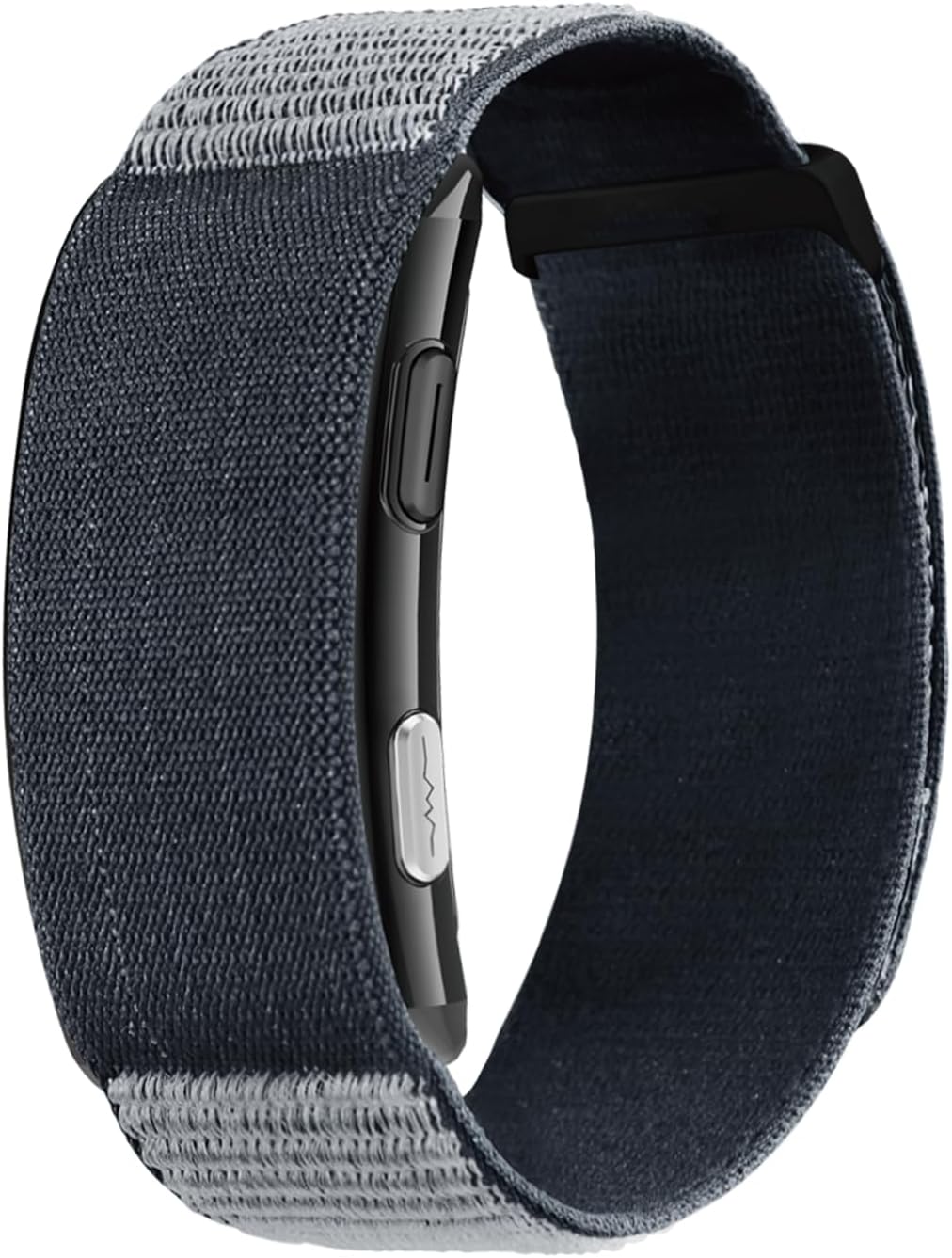
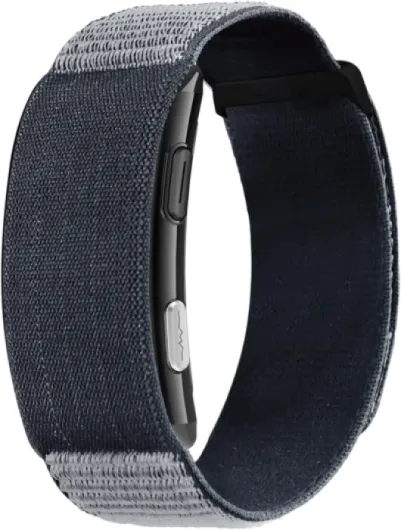
The design choice that stands out is the screen-free aluminium band. Unlike classic fitness trackers that rely on a small OLED or LCD, this one goes for an anodised aerospace-grade aluminium casing in metallic black, combined with a magnetic clasp and interchangeable metal and nylon straps. One reviewer specifically praises the aluminium shell for shrugging off a hard knock and still looking fresh afterwards, which suggests the casing is not just cosmetic. The IP68 rating also points to decent protection against dust and water (showers, rain, surface swimming) as long as you respect the warning about not using it in saunas, hot baths or diving.
Several comments mention that the band is slim and discreet, easy to forget on the wrist during the day. For people who dislike big smartwatch screens or want something that passes more as a bracelet than a gadget, this is likely a key selling point. On the flip side, the absence of a display means you rely heavily on your phone to read metrics and notifications. That will not suit everyone; some users simply prefer to glance at their wrist for steps and heart rate without opening an app.
The tiny magnetic clasp gets positive remarks for practicality. A magnetic system usually means quick on/off and easy adjustment, but it can also raise questions about long-term wear, especially during intense sports. There are no widespread complaints about accidental opening in the comments, though, so at least among current buyers it does not seem like a common issue.
In my opinion, the design is targeted at people who want a clean, jewellery-like tracker rather than a mini smartphone on the wrist. If you value a bright screen and rich on-device controls, this will feel limited. If you prefer something lightweight, low-profile and metal rather than plastic, the VITRO looks solid on paper and is supported by several positive remarks about its premium feel and everyday wearability.
Battery life: big promise, very inconsistent feedback
The spec sheet advertises a 15‑day battery life, which is ambitious for a device that tracks heart rate 24/7, monitors sleep, and runs continuous sensors like PPG. The internal battery capacity is not listed, but given the 0.05 kg weight and minimalist hardware (no display), that 15‑day claim is not unrealistic on paper if sampling rates and vibration alerts are kept moderate. Some buyers actually confirm getting “close to the claimed 15 days” on a single charge, which shows the advertised figure is not pure fantasy for everyone.
However, other reviews tell a very different story. One verified purchaser explains that the band initially lasted 4–5 days, then after only two months the battery degraded to the point where it no longer makes it through 24 hours, despite no change in settings and minimal use of notifications. Another review simply states that the battery life is “more like 2 days not 15”. That is a huge gap between marketing and real-world experience and suggests either inconsistent quality control or strong dependence on how features are configured.
Continuous monitoring of heart rate, blood oxygen, skin temperature, stress, plus frequent vibration alerts and sport tracking can destroy any battery claim if everything is set to maximum. But the complaint about rapid degradation after a short time is more worrying, because that points to potential ageing issues or faulty cells rather than just heavy usage. There is not enough volume of similar reports to say it is systematic, but it is clearly more than a minor detail for the affected users.
In my opinion, the battery aspect is the biggest question mark on this product. Some people are satisfied, others are very frustrated. If you decide to go for it, it is wise to assume a more conservative real-life range (around a week) and see the 15‑day figure as an ideal case with limited features turned on. Anyone who absolutely needs long, reliable battery life with no surprises might be more comfortable with a mainstream tracker whose endurance and ageing behaviour are better documented.
Build quality and reliability over time
From a pure materials standpoint, the VITRO looks reassuring. The casing is aerospace-grade anodised aluminium, which is usually both light and resistant to everyday knocks and scratches. One buyer recounts a fall where the rod went flying and they skidded on wet concrete; they note that the aluminium shell took the hit better than their pride and still looked good afterwards. That is a strong anecdote in favour of the physical robustness of the device. The IP68 rating also indicates solid protection against dust and water immersion to a limited depth, as long as you keep it away from high-pressure or high-temperature environments like saunas and hot baths, as the safety instructions insist.
The supplied metal and nylon straps give users options for style and comfort. Nylon is usually more forgiving for sports and sleeping, metal can feel more “dressy” for daily wear. There are no recurring complaints about broken straps or clasps in the comments, which is a positive sign. The magnetic clasp is even mentioned as a good idea by at least one user, suggesting it holds up in normal use.
Where durability becomes more questionable is in the electronic and functional reliability. The negative reviews about battery degradation after a couple of months raise concerns about long-term endurance of the battery cell or charging system. In addition, there are comments about fall detection not triggering during actual falls but firing later without a reason. That is not a physical breakage, but it is a reliability issue: a safety feature that behaves inconsistently can reduce trust in the product as a whole.
In my opinion, the VITRO looks physically tough but functionally uneven. The aluminium shell and IP rating should handle daily life, sports, and occasional impacts reasonably well. However, the mixed reports on battery ageing and the erratic behaviour of fall alerts in some cases mean durability is not just about the shell; it is about whether the electronics and firmware stay dependable over time. For users who plan to rely on the SOS and fall detection, that uncertainty is not trivial.
Health tracking and sport features: solid on paper, some limits in practice
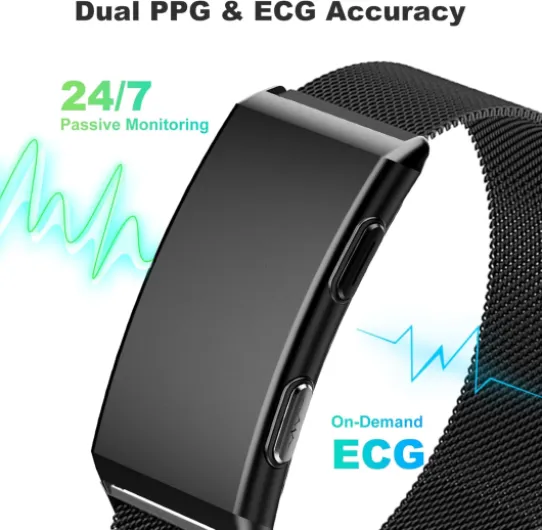
On the performance side, the VITRO leans heavily on its dual PPG and ECG heart tracking. Continuous optical monitoring (PPG) runs in the background, while the ECG is triggered manually and takes around 30 seconds according to one buyer. Several reviews state that heart rate readings and ECG data line up reasonably well with other devices they own, which suggests the algorithms are at least in the right ballpark for wellness tracking. The product is clearly marked as non-medical, so anyone expecting hospital-grade precision is misaligned with what the brand is promising.
The 24/7 wellness tracking covers heart rate, blood oxygen, skin temperature, HRV, stress, body metrics, menstrual cycle and sleep patterns. Some users find the sleep tracking useful and fairly detailed, clearly showing light and deep sleep plus wake periods. Others call the sleep tracking “pretty rubbish”, so the experience is mixed. That kind of divide is common in this category: sleep algorithms are heavily dependent on movement and heart rate, and small differences in wearing position or user habits can skew the results.
For sports, the band advertises 188 modes. There is not much detail in the reviews about advanced metrics like VO2 max or training load, so it is safer to assume basic tracking: duration, heart rate zones, possibly calories and distance when relevant. One reviewer says there are “stacks of sport modes” they will probably never exhaust, which confirms the variety but not necessarily the depth of analysis. If you are a serious runner or cyclist looking for advanced GPS metrics, this product does not look like the main candidate; it is more of an all-round daily activity and light workout tracker.
In my view, the performance package is decent for general wellness but not aimed at hardcore athletes. The ECG, HRV and stress metrics are a plus at this price level, and several comments say the data is easy to read in the app. However, the mixed feedback on sleep and the lack of detail about sport analytics mean expectations should stay moderate. It is a good fit for people who want an overview of their health trends and casual sport tracking, not a replacement for high-end sports watches.
What the Penerl VITRO actually offers
The VITRO is positioned as a general wellness and fitness band, not a medical device. The safety instructions repeat this clearly: no diagnosis, no treatment, no disease prevention. It tracks heart rate via PPG all day, lets you run on-demand ECG recordings, and syncs the data to the G BAND app on iOS (13+) and Android (8+). On paper you get trends for heart rate, blood oxygen, skin temperature, HRV, stress, sleep, menstrual cycle, and broader “metabolic wellness” insights. That is a lot for a small aluminium pod without a classic display.
Beyond health, the brand advertises 188 sport modes. Realistically, that usually means a long list of niche profiles (different gym machines, dance types, outdoor activities) built on top of a smaller number of core tracking algorithms. Still, it should cover the usual suspects: running, cycling, swimming, yoga and basic gym sessions. Smart notifications are present but kept simple: vibration alerts for messages, alarms, sedentary reminders and heart-rate-related warnings, rather than full smartwatch features like calls or app ecosystems.
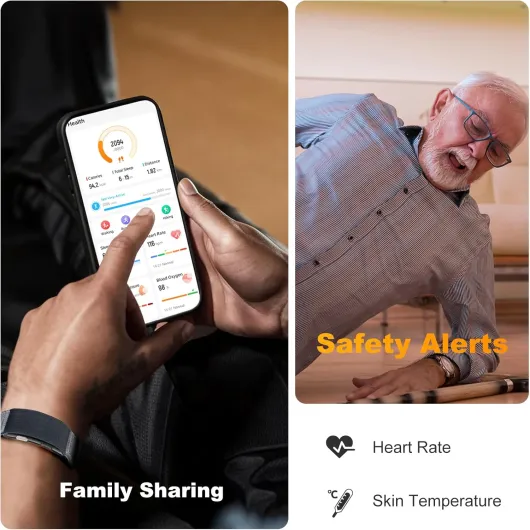
The other major angle is safety and remote monitoring. The band includes manual SOS functions and motion-based fall detection that can notify preset contacts. There is also a family sharing feature so relatives can view selected wellness data in the app. Several reviewers highlight this as a reassuring function, especially for older family members, even though not everyone is satisfied with how consistently it behaves.
On the hardware side, the band uses an aerospace-grade anodised aluminium casing, IP68 water resistance, and a 15‑day advertised battery life. In the box you get the tracker itself, a charging cable, an instruction manual, and two straps (metal and nylon). At about 0.05 kg, it is very light. In my opinion, the overall pitch is clear: a compact, non-flashy band that focuses on health metrics and safety alerts more than on smartwatch features or a big colourful screen.
Pros
- Aluminium, screen-free design that is slim, discreet and IP68-rated
- Dual PPG and ECG sensors with broad 24/7 wellness tracking (HR, SpO2, HRV, stress, sleep, menstrual cycle)
- Includes SOS alerts, fall detection and family sharing for remote monitoring
Cons
- Battery life very inconsistent across buyers, with some reports of rapid degradation
- Fall detection and SOS behaviour described as unreliable by some users
- Price level reportedly close to mainstream brands that offer more mature ecosystems
Conclusion
Analysis score
The Penerl VITRO is an interesting fitness tracker on paper: a light aluminium band with no flashy screen, but with ECG, 24/7 health metrics, 188 sport modes, SOS alerts, fall detection and family sharing. Some buyers are clearly satisfied, praising the premium feel, easy-to-read app graphs, and battery life that can approach the advertised 15 days. For users who want a discreet, metal wellness band with safety features for themselves or relatives, it ticks a lot of boxes.
However, the public feedback is too mixed to ignore. Battery life is the main red flag, with several reviewers describing either much shorter endurance than promised or rapid degradation after a couple of months. The fall detection and SOS features, which are supposed to be key selling points, also appear unreliable for some users. Add in a price level that seems close to big-name competitors, and the 3.5/5 average rating makes sense: not a disaster, but not a clear win either.
In my opinion, this tracker suits people who value form factor and feature set over brand name, and who are comfortable accepting some uncertainty in exchange for ECG + SOS in a compact metal design. Those who need rock-solid battery life, highly consistent safety alerts, and the ecosystem and support of a major brand should probably look elsewhere or wait for a discount. It is a promising concept with real strengths, but the execution and reliability do not look universally convincing yet.