Summary
Analysis score
Average of the criteria rated below
Is the 4G LTE Cam S330 good value for money?
Design and installation: dome, solar, and off‑grid mounting
Solar panel and 9,400 mAh battery: "forever power" in practice
Outdoor durability, weather resistance, and reliability
4K image quality, AI tracking, and 4G data behavior
What the 4G LTE Cam S330 actually offers
Pros
- True off‑grid capability with 4G LTE and included roaming SIM plus Wi‑Fi dual mode
- Solar panel and 9,400 mAh battery often keep charge near 100% with minimal maintenance
- 4K resolution with pan‑tilt 360° coverage and color night vision via 100‑lumen spotlight
Cons
- Ongoing cellular data costs if you rely on 4G, especially with frequent live viewing
- Setup and QR code pairing can be tricky; some users report poor documentation and support
- Identification quality drops at longer distances at night despite 4K resolution

Specifications
View full product page →| Brand | eufy Security |
4K security for the middle of nowhere
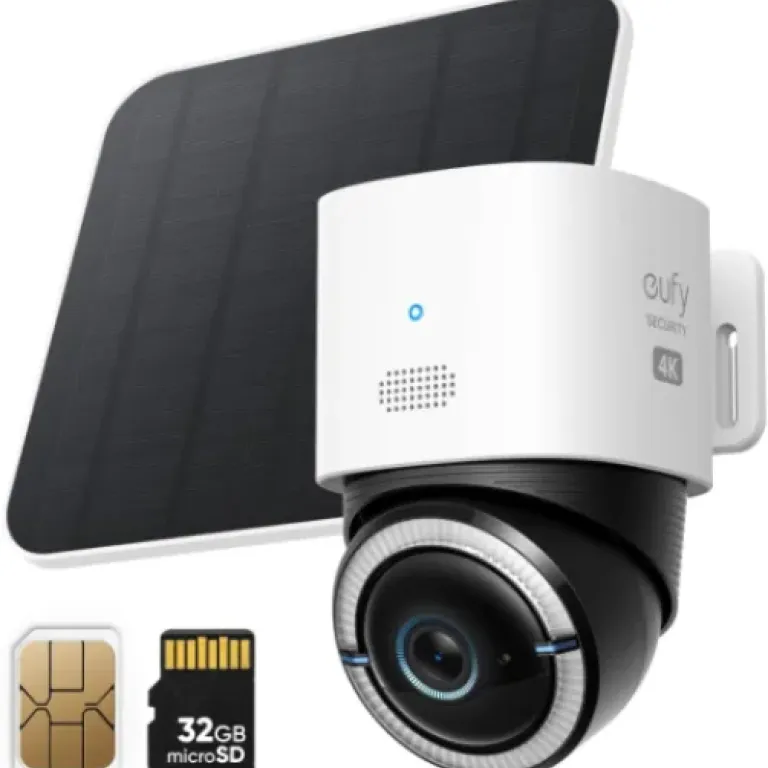
The Eufy Security 4G LTE Cam S330 targets a very specific need: securing spots where power and Wi‑Fi don’t exist or are unreliable. On paper, it mixes 4K resolution, a built‑in 4G LTE connection, and a solar panel that promises “forever power”. The idea is simple: mount it on a wall, pole, or outbuilding, drop in a SIM card, and you have a stand‑alone security setup. No router, no power cable, just an app on your phone.
Public reviews show a solid 4.2/5 average from several hundred ratings, which suggests the concept holds up reasonably well in real life, even if not everything is perfect. People use it on off‑grid chicken coops, construction sites, burned‑out houses waiting for rebuilds, and remote corners of their property. The recurring praise is that it actually works where traditional Wi‑Fi cameras would be useless, and that the solar panel usually keeps the battery topped up.
On the flip side, some users hit walls with the initial setup, especially around QR code pairing, app requirements, and understanding data plans. One very negative review describes an entire day wasted on pairing issues and frustration with customer service response times. Others are more positive about support, describing painless replacements when a unit misbehaved. So the experience seems to depend a lot on how comfortable you are with apps, SIM cards, and basic networking.
In my view, this camera is not a generic “cheap Wi‑Fi cam” for a small apartment. It’s more of a tool for people who explicitly need 4G and solar: rural landowners, construction sites, farms, cabins, or temporary setups. If that’s your situation, the spec sheet is attractive: 4K, pan‑tilt 360°, AI detection, 4G/Wi‑Fi dual mode, and a beefy 9,400 mAh battery. The rest of this analysis looks at how those promises line up with what buyers report in real use.
Is the 4G LTE Cam S330 good value for money?
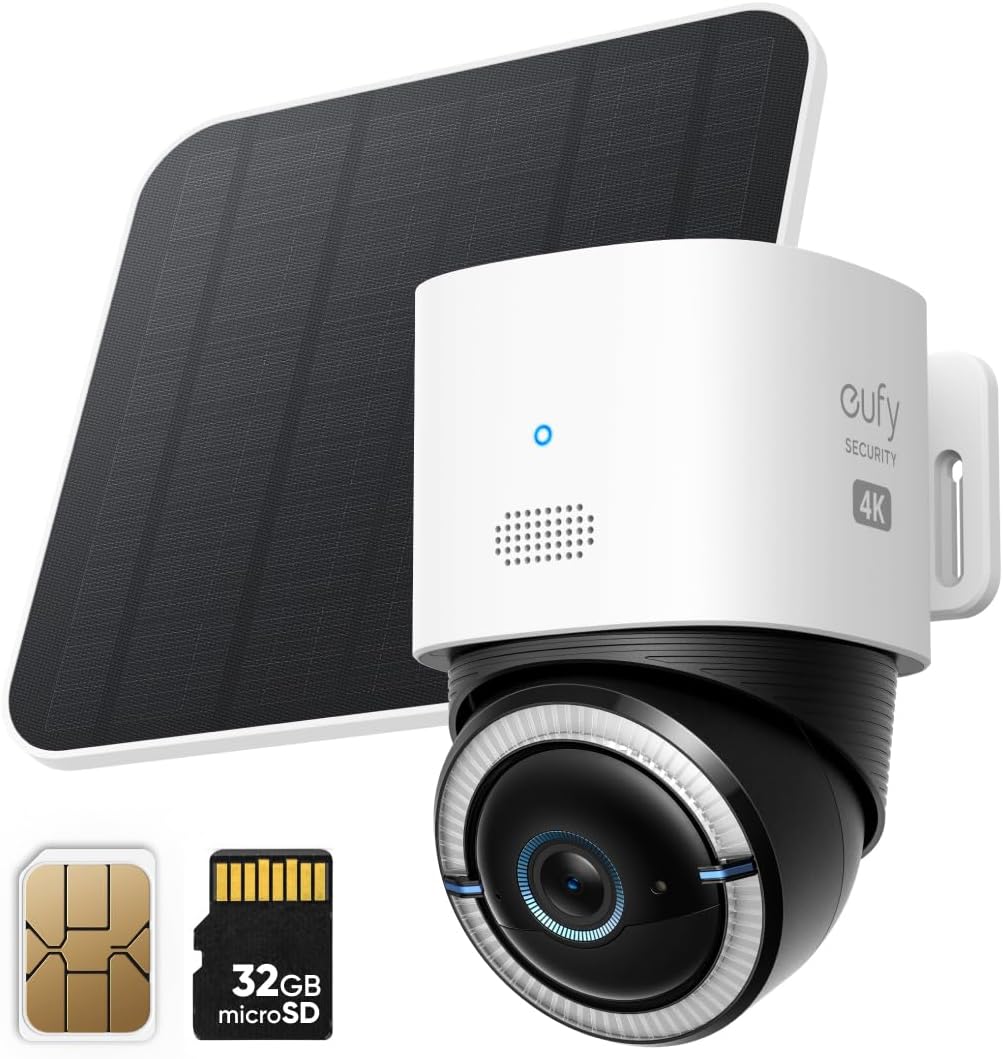
The value question with this camera hinges on one thing: do you actually need 4G and solar? If you just want to monitor a front porch within easy reach of a router and outlet, plenty of cheaper Wi‑Fi‑only cameras can do that job. The Eufy 4G LTE Cam S330 is clearly priced and specced for people who can’t or don’t want to run cables, and who care about 4K detail, pan‑tilt coverage, and autonomous power. With its 4G/Wi‑Fi dual mode, included solar panel, and 32 GB microSD card, it comes as a fairly complete kit for a single camera.
Looking at the reviews, buyers who actually use it in those off‑grid or semi‑off‑grid scenarios often feel they got their money’s worth. One construction site owner says the camera, which cost them around $250, saved about $1,500 by catching someone trying to steal wiring. Another off‑grid user is simply relieved to have a clear live view of their chicken coop and greenhouse, with notifications for predators like raccoons and hawks. For them, the combination of 4G, solar, and 4K image quality is exactly what they were paying for, and it delivers enough to justify the cost.
However, there are real extra costs to consider. First, the data plan: even with the EIOTCLUB roaming SIM, you’ll be paying monthly or per‑gigabyte fees if you rely on 4G. One user burned through the initial data in three days by leaving the camera always on in the background and checking it constantly. They then learned to manage usage and picked a smaller plan (around $13 for 30 days) that worked better for them. If you want 24/7 high‑resolution remote access and frequent live viewing over LTE, your data bill can climb fast. Second, if you choose to use AT&T, T‑Mobile, or Verizon SIMs directly, they must be data‑only plans, which might not be the cheapest consumer options.
In my opinion, the value is solid but targeted. For a remote property, construction site, cabin, or any place without infrastructure, this camera makes sense: you avoid trenching cable, installing power, or negotiating Wi‑Fi with neighbors. The 4.2/5 average rating with nearly a thousand reviews indicates most buyers are satisfied, but it’s not flawless. Setup complexity, occasional hardware issues, and data costs are the main drawbacks. If you go in with clear expectations about those points and you genuinely need what it offers, the price/performance balance is reasonable. If you just want a simple home Wi‑Fi camera, this is overkill and not the smartest way to spend your money.
Design and installation: dome, solar, and off‑grid mounting
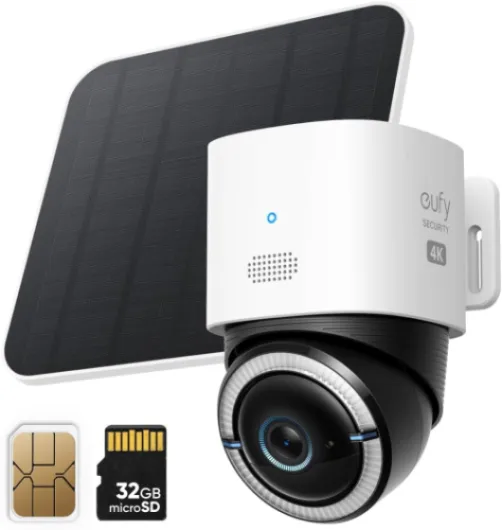
The 4G LTE Cam S330 uses a dome‑style form factor: roughly 3.54 x 3.54 x 5.67 inches and about 3.56 pounds. That’s not tiny, but it’s in line with many motorized pan‑tilt cameras that need room for moving parts and antennas. The design is clearly focused on outdoor mounting, with a wall bracket included in the box and a separate bracket for the solar panel. The kit also includes a pole mounting strap, screws, positioning stickers, and a charging cable, so you’re not starting from zero when it comes to hardware.
From the comments, installation is generally described as straightforward for anyone who has handled basic DIY tasks. One buyer mounted it on a telescoping flagpole using wire through the bracket holes and did the same with the solar panel. That kind of hack suggests the mounting system is flexible enough for improvised setups, even if Eufy doesn’t officially market a dedicated round‑pole clamp for this exact use. In my opinion, a proper adjustable pole mount in the box would make sense, given how many people want to mount these on posts, poles, or fences rather than flat walls.
The design also integrates a spotlight and what appears to be an integrated microphone and speaker for two‑way audio (common on Eufy cams, though not heavily discussed in the quoted reviews). The camera head can pan and tilt to cover a full 360° viewing angle horizontally, which is key if you’re watching a wide open area like a yard, construction site, or field. Instead of buying multiple fixed cameras, you can theoretically cover most of the surroundings from a single vantage point, as long as you place it high enough and avoid blind spots.
On the downside, one reviewer calls out the instruction materials: tiny 4‑point‑style font and not very helpful diagrams. That same person complains that QR code scanning for setup was unreliable, which turns the physical setup into a frustrating experience if you’re not tech‑savvy. So while the physical design and mounting hardware look solid on paper, the “design” of the onboarding process — the printed quick start guide and app flow — could be clearer. If you’re comfortable with smartphone apps and QR codes, it should be manageable; if not, budget some patience or help from someone more used to this kind of tech.
Solar panel and 9,400 mAh battery: "forever power" in practice
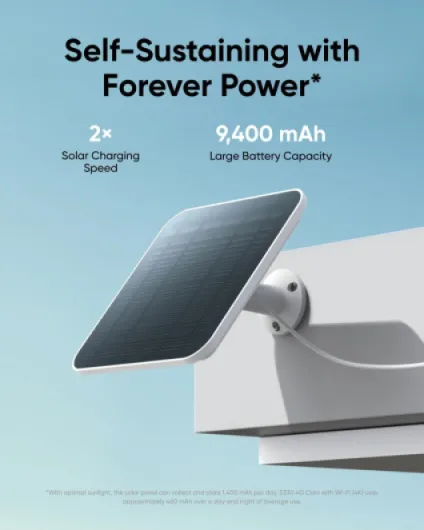
The power setup is one of the main reasons to pick this model: a 9,400 mAh battery combined with a dedicated solar panel. Eufy markets this as “Forever Power,” implying that under normal sunlight the camera should stay charged indefinitely. On paper, that’s plausible given the modest 4.5 W power draw and the fact that the panel only has to offset the camera’s consumption, not charge phones or anything else. The included solar panel and bracket are a real plus; many competing products sell the panel separately.
Several buyers confirm that the solar system holds up well. One review from a cold Wisconsin winter reports the battery stayed fully charged all season, despite the harsher conditions and shorter daylight hours. Another user with a chicken coop and greenhouse setup says the battery “stays at 100% full almost always,” even with frequent motion events from animals and occasional live view checks. Those anecdotes suggest that for typical outdoor use with some sun exposure, the battery and panel combo is sufficient to avoid manual charging.
Of course, this depends heavily on installation. If you mount the panel under eaves or in heavy shade, or if the camera is in a very high‑traffic area triggering constant recordings, the panel may struggle. The spec sheet doesn’t list explicit autonomy in days without sun, but with 9,400 mAh on board, it should handle at least a few cloudy days if you’re not streaming constantly in 4K. In my opinion, the bigger limiting factor for many users is not the battery but the data plan: power may be “free” from the sun, but cellular video still costs money.
One detail worth noting: the camera includes a charging cable, so if you ever need to top up the battery manually (for example, if you installed it in a spot with marginal sunlight), you can bring a power bank or plug it in temporarily. That gives you a fallback option. Overall, buyers who mention power are largely satisfied; you don’t see complaints about needing to recharge every few days. The pattern from the comments is clear: if you give the panel a reasonable amount of sun and don’t abuse live view over LTE, the camera behaves like a self‑sufficient unit with very little ongoing maintenance.
Outdoor durability, weather resistance, and reliability
The 4G LTE Cam S330 is advertised as an outdoor camera with an IP55 rating. That means it’s protected against dust to a degree and against water jets from any direction, but it’s not fully sealed like an IP67 device that can survive immersion. In practice, IP55 is common for outdoor electronics mounted under eaves or on walls. It should handle rain, wind, and dust, but it’s not meant to be submerged or blasted by high‑pressure washers. The shell is made of plastic, which is standard in this category, and helps keep the weight reasonable for wall or pole mounting.
From the reviews, weather durability seems decent. One owner mentions that their Eufy solar camera system held up fine through a cold Wisconsin winter, with no mention of cracking housings or water ingress. Others talk about using it in off‑grid farm or construction environments, which usually means exposure to dust, occasional splashes, and temperature swings, without reporting physical failures. The solar panel and bracket also appear to hold up to typical outdoor conditions, as there are no widespread complaints about them breaking off or corroding quickly.
Where durability gets more interesting is reliability over time. One user reports that one of their cameras stopped saving recorded events properly. They contacted Eufy, went through some troubleshooting, then sent the faulty unit back and received a new one. They describe the manufacturer as “very reasonable to work with,” which suggests that while hardware issues can happen, warranty handling is at least functional in that case. On the opposite end, another buyer had a nightmare setup experience, blaming both the tiny printed instructions and what they saw as slow, scripted customer support responses. That’s less about physical durability and more about brand reliability and support expectations.
In my opinion, the hardware durability looks acceptable for an outdoor camera at this price level: IP55, solar, plastic shell, no obvious design flaws mentioned. The weak spot is more likely to be the moving parts (pan/tilt motors) and the long‑term performance of the solar panel and battery, which only time will truly reveal. Since there are already hundreds of reviews and no wave of complaints about motors failing or panels dying quickly, the odds seem reasonable. Still, if you plan to mount it in a very exposed location (coastal salt air, extreme heat, direct sideways rain), I’d be cautious and maybe give it some shelter under an overhang to prolong its life.
4K image quality, AI tracking, and 4G data behavior
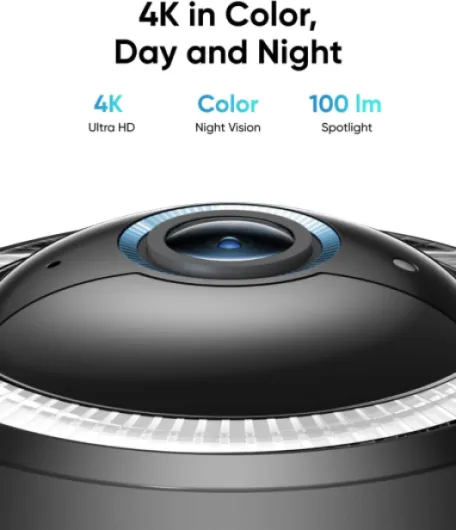
Performance is where this camera tries to justify its price. On paper, you get 4K resolution with color day and night, plus AI detection for people and vehicles, and a motorized 360° field of view. One reviewer says they can read the names on the sides of trucks in their driveway, which is consistent with a decent 4K sensor and lens. Eufy claims you can identify a license plate at about 30 feet (10 meters) during the day, which is realistic for 4K if compression and focus are handled correctly.
At night, the camera uses a 100‑lumen spotlight to keep footage in color up to around 26 feet (8 meters). Users mention that the spotlight is “super bright” and that night footage with the light on is clear enough to monitor activity in a yard or coop area. One buyer used it to monitor a burned house at night and was satisfied with how it illuminated vehicles and people coming into view. However, another reviewer points out that identification at longer distances, especially at night, is not great. If a truck had parked on the far side of a house, they doubt the camera would have captured enough detail to identify it. That’s a typical trade‑off: even with 4K, small license plates or faces at 20–30+ meters in the dark are tough.
The AI tracking and motion detection seem generally effective. One off‑grid user mentions that the camera “catches everything,” from raccoons and possums to hawks, although fast‑moving birds are hard to clearly capture, which is normal for most security cameras. Another user actually caught someone trying to steal wiring at a construction site. They say the motion alerts and live view worked as intended, and the footage was usable enough to understand what was happening and intervene. In my view, that’s exactly the job this type of camera is supposed to do: not cinematic video, but clear evidence.
Where performance gets more nuanced is 4G data usage. One buyer explains that leaving the camera always on and constantly checking the live feed quickly burned through the initial EIOTCLUB data bundle in about three days. After that, they switched to a more disciplined approach: keeping the camera off most of the time and only turning it on via the app when they wanted to check the site. With that method, a roughly $13, 30‑day data pack lasted the whole month. This lines up with basic logic: 4K video streaming is data‑hungry, and constant live view over cellular will cost you. So the camera’s performance is strong, but you have to manage your usage habits and detection settings if you want to keep data bills reasonable.
What the 4G LTE Cam S330 actually offers
On paper, the Eufy 4G LTE Cam S330 is a self‑contained surveillance unit: camera, battery, solar panel, and connectivity in one package. It’s an outdoor, wall‑mountable dome‑style camera with a motorized pan and tilt mechanism, giving a claimed 360° field of view. Video is listed as 4K (2160p) at 30 fps using MPEG‑4 encoding, with color night vision thanks to a 100‑lumen spotlight and “Night Color” low‑light processing. You’re looking at a device clearly aimed at permanent outdoor use, not a living‑room gadget.
The big selling point is connectivity. It supports both Wi‑Fi and 4G LTE, and Eufy includes an EIOTCLUB SIM card that can roam across AT&T, T‑Mobile, and Verizon networks in the US to automatically pick the strongest signal. The camera can run entirely on 4G if you have no Wi‑Fi, or use Wi‑Fi when available and automatically switch to 4G if your router or power goes down. That dual‑mode approach is a real differentiator compared with many “cellular only” cameras that become useless if you later add Wi‑Fi, or vice versa.
Power is handled by a solar panel and a built‑in 9,400 mAh lithium‑ion battery. Eufy markets this as “Forever Power”, which in practical terms means the panel should keep the battery topped up if the camera isn’t in deep shade all day and motion activity isn’t extreme. Several buyers report the battery sitting near 100% even through winter, which lines up with the relatively modest 4.5 W power draw on the spec sheet. That said, heavy 4G live‑view usage and frequent motion events can still eat power and, more importantly, cellular data.
Storage is local by default. The camera comes with a 32 GB microSD card according to the spec sheet (though at least one buyer said theirs did not, so there may be bundle variations or confusion with another model). Local recording helps avoid mandatory cloud fees, but if you rely on 4G, you still have to pay for data. The included EIOTCLUB SIM offers various prepaid data plans via the app, and reviews mention costs around the low tens of dollars per month for light to moderate use. Overall, the product positioning is clear: this is a mid‑to‑high‑end, self‑reliant outdoor camera for places where running cables or Wi‑Fi is a hassle.
Pros
- True off‑grid capability with 4G LTE and included roaming SIM plus Wi‑Fi dual mode
- Solar panel and 9,400 mAh battery often keep charge near 100% with minimal maintenance
- 4K resolution with pan‑tilt 360° coverage and color night vision via 100‑lumen spotlight
Cons
- Ongoing cellular data costs if you rely on 4G, especially with frequent live viewing
- Setup and QR code pairing can be tricky; some users report poor documentation and support
- Identification quality drops at longer distances at night despite 4K resolution
Conclusion
Analysis score
The Eufy Security 4G LTE Cam S330 is a niche product done fairly well. It’s built for people who need surveillance where power and Wi‑Fi are unreliable or nonexistent: rural land, farms, construction sites, cabins, or homes under renovation. On paper, it checks the right boxes for that role: 4K resolution, motorized 360° coverage, AI detection, IP55 weather resistance, a 9,400 mAh battery, and an included solar panel. Public reviews back up the idea that it genuinely works in these off‑grid scenarios, often keeping the battery near full and providing clear enough footage to identify vehicles and people at reasonable distances.
It’s not without flaws. Setup can be frustrating for less tech‑savvy users, especially when QR code pairing or app requirements don’t cooperate. One user had such a bad onboarding and support experience that they rated it the lowest possible. Others had a smoother ride and even praise customer service for handling a faulty unit without drama. Identification at long distances at night is limited, which is normal but worth noting if you expect crystal‑clear plates from across a large property. And the 4G data plans are an ongoing cost you must factor in, especially if you like to check the live view frequently.
In my opinion, this camera makes sense if: you have a specific off‑grid or hard‑to‑reach location, you’re okay managing a data plan, and you want a mostly self‑sufficient solution. If you fall into that group, it offers good value and a practical set of features. If your property already has solid Wi‑Fi and power everywhere you care about, you can probably get by with a simpler and cheaper model from Eufy or a competitor and avoid the cellular complexity altogether.