Summary
Analysis score
Average of the criteria rated below
Value for money: filters vs. elbow grease
Slim tower design and real‑world practicality
Long‑term reliability and the importance of cleaning
Coverage, noise, and real‑world quirks
What the Ionic Pro Turbo (TA550) actually offers
How well it cleans the air according to buyers
Pros
- Filterless design with washable blades eliminates ongoing filter purchases
- Very low power draw (12W) suitable for 24/7 operation in rooms up to about 500 sq. ft.
- Many long‑term owners report years of reliable use and noticeable air freshness when properly maintained
Cons
- Effectiveness and quietness depend heavily on thorough, regular cleaning of blades and ionizing wire
- No CADR figures, smart features, or air quality sensors compared to modern HEPA purifiers

Specifications
View full product page →| Brand | Ionic Pro |
A quiet, filterless tower that splits opinions
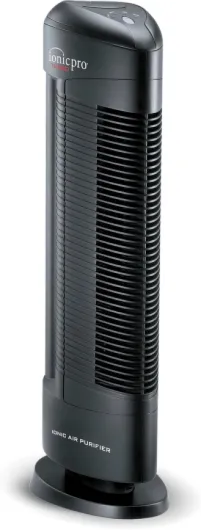
The Ionic Pro Turbo (TA550) sits in a weird but interesting corner of the air purifier market. On paper it promises a lot: a slim tower that covers up to 500 sq. ft., runs at only 12 watts, claims to remove 99.9% of common irritants, and does all this with no disposable filters. Instead of the usual HEPA cartridges, it relies on ionic technology and metal collection blades you wipe down by hand. The idea is clear: low running costs, quiet operation, and simple upkeep.
In the Amazon comments, the tone is mostly positive. The product averages around 4.3/5 from nearly 3,000 ratings, which is solid for something that’s been on the market for years. The most enthusiastic buyers talk about less sinus trouble, fresher-smelling rooms, and zero money spent on replacement filters. Others are more cautious and point to maintenance quirks, confusing cleaning instructions, or performance that seems less obvious in already clean environments.
What stands out is that this is not a modern HEPA machine with CADR numbers and app controls. It’s an older-style ionizer tower that tries to win on silence and long-term cost. Some reviewers have units that have been running for five or six years, which hints at decent durability if you keep up with cleaning. At the same time, a few people run into crackling noises, red warning lights, or shutdowns when the unit gets dirty or isn’t cleaned the right way.
In my opinion, this purifier targets a very specific profile: someone who hates buying filters, prefers a quiet device, and is willing to spend a bit of time cleaning blades and wires. If you want hard numbers on particle removal and modern features, this will feel dated. If you just want a silent tower quietly pulling gunk out of the air and you don’t mind getting your hands slightly dirty every few weeks, it starts to look more interesting.
Value for money: filters vs. elbow grease
Financially, the Ionic Pro Turbo follows a different logic than most HEPA purifiers. You pay the purchase price once, and then, in theory, there are no consumables. No HEPA cartridges, no carbon filters, nothing to reorder. Several reviewers emphasize how much they appreciate this. One person with two units running for over six years points out that they haven’t bought a single filter in all that time. Another buyer who equipped multiple floors and even bought units for their adult children insists that avoiding an “eternal cycle of buying more filters” is the main draw.
On top of that, the purifier uses only 12 watts, which is very low. That means you can realistically run it 24/7 with minimal impact on your power bill. Many modern HEPA purifiers with powerful fans draw significantly more. From a pure running‑cost perspective, this is hard to beat: low electricity, zero filter spend, and only your time for cleaning. Over several years, that can easily offset a higher upfront cost compared to some cheaper, filter‑based units.
The trade‑off is that part of the “cost” is your time and effort. Cleaning the blades properly, letting them dry, and wiping the ionizing wire is not a 30‑second job. Some owners mention that the official recommendation is to let the blades dry for 24 hours, which is not convenient if you only have one set. Others speed this up by towel‑drying and waiting a few hours, but it still takes a bit of planning. If you hate maintenance tasks or know you’ll procrastinate, then the practical value drops, because the purifier won’t perform at its best if you neglect cleaning.
In my opinion, the value proposition is strong for a specific type of buyer: someone patient enough to do regular maintenance and annoyed by the idea of buying filters every few months. Over a multi‑year period, the savings on consumables and electricity can be substantial. If you’d rather pay for the convenience of quick filter swaps and don’t want to think about wires or residue, then a more conventional HEPA purifier might feel like better value, even if the long‑term cost on paper is higher.
Slim tower design and real‑world practicality
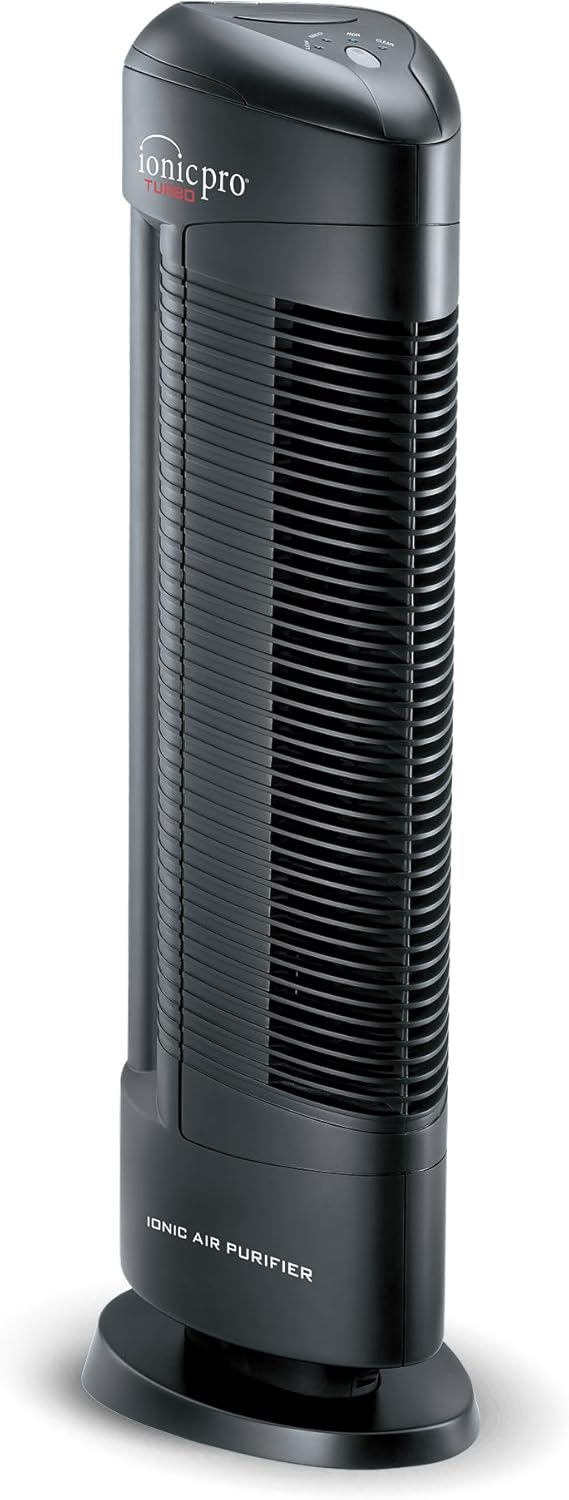
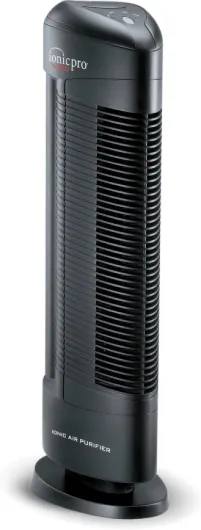
The Ionic Pro Turbo goes for a tower form factor, which is now common among home air purifiers. At 28.5 inches tall and under 10 inches wide, it has a relatively small footprint. Buyers often mention placing it against a wall, in a corner, or near a doorway without it taking up much floor space. The weight of 7.8 pounds means most adults can easily move it between rooms, which fits the idea of a portable unit covering multiple spaces over time rather than being stuck in one spot.
The overall look is straightforward: a black plastic tower with vents and a simple button‑based control panel offering three speed settings. There’s no touchscreen, no display of particle levels, and no app. Several reviewers seem to appreciate this simplicity: less to break, fewer confusing menus, and just a basic speed selection. Others, especially those used to newer HEPA purifiers, find it a bit dated and would have liked at least a basic indicator of air quality or fan speed beyond a simple light.
What stands out from the comments is how discreet the product is visually. It doesn’t scream for attention; in many homes it just blends into the background like a small speaker or fan. People who keep units on multiple floors mention that guests often don’t notice them unless they’re pointed out. That can be a plus if you don’t want your living room to look like a lab. On the downside, the black finish can show dust more than a white or grey model would, so you may end up wiping the outside surfaces from time to time if that sort of thing bothers you.
In my opinion, the design is functional and unflashy. It prioritizes footprint and ease of placement over modern aesthetic trends. If you’re into sleek smart‑home gadgets with displays and glass surfaces, this will feel basic. But if you just want a narrow, light tower you can tuck into a corner and forget, the design does its job. The main question is less about looks and more about whether you’re okay with a control layout that feels early‑2000s in a market where many competitors now offer more feedback and automation.
Long‑term reliability and the importance of cleaning
Durability looks like one of the stronger points of the Ionic Pro Turbo, as long as the owner treats maintenance seriously. Several reviews mention units running for five to six years and beyond while still doing their job. One buyer says they own two TA550‑type units: one bought at Walmart, the other on Amazon, both still functional after more than six years of continuous use. Another person says they’ve had multiple units over time, acknowledging that they eventually wear out but only after a long period.
What keeps coming up is that most of the “it broke” or “it shut off” complaints are linked to dirty blades or wires, not necessarily true hardware failure. Owners describe symptoms such as a red warning light, unexpected shutdowns, or loud zapping sounds. Then, after a deep clean (sometimes deeper than the manual suggests), the device goes back to working normally. One experienced user even says the default cleaning instructions from the seller are not very clear and insists that using rubbing alcohol and giving the parts enough time to dry is key to restoring proper function.
There are also some limitations. Replacement blades don’t seem easy to find, and at least one long‑term owner mentions wanting a second set of blades to swap in while the first set dries, but they couldn’t locate any. Over many years, the blades lose their shine but apparently still function. Some people might see the need to slide the wire cleaner or manually wipe the wire as a hassle, especially if the unit is placed in a hard‑to‑reach corner.
In my opinion, durability is good but conditional. The core electronics and body seem to last a long time, judging by the long‑term owners who still use theirs daily. However, this is not a “set and forget for years” device. If you ignore the red light, don’t clean the blades properly, or let the wire build up debris, it will start acting up. For someone willing to build cleaning into their routine, the lifespan potential looks solid. For someone who knows they’ll ignore maintenance warnings, the long‑term experience could be more frustrating.
Coverage, noise, and real‑world quirks
On paper, the Ionic Pro Turbo is rated for up to 500 sq. ft. with air in that area cycled three times per hour. That’s roughly in the range of a typical living room or medium open‑plan space. Users often place it in basements, bedrooms, or main living areas. While there’s no official CADR number, multiple reviewers mention that it seems to handle medium rooms reasonably well, especially when left running 24/7. Some people even run several units across different floors, which naturally boosts overall coverage.
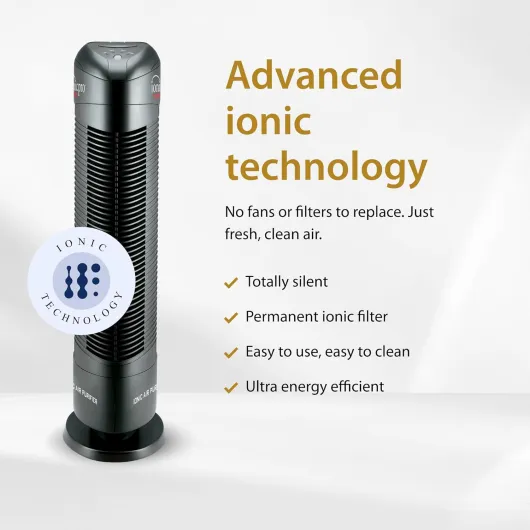
The brand advertises 100% silent ionizer technology, yet the spec sheet lists a noise level of 55 dB. In the comments, people overwhelmingly describe it as very quiet, often saying they can’t hear it unless they’re close. A few only notice a soft airflow at higher speeds. The main noise complaints are not about fan hum but about crackling, zapping, or buzzing sounds when the unit is dirty. Several owners explain that when dust builds up on the blades or the ionizing wire, the purifier starts making sharp noises or shuts itself off with a red light, which is the cue that it needs a thorough cleaning.
This brings up a performance quirk: the purifier’s effectiveness is tightly linked to regular maintenance. One detailed review explains that many unhappy users probably never cleaned it properly. They outline a method using rubbing alcohol and careful wiping of both the blades and the wire, then letting everything dry completely before restarting. According to them, once cleaned correctly, the noise disappears and the unit goes back to quietly collecting large amounts of dirt. That kind of comment suggests performance is good when the device is maintained but can degrade noticeably if cleaning is rushed or skipped.
In my opinion, pure performance here is a trade‑off. You get quiet, continuous operation and decent room coverage, but you also take on the responsibility of keeping the internals clean so it doesn’t crackle or shut down. If you’re the type who forgets maintenance tasks, a HEPA purifier with easy filter swaps might be more reliable. If you’re willing to spend 10–15 minutes on a proper clean every few weeks or when the light comes on, the performance described in the reviews sounds solid for everyday home use.
What the Ionic Pro Turbo (TA550) actually offers
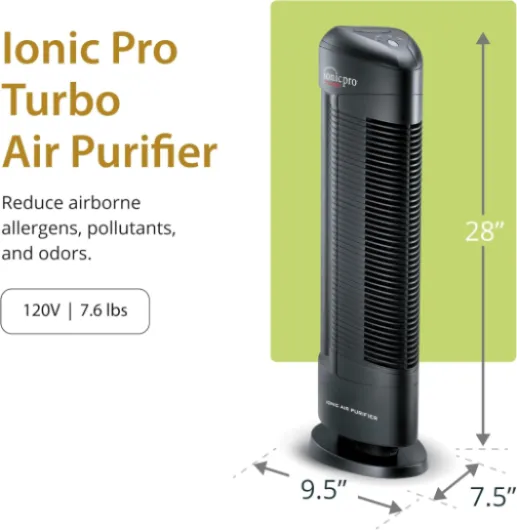
On the spec sheet, the Ionic Pro Turbo (TA550) is a medium‑to‑large‑room air purifier built around ionic technology rather than a classic fan + HEPA filter combo. The brand claims coverage of up to 500 square feet, with air in that space purified three times per hour. It uses just 12 watts, which is roughly the draw of or even less than a compact fluorescent bulb. The dimensions are 7.5"D x 9.5"W x 28.5"H and the weight is about 7.8 pounds, so it’s a tall but relatively light tower that can be moved from room to room without trouble.
The key selling point is the filterless design. Instead of buying cartridges, users slide out metal collection blades, wipe off the black residue with a damp cloth or similar, let them dry, and put them back in. There’s also a rear ionizing wire that needs occasional cleaning. Several verified buyers insist this is where the value lies: no ongoing filter costs, just a bit of hands‑on maintenance. A few long‑term owners mention six or more years of use without buying a single filter, which matches the concept.
The marketing also claims removal of 99.9% of airborne irritants such as dust, pollen, pet dander, smoke particles, and household odors. There’s no detailed CADR figure listed, so you don’t get the same level of quantified performance you see on modern HEPA purifiers. Instead, the brand leans on user‑friendly points: it is described as 100% silent ionizer technology, but the spec sheet also lists 55 dB noise level, which suggests there is still some airflow or fan element at certain settings, even if many buyers describe it as practically noiseless in use.
In my opinion, the product is clearly designed as a low‑maintenance, 24/7 background purifier rather than a high‑spec, data‑rich machine. The long availability date (first listed in 2000) and the relatively modest best‑seller rank show it’s no longer a market leader but still has a stable niche. If you want something simple to plug in and leave running all day that doesn’t chew through filters or electricity, the concept makes sense. If you’re chasing the latest filtration standards and connected features, this model will look pretty old‑school.
How well it cleans the air according to buyers
Effectiveness is where opinions get interesting. The brand claims the Ionic Pro Turbo removes 99.9% of airborne irritants like dust, pollen, pet dander, smoke, and odors in spaces up to 500 sq. ft. Several highly positive reviews back up at least part of that promise. One long, detailed comment describes a user who initially thought the unit was a gimmick because it was so quiet, then noticed that the air “smelled like after a rainfall” and that a musty basement smell disappeared. That same person later saw a clear layer of black residue on the blades during cleaning, which they took as evidence that the unit was indeed trapping particles.
Another reviewer with six years of use across two units reports a big drop in morning sinus headaches and says the blades get visibly dirty at home (carpet, three cats, lax cleaning habits) but not nearly as dirty in a tiled, well‑cleaned office. Their conclusion is that the purifier doesn’t perform miracles and doesn’t replace dusting, but it noticeably improves air quality, especially in more polluted or dusty environments. That fits the idea that an ionizer will have a more obvious effect where the baseline air is worse.
However, not all buyers are blown away. Some comments mention that in already clean, regularly vacuumed spaces, the difference is subtle or hard to notice. Others are skeptical of ionic technology in general and would prefer published CADR figures or independent lab data. There are scattered complaints that it doesn’t fully solve heavy smoke or pet odor issues on its own, which is not surprising; even high‑end HEPA purifiers often struggle with strong, continuous sources of pollution without ventilation or source control.
In my opinion, the realistic expectation for this product is moderate but continuous cleaning rather than drastic, instant changes. Reviews suggest it helps with general stuffiness, light odors, and everyday dust in moderately sized rooms, especially over days and weeks. For severe allergy sufferers or households with heavy smoke, I’d see it more as a helper than the sole solution. The lack of hard performance metrics is a downside if you want quantifiable guarantees, but the volume of long‑term positive reviews indicates that, for many households, it gets the job done at a level they’re happy with.
Pros
- Filterless design with washable blades eliminates ongoing filter purchases
- Very low power draw (12W) suitable for 24/7 operation in rooms up to about 500 sq. ft.
- Many long‑term owners report years of reliable use and noticeable air freshness when properly maintained
Cons
- Effectiveness and quietness depend heavily on thorough, regular cleaning of blades and ionizing wire
- No CADR figures, smart features, or air quality sensors compared to modern HEPA purifiers
Conclusion
Analysis score
The Ionic Pro Turbo (TA550) is not a shiny new HEPA purifier with apps and sensors. It’s a low‑key ionic tower that focuses on three things: quiet operation, low power use, and no disposable filters. The published reviews suggest it does those things well. Many long‑term owners report cleaner‑smelling rooms, less stuffiness, and in some cases fewer sinus issues, with blades that build up a clear layer of collected dirt over time. Coverage up to 500 sq. ft. and 12‑watt consumption make it suitable as a 24/7 background cleaner in medium rooms.
It’s not perfect. You don’t get CADR numbers, smart features, or plug‑and‑forget convenience. Performance and durability are strongly tied to how well you clean it. If you ignore the red light or rush through maintenance, you’re likely to encounter crackling noises or shutdowns. For people willing to spend occasional time wiping blades and the ionizing wire, the unit seems to last years and deliver steady, if not lab‑certified, air improvement.
In my opinion, this purifier makes sense for buyers who want to avoid ongoing filter costs, value near‑silent operation, and don’t mind a bit of hands‑on upkeep. Allergy sufferers in dusty or pet‑heavy homes may see the most noticeable benefits. Those who want hard performance data, modern controls, or absolute simplicity may be better served by a newer HEPA‑based model. Overall, it’s a solid, somewhat old‑school option that trades features and hard metrics for low running costs and straightforward, if slightly labor‑intensive, maintenance.