Summary
Analysis score
Average of the criteria rated below
Two effects (wide + macro) for roughly the cost of a filter
Chunky screw-on design with pronounced fisheye look
Metal housing, hefty glass, and budget-level finishing
Solid feel and metal threads, with occasional QC hiccups
Wide field of view and fun macro, with visible edge compromises
What this 58mm wide-angle/macro add-on actually does
Pros
- Very low cost compared to dedicated wide-angle or macro lenses
- Two-in-one design: 0.43x wide-angle plus detachable macro element
- Metal housing and glass optics give a solid, durable feel for the price
Cons
- Heavy front attachment that can unbalance small cameras
- Visible edge softness and strong fisheye-style distortion
- Dependent on 58mm filter threads or step rings, with occasional minor QC issues reported

Specifications
View full product page →| Brand | Altura Photo |
A cheap shortcut to wide angle and macro on your DSLR
The Altura Photo 58mm 0.43x HD Wide Angle Lens with Macro sits in a very particular niche: it’s not a standalone lens, but a screw-on converter that mounts to the 58mm filter thread of your existing lenses. The idea is simple: instead of buying an expensive wide-angle or dedicated macro lens, you attach this unit to something like a Canon 18–55mm kit lens and get a wider field of view plus a detachable macro element for close-ups. With an average of 4.2/5 stars from more than 8,700 Amazon reviews, it clearly has an audience.
On paper, this type of accessory is always a compromise. A 0.43x factor on a kit zoom promises a noticeably wider view, but optical quality will depend heavily on both the converter and the base lens. Several published reviews highlight that it delivers a clear enough image for casual work, social media, and vlogging, while also pointing out softness and distortion near the edges, which is expected for this price bracket.
The macro function is a second selling point. The front wide-angle group unscrews, leaving a close-up element that buyers often describe as a surprisingly fun bonus. People who thought they’d only use it for wide shots end up playing with extreme close-ups of plants, textures, and small objects. At this price, that “two-in-one” aspect is a big part of the perceived value.
In my opinion, this product makes sense if you understand what it is: a low-cost add-on that expands your creative options but doesn’t replace a true wide-angle or macro prime. It targets beginners, vloggers, and budget-conscious shooters who want more flexibility out of a kit lens, and who can live with some optical compromises to save a lot of money.
Two effects (wide + macro) for roughly the cost of a filter
Value is where this product clearly wins people over. Several reviewers mention paying around $25 and comparing that against name-brand wide-angle lenses that cost hundreds. One buyer says they were looking at spending over $200 on a wide-angle option for vlogging with a Nikon D5100 and ended up with this Altura lens instead, calling it a “steal” for the money. The fact that it also includes a detachable macro element effectively makes it a 2-in-1 accessory at filter-level pricing.
The average rating of 4.2/5 from thousands of reviews suggests that, for most buyers, the compromise between price and optical quality feels fair. People repeatedly describe it as a great budget alternative rather than pretending it matches real wide-angle glass. For common use cases—vlogging, casual landscapes, room tours, social media photos—the extra field of view and fun macro capability seem to justify the small investment, even with edge softness and distortion.
It also saves money through compatibility. Because it’s thread-based, one unit can serve multiple camera bodies and lenses, including DSLRs, mirrorless systems, and even camcorders or film cameras if you have the right step rings. One reviewer mentions using it from a Sony A7III down to an old Canon AE-1, which underlines how it can spread its cost over several setups. That’s very different from a dedicated lens locked to a single mount.
In my opinion, the value proposition is straightforward: if you’re price-sensitive, curious about ultra-wide and macro effects, and willing to accept some optical flaws, this accessory offers strong bang for the buck. If you’re a working professional delivering high-resolution prints or client work where image quality at the edges matters, the savings probably aren’t worth the compromises. For hobbyists and content creators who just want more creative options without a big investment, it lines up well with expectations.
Chunky screw-on design with pronounced fisheye look
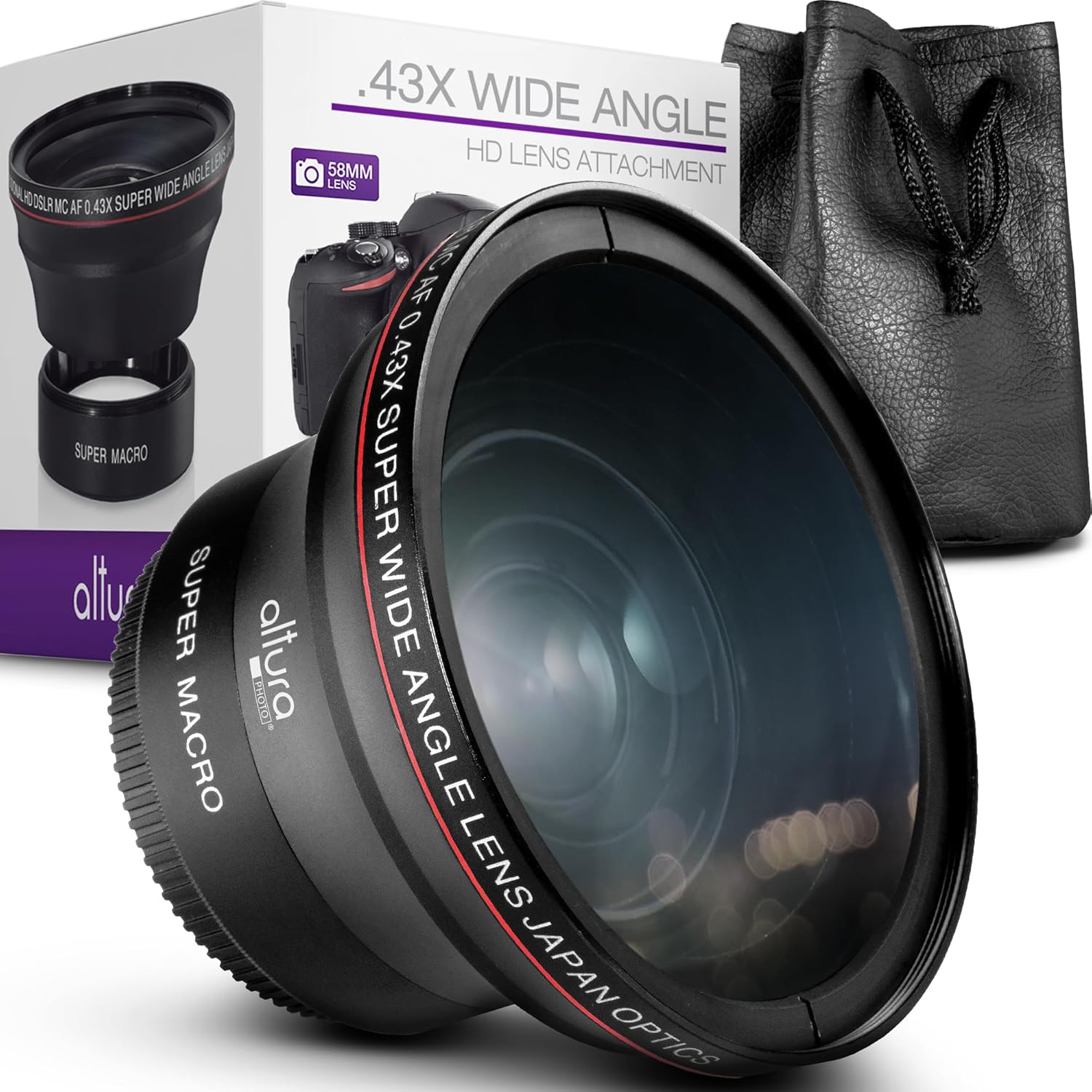
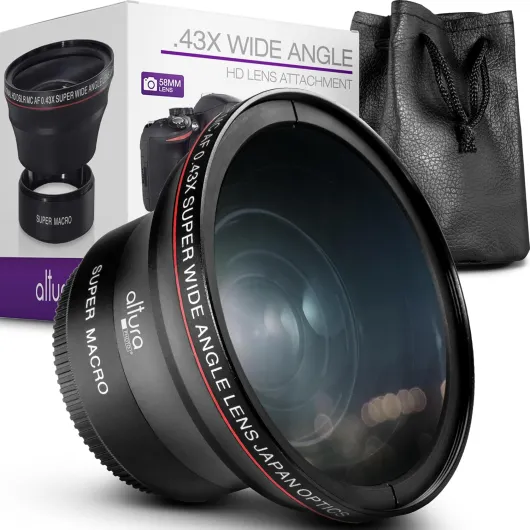
On the design side, this is a large, front-heavy attachment. The product dimensions are listed as 3.54 x 3.54 x 3.54 inches with a weight of about 10.9 ounces (roughly 309 grams). Several buyers emphasize how heavy and solid it feels compared to its low price, noting that the front glass diameter is around 85mm while the mounting thread is 58mm. That big front element is what allows the wide field of view, but it also explains why the combo becomes noticeably front-loaded on small DSLRs or mirrorless bodies.
The design is modular: the front wide-angle group screws onto the macro section, which in turn screws into your lens. One reviewer points out that you cannot use the wide-angle part alone without the macro; the macro acts as the interface to your lens. On the other hand, you can use the macro by itself for close-up work. This stacking design keeps costs down and gives you two functions in one housing, but it does mean extra joints and threads that can potentially pick up dust or tiny nicks over time.
Optically, the design produces a clear fisheye-style distortion. People who shared example shots mention strong curvature, especially noticeable on straight lines near the frame edges, like window frames or doorways. For vlogging, tight interior shots, or creative photography, that can be part of the appeal. For architecture or anything that demands straight geometry, it’s more of a drawback. The blur and softness that show up toward the edges in some user photos are consistent with this kind of inexpensive converter design.
Usability-wise, the screw-on nature makes it easy to mount and remove, but it does add an extra step to your shooting workflow. You’re effectively turning your normal lens into a dedicated ultra-wide or macro setup when it’s attached, and then spinning it off when you want your original focal range and optical performance back. In my opinion, the design is straightforward and practical for occasional use, but people expecting the handling of a native wide-angle lens will probably find it more fiddly and less balanced in the hand.
Metal housing, hefty glass, and budget-level finishing
Several buyers insist on one point: for the price, the build feels surprisingly solid. Comments repeatedly mention a metal housing, not plastic, and “quality glass” for both the macro and wide-angle elements. The roughly 11-ounce weight backs that up; this isn’t a hollow toy accessory. Threads are also metal, and reviews describe a secure fit to both the base lens and step-up rings, which is important for such a large front element.
The accessory package includes a rubber front cap that press-fits onto the big front ring, plus a synthetic (PU) pouch that one reviewer calls “vegan-leather.” These extras are simple but practical: they help protect the large front element from scratches and dust when the unit is not mounted. There’s no mention of exotic coatings or weather sealing; on paper this is standard optical glass with basic multi-coating at best, which is normal in this price segment.
Not everything is perfect. One verified buyer reports a small nick in the thread that caused a loud sound when unscrewing the lens, even though it still mounted securely. Another mentions a dented, unsealed box that looked like it might have been a return. These comments suggest that quality control is decent but not flawless. With a mass-market accessory at this price point, occasional minor defects are not surprising, and the overall review average of 4.2/5 indicates that serious defects are relatively rare.
In my opinion, the materials are one of the product’s strong points relative to cost. You’re getting metal and glass, a substantial feel, and accessories that make it easier to store and transport. It’s not high-end machining or pro-level finishing, and the optics clearly have limitations, but for a roughly $25 add-on, the material choices are more reassuring than the price might suggest. The trade-off is that the same solid construction makes the unit heavy, which has consequences for comfort and handling.

Solid feel and metal threads, with occasional QC hiccups
Durability is tricky to judge without long-term lab data, but the combination of metal housing, metal threads, and thick glass is a good starting point. Multiple reviewers describe the lens as heavy and sturdy, saying it “doesn’t feel cheap” and feels more expensive than its actual price. That generally suggests it can handle regular mounting and unmounting without falling apart, provided the user is not overly rough with it.
The threads are a key wear point on any screw-on accessory. Here, comments are mostly positive about how securely it attaches to both lenses and step-up rings. That said, one user mentions a nick in the threads that caused scraping noises when unscrewing. While this seems to be an isolated case in the comment pool, it’s a reminder that thread damage is a realistic risk if the lens is cross-threaded or dropped. With a large, heavy front element, an impact to the front ring could easily deform the thread if it hits a hard surface.
The included rubber cap and pouch contribute indirectly to durability by encouraging people to store it properly. A big exposed element thrown into a bag without protection would quickly pick up scratches or dust. The fact that Altura includes a snug-fitting rubber cap is practical: users say it holds well and protects the glass. The pouch is basic but at least gives you a place to keep the lens when it’s not on the camera.
In my opinion, for the price, durability looks good but not bulletproof. The solid metal and glass construction should age better than very cheap plastic add-ons, but the weight and size mean you need to be careful about impacts and about how much strain you put on the base lens’s filter threads. Used with some care and stored in its pouch, it ought to serve a casual shooter for quite a while. People who constantly mount and unmount gear in rough conditions might prefer to invest in a native wide-angle lens that’s designed to be knocked around more.
Wide field of view and fun macro, with visible edge compromises
On the performance front, expectations need to match the concept. This is a front converter, so you’re stacking optics in front of an existing lens. That will almost always introduce some image degradation compared to the bare lens. According to many reviews, the center sharpness remains quite usable, especially for casual stills, YouTube videos, and social media content. Several buyers explicitly state that it “maintains original sharpness/definition” in the center area for their purposes.
The main optical trade-offs show up at the edges. Users often note softness and blur toward the corners, plus the strong fisheye-style barrel distortion. One reviewer even says they’re fine with this because they plan to put their subject in the middle of the frame and let the blurred edges fall into the background. For vlogging where the subject is centered, or for stylized wide shots, that’s a reasonable approach. For critical landscape or architecture work, it’s obviously less ideal.
Autofocus performance seems largely unaffected in terms of speed and noise, at least according to the comments that mention it. One user with a Sony A7III and a 50mm E-mount lens notes no noticeable increase in autofocus noise. Since the converter doesn’t change the camera’s AF system or electronics, that makes sense: any focus issues are more likely to be about contrast and sharpness rather than mechanical incompatibility.
On the macro side, performance gets a lot of positive remarks. The detachable close-up element allows very short working distances and detailed shots of small items. People who never planned to do macro end up enjoying it as a creative tool. In my opinion, the performance is exactly what you’d expect from a budget converter: very good value for fun, non-critical work, but nowhere near the level of a real ultra-wide or dedicated macro prime. If your goal is professional-grade sharpness across the frame, this will feel limited; if your goal is to widen your kit lens cheaply and play with macro, it looks like it does the job.

What this 58mm wide-angle/macro add-on actually does
Functionally, this Altura Photo unit is a 0.43x wide-angle converter with a detachable macro section. It screws into the front of any lens that has a 58mm filter thread. That includes a long list of Canon EF-S kit lenses (18–55mm, 55–250mm), some Canon EF primes like the 50mm f/1.4 and 85mm f/1.8, plus various Nikon, Olympus, Panasonic, Fujifilm, and other lenses that share the same thread size. It does not mount to the camera body; it behaves like a large filter or front accessory.
The 0.43x factor means it multiplies your current focal length by roughly 0.43. So if you’re at 18mm on a Canon APS-C kit lens, you’re effectively around 7–8mm in terms of angle of view, which is very wide. That’s where the “breathtaking wide-angle” marketing line comes from. In practice, reviewers say it clearly widens your frame and lets you capture more of interiors, tight rooms, group scenes, and landscapes, with a noticeable fisheye-style curvature on the edges.
The macro side works differently. When you unscrew the front wide-angle element, the remaining rear element behaves like a close-up filter. Buyers report that it lets them focus extremely close to small subjects and capture fine detail—things like flower petals, insects, coins, and textures. It’s not a 1:1 macro lens in the technical sense, but for hobby use it seems to offer a strong magnification bump over a normal kit zoom’s closest focusing distance.
One strong point of this format is cross-system compatibility. Because it’s thread-based, users mention success on Canon DSLRs, Nikon DSLRs, Sony mirrorless (via lenses with 58mm threads or step rings), and even older film cameras. A few reviews describe mounting it via step-up rings on camcorders or lenses with smaller threads. In my opinion, that flexibility is a big part of why it ranks so high in camcorder and mirrorless accessory charts, even though it’s a relatively old product (first available in 2013).
Pros
- Very low cost compared to dedicated wide-angle or macro lenses
- Two-in-one design: 0.43x wide-angle plus detachable macro element
- Metal housing and glass optics give a solid, durable feel for the price
Cons
- Heavy front attachment that can unbalance small cameras
- Visible edge softness and strong fisheye-style distortion
- Dependent on 58mm filter threads or step rings, with occasional minor QC issues reported
Conclusion
Analysis score
Overall, the Altura Photo 58mm 0.43x HD Wide Angle Lens with Macro comes across as a practical budget tool rather than a precision optic. It widens the field of view on common 58mm-thread lenses and adds a surprisingly useful macro capability, all in a metal-and-glass package that feels more serious than its price suggests. The large user base and solid 4.2/5 average rating indicate that most buyers get what they expect: a fun, low-cost way to experiment with ultra-wide and close-up shots.
It’s not flawless. The unit is heavy and makes small cameras front-heavy, it introduces fisheye distortion and softness toward the edges, and occasional quality-control hiccups like nicked threads or dented packaging do appear in the reviews. It also relies on your existing lens, so its performance ceiling is limited by both the converter and the base glass. People looking for clean, edge-to-edge sharpness for landscapes, architecture, or professional work should still aim for a real wide-angle or macro lens.
In my opinion, this accessory is best for beginners, vloggers, and hobby photographers who want more creative options from a kit lens without spending a lot. It’s also suitable for anyone with multiple cameras who likes the idea of a single, thread-based wide/macro add-on they can move between systems. If you understand the trade-offs and treat it as a low-cost creative tool, the value is strong. If you expect pro-level optics, you’ll likely outgrow it quickly and end up shopping for dedicated lenses anyway.