Summary
Analysis score
Average of the criteria rated below
Is the Honeywell HX09CESAWG good value for money?
Compact footprint, simple layout, some practical quirks
Build quality, safety features and long-term outlook
Noise, energy use and daily operation
What this Honeywell 3‑in‑1 unit actually offers
Cooling and dehumidifying: strong in small rooms, limited by physics
Pros
- Effective cooling for small to medium rooms with 9000 BTU and compact footprint
- 3‑in‑1 functions (AC, 24 L/day dehumidifier, fan) with 24‑hour timer and remote control
- Honeywell branding with 2‑year warranty and built‑in safety protections
Cons
- Very noisy in operation (around 65 dB), often too loud for comfortable sleep
- Basic, sometimes flimsy window kit that may require DIY or aftermarket upgrades
- No brakes on casters, which can be a safety concern if placed on elevated surfaces

Specifications
View full product page →| Brand | Honeywell |
Portable AC that aims to tame small-room heat
The Honeywell 9000 BTU HX09CESAWG is a compact, 3‑in‑1 portable unit that combines air conditioning, dehumidification and fan mode in one casing. On paper, it targets small to medium rooms in homes and offices, with a focus on British-style summers rather than tropical heat. With a listed 9000 BTU cooling capacity, 24 L/day dehumidifier function and fan-only mode, it’s designed as a flexible seasonal tool rather than a permanent HVAC solution.
Public feedback is fairly positive without being glowing. The unit sits around 3.8/5 stars from roughly 70 Amazon reviews, which suggests most buyers feel it does the job, but there are some clear pain points. The recurring themes are strong cooling for smaller spaces, a lot of noise, and some mixed reactions on build details such as the window kit and mobility safety.
On the technical side, it draws about 1000 W at 240 V, uses R‑290 refrigerant, and offers a 5‑star efficiency tag with a SEER of 10.29. It’s a single-hose, non‑inverter, rotary-scroll compressor design, which is standard in this price/size range. At around 20 kg and under 70 cm high, it’s one of the more compact units in its category, which several buyers chose specifically to fit under desks or in tight studies.
In my opinion, the HX09CESAWG comes across as a practical, no‑frills option: good cooling power for modest rooms, simple controls, and a trusted brand name, but with clear compromises on noise and some ergonomic choices. If you expect split‑system silence or want to cool a very large open‑plan area, the published feedback suggests you’ll be disappointed. If you just want a small furnace of a room to stop baking during heatwaves, it looks much more convincing.
Is the Honeywell HX09CESAWG good value for money?
The price is not displayed here, but judging from how buyers talk about it and where Honeywell usually positions its products, this 9000 BTU unit sits somewhere in the middle of the portable AC market: not the cheapest, not the premium top end either. One reviewer explicitly says it’s “perhaps a bit more expensive than it deserves, market price wise,” but still calls it a solid 4‑star purchase, which sums up the value proposition quite well in my opinion.
For your money, you get three functions (AC, dehumidifier, fan), a known brand, a 2‑year warranty, and a spec sheet that’s coherent: 9000 BTU, 1000 W, SEER 10.29, 24 L/day dehumidifying capacity, and a compact, 20 kg casing. You also get a remote, timer and window kit included, so there’s no essential accessory missing. Compared to off‑brand budget units that might be slightly cheaper, Honeywell’s main added value is brand reliability, better quality control, and the comfort of easier warranty support.
On the downside, the noise level is high and clearly documented by many buyers. If you end up having to run it at full blast because your room is at the upper limit of its capacity, the acoustic discomfort is the hidden “cost” of choosing a cheaper portable unit over a quiet split system. Another small hit to perceived value is the basic window kit, which some users find flimsy enough to justify buying a better third‑party solution, adding to the total spend.
Overall, I would describe the value as good but not outstanding. If you specifically need a compact footprint, want the reassurance of the Honeywell name and warranty, and are cooling a small room, it makes sense. If you have a larger space, are extremely noise‑sensitive, or are willing to invest more in a split system, there are better options long‑term. For renters and small‑room users who just want reliable cooling a few weeks a year, it looks like a sensible middle‑ground purchase.
Compact footprint, simple layout, some practical quirks
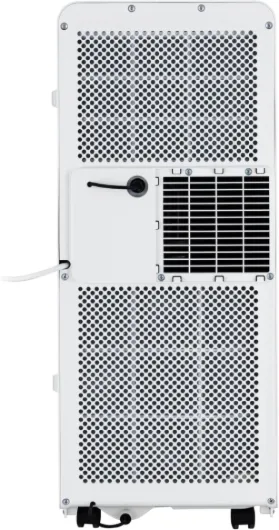
On the design side, the HX09CESAWG is relatively compact for a portable AC. The body measures 33.5 × 28.5 × 69.8 cm (D × W × H) and weighs about 20 kg. Several buyers specifically mention choosing it because it could fit under a desk or into a tight corner in a small office. That smaller footprint is a real point in its favor if you’re already short on space and don’t want a huge tower dominating the room.
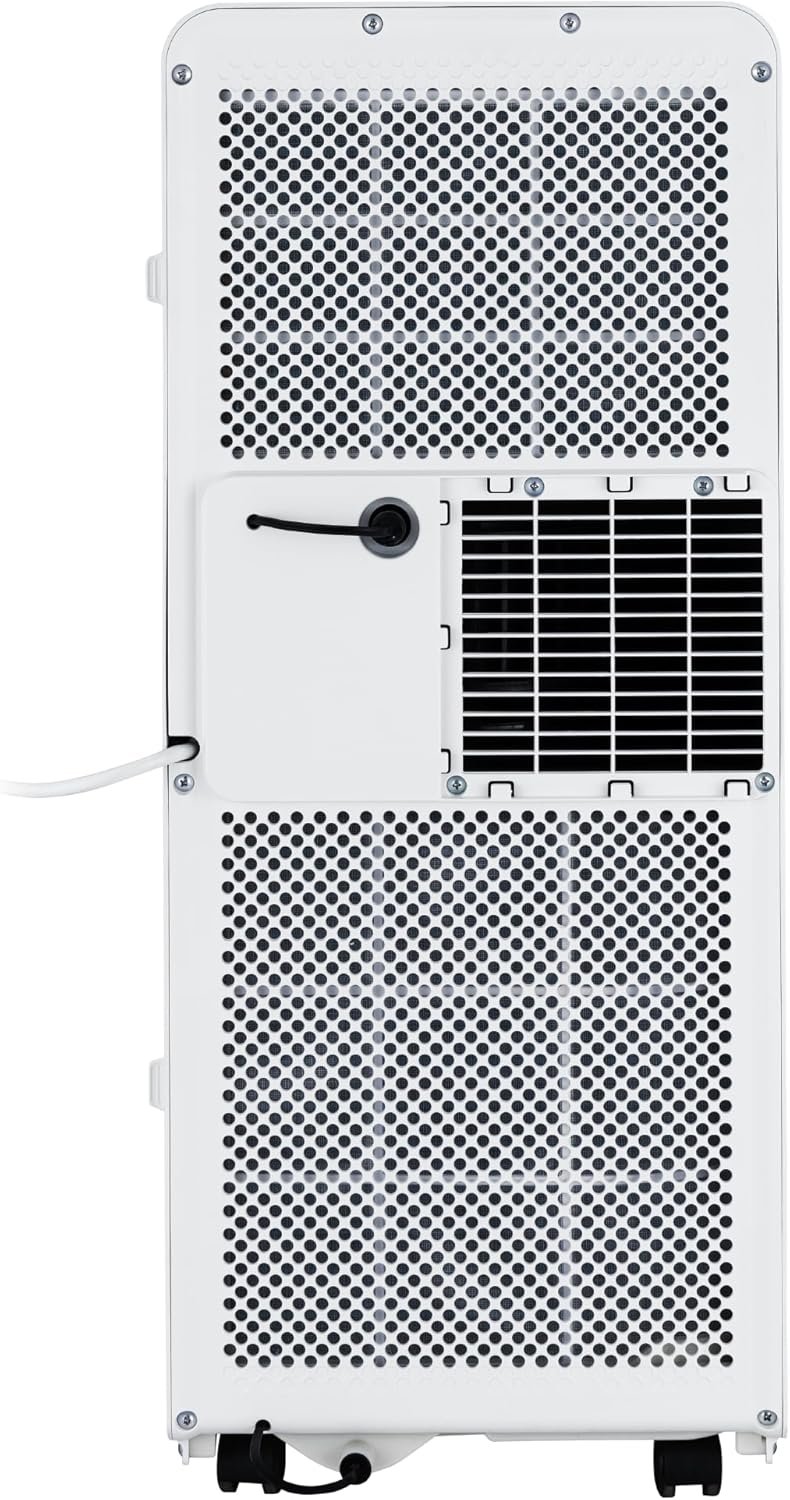
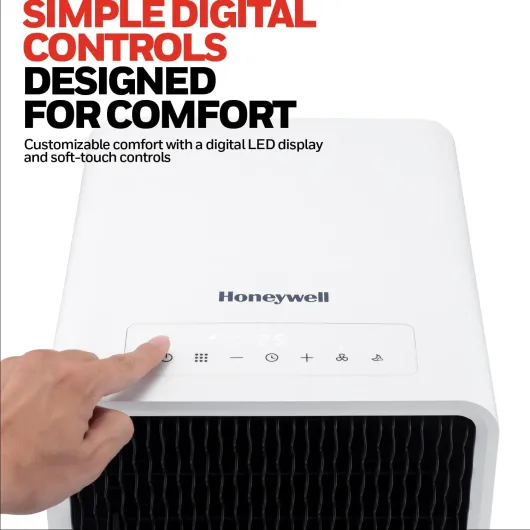
The form factor is standard: a vertical white unit on four casters, with the exhaust hose connecting at the back to a window kit. The front houses the air outlet and a clear LCD control panel, while the remote offers full control from across the room. Reviews describe the user interface as straightforward and close to “plug and play”, with little setup complexity beyond sorting the window exhaust. That’s typical of packaged portable ACs, and here the brand seems to have avoided overcomplicating things.
However, the design is not without issues. One very unhappy buyer calls the unit “very big and heavy” and highlights a lack of wheel brakes, which becomes a safety concern if you place the unit on a table to keep it away from a child. That use case is not ideal for a 20 kg device in the first place, but the criticism about the casters having no lock is fair. For floor use, casters without brakes are fine and make it easy to move between rooms; for elevated placement, they can indeed be a hazard.
The supplied window kit also draws mixed comments. Some users find it adequate, especially with sliding or sash windows, while others call it “cheap plastic” and mention needing to improvise or buy aftermarket kits for non‑sliding windows. In my view, this is pretty standard for the category: OEM window kits are rarely perfect, but given the price of the unit, Honeywell could arguably have included something a bit more robust. Overall, the design is practical and compact, but not premium, and you may need a bit of DIY to get the best window seal in tricky window setups.
Build quality, safety features and long-term outlook
Durability is always tricky to judge early, but there are a few solid indicators here. First, this Honeywell comes with a 2‑year warranty, which is a bit more reassuring than the 1‑year coverage some budget brands offer. The brand also highlights multiple protection checks, thermal protection and a heat‑safe internal casing. Those are standard safeguards to prevent overheating and damage to internal components during extended operation in hot conditions.
The unit uses a rotary-scroll compressor, a common and generally reliable technology for small ACs. The refrigerant is R‑290, which is widely used in newer portable units for its lower environmental impact compared to older gases. There is a washable dust filter, which, if cleaned regularly, should help protect the internals from dust buildup and extend overall lifespan. Several buyers appreciate this filter system, as it’s cheap to maintain and doesn’t require consumable replacements.
In terms of user feedback, there aren’t widespread reports of early failures or breakdowns among the published reviews. The main criticisms focus on noise, weight, and window kit quality rather than mechanical failure. One extremely negative reviewer is unhappy enough to say they will take the unit to a recycling centre rather than return it, but their complaints centre more on performance perception, noise and design quirks than on an actual functional defect.
From an analytical standpoint, the overall picture is a mid‑range portable AC with respectable brand backing and standard internal components. It’s built in China, like most competitors in this segment. The plastic exterior and window kit are not premium, and the casters lack brakes, but there’s nothing in the specs or reviews suggesting systematic structural weakness. In my opinion, if the unit is used on the floor, kept reasonably clean, and not abused by constant on/off cycles all day long, it should offer a sensible service life for several summers, in line with other branded portable ACs.
Noise, energy use and daily operation
Performance here is a mix of cooling output, energy consumption and noise. On energy, the spec sheet lists 1000 W power draw, a 5‑star efficiency label and a SEER of 10.29. For a non‑inverter portable AC, that’s decent. It’s not ultra‑efficient compared to modern split systems, but it’s competitive within mobile units. At UK electricity prices, running it for a few hours during the hottest part of the day is manageable, but leaving it on all day will show up on your bill, as with any 1 kW appliance.
Noise is where this Honeywell clearly divides opinion. The spec quotes 65 dB, which is fairly loud – more like a strong kitchen extractor or a loud fan. Several reviews highlight the noise as the main drawback. One buyer says it’s “very noisy” with effectively two fan levels: “very noisy” and “extra very noisy”, and that talking in the same room can be difficult at full power. Another buyer acknowledges it’s noisy “as they all are” but says they got used to it as background sound and found it tolerable for office work.
One critical review goes further, mentioning not just loudness but also “weird rumbles and rattles”. That could be an individual unit issue (loose panel, transport damage, or a manufacturing defect), because other buyers don’t describe the same rattling, only general loudness. Still, it’s a reminder that portable ACs combine a compressor and strong fan in one box inside the room; they are inherently much louder than a split system with the compressor outdoors.
In day‑to‑day operation, the 24‑hour timer, remote control and LCD make it easy to run the unit strategically. Several buyers mention running it before bedtime to pre‑cool a bedroom, then switching it off to sleep in quiet. Others run it while working in a home office, accepting the noise as the price for a comfortable temperature. In my opinion, the performance story is clear: efficient enough for what it is, good cooling when used correctly, but noisy to the point that light sleepers or noise‑sensitive users should plan to use it intermittently rather than continuously at night.
What this Honeywell 3‑in‑1 unit actually offers
The HX09CESAWG is positioned as a 3‑in‑1 climate tool: a 9000 BTU air conditioner, a 24 L/day dehumidifier, and a standard fan. The AC mode is clearly the main attraction, with several buyers saying it noticeably drops the temperature in small bedrooms, studies and typical UK living rooms when used with doors and windows closed and curtains drawn. One buyer even bought three identical units for multiple rooms, which is a strong signal that, for them, the cooling performance met expectations.
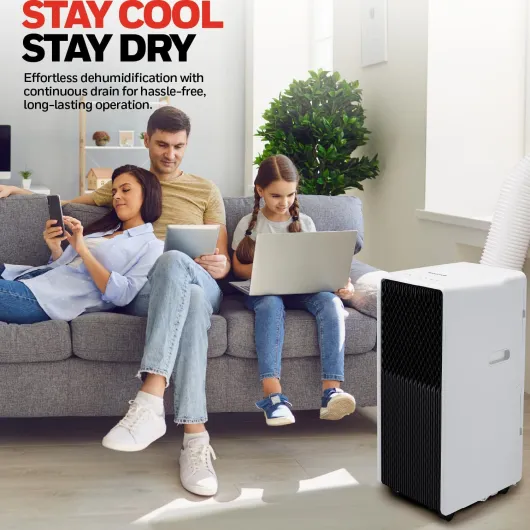
Beyond cooling, the 24 L/day dehumidifier specification is fairly solid for a portable AC of this size. It’s not a dedicated high‑capacity dehumidifier, but on paper it should help in damp or humid seasons, especially in smaller homes and flats. One critical review points out that dehumidifier mode still runs the fan, which means it won’t be a silent moisture-removal option in winter. That’s not unique to this model, but it’s worth knowing if you were hoping for a quiet dehumidifier-only setup.
The fan-only mode is a standard extra: no cooling, just air circulation using the built-in fan. Reviews suggest some people use it to push cool air into hallways or adjacent rooms, sometimes combined with extra desk fans to distribute the chilled air further. The unit also includes a 24‑hour timer, a remote control, and a full-function LCD control panel, which makes it easier to integrate into a daily routine (for example, pre‑cooling a bedroom before sleep rather than running it all night).
In terms of positioning, I see this Honeywell as a small-to-medium room solution for users who want one device that can cool, dry and circulate air without permanent installation. It’s not pretending to be a silent premium machine or a high‑end inverter system. The brand leans heavily on reliability, a 2‑year warranty, and safety protections like thermal protection and a heat‑safe casing. For someone renting or unable to install a split system, it looks like a realistic compromise between performance, flexibility and upfront cost, with the obvious trade-off of significant noise during operation.
Cooling and dehumidifying: strong in small rooms, limited by physics
The core question with any portable AC is simple: does it cool properly? Here, the published reviews lean clearly towards “yes” for the intended room sizes. Multiple buyers report that this 9000 BTU model cools down small bedrooms, studies and typical UK living rooms to a comfortable level, even during heatwaves. One review mentions using it in a tiny 2 m × 2 m office packed with heat‑producing electronics and a south‑facing window; they say it kept the room cold and could even push cool air into a hallway and living room with the help of extra fans.
Another buyer describes running the unit upstairs in a detached 4‑bed home and managing to bring the overall house temperature down to an acceptable level, relying on the fact that cold air sinks. That doesn’t mean this 9000 BTU unit is really sized for whole‑house cooling, but it shows that in real use, it can influence more than just the immediate room if doors are open and air can circulate. For focused cooling though, it’s clearly most effective when doors are shut and the space is not oversized.
There is, however, a very negative review that says the unit “doesn’t cool the room down” and only feels cold directly in front of the outlet. In my opinion, this type of experience often comes from a combination of factors: poor window sealing around the exhaust, too large a room, high sun exposure, or running the unit with windows open. Another positive reviewer explicitly reminds readers to close windows, draw curtains and consider initial room temperature when judging performance, which lines up with how portable ACs work generally.
On paper, 9000 BTU and 1000 W for a non‑inverter single‑hose unit is pretty standard and should be enough for roughly 15–20 m² in a temperate climate, assuming reasonable insulation. The 24 L/day dehumidifier function means it should also pull a noticeable amount of moisture out of humid rooms, which indirectly improves comfort. One critical buyer notes that dehumidifier mode still pushes air and can feel chilly in winter, so it’s not a silent, warm dehumidifier alternative. Overall, the effectiveness profile is clear: strong cooling for small enclosed rooms if used correctly, but it won’t defy basic thermodynamics or room-size limits.
Pros
- Effective cooling for small to medium rooms with 9000 BTU and compact footprint
- 3‑in‑1 functions (AC, 24 L/day dehumidifier, fan) with 24‑hour timer and remote control
- Honeywell branding with 2‑year warranty and built‑in safety protections
Cons
- Very noisy in operation (around 65 dB), often too loud for comfortable sleep
- Basic, sometimes flimsy window kit that may require DIY or aftermarket upgrades
- No brakes on casters, which can be a safety concern if placed on elevated surfaces
Conclusion
Analysis score
The Honeywell HX09CESAWG 9000 BTU portable AC comes across as a competent, compact solution for small rooms that run too hot in summer. The combination of cooling, 24 L/day dehumidification and fan mode, plus a 2‑year warranty and a trusted brand name, give it a solid foundation. Most buyers say it cools effectively when used correctly in enclosed spaces, and the smaller footprint makes it attractive for studies, bedrooms and home offices where space is tight.
The main trade‑off is noise. With a quoted 65 dB and many reviews calling it very loud, this is not a unit you casually run all night in a bedroom if you’re a light sleeper. The basic window kit and lack of caster brakes also show where Honeywell has saved some costs. In my opinion, this model suits people who prioritise straightforward, reliable cooling over acoustic comfort and premium finishing, and who are mainly targeting one or two smaller rooms.
If you’re renting, can’t install a split system, and just want a trustworthy portable to survive heatwaves, it’s a reasonable pick. If you expect quiet operation, want to cool a large open‑plan area, or hate DIY window sealing, you should either look at higher‑capacity or split units, or be ready to tweak the setup. Overall, it’s a solid mid‑range option with clear strengths and equally clear compromises.