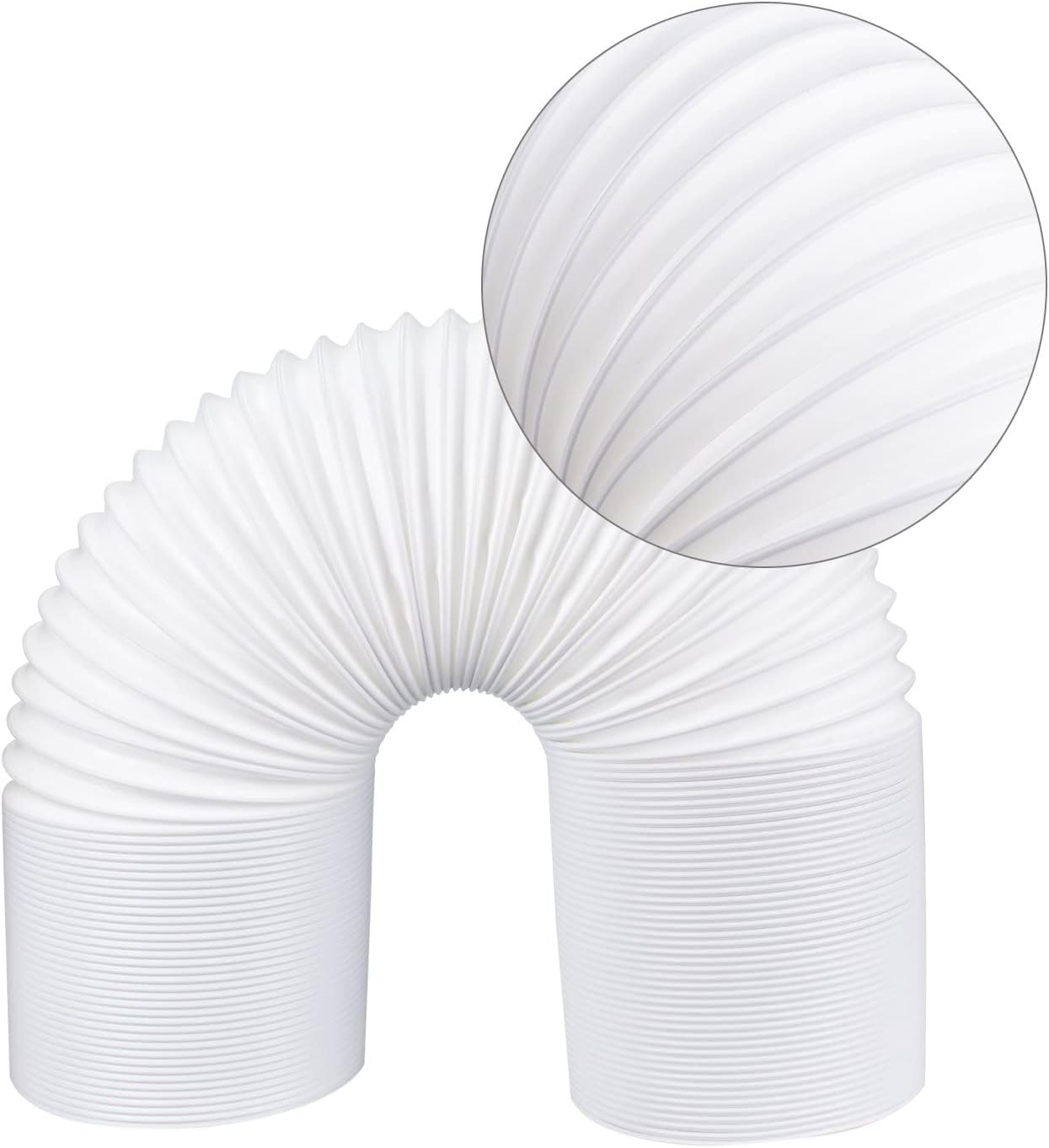
Summary
Analysis score
Average of the criteria rated below
Value for money: pricey, but does the quality justify it?
Long, thick, and built to act like a proper AC duct
Polypropylene and steel wire: sturdy build for hot airflow
Built for repeated use and hot airflow
What this 150 mm Dostear hose actually offers
Does it do the job as a replacement or extension hose?
Pros
- Long 3 m (118 inch) hose provides much more reach than many stock or budget hoses
- Thick polypropylene with steel wire spiral gives a sturdy, heavy-duty feel and good shape retention
- 150 mm (5.9 inch) diameter with clockwise thread fills a niche many generic hoses don’t cover well
Cons
- Higher price than many shorter or thinner replacement hoses
- Requires careful checking of diameter and thread direction to avoid compatibility issues

Specifications
View full product page →| Brand | Dostear |
A long replacement hose for portable air conditioners that actually fits
The Dostear 150 mm portable air conditioner hose targets a very specific but common problem: the original vent tube on many portable AC units is either too short, cracked, or simply the wrong thread direction for most generic replacements. Here, you get a hose with a 5.9 inch (150 mm) outside diameter, a generous 300 cm / 118 inch length, and a clockwise thread version. On paper, this puts it in the category of oversized, heavy-duty replacement hoses rather than the usual flimsy 1–1.5 m tubes that come with many units.
Public reviews give it a 4.4/5 rating from around 80 buyers, which is solid for such a niche accessory. Several comments focus on compatibility and build quality, which are the two critical points for this kind of product: if it doesn’t fit the AC or collapses when hot air flows through, it is useless. The manufacturer claims “universal compatibility” for most 150 mm portable ACs, but also warns buyers to check both diameter and thread direction, which already sounds more realistic than the usual “fits all” promise.
The hose is made from thickened polypropylene with a built-in steel wire, with a stated wall thickness of about 3 mm. That suggests a stiffer, more heat-resistant construction than many thin vinyl hoses. Some reviewers even describe it as heavier-duty than their original hose. At the same time, a few people mention the price as relatively high, which raises the question of value: are you paying a premium just because everything cheaper is sold out, or does the build justify it?
In my opinion, this hose looks like a serious option if you need extra length or a robust replacement for a 150 mm unit, especially for clockwise-thread models that are harder to match. It’s not a gadget; it’s a simple, functional tube. The real interest comes from the combination of length, diameter, and thread direction that many competing products don’t offer in one package. If those three match your unit, it’s worth a closer look; if not, it will be a frustrating purchase.
Value for money: pricey, but does the quality justify it?
On the price front, several reviewers point out that this hose is more expensive than some alternatives. One verified buyer explicitly calls it “expensive but worth it”, arguing that you “pay for what you get” and praising the build quality and fit. Another mentions that they bought it partly because other hoses had sold out, which hints at a situation where demand pushed people toward higher-priced options. Despite that, the overall rating sits at 4.4/5 from more than 80 reviews, which suggests most customers feel they got fair value.
What are you paying for? First, the 3 m length is longer than standard, so you’re effectively buying more material. Second, the 150 mm diameter in a clockwise thread is less common than 130 mm or anti-clockwise hoses, so you’re in a more specialized niche. Third, the thick PP + steel wire construction looks more robust than the thinnest budget hoses. When you add these factors up, it makes sense that this product sits at a higher price bracket than a 1.5 m, thin-wall generic tube.
If someone only needs a short, basic replacement for a low-use AC unit, this might be overkill, both in length and in price. You’d be paying for 3 m when you might only need 1.5 m, and for sturdiness you’ll barely notice. On the other hand, if you specifically need a long, 150 mm, clockwise-thread hose that aligns well with older or less common units, the alternatives narrow quickly. In that situation, paying a bit more for something that actually fits and feels solid is easier to justify than gambling on cheaper hoses that might not connect correctly or might fail quickly.
In my opinion, the value is good but not spectacular: this is a quality-focused, niche hose rather than a bargain. The people who seem most satisfied are those who had real compatibility issues or hose failures and finally found a solution that works and feels durable. If budget is the main constraint and your AC uses a more standard size or thread, there are likely cheaper options that will do the job. But for tricky 150 mm setups or anyone who wants a longer, tougher duct and is willing to pay a bit more, the balance between cost and quality looks reasonable.
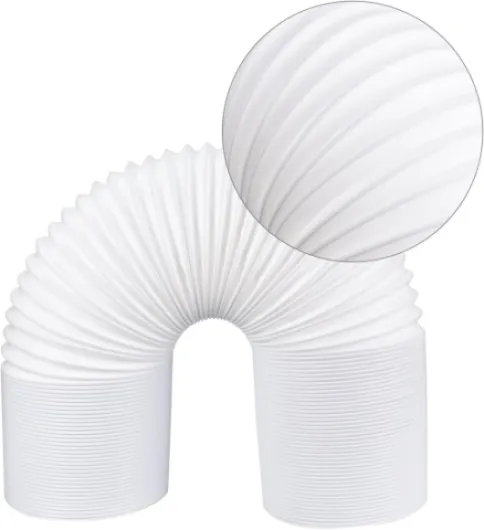
Long, thick, and built to act like a proper AC duct
Design-wise, the Dostear hose follows the classic portable AC duct format: a corrugated, accordion-style tube that can stretch and retract. The standout numbers are the 150 mm outer diameter and the 300 cm length. Most stock hoses that come with portable AC units are in the 1.2–1.5 m range, sometimes 2 m at best. Here you effectively double that reach, which can matter if your AC unit is far from a suitable window or vent opening. The ability to compress down to around 45.5 cm makes storage simpler when the hot season is over.
The internal structure uses a steel wire spiral to maintain the circular shape and resist collapse when hot air is pushed through. Around that, there is a polypropylene shell claimed to be thickened, with a 3 mm nominal wall thickness. Several buyers describe it as thicker or heavier-duty than their original hoses, and one mentions metal wiring and a hard PVC-like cover. That lines up with the spec sheet: this isn’t an ultra-thin, floppy tube, but something that should hold its shape reasonably well when extended and bent.
The thread direction is clearly part of the design. This particular variant is for clockwise screw connections, which some owners of older free-standing AC or dehumidifier units know can be hard to match. One review specifically praises that it fitted an older unit that most other Amazon hoses did not, because many alternatives are either slightly larger or only available in anti-clockwise thread. That tells you the manufacturer actually paid attention to the dimensions and threading rather than just copying a generic 130 mm hose and calling it universal.
In my opinion, the design is straightforward but thoughtful: longer than average, relatively thick walls, and a clear focus on a 150 mm standard that is less common than 125–130 mm hoses. There’s no fancy feature like insulation or noise reduction, but for an exhaust duct, the priorities are fit, shape retention, and length. On those points, the design looks coherent. The main risk is that someone ignores the thread-direction and diameter notes and expects it to magically adapt to a smaller or different connector, which it obviously won’t.
Polypropylene and steel wire: sturdy build for hot airflow
The materials are clearly spelled out: polypropylene (PP) plus steel wire, with a 3 mm nominal wall thickness. Polypropylene is common in AC hoses because it resists heat and deformation better than thin PVC film. The steel wire spiral is what gives the hose its structure and makes it possible to bend and extend it like a spring without collapsing completely under airflow or moderate negative pressure. Together, these components aim for a balance between flexibility and rigidity.
Several reviews back up the impression of a solid build. Buyers call it “good quality”, “heavy duty”, and explicitly mention metal wiring and a hard outer cover. One person even notes it is identical in construction to the original hose that came with their AC, just longer. Another says it is actually better than the stock hose on their unit in terms of thickness and flexibility. That kind of comment suggests the PP used here is not ultra-thin or brittle, which is a common complaint on cheaper replacement tubes that kink or tear quickly.
The manufacturer highlights heat resistance, wear resistance, and aging resistance. While there are no lab numbers to confirm that, those claims are reasonable for thick PP with embedded wire. A 3 mm wall is relatively substantial for an AC exhaust duct, and that thickness should help reduce the chance of cracks from repeated expansion and compression. The steel ring also helps the hose keep a more circular cross-section even when bent around corners, which matters for maintaining airflow and not overheating the unit.
In my opinion, the materials are one of the main selling points here. On paper and in the comments, this hose sits in the “robust” category rather than the cheapest possible option. For someone who runs a portable AC heavily through the summer, that could mean fewer problems with splits or sagging. The trade-off is probably a bit more weight and stiffness compared with ultra-light hoses, but for an exhaust duct that usually sits behind a unit and runs to a window, that is a fair compromise if durability is the goal.
Built for repeated use and hot airflow
Durability is where this hose seems to stand out compared with many budget alternatives. The manufacturer emphasizes a thickened polypropylene body with a steel ring, claiming better resistance to heat, wear, and aging. For a portable AC exhaust, that means it should tolerate repeated expansion and contraction, hot airflow over long hours, and occasional knocks or bends without splitting. The 3 mm wall thickness is a concrete figure that supports this positioning and is thicker than some paper-thin hoses seen in this category.
Public reviews generally back up this durable image. Buyers describe it as heavy duty, good quality, and in some cases superior to the original hose that came with their air conditioner. One verified purchase notes that it was bought as a solution after the essential vent hose had cracked, and that this Dostear model can act either as the main pipe or as an extension. Another user highlights the thickness and flexibility as key positives, implying less risk of tears when bending or repositioning the hose. There are no recurring complaints about early failure, which is usually what drags down ratings on cheap hoses.
The steel wire reinforcement is important in this context. It keeps the hose from collapsing under its own weight when extended, especially at the full 3 m. A sagging or flattened hose can overheat the AC unit and reduce efficiency. With the internal wire, the duct should keep a more stable shape, as long as it’s not forced into extremely tight bends or pulled hard from one end. The polypropylene shell, if as thick as advertised, should also resist UV exposure and general aging better than very thin plastic, though long-term outdoor exposure is still not ideal for any of these materials.
In my opinion, durability is one of the key justifications for the higher price that some buyers mention. You are paying for more material, a stronger structure, and a length that can handle real-world placements without constant worry about tearing. It’s not indestructible, and misuse (sharp kinks, stepping on it, leaving it permanently under tension) will eventually cause problems like with any hose. But compared with many low-cost options, this one looks designed to last through several summers of normal use rather than just one season.
What this 150 mm Dostear hose actually offers
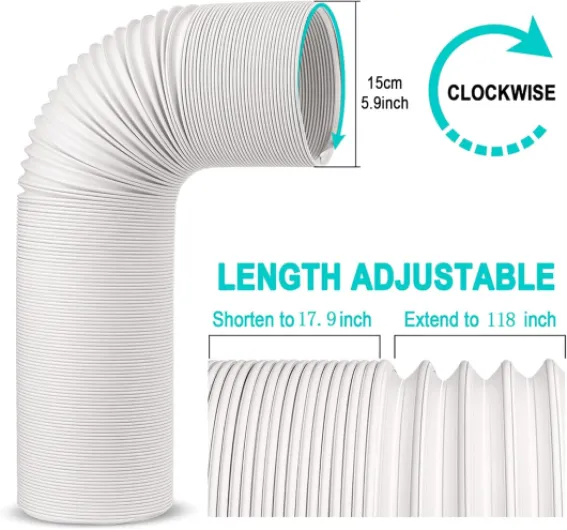
This hose is essentially a single 3 m / 118 inch exhaust duct designed for portable air conditioners with a 150 mm (5.9 inch) outer diameter connection. The color variant listed is “Clockwise & Length 300 cm”, which means this specific model is the clockwise-thread version at full length. The manufacturer also mentions that the product family includes both clockwise and anti-clockwise thread options, but you need to pick the right one; this listing is clearly aimed at clockwise setups.
The nominal wall thickness is advertised at 3 mm, with construction based on polypropylene and an internal steel wire. In simple terms, it is a typical concertina-style AC duct: it compresses down to about 45.5 cm (17.9 inches) and stretches out to the full 300 cm. The product is sold as a single unit count, so you’re not getting multiple segments in the box. If you want to use it as an extension rather than a full replacement, you’ll need a separate round connector or coupler, which several buyers say they sourced separately on Amazon.
The marketing angle is “universal compatibility”, but the small print is more honest: the 5.9 inch diameter is measured outer edge to outer edge, and the thread direction matters a lot. For replacement of the original hose, thread direction is less critical as long as you use the original coupler. For extension, you must match the thread direction between the two hoses, or they simply won’t screw together. A few reviews underline that this hose solved compatibility issues with older or more obscure AC brands where other hoses were either slightly oversized or had the wrong thread direction.
On ranking, it sits high in its niche: #5 in Air Conditioner Replacement Tubes and around #13,000 in Home & Kitchen

Does it do the job as a replacement or extension hose?
Effectiveness for this kind of product boils down to three questions: Does it fit? Does it hold up under hot airflow? and Does the extra length work in real setups? On fit, multiple reviewers say it matched their units correctly, especially in cases where they struggled with other hoses. One buyer mentions that other Amazon options were slightly oversized or had the wrong anti-clockwise thread, while this clockwise 150 mm hose finally screwed onto an older free-standing AC/dehumidifier. Another review notes that it fit their connectors perfectly and behaved just like the original pipe.
On how it handles hot air, comments are mostly positive. People describe it as thick and flexible, and one person specifically bought it because their original hose had cracked. According to that feedback, the Dostear hose works either as a direct replacement or as an extension when combined with a separate plastic connector. There are no widespread complaints of melting, collapsing, or significant air leaks in the public comments, which would be the classic signs of a poor AC hose. The steel wire structure and 3 mm wall thickness likely contribute to stable airflow and less chance of the hose pinching shut on sharp bends.
The 3 m length is both the main advantage and a point that needs realistic expectations. The longer the hose, the more back-pressure and heat loss you can get. The manufacturer doesn’t give any airflow ratings or maximum recommended length, so users have to rely on common sense: avoid unnecessary loops, keep bends gentle, and don’t exceed what the AC’s fan can handle. Several buyers seem to use the full length without complaint, which suggests most typical portable units cope well enough, but it’s still something to keep in mind if you plan very long runs.
In my opinion, the hose looks effective at what it’s supposed to do: channel hot air out of the room while fitting a range of 150 mm portable AC units, especially clockwise-thread models. It’s not a performance upgrade in the sense of boosting cooling power; it’s more about maintaining proper exhaust over a longer distance without leaks or structural issues. If your priority is a dependable, long duct that behaves like the original or better, the feedback suggests it delivers. Just be careful about matching diameter and thread direction, and about not pushing your AC beyond reasonable hose length and routing.
Pros
- Long 3 m (118 inch) hose provides much more reach than many stock or budget hoses
- Thick polypropylene with steel wire spiral gives a sturdy, heavy-duty feel and good shape retention
- 150 mm (5.9 inch) diameter with clockwise thread fills a niche many generic hoses don’t cover well
Cons
- Higher price than many shorter or thinner replacement hoses
- Requires careful checking of diameter and thread direction to avoid compatibility issues
Conclusion
Analysis score
The Dostear 150 mm, 3 m portable AC hose targets a specific need: a long, sturdy exhaust duct that actually fits 150 mm units, especially those with clockwise threads. On paper, the combination of 5.9 inch diameter, 118 inch length, and 3 mm thick polypropylene with steel wire already sets it apart from many short, flimsy generic hoses. The public feedback backs that up: buyers frequently describe it as heavy-duty, thicker than their original hose, and compatible where other options failed.
It’s not the cheapest option, and several reviewers openly say it feels pricey. But the 4.4/5 average rating and comments about solid build and proper fit suggest that most people who chose it felt the money was well spent. There are no widespread complaints about leaks, collapsing, or early failure, which is exactly what you want to avoid with an exhaust hose. The main caveat is clear: you must check your diameter and thread direction carefully, especially if you plan to use it as an extension instead of a full replacement.
In my opinion, this hose is a good pick for owners of 150 mm portable ACs who need extra reach or a more robust replacement and are tired of fighting with poorly fitting, thin hoses. It suits people who run their units heavily in summer and want a duct that can handle the heat and constant movement. If your unit uses a more common size, or if you only need a short, basic hose and price is your priority, you can probably find cheaper alternatives. But for the specific 150 mm clockwise niche, this looks like a solid, reliable solution.