Portable Air Conditioners

The best portable air conditioner remote controls: our top 4 (October 2026)

Independent guide to top portable air conditioner remote controls, from classic handsets to smart app systems, with advice on room size, BTU, noise and usability.

9 June 2026 16 min read
The best portable air conditioner remote controls: our top 4 (October 2026)
Discover our ranking of the 4 best portable air conditioner remote controls based on our analyses of specs and customer reviews.

How remote controls transform the experience of a portable air conditioner

A well designed remote control turns any portable air conditioner into a genuinely convenient cooling companion. When you can adjust temperature, fan speed, and mode from the sofa, the unit feels smarter and more responsive. This comfort upgrade matters even more when the portable unit sits in a corner behind furniture or near a window where access is awkward.

People searching for the best portable air conditioner remote controls are usually trying to solve daily frustrations, not chasing gadgets for their own sake. They want to manage hot air, noise level, and energy use without walking across the room every hour, especially in bedrooms where a bright display or loud fan can disturb sleep. A precise remote control lets you fine tune cooling in a specific room size, whether it is a compact office of 12 square metres or a living room of 30 square metres.

Every remote control for portable air conditioners should offer clear buttons for power, mode, fan, and temperature, because these are the functions you use constantly. On better models of portable air conditioner, the remote also manages swing louvers, timer settings, and sometimes a dehumidifier mode, which helps when humid air makes the room feel warmer than the actual temperature. When you compare portable air conditioners, treat the remote as part of the whole unit rather than an afterthought, because a weak remote can make even the best portable cooling system feel clumsy.

Remote controls also influence how effectively a portable air conditioner handles airflow through its hose and window kit. If you can quickly switch between fan only, cooling, and eco modes, you can adapt to changing outdoor air conditions without constantly reconfiguring the portable unit itself. This flexibility is especially valuable with dual hose or single hose portable acs, where airflow balance affects both comfort and efficiency.

For many buyers, the best portable air conditioner remote controls are those that remain intuitive even in the dark. Large, backlit buttons and a simple layout help you adjust the air conditioner at night without turning on bright lights or fumbling with your phone. When you combine this ease of use with a quiet fan setting and a stable temperature, a portable air conditioner can rival some fixed air conditioners in perceived comfort.

Smart remotes and companion apps extend control beyond line of sight, which changes how you plan your day around heat. Instead of returning to a hot room and blasting the portable air conditioner at maximum BTU output, you can start gentle cooling a little earlier and maintain a steady temperature that feels more natural. This approach reduces stress on the unit, limits hot air build up, and often lowers energy use over time.

Ranking

#1 🏆 Best choice
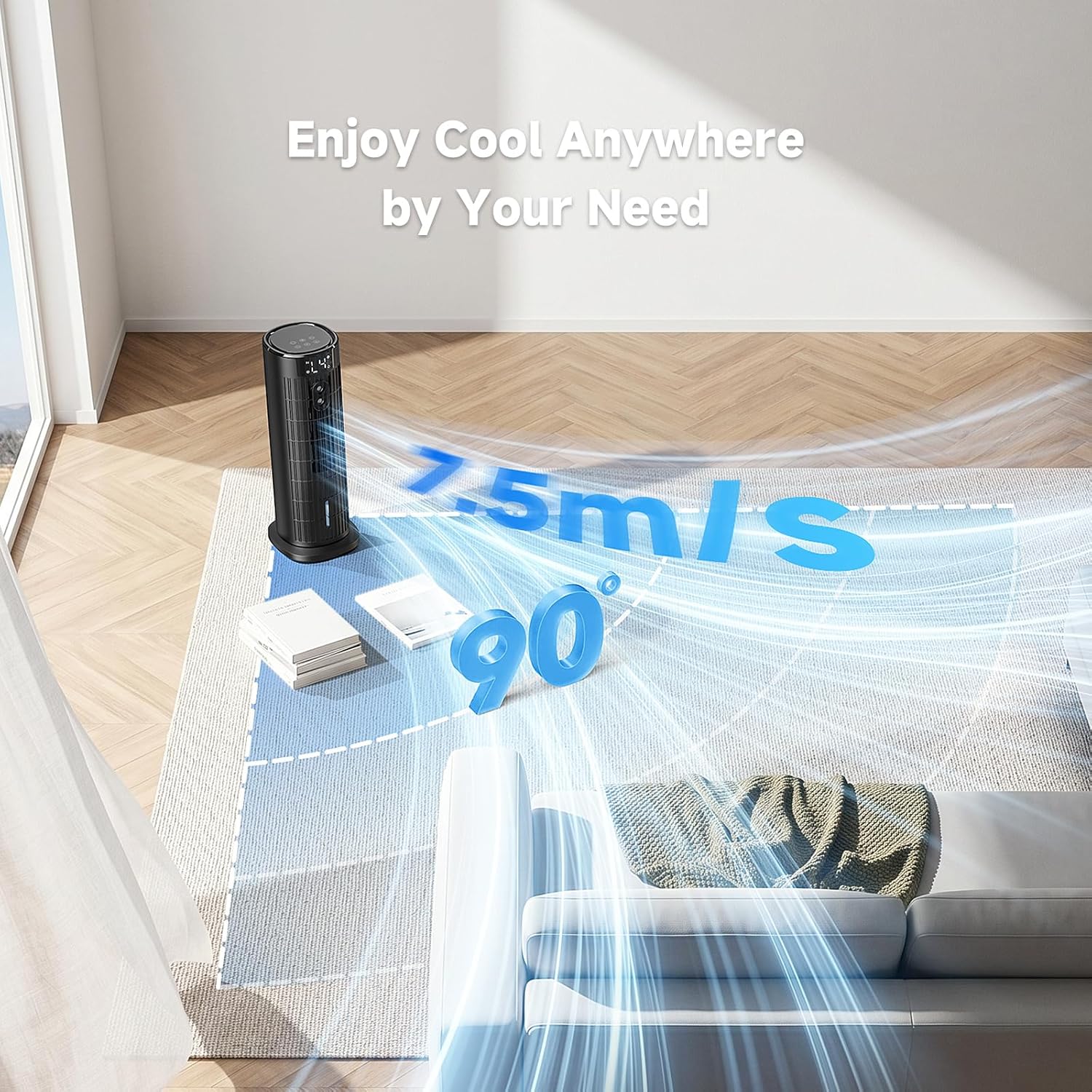
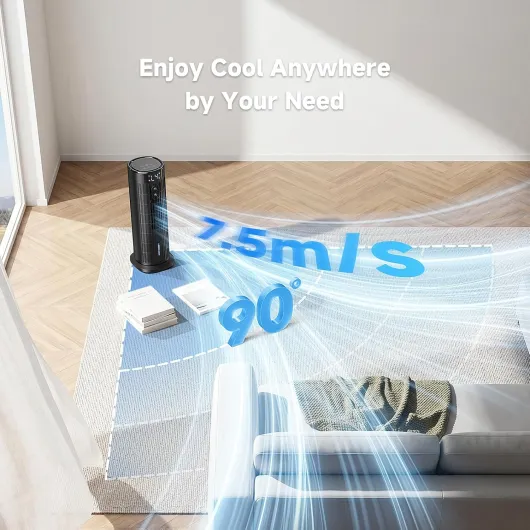
Portable Air Conditioner, Air Cooler with 4 Fan Speeds, Remote Control & 90°Oscillating Storm Mode 1000ML Tower Fan 2-10 Hour Timer Quiet Mini Air Conditioning for Office, Bedroom(Carbon Black)

CoamoTrail

Portable Air Conditioner, Air Cooler with 4 Fan Speeds, Remote Control & 90°Oscillating Storm Mode 1000ML Tower Fan 2-10 Hour Timer Quiet Mini Air Conditioning for Office, Bedroom(Carbon Black)

  • Very positive user feedback (4.9/5 over 89 reviews) for bedroom and office use
  • Compact 2 kg tower design with handle, remote control, timer, and 90° oscillation
  • Low power consumption (18 W, 12 V) with mist mode and 1000 ml water tank for enhanced cooling sensation
The CoamoTrail F30-D is, in my opinion, a solid little evaporative cooler for people who need targeted relief in small spaces rather than full-room air conditioning. The specs make it clear what it is: an 18 W, 12 V tower fan with water, ice, mist, and oscillation. It is light (2 kg), compact (roughly 45 cm tall), and comes with a remote and timer, which suits bedrooms, home offices, and small flats. The very high user rating (4.9/5 over 89 reviews) confirms that most buyers feel it gets the job done for personal cooling.Its strong points are the combination of quiet operation, multiple speeds, mist and storm modes, and low power consumption. People who place it near a bed or desk report a comfortable, refreshing breeze and appreciate how easy it is to move and control. On the downside, it is not a real air conditioner and will not cool a large room like a compressor-based unit. Durability looks acceptable for a seasonal, budget-friendly product, but it still relies on light plastic and will need regular cleaning of the water tank.In short, this model makes sense if you want a portable, quiet, and economical cooler for a bedroom, nursery, or work corner, and you understand its evaporative nature. It is a good fit for renters, students, and anyone who cannot install a heavy AC. Those who need strong, whole-room cooling in very hot or humid climates should instead invest in a true mobile air conditioner or split system, even if that means a higher upfront cost.
Analysis score
8.2 /10
🌟 Excellent See full review →
See offer Amazon
#2
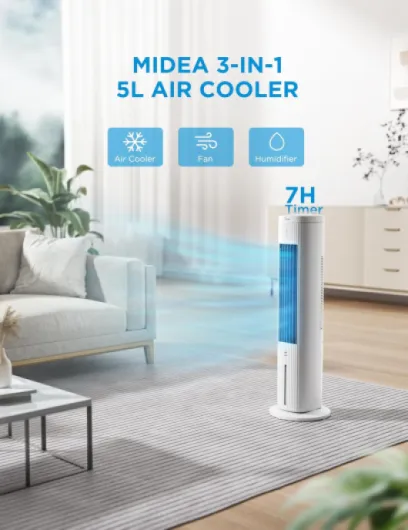
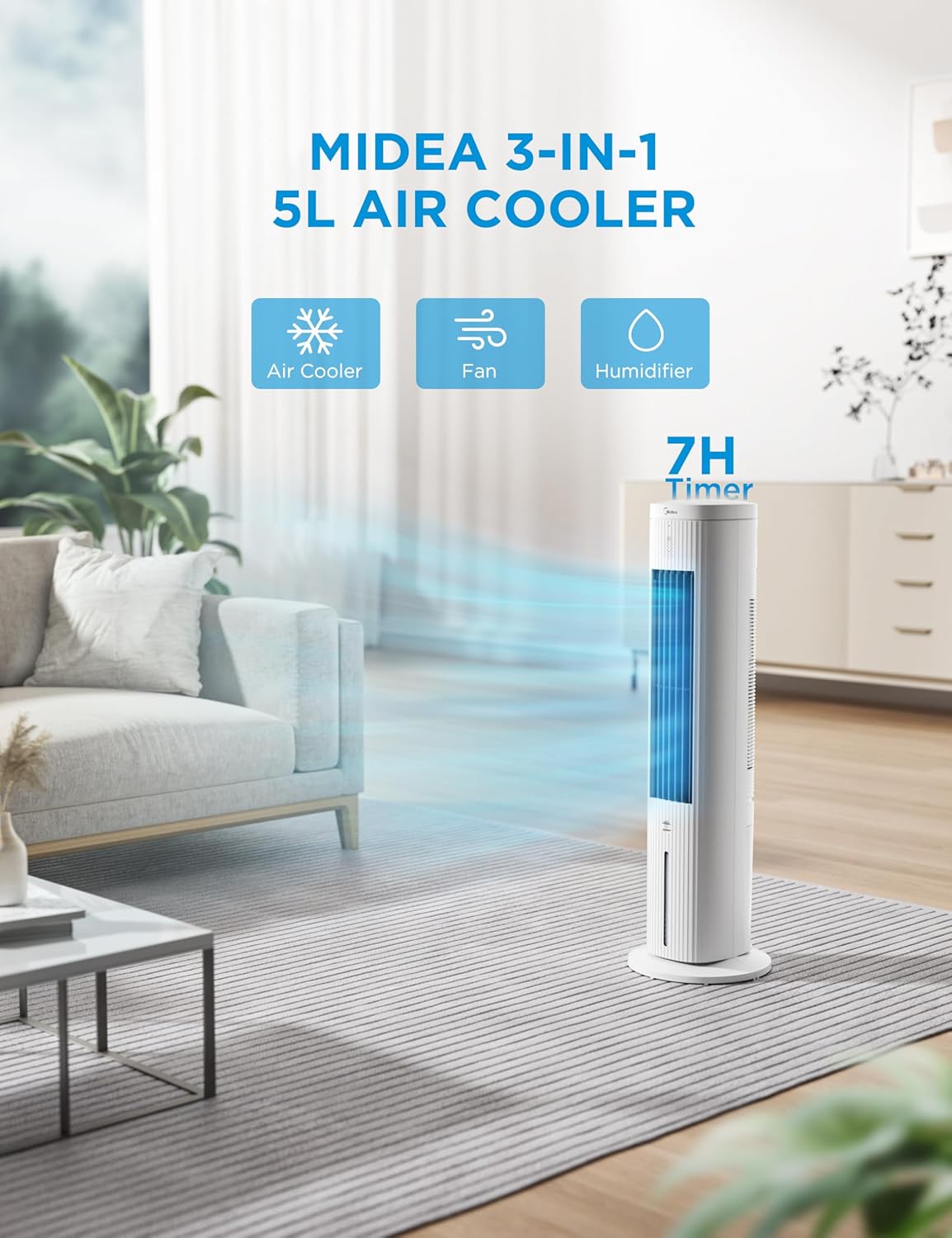
5L Air Cooler, 3-in-1 Portable Air Conditioner with Remote Control, 3 Speeds & 75° Automatic Oscillation, 7H Timer, Low Noise - Cooling Tower Fan and Humidification for Home, Office, Bedroom Standing 45W 5L White

Midea

5L Air Cooler, 3-in-1 Portable Air Conditioner with Remote Control, 3 Speeds & 75° Automatic Oscillation, 7H Timer, Low Noise - Cooling Tower Fan and Humidification for Home, Office, Bedroom Standing 45W 5L White

  • Strong airflow (up to 1600 m³/h / 944 CFM) with 75° oscillation in a tall tower format
  • 3‑in‑1 use (fan, humidifier, evaporative cooler) with 5 L tank and included ice packs
  • Low noise on lower speeds and convenient features: remote control, 7‑hour timer, no bright lights at night
The Midea 5L Air Cooler is basically a beefed‑up tower fan with water‑based cooling and a few extra tricks. It doesn’t behave like a true air conditioner, and several buyers insist on that point, but it clearly offers better comfort than a standard fan for many people. With 55 W power draw, 1600 m³/h airflow, a 5 L tank, and a 1 m‑tall tower format, it’s built to sit in a bedroom, office, or living room and push a solid stream of air at a comfortable height. The remote control, 7‑hour timer, and dark‑room‑friendly display make it especially suited for night‑time use.In my opinion, it fits best for users who: live in a small to medium space, want relief during warm spells, don’t have the budget or setup for a portable AC, and are happy with spot cooling rather than full climate control. If you’re expecting to drop a large room from 30 °C to 22 °C just by adding ice to the tank, you’ll likely find it underwhelming. If you mainly want a quiet, strong tower fan that can send a cooler breeze over your bed or sofa and run cheaply for hours, it looks like a good pick. The average 4.4/5 rating, 2‑year warranty, and lack of recurring quality complaints support the idea that it’s a solid, if not spectacular, piece of kit for the money.
Analysis score
8 /10
🌟 Excellent See full review →
See offer Amazon
#3 🔥 Most popular
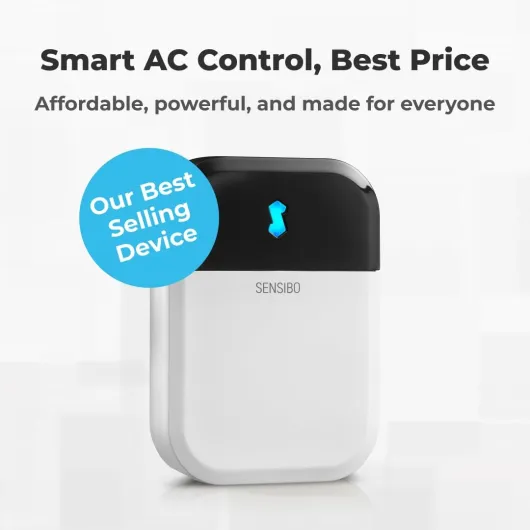
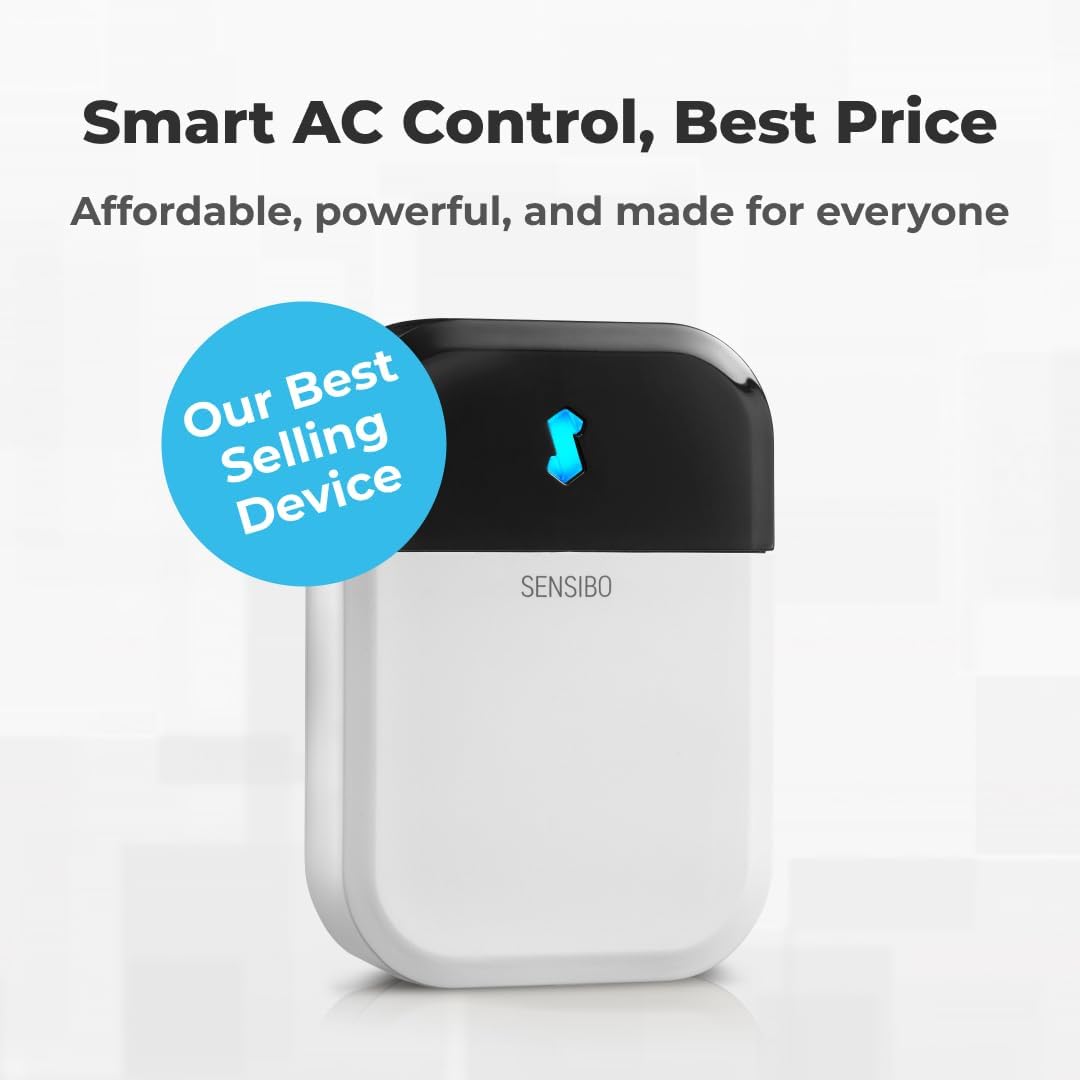
Sky, Smart Wireless Air Conditioner Controller - Quick & Easy DIY Installation - Maintains Comfort with Energy Efficient - Automatic Wifi Thermostat Control App - Google, Alexa and Siri Compatible Cloud White

Sensibo

Sky, Smart Wireless Air Conditioner Controller - Quick & Easy DIY Installation - Maintains Comfort with Energy Efficient - Automatic Wifi Thermostat Control App - Google, Alexa and Siri Compatible Cloud White

🔥 Populaire
  • Clean, focused app with useful AC-specific features like geofencing and Climate React
  • Works with most IR-controlled ACs and supports Google Assistant, Alexa, and Siri
  • Helps cut waste by automating on/off times and remote control, improving day-to-day comfort
Analysis score
7.2 /10
👍 Very good
See offer Amazon
#4
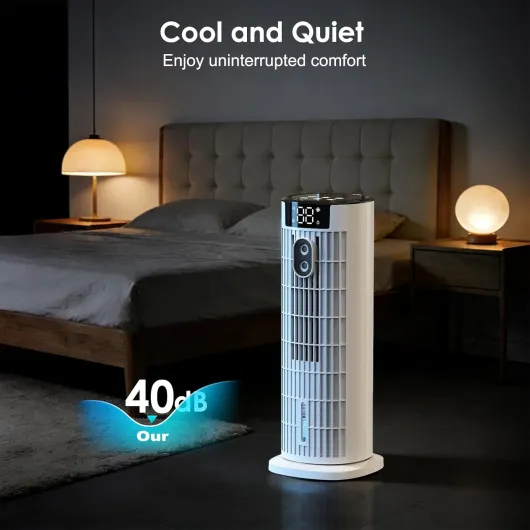
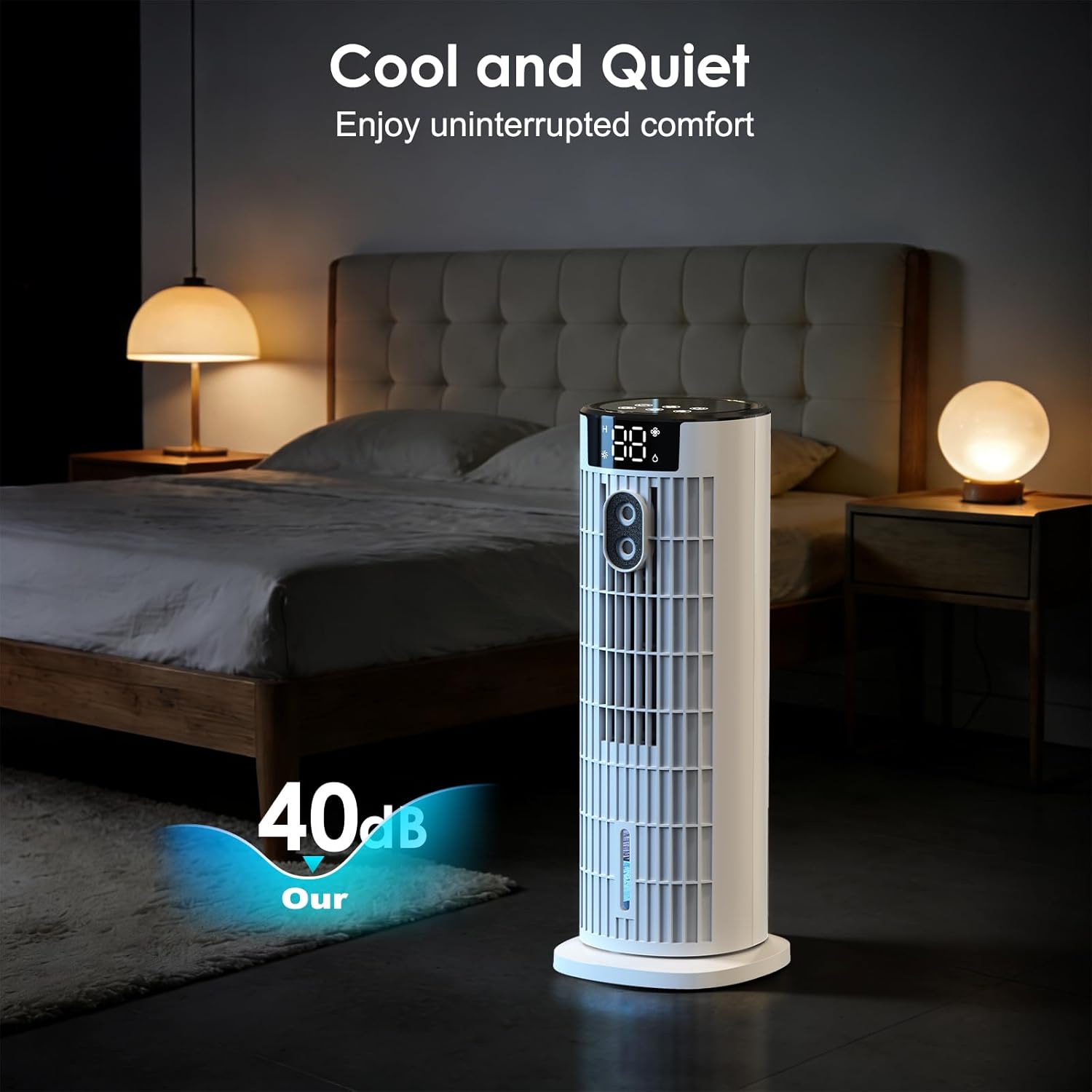
Air Cooler, Portable Air Conditioner with 3 Wind Speeds, LED Display Screen and Remote Control, 90°Oscillation Tower Fan Silent Evaporative Cooler Portable Air Coolers for Home Office (White)

CoamoTrail

Air Cooler, Portable Air Conditioner with 3 Wind Speeds, LED Display Screen and Remote Control, 90°Oscillation Tower Fan Silent Evaporative Cooler Portable Air Coolers for Home Office (White)

  • Low 18 W power consumption with 12 V DC operation, cheap to run during heatwaves
  • 1000 ml pull-out water tank with spray modes and included ice pack for boosted local cooling
  • Quiet operation around 40 dB with 3 speeds, storm mode, 90° oscillation and sleep-friendly timer up to 10 hours
The CoamoTrail F30 is a compact evaporative cooler that behaves more like a feature-rich tower fan than a true air conditioner. Its strengths are clear: low 18 W power draw, a decent 1000 ml pull-out water tank, 3 fan speeds plus storm mode, 2 spray modes, 90° oscillation, and a convenient LED display with timer. Most reviews describe it as quiet enough for sleep and effective at making small rooms or personal spaces more comfortable, especially at bedtime or during short heatwaves.On the downside, its cooling capacity is inherently limited by the low wattage and evaporative design. It can’t match a real compressor AC, and at least one buyer reports feeling no difference at all. The remote control is another weak spot: one reviewer calls it flimsy and non-functional, which suggests inconsistent quality control on accessories. Build quality overall looks basic, with standard plastic construction and no standout durability features.In my view, this cooler suits people who want a small, inexpensive, low-power device to improve comfort in a bedroom, office, or caravan and who are realistic about what evaporative cooling can do. It is less suitable for those trying to cool large, hot spaces or expecting full air-conditioner performance. If you go in expecting an efficient, quiet fan with some extra cooling from water and ice rather than a miracle machine, the F30’s combination of features and user feedback points to a solid, budget-friendly option.
Analysis score
7 /10
👍 Very good See full review →
See offer Amazon

Comparison table : Portable air conditioner remote controls

Analysis score Value for money Design Comfort Durability Performance Presentation Effectiveness
Portable Air Conditioner, Air Cooler with 4 Fan Speeds, Remote Control & 90°Oscillating Storm Mode 1000ML Tower Fan 2-10 Hour Timer Quiet Mini Air Conditioning for Office, Bedroom(Carbon Black)
#1 CoamoTrail
Portable Air Conditioner, Air Cooler wit...
See offer Amazon
8.2/10
5L Air Cooler, 3-in-1 Portable Air Conditioner with Remote Control, 3 Speeds & 75° Automatic Oscillation, 7H Timer, Low Noise - Cooling Tower Fan and Humidification for Home, Office, Bedroom Standing 45W 5L White
#2 Midea
5L Air Cooler, 3-in-1 Portable Air Condi...
See offer Amazon
8/10 -
Sky, Smart Wireless Air Conditioner Controller - Quick & Easy DIY Installation - Maintains Comfort with Energy Efficient - Automatic Wifi Thermostat Control App - Google, Alexa and Siri Compatible Cloud White
#3 Sensibo
Sky, Smart Wireless Air Conditioner Cont...
See offer Amazon
7.2/10 - -
Air Cooler, Portable Air Conditioner with 3 Wind Speeds, LED Display Screen and Remote Control, 90°Oscillation Tower Fan Silent Evaporative Cooler Portable Air Coolers for Home Office (White)
#4 CoamoTrail
Air Cooler, Portable Air Conditioner wit...
See offer Amazon
7/10 -

Smart remotes, apps, and the rise of connected portable air conditioners

Smart remote controls have reshaped what people expect from a portable air conditioner in a small apartment or home office. When a portable air conditioner connects to a Wi Fi app, you can manage temperature, fan speed, and modes from anywhere with an internet connection. This remote access turns a simple portable unit into part of a broader smart home cooling strategy.

Many of the best portable air conditioner remote controls now work alongside a dedicated app that mirrors every button and sometimes adds extra features. With a good app, you can schedule cooling for specific hours, monitor room temperature trends, and even check whether the air conditioner is drawing power unnecessarily. This level of control is particularly useful for people who rent and rely on portable air conditioners instead of installing permanent window units or split systems.

When you read about enhancing your cooling experience with a remote control for your portable air conditioner, you will often see references to smart plugs and voice assistants. A smart plug can turn a basic portable air conditioner into a semi smart device, letting you power the unit on and off remotely, although it cannot change modes or temperature without a proper remote control. Voice control through platforms such as Amazon Alexa or Google Assistant adds another layer of convenience, especially when your hands are busy or you are across the room.

Smart remotes also help you manage noise level more precisely, which matters in shared spaces or small rooms. Instead of leaving the fan on high all night, you can program the portable air conditioner to reduce fan speed after the room reaches the desired temperature. This strategy keeps the air cooler without the constant roar that sometimes makes powerful air conditioners feel intrusive.

For people comparing portable air conditioners on Amazon, the presence of a smart remote or app support often becomes a deciding factor. A portable air conditioner that integrates with an app can send alerts if the filter needs cleaning or if the room temperature drifts outside your preferred range. These small touches build trust in the unit and help you feel more in control of your indoor air environment.

Smart features also interact with the physical design of the portable unit, including whether it uses a single hose or dual hose configuration. When you can see how quickly the room cools in the app, you gain a clearer sense of how the hose, window kit, and BTU rating work together in real conditions. Over time, this feedback helps you refine schedules and settings so the portable air conditioner works with your lifestyle instead of against it.

Comparing remote control designs on leading portable air conditioner models

Remote control design varies widely between portable air conditioner models, even when the units share similar BTU ratings and room size recommendations. Some brands prioritise large, clearly labelled buttons, while others focus on compact remotes that slip easily into a drawer. The best portable air conditioner remote controls strike a balance between simplicity and depth, offering quick access to essentials without burying advanced functions.

On many mid range portable air conditioners, the remote mirrors the control panel on the unit, which helps new users learn the layout quickly. You will usually find dedicated buttons for power, mode, fan speed, and temperature adjustment, plus a timer key and sometimes a sleep mode. This consistency means that whether you stand next to the portable unit or sit across the room, the experience of controlling the air conditioner feels familiar.

Premium models such as the Midea Duo series and the Whynter ARC line often include more sophisticated remote controls. A Midea Duo portable air conditioner remote may feature a small display that shows set temperature, mode, and fan speed, reducing the need to squint at the unit’s screen. Some Whynter ARC portable air conditioners add extra buttons for directional airflow or dehumidifier settings, which can be valuable in humid climates where evaporative air cooling alone is not enough.

When you explore a guide to top portable air conditioner remote controls, you will notice that layout clarity consistently outranks sheer feature count. A remote with too many tiny buttons can frustrate users, especially in dim light or for people with reduced dexterity. By contrast, a remote that groups functions logically and uses different shapes or colours for key buttons makes daily operation of the air conditioner much easier.

Remote controls also interact with how the portable air conditioner manages hot air through its hose and window kit. For example, a dual hose portable unit may include specific modes that optimise intake and exhaust airflow, which you can toggle directly from the remote. Single hose portable acs often rely more on fan speed and temperature adjustments to balance cooling performance with energy use.

Some remotes include a built in thermostat sensor, sometimes called a follow me feature, which measures temperature where you are rather than at the unit. This design helps the portable air conditioner avoid overcooling near the window while leaving the seating area too warm, especially in larger rooms measured in hundreds of square feet. When combined with a well sealed window kit and properly positioned hose, this feature can make a noticeable difference in comfort.

Matching remote features to room size, BTU, and daily use

Choosing the right remote control features starts with understanding your room size and the BTU capacity of your portable air conditioner. A compact bedroom of 10 to 15 square metres needs less aggressive cooling than an open plan living area of 30 to 40 square metres. The best portable air conditioner remote controls help you fine tune output so the unit does not overshoot the target temperature or cycle on and off too frequently.

For small rooms and home offices, a simple remote with precise temperature steps and a quiet fan mode is often enough. In these spaces, the portable air conditioner usually sits close to the seating area, so you will appreciate quick access to fan speed and sleep settings to manage noise level. A clear display that shows both set temperature and current mode helps you avoid confusion when you adjust the air conditioner late at night.

Larger rooms, especially those with high ceilings or significant sun exposure, benefit from more advanced remote features. A timer function lets you start cooling before you arrive, so the portable unit does not need to run at maximum BTU output for long periods. When the remote includes multiple fan speeds and perhaps a turbo mode, you can quickly remove hot air that accumulates near windows before settling into a quieter setting.

People who move their portable air conditioners between rooms should pay attention to how easy the remote is to use from different angles. Infrared remotes require line of sight to the unit, which can be tricky if the hose and window kit force you to place the air conditioner behind furniture. In such cases, a smart app or Bluetooth remote can provide more reliable control, especially when you are not standing directly in front of the air conditioner.

Energy conscious users often look for remotes that support eco or energy saver modes, which cycle the compressor while keeping the fan running. These modes help maintain comfortable air without constant full power cooling, particularly in moderate climates or during evenings when outdoor air temperature drops. When combined with a programmable timer, these features can reduce electricity use while still keeping the room pleasant.

For renters who cannot install permanent window air conditioners, portable air conditioners with strong remote controls offer a flexible alternative. You can pair a capable remote with a well installed window kit to manage airflow and minimise hot air leakage around the hose. Over time, this combination of thoughtful hardware and smart control can narrow the performance gap between portable units and more traditional air conditioners.

Installation, window kits, and how remotes support real world cooling

A remote control cannot fix a poorly installed portable air conditioner, but it can help you get the most from a good setup. Proper installation of the hose and window kit ensures that hot air leaves the room efficiently, which allows the unit to reach the set temperature more quickly. Once that foundation is in place, the best portable air conditioner remote controls let you refine fan speed and modes to suit changing conditions.

Many people struggle with installing a portable air conditioner in casement or sliding windows, where standard window kits do not always fit neatly. Detailed guides on how to install a portable AC window kit on casement and sliding windows without contacting a landlord can be invaluable for renters. When the window kit seals tightly and supports the hose securely, the portable unit can focus on cooling instead of fighting constant warm air infiltration.

Remote controls play a subtle role in maintaining that installation quality over time. If you can adjust the air conditioner without tugging on the hose or bumping the portable unit, you reduce the risk of gaps forming around the window kit. This matters especially for single hose portable acs, which already face efficiency challenges compared with dual hose designs because they draw some indoor air for exhaust.

In rooms where evaporative air coolers or fans previously handled heat, a portable air conditioner with a capable remote represents a significant upgrade. You gain precise temperature control, dehumidification, and the ability to direct airflow exactly where you need it. The remote becomes the daily interface with this more sophisticated cooling system, so its reliability and clarity directly affect your satisfaction.

People often underestimate how much a remote can help manage humidity and comfort during shoulder seasons. On mild days, you might use fan only or dehumidifier modes more than full cooling, especially if outdoor air is not extremely hot. A remote that makes these modes easy to access encourages you to use them, which can keep the room comfortable while using less energy than constant compressor operation.

Over months of use, a good remote also supports maintenance habits that keep the portable air conditioner performing well. Timer functions can remind you to shut the unit off when you leave, while filter reset indicators visible on the remote or app prompt regular cleaning. These small behaviours help the air conditioner maintain its rated BTU performance and keep noise level from creeping up due to clogged filters or restricted airflow.

Future trends: from ecoflow wave to fully integrated smart cooling

New generations of portable air conditioners are pushing remote control design beyond simple infrared handsets. Products such as the EcoFlow Wave portable air conditioner integrate battery power, smart app control, and detailed energy monitoring into a single portable unit. In these systems, the remote experience often lives primarily in the app, with the physical remote serving as a backup rather than the main interface.

The EcoFlow Wave and similar models show how portable air conditioners can blend cooling performance with off grid flexibility. Users can monitor power draw, remaining battery capacity, and estimated runtime directly in the app while adjusting temperature and fan speed. This level of insight helps people plan cooling for outdoor events, camper vans, or temporary workspaces where traditional window air conditioners are impossible.

As more portable air conditioners adopt smart features, remote controls will likely become more specialised. Some units may ship with minimalist remotes that handle only core functions, relying on the app for advanced scheduling, geofencing, and integration with other smart devices. Others may include more advanced remotes with small displays, motion sensors, or built in temperature probes that communicate with the air conditioner over radio rather than simple infrared.

Brands such as Midea, with its Midea Duo portable air conditioner line, already experiment with hybrid approaches that combine strong physical remotes and capable apps. The Midea Duo design, which uses a dual hose system to improve efficiency, benefits from precise control over modes and fan speeds to match different room sizes. When the remote and app both present these options clearly, users can adapt quickly whether they stand near the unit or manage it from another floor.

Traditional portable air conditioners, including many Whynter ARC models, continue to refine their remotes with better ergonomics and clearer labelling. Even without full smart home integration, these improvements make daily operation easier for people who simply want reliable cooling without a steep learning curve. For many households, this balance between familiar remotes and optional app control will define the best portable air conditioner remote controls in the near term.

Across all these developments, the core goal remains the same, which is to give users precise, effortless control over indoor air comfort. Whether you rely on a classic remote, a sophisticated app, or a combination of both, the portable air conditioner should respond quickly and predictably to your commands. When that happens, the technology fades into the background and you simply enjoy a cool, quiet room tailored to your preferences.

Key figures on portable air conditioner controls and performance

  • Many portable air conditioners in the 8 000 to 14 000 BTU range are designed for rooms between roughly 20 and 45 square metres, so matching remote features to this room size band helps avoid overcooling or underperformance (data compiled from major manufacturers’ specification sheets).
  • Independent laboratory tests have shown that dual hose portable air conditioners can cool rooms up to 20 percent faster than comparable single hose units, which makes precise remote control over modes and fan speeds especially valuable for managing comfort and energy use (figures reported by consumer testing organisations).
  • Noise level measurements for typical portable air conditioners often fall between 50 and 60 decibels on low to medium fan settings, so remotes that allow quick switching to quieter modes at night can significantly improve perceived comfort in bedrooms (data from manufacturer acoustic specifications).
  • Smart portable air conditioners with Wi Fi and app based remote control have grown to represent a substantial share of new models offered by major brands, reflecting strong consumer demand for remote temperature management and scheduling (market analyses from appliance industry reports).
Frequently asked questions

The remote is crucial because it is your primary interface with the portable air conditioner during daily use. A clear, reliable remote makes it easier to adjust temperature, fan speed, and modes without walking to the unit each time. When comparing models, treat the remote as part of the overall design rather than a minor accessory.

A smart plug can switch a portable air conditioner on and off remotely, but it cannot change modes, fan speeds, or temperature settings. Most air conditioners require their own remote or control panel to adjust these functions properly. Smart plugs work best as a complement to, not a replacement for, a good remote control.

Look for large, well spaced buttons, clear labelling, and direct access to temperature, fan speed, and mode selection. A timer function, sleep mode, and if possible a backlit display can greatly improve usability, especially at night. For larger rooms or complex schedules, consider models that pair the remote with a smart app for more detailed control.

Most portable air conditioners with smart apps still include a physical remote and onboard controls that work without internet access. You may lose remote access from outside the home, but you can usually control temperature and modes locally. If constant connectivity is critical, check the product documentation to see how the unit behaves during network outages.

Smaller rooms benefit most from precise temperature steps and quiet fan modes, which help avoid overcooling and excessive noise. Larger rooms often need remotes with multiple fan speeds, turbo or high power modes, and robust timers to manage longer cooling cycles. Matching remote capabilities to your room size ensures the portable air conditioner can maintain comfort efficiently.

According to our analyses, the best portable air conditioner remote controls is the Portable Air Conditioner, Air Cooler with 4 Fan Speeds, Remote Control & 90°Oscillating Storm Mode 1000ML Tower Fan 2-10 Hour Timer Quiet Mini Air Conditioning for Office, Bedroom(Carbon Black) with an analysis score of 8.2/10.

The cheapest portable air conditioner remote controls in our comparison is the Sky, Smart Wireless Air Conditioner Controller - Quick & Easy DIY Installation - Maintains Comfort with Energy Efficient - Automatic Wifi Thermostat Control App - Google, Alexa and Siri Compatible Cloud White.

The most popular portable air conditioner remote controls is the Sky, Smart Wireless Air Conditioner Controller - Quick & Easy DIY Installation - Maintains Comfort with Energy Efficient - Automatic Wifi Thermostat Control App - Google, Alexa and Siri Compatible Cloud White with 5 604 customer reviews.

To choose a portable air conditioner remote controls, we recommend comparing performance, build quality, value for money and user reviews. Our comparison table above helps you make the right choice.

We analyzed 4 Portable air conditioner remote controls (specs and customer reviews) to establish this ranking.
#1 Portable Air Conditioner, Air Cooler with 4 Fan Speeds, Remote Control & 90°Oscillating Storm Mode 1000ML Tower Fan 2-10 Hour Timer Quiet Mini Air Conditioning for Office, Bedroom(Carbon Black) Portable Air Conditioner, Air Cooler with 4 Fan Speeds, Remote Control & 90°Oscillating Storm Mode 1000ML Tower Fan 2-10 Hour Timer Quiet Mini Air Conditioning for Office, Bedroom(Carbon Black)
Analysis score 8.2/10 Best choice
See offer Amazon