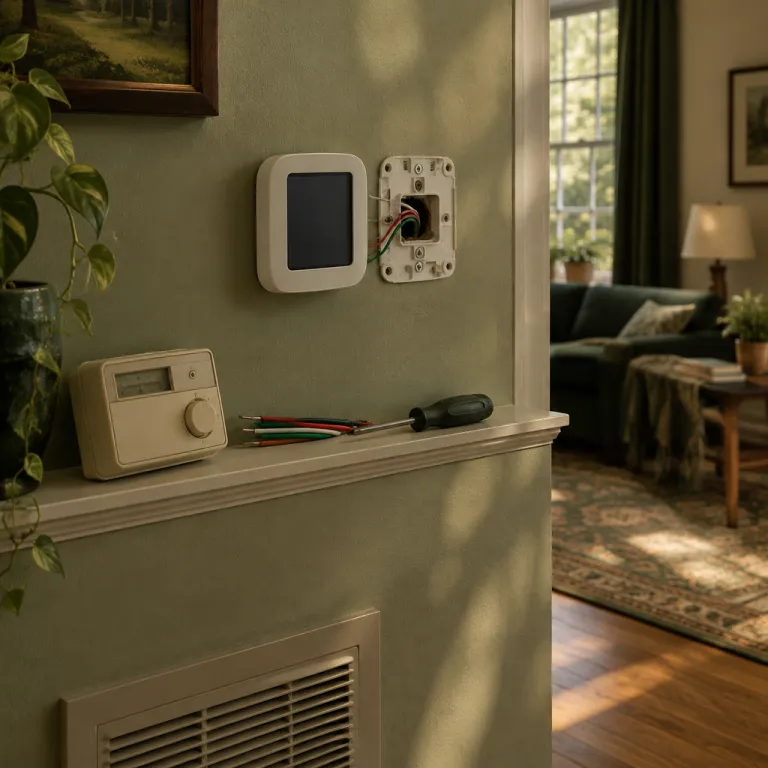
Understanding how to choose a smart thermostat for your home
Smart thermostats sit at the heart of a modern heating system and quietly shape both comfort and energy bills. When you start exploring how to choose a smart thermostat, you are really deciding how precisely your home will respond to your daily routines and changing weather. A well matched device can feel invisible in use yet still cut wasted energy significantly.
The first step in how to choose a smart thermostat is to understand your current HVAC setup in detail. Central heating and cooling systems can be single stage, multistage, heat pump based, or use boilers with radiators, and each type supports different thermostat wiring and control logic. Matching the thermostat to this existing infrastructure prevents malfunctions, protects equipment, and keeps warranties intact.
Two main actors shape this decision process, and both matter more than marketing claims. The homeowner acts as the buyer and end user, while an HVAC professional or electrician often validates compatibility and handles complex wiring. Treat how to choose a smart thermostat as a joint project between you and that specialist, not just a quick online purchase.
Energy savings are a central motivation, but expectations should be grounded in real data rather than vague promises. Independent experiments from public agencies show average energy savings around 10 percent when smart scheduling and occupancy features are used consistently. That level of improvement usually translates into a typical payback period of about two years, assuming normal heating and cooling usage.
Comfort and convenience deserve equal weight alongside pure efficiency metrics. Remote control from a phone, clear temperature readouts, and intuitive schedules all influence whether you actually use advanced features day after day. When you evaluate how to choose a smart thermostat, prioritize models whose interface you can understand at a glance, because complexity you avoid will never save you money.
Checking HVAC compatibility and wiring before you buy
Compatibility is the single most important technical factor in how to choose a smart thermostat, and it is often misunderstood. Every thermostat relies on low voltage control wiring that connects to your furnace, heat pump, or boiler, and the available terminals determine which models will work safely. Ignoring this step can leave you with a beautiful screen that simply cannot power on.
Many smart models require a continuous power supply from a common wire, often labeled C wire, to support WiFi, backlighting, and learning algorithms. The official guidance is clear and should be quoted exactly where relevant : “Do I need C-wire? Many smart models require common wire for continuous power.” If your existing thermostat lacks this conductor, an HVAC professional or electrician can often add one from the control board, or install an approved adapter kit supplied by the manufacturer.
Connectivity questions extend beyond wiring and into your home network and radio protocols. “Will WiFi alone suffice? WiFi enables remote control; other protocols needed for low-power links.” That means some ecosystems rely on Zigbee and Thread connectivity to link battery powered sensors or additional room controllers, while the thermostat itself still uses WiFi for app access and firmware updates.
When you study how to choose a smart thermostat, check the manufacturer’s online compatibility checker before placing any order. These tools usually ask for your current thermostat wiring labels and HVAC equipment type, then confirm whether a given model supports single stage, multistage, or heat pump configurations. If the result is unclear, send photos of your wiring to an HVAC professional and ask for written confirmation before proceeding.
Professional installation is not always mandatory, but it is strongly recommended for complex systems or older properties. The official answer in expert guidance states : “Is professional installation necessary? Recommended for complex wiring or compatibility issues.” If you are already planning other home upgrades, you can even coordinate a visit when you evaluate grooming appliances or bathroom outlets, using a similar mindset to choosing the right head shaving cream for electric shavers in terms of matching tools to specific hardware needs.
Key smart features that genuinely improve comfort and savings
Once compatibility is confirmed, the next step in how to choose a smart thermostat is to focus on features that deliver real world benefits, not just glossy marketing. Learning algorithms can analyze your daily patterns and automatically adjust schedules, while geofencing uses your phone’s location to switch between home and away modes. These capabilities reduce the need for manual tweaks and help maintain consistent comfort without constant attention.
AI based adaptive scheduling goes a step further by combining occupancy data, outdoor weather, and historical usage to predict when heating or cooling should start. Instead of simply following fixed time blocks, the thermostat can preheat or precool so that rooms reach the target temperature exactly when you wake up or return from work. When you compare models, look for clear explanations of how their learning systems work and whether you can override them easily if your routine changes.
Integration with smart home ecosystems is another pillar of how to choose a smart thermostat intelligently. Some models work best with Google Home, others with Amazon Alexa, Apple Home, or open standards like Matter, and this affects voice control, automation routines, and accessory support. If you already own smart lights, plugs, or a smart home starter kit, align your thermostat choice with that ecosystem to avoid juggling multiple apps.
Voice control and app design influence daily usability more than many spec sheets admit. A clear mobile app with logical menus, energy reports, and remote override buttons encourages you to engage with your system regularly, which is essential for achieving that average 10 percent energy savings. Before buying, browse app store screenshots or reviews to see whether the interface looks intuitive to you personally.
For readers who enjoy deep dives into connected devices, the mindset used in a comprehensive guide to electric razor insights can transfer directly to thermostats. You compare blade types, battery life, and ergonomics there, while here you compare sensors, connectivity, and scheduling intelligence. In both cases, a structured checklist helps you filter marketing noise and focus on features that match your actual habits.
Connectivity, protocols, and smart home ecosystem choices
Connectivity decisions sit at the core of how to choose a smart thermostat that will age gracefully with your home. WiFi remains the primary link between the thermostat and your phone, enabling remote control, firmware updates, and cloud based analytics. However, many systems now add Zigbee and Thread connectivity to communicate efficiently with low power sensors and other accessories.
Zigbee and Thread connectivity offer mesh networking, where each compatible device can relay signals to others, extending range without overloading WiFi. This architecture is particularly useful in larger homes or properties with thick walls, where a single router struggles to reach every room. When you evaluate thermostats, check whether they act as border routers or hubs for these protocols, because that can simplify your overall smart home layout.
Smart home ecosystems influence how different brands cooperate or conflict inside your house. If you already own speakers, plugs, or cameras from a specific platform, align how to choose a smart thermostat with that existing investment to avoid fragmentation. For example, a thermostat that supports Matter and major voice assistants can slot into most setups with minimal friction.
Security and privacy deserve careful attention, especially when devices connect to cloud services and store occupancy data. Look for clear privacy policies, regular firmware updates, and options to restrict data sharing while still retaining core features like remote control. Some homeowners prefer local control options where schedules and automation run on the device or hub, reducing dependence on external servers.
If you are building your first connected home, a dedicated smart home starter kit recommendations for a seamless first setup guide can help you map out priorities. That same structured approach applies directly to how to choose a smart thermostat, where you balance budget, ecosystem lock in, and future expansion plans. Treat the thermostat as one node in a broader network rather than an isolated gadget.
Energy savings, comfort tuning, and realistic payback expectations
Energy performance is often the headline promise, so it deserves a clear, realistic analysis when you decide how to choose a smart thermostat. Independent tests from agencies such as the United States Department of Energy show that properly configured smart thermostats can reduce heating and cooling consumption by around 10 percent on average. That figure assumes you use scheduling, occupancy detection, and temperature setbacks consistently rather than leaving everything at a fixed setting.
Payback periods depend on your climate, insulation quality, and local energy prices, but typical estimates cluster around two years of normal use. In colder regions with long heating seasons, savings can accumulate faster, while in mild climates the financial return may be slower but still meaningful. When comparing models, prioritize those with clear energy reports and Energy Star certification, because transparent data helps you verify whether promised savings appear on your actual bills.
Comfort tuning goes beyond simple temperature numbers and into how your home feels throughout the day. Some thermostats support remote room sensors that monitor temperatures in multiple spaces, allowing the system to prioritize occupied rooms rather than just the hallway where the main unit sits. This feature can reduce hot and cold spots, especially in multi story homes or layouts with large open areas.
Learning algorithms and AI based adaptive scheduling can gradually refine how your system responds to your lifestyle. If you routinely leave earlier on certain days, the thermostat can adjust preheating and setbacks automatically, trimming waste without sacrificing comfort. When you evaluate how to choose a smart thermostat, check whether you can review and edit these learned schedules, because manual control remains important when routines change.
For some buyers, the decision process mirrors how they evaluate other personal tech, such as grooming tools or shavers. You weigh long term operating costs, maintenance, and user experience rather than just upfront price, much like when reading a detailed guide to maintaining electric razors. Apply that same disciplined thinking here, and you will select a thermostat that quietly pays for itself while keeping your home consistently pleasant.
Practical buying checklist and collaboration with professionals
Turning theory into action requires a structured checklist that guides how to choose a smart thermostat from research to installation. Start by photographing your existing thermostat wiring with labels visible, then identify your HVAC type, whether it is a furnace, heat pump, or boiler. With that information ready, use manufacturer compatibility checkers to filter out unsuitable models before you even consider aesthetics or advanced features.
Next, define your priorities in terms of energy savings, comfort, and ecosystem integration. If your main goal is lower bills, focus on models with strong scheduling tools, occupancy detection, and clear energy reports, ideally backed by Energy Star ratings. If seamless automation matters more, prioritize thermostats that integrate tightly with your chosen smart home platform and support Zigbee and Thread connectivity for future expansion.
Collaboration with professionals can turn a potentially stressful installation into a smooth, predictable process. An HVAC professional or qualified electrician can confirm wiring, add a C wire if needed, and verify that safety controls such as emergency heat or boiler protections remain intact. Treat their input as part of how to choose a smart thermostat wisely, especially in older homes or complex multistage systems.
Before finalizing any purchase, review app screenshots, user manuals, and support documentation to gauge long term usability. A clear manual with wiring diagrams, troubleshooting steps, and contact options for technical support signals a brand that takes reliability seriously. Keep in mind that a thermostat will likely stay on your wall for many years, so robust support matters as much as sleek design.
Finally, schedule a follow up check a few weeks after installation to review energy reports and comfort levels. Adjust schedules, temperature setbacks, and geofencing rules based on real experience rather than assumptions, then monitor bills across at least one full season. This iterative approach completes the cycle of how to choose a smart thermostat, install it correctly, and fine tune it for both comfort and measurable savings.
Key figures and performance benchmarks for smart thermostats
- Average energy savings of around 10 percent for heating and cooling are commonly reported when smart scheduling and occupancy features are used consistently, based on experiments from the United States Department of Energy.
- Typical payback periods of about two years are estimated by environmental agencies such as the United States Environmental Protection Agency, assuming normal usage patterns and average energy prices.
- Heating and cooling often account for roughly 40 to 50 percent of household energy consumption in many temperate climates, so even modest percentage reductions from smart thermostats can translate into substantial annual cost savings.
- Many modern smart thermostats support multiple connectivity protocols, with WiFi for cloud access and Zigbee and Thread connectivity for low power accessories, improving reliability in larger homes with challenging layouts.
- Energy Star certified smart thermostats must demonstrate verifiable savings under standardized testing conditions, providing buyers with a performance benchmark that goes beyond unverified manufacturer claims.
FAQ about how to choose a smart thermostat
Do I really need a C wire for a smart thermostat
Many smart thermostats require a C wire to supply continuous low voltage power for WiFi, backlighting, and internal processors. Some models can operate without it using power stealing techniques or adapter kits, but these solutions may be less stable on certain HVAC systems. When in doubt, ask an HVAC professional to add a proper C wire from the control board for maximum reliability.
How can I check if a smart thermostat is compatible with my system
Start by removing your existing thermostat cover and photographing the wiring terminals with labels clearly visible. Then use the manufacturer’s online compatibility checker, entering your wiring labels and HVAC type, such as single stage furnace or heat pump with auxiliary heat. If the tool gives ambiguous results, share the photos with an HVAC professional and request confirmation before purchasing.
Is professional installation necessary for every smart thermostat
Many homeowners can handle straightforward replacements on simple single stage systems, especially when the wiring already includes a C wire. Professional installation becomes highly advisable for heat pumps, multistage equipment, boilers, or any setup with unfamiliar wiring labels. Expert installers can also verify safety controls, configure advanced settings, and ensure that warranties remain valid.
Will a smart thermostat always lower my energy bills
Smart thermostats provide tools for savings, but actual results depend on how you use them. Features like scheduling, geofencing, and adaptive learning must be configured thoughtfully, with temperature setbacks during absences and nights. If you simply set one constant temperature and never adjust it, savings will be minimal regardless of how advanced the device is.
Which smart home ecosystem should I prioritize when choosing a thermostat
The best ecosystem is usually the one you already use for other devices, such as speakers, lights, or plugs. Selecting a thermostat that integrates smoothly with that platform reduces app clutter and simplifies automation routines. Look for support for major voice assistants and emerging standards like Matter to keep future options open while maintaining current convenience.
Trusted references
- United States Department of Energy
- United States Environmental Protection Agency
- Energy Star program documentation