Single hose vs dual hose models in compact living spaces
Not all portable units move air the same way, and that matters in tight apartments. Single hose models draw room air, cool part of it, then push hot exhaust outside through one hose. Dual hose models use one hose to pull outdoor air for the condenser and a second hose to expel hot air, which often makes them some of the best portable air conditioners for apartments where performance and stability really count.
Single hose portable air conditioners are usually cheaper and easier to find. They work well in smaller rooms up to about 18 to 20 m², especially where insulation is decent and sun exposure is moderate. Many buyers still consider them among the best portable air conditioners for apartments when budget and simplicity outrank absolute efficiency, particularly for seasonal or occasional use.
Dual hose portable air conditioners reduce negative pressure inside the room. Because they do not pull as much already cooled indoor air out, they maintain more stable temperatures and can cool faster during peak heat. In larger living rooms or open plan studios, dual hose designs often qualify as the best portable air conditioners for apartments that struggle with strong afternoon sun or large window areas.
Air quality also shifts slightly between these two designs. Single hose units can draw in warm, humid air from adjacent rooms or corridors, which may matter if your building’s common areas feel stuffy. Dual hose models limit this effect, so when you evaluate the best portable air conditioners for apartments, consider how your unit interacts with hallways, neighboring rooms, and any shared spaces.
Remote control and smart features now influence daily usability as much as hose design. Many of the top portable air conditioners with remote control combine dual hose layouts with Wi Fi connectivity and app scheduling. For tech focused renters, these smart dual hose units often feel like the best portable air conditioners for apartments because they integrate seamlessly with routines, voice assistants, and connected homes.
Installation, venting, and landlord friendly setups
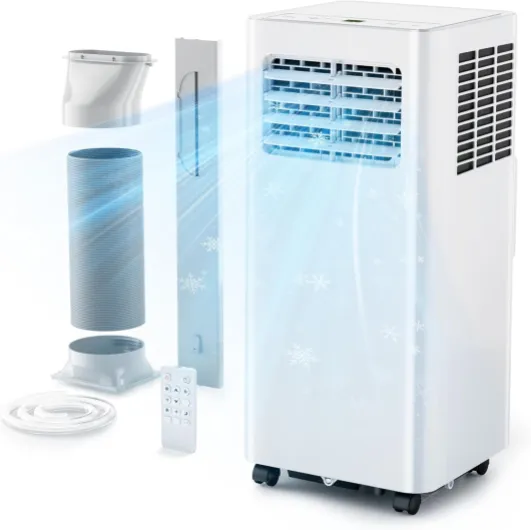
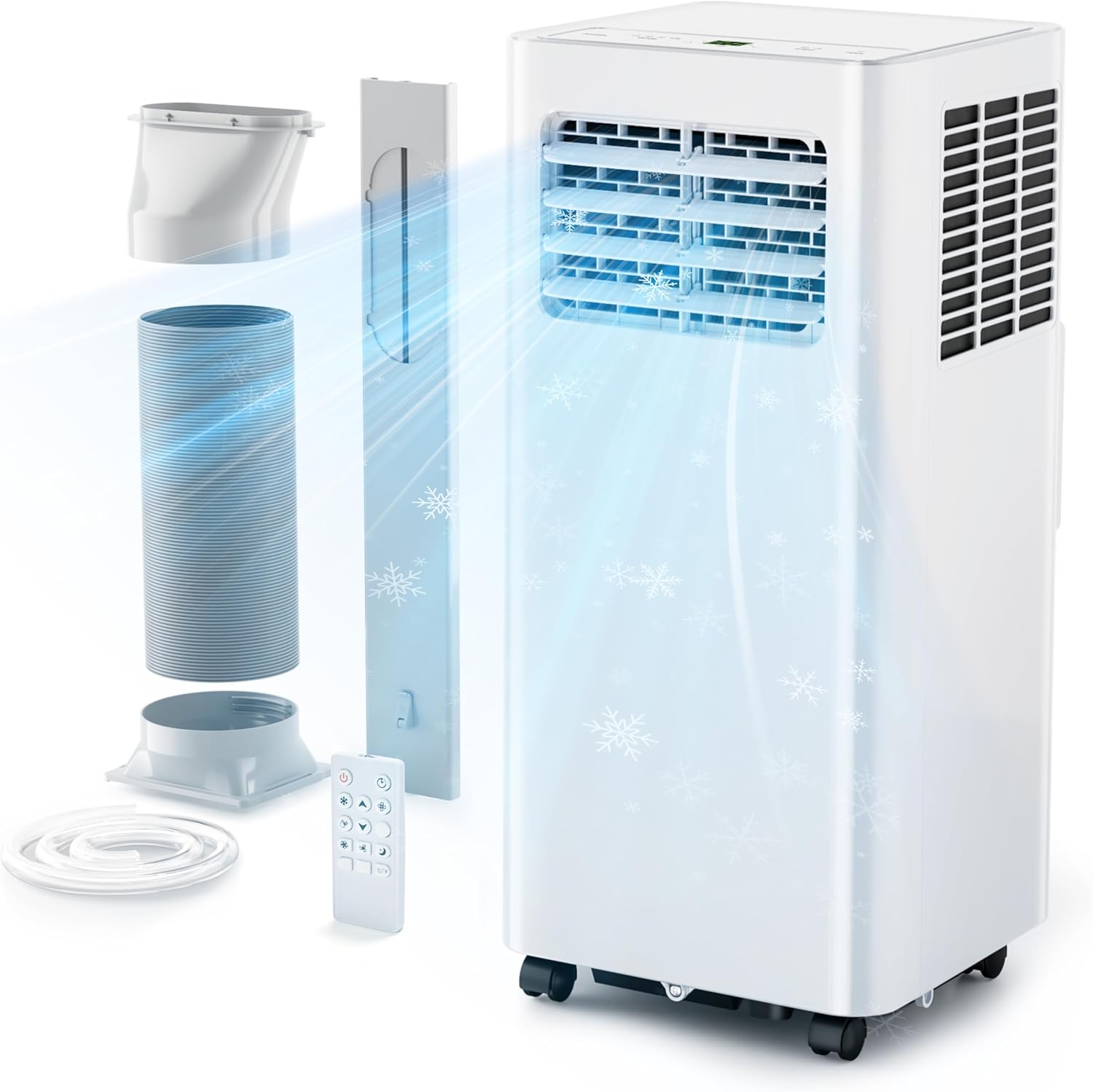
Apartment living often means no drilling, no permanent fixtures, and strict window rules. Portable air conditioners respect these limits, but only if you install them correctly and seal gaps carefully. The best portable air conditioners for apartments ship with flexible window kits that adapt to different frame types without leaving marks or requiring tools.
Measure your window opening before you buy anything. Sliding windows, French windows, and tilt and turn frames all need slightly different panel shapes and extension pieces. When you compare the best portable air conditioners for apartments, check whether the included kit covers your window height and width, or if you will need extra panels or foam strips to close small gaps.
Good sealing is not just about keeping insects out. Any gap around the exhaust panel lets hot outdoor air leak back in, forcing the compressor to work harder and raising your energy use. Models marketed as the best portable air conditioners for apartments often include thicker foam, adjustable sliders, and even optional sealing tape to minimize these leaks and protect delicate frames.
Drainage is another overlooked part of installation. Most modern units use self evaporative technology, which expels much of the condensate water through the exhaust hose, but high humidity can still fill the internal tank. When you choose among the best portable air conditioners for apartments, look for an accessible drain port and the option to attach a small hose for continuous drainage into a nearby sink, shower, or floor drain.
If you prioritize quick setup, focus on units designed for easy installation. Many renters appreciate guides that highlight a top easy install portable air conditioner because these models reduce both setup time and potential landlord concerns. In practice, the best portable air conditioners for apartments combine tool free window kits, clear manuals, and compact exhaust hoses that do not dominate your limited space or block emergency exits.
Noise, sleep quality, and everyday comfort in small apartments
Cooling performance means little if the unit keeps you awake at night. Portable air conditioners place the compressor inside the room, so they inevitably sound louder than split systems mounted outdoors. The best portable air conditioners for apartments manage this with refined airflow paths, better insulation, and multiple fan speeds that let you trade cooling intensity for quieter operation.
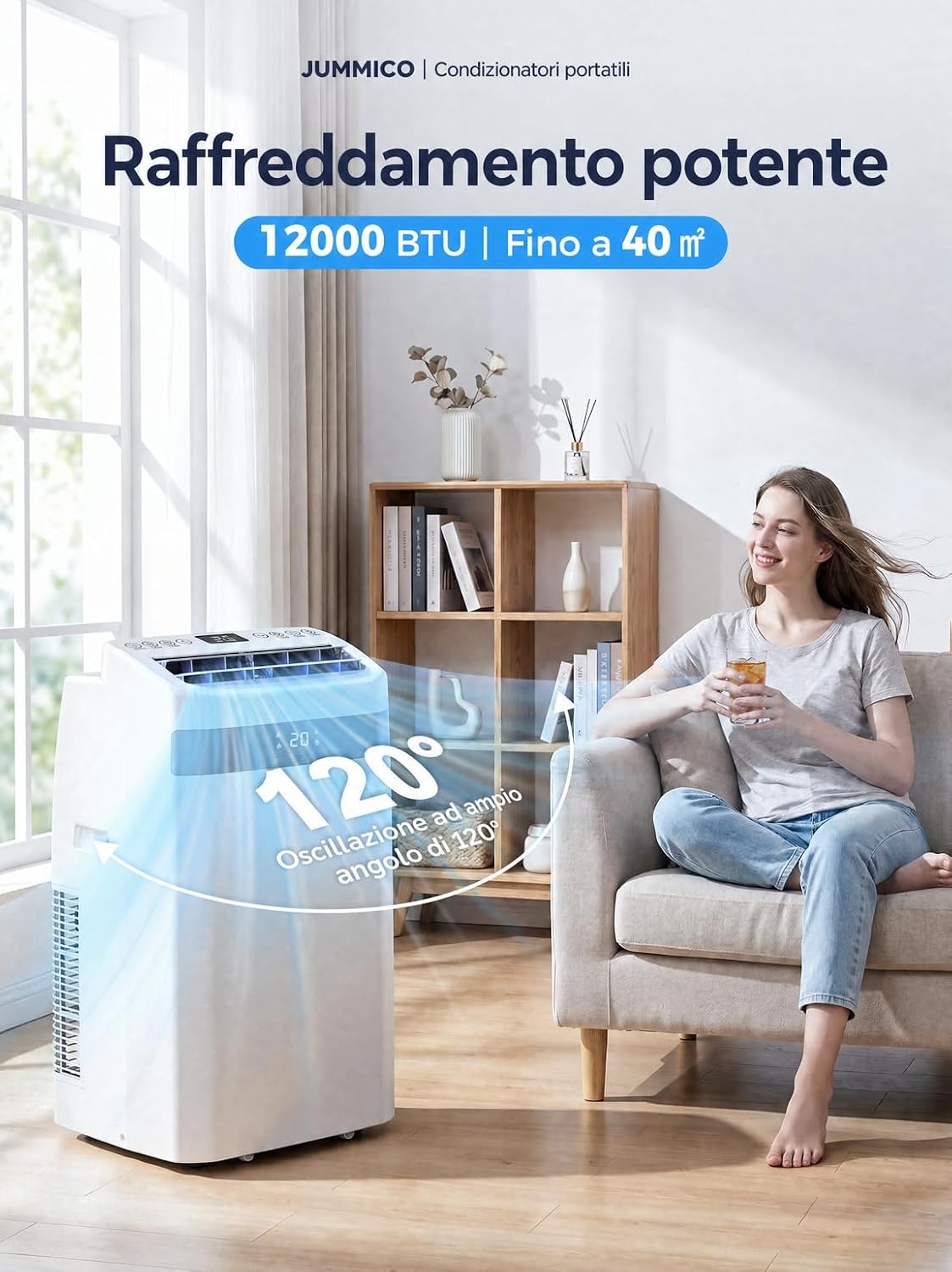
When you read specifications, focus on decibel ratings at both low and high fan settings. A model rated around 50 dB on low and 60 dB on high usually feels acceptable in a living room but may still feel intrusive beside a bed. For bedrooms, the best portable air conditioners for apartments often include sleep modes that gradually raise the set temperature and slow the fan to reduce noise while you rest.
Compressor cycling patterns also influence perceived loudness. Some cheaper units run at full power, then shut off abruptly, creating a repeating on off thump that can feel more disturbing than a constant hum. Higher quality models, often marketed as the best portable air conditioners for apartments, use more refined control logic to smooth these transitions and maintain steadier sound levels across the night.
Placement within the room matters as much as the decibel number. Avoid pushing the unit into a tight corner where vibrations can resonate through walls or furniture, and keep at least 30 to 50 cm of clearance around air intakes. When you position the best portable air conditioners for apartments correctly, you reduce both noise reflections and airflow turbulence, which can otherwise create whistling or rattling sounds.
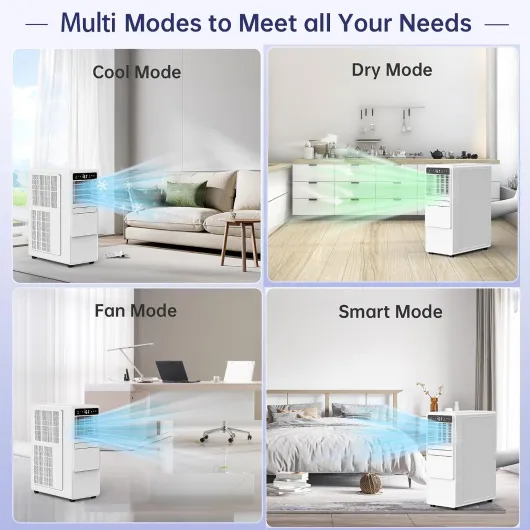
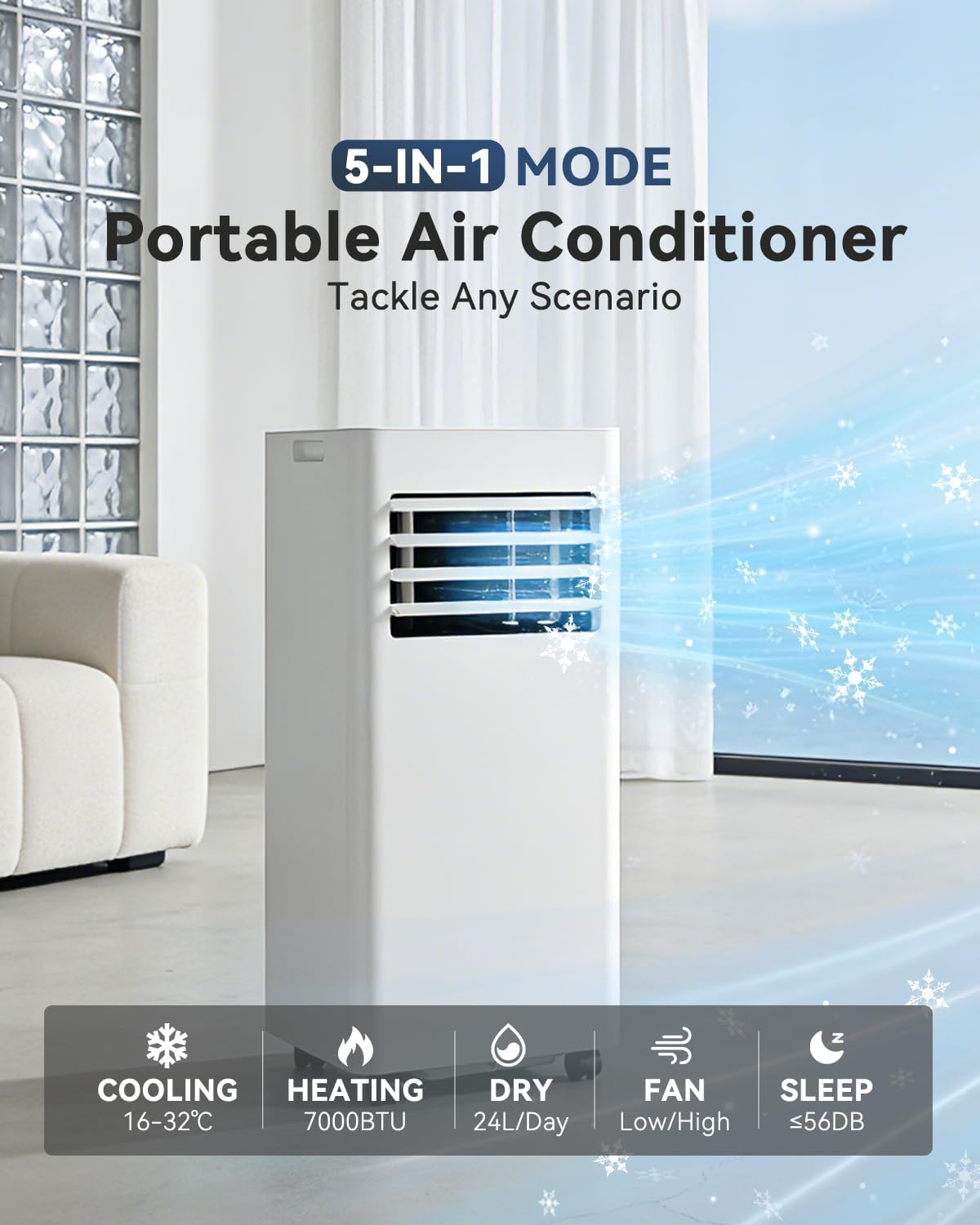
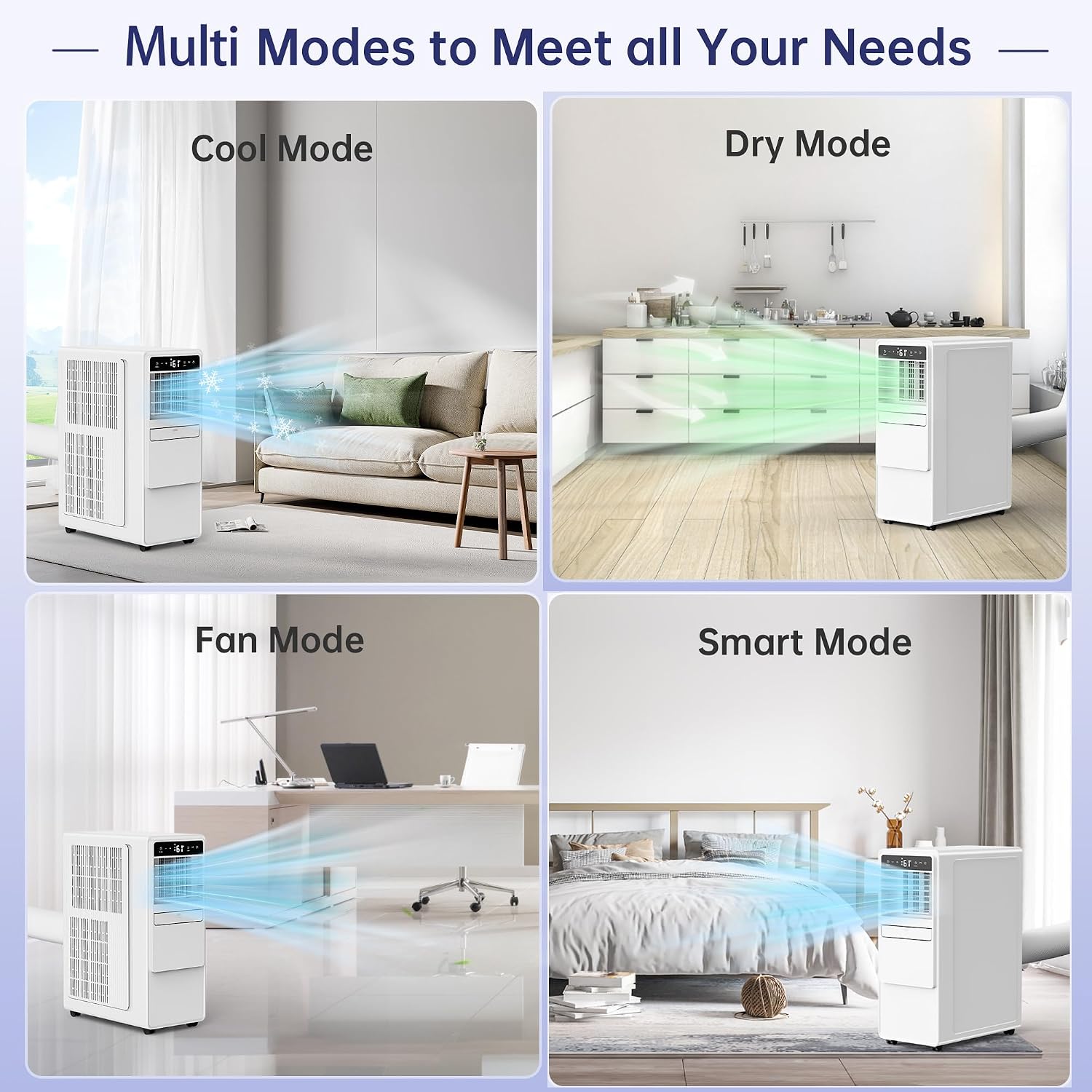
Daily comfort also includes how the unit handles humidity. Many portable air conditioners offer a dedicated dry mode that removes moisture without aggressive cooling, which helps in coastal cities or older buildings with poor ventilation. In such cases, the best portable air conditioners for apartments double as dehumidifiers, making the air feel cooler at the same temperature and improving sleep quality without overcooling the room.
Energy efficiency, running costs, and smart control
Electricity prices keep rising, so efficiency is not a luxury feature anymore. Portable air conditioners draw significant power, especially during long heatwaves, and inefficient models can surprise you with high monthly bills. The best portable air conditioners for apartments combine solid cooling capacity with optimized compressors, variable fan speeds, and intelligent thermostats that avoid unnecessary cycling.
Check the energy efficiency ratio or seasonal efficiency ratings where available. A higher EER means more cooling output per watt consumed, which directly lowers your cost per hour of operation. When you compare the best portable air conditioners for apartments, do not just look at maximum BTU or watt numbers, but at how efficiently they deliver that cooling under standard test conditions published in their spec sheets.
Smart features now play a major role in controlling energy use. Wi Fi enabled units let you schedule cooling around your actual presence, pre cooling the apartment before you arrive and reducing output when you leave. For tech oriented buyers, the best portable air conditioners for apartments integrate with voice assistants and home automation routines, so you never run them longer than necessary or forget to switch them off.
Thermostat accuracy also affects both comfort and cost. Some cheaper models measure temperature near the unit, which can be cooler than the rest of the room and cause premature shutoff. Higher end models, often listed among the best portable air conditioners for apartments, use more accurate sensors or remote controls with built in thermometers to track the temperature where you actually sit or sleep.
Energy efficiency does not stop at cooling alone. Many portable units include fan only and dehumidify modes that use far less power while still improving comfort on milder days. When you evaluate the best portable air conditioners for apartments, consider how often you can rely on these lighter modes instead of full cooling, because that choice significantly shapes your annual running costs.
Air quality, filtration, and pairing with other climate tech
Cooling the air is one thing, but breathing cleaner air is another. Portable air conditioners recirculate indoor air, so their filters and airflow patterns influence dust levels and perceived freshness. The best portable air conditioners for apartments use multi stage filters that capture larger particles and sometimes finer dust, which helps allergy sensitive residents and pet owners.
Most units ship with basic mesh filters designed to protect the internal coils. These filters are washable and should be cleaned every two to four weeks during heavy use to maintain airflow and efficiency. When you shortlist the best portable air conditioners for apartments, check how easy it is to remove and wash the filter, because complicated access often leads to neglected maintenance and reduced performance.
Some models add activated carbon layers to reduce odors from cooking, pets, or nearby traffic. While they do not replace a dedicated air purifier, they can noticeably improve perceived air quality in small studios. In dense urban environments, the best portable air conditioners for apartments often work alongside a separate purifier to handle fine particles and volatile organic compounds more effectively.
If you want a more complete indoor climate setup, consider pairing your portable unit with a compact air purifier. Guides that explain the benefits of a dedicated air purifier show how filtration and cooling complement each other in tight spaces. For many renters, the best portable air conditioners for apartments form part of a broader strategy that includes purification, humidity control, and smart monitoring.
Humidity management deserves special attention in older or poorly insulated buildings. Excess moisture encourages mold growth and makes heat feel more oppressive, while overly dry air can irritate airways and damage wooden furniture. When you evaluate the best portable air conditioners for apartments, look for models with effective dehumidify modes and clear condensate handling, then balance them with humidifiers or purifiers as needed for year round comfort.
Real world scenarios and matching a unit to your apartment layout
Every apartment layout challenges portable cooling in different ways. A narrow studio with a single south facing window behaves very differently from a two room flat with internal corridors. The best portable air conditioners for apartments only feel “best” when they match these specific layouts, window orientations, and daily routines.
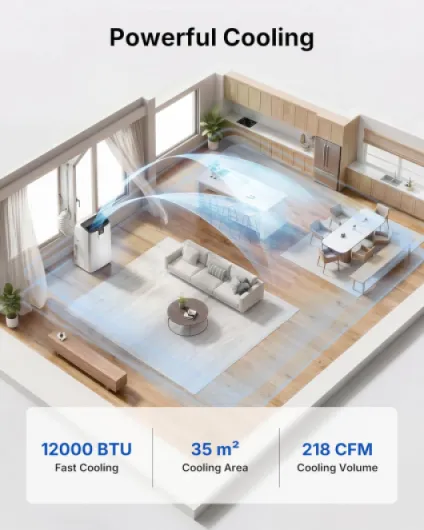
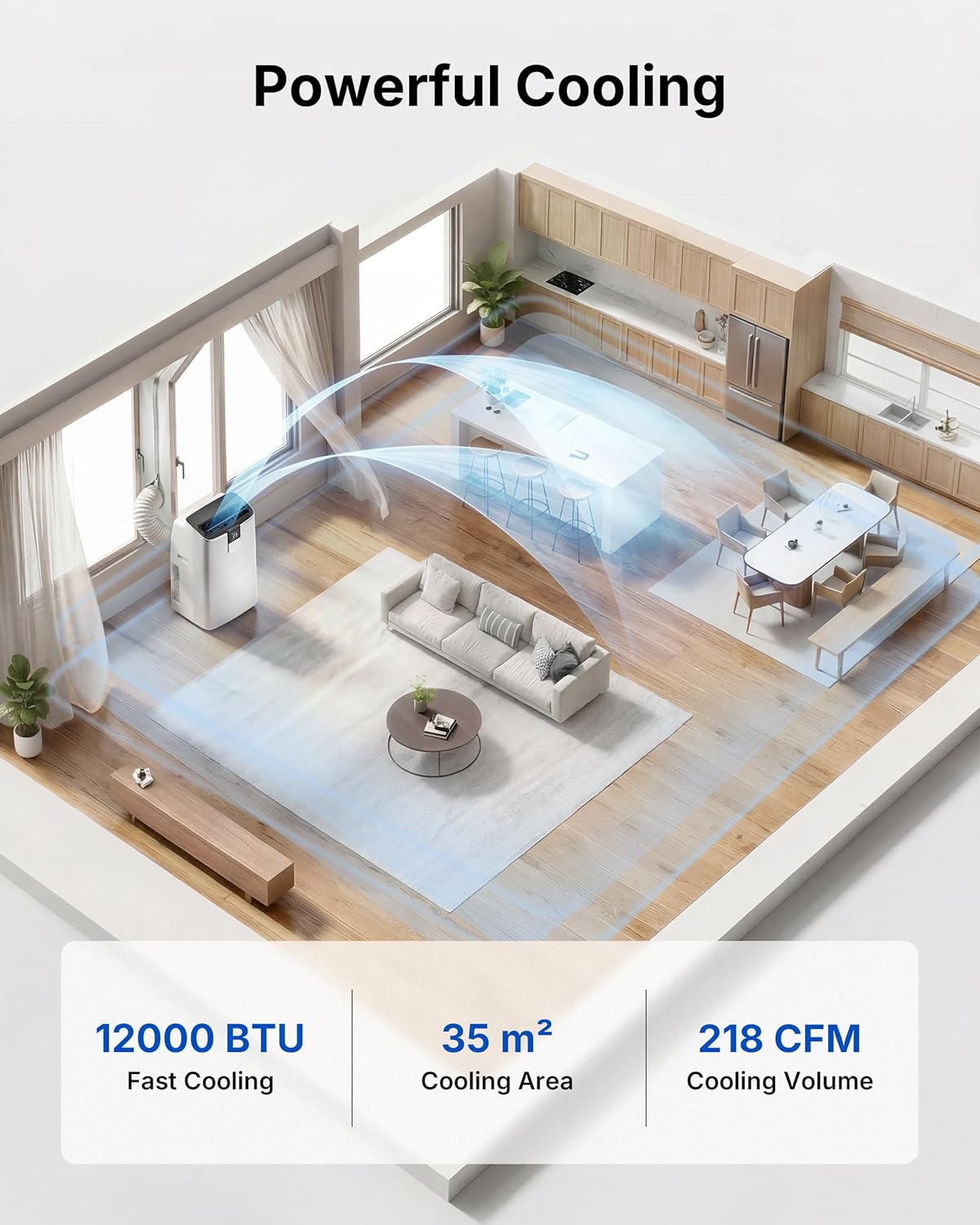
In a compact studio around 25 m², a mid range single hose unit with good insulation and a quiet sleep mode often suffices. Place it near the main window, angle the louvers toward the bed or sofa, and keep interior doors open to avoid hot pockets. For many renters in this situation, such a unit ranks among the best portable air conditioners for apartments because it balances price, noise, and flexibility.
Larger one bedroom apartments with open plan living areas usually benefit from stronger or dual hose models. Position the unit in the living room where you spend most waking hours, then rely on airflow and fans to push cool air toward the bedroom. In these cases, the best portable air conditioners for apartments are those that maintain stable temperatures across multiple zones without constant repositioning or excessive noise.
Shared apartments introduce another layer of complexity. Roommates may have different comfort preferences, and doors often stay closed for privacy, which traps heat in individual rooms. When you choose the best portable air conditioners for apartments with multiple occupants, consider whether one powerful unit in the common area or two smaller units in separate rooms better matches your lifestyle and electrical capacity.
Storage and off season handling also matter in small homes. Look for compact footprints, integrated cord storage, and sturdy casters that roll easily over thresholds and rugs. Over several years of use, the best portable air conditioners for apartments are not just efficient and quiet, but also easy to move, store, and maintain without damaging floors or crowding already limited closets.
Key figures about portable air conditioners for apartments
- Typical portable air conditioners for residential use range from about 1 800 to 3 500 watts of cooling capacity, which suits rooms from roughly 15 to 35 m² depending on insulation and sun exposure, according to major manufacturers’ sizing charts.
- Noise levels for modern portable air conditioners usually fall between 50 and 65 dB at standard operating modes, which corresponds to the sound of a quiet office to normal conversation, based on acoustic comparisons from appliance testing organizations.
- Energy efficiency ratios for portable air conditioners often range from about 2.6 to 3.1, meaning they deliver 2.6 to 3.1 units of cooling for each unit of electricity consumed, as reported in product specification sheets from leading brands.
- Independent lab tests have shown that poor window sealing can reduce effective cooling performance by more than 20 percent, because hot outdoor air leaks back into the room and forces the compressor to run longer for the same temperature drop.
- Consumer surveys from large appliance retailers indicate that over half of buyers prioritize noise level and energy consumption over initial purchase price when choosing portable air conditioners for small apartments, reflecting growing concern about comfort and running costs.