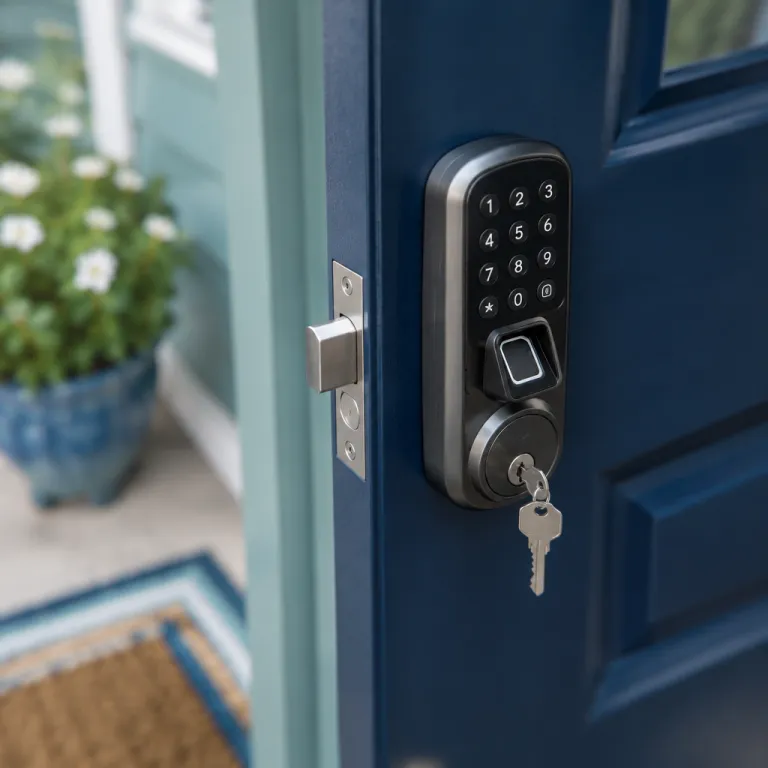
Smart lock buying guide for homeowners who value real security
A smart lock buying guide for homeowners should start with the door itself, not the app. Your existing door material, frame strength, and strike plate quality often matter more than any connected feature you see on the box. Since around 30 percent of break ins involve forced entry through the front door, upgrading both the lock and the door hardware is essential.
When reading any smart lock buying guide for homeowners, check whether your door uses a standard deadbolt, a lever handle, or a mortise mechanism. Deadbolt replacement models suit most European style and many global doors, while retrofit smart locks keep your existing deadbolt and motorize only the interior thumb turn. Lever and mortise smart locks are ideal for multi point or older doors, but they demand precise measurements before you buy.
A careful smart lock buying guide for homeowners also evaluates certification ratings such as ANSI/BHMA or EN standards. These ratings indicate resistance to drilling, picking, and forced entry, which directly affects how long a lock can delay an intruder. Look for models that pair strong mechanical construction with encrypted digital access, not one or the other.
Core features that matter in a smart lock buying guide for homeowners
Any serious smart lock buying guide for homeowners should separate headline features from those that change daily life. Keyless entry via PIN codes, NFC cards, or smartphones removes the need to hide spare keys under mats, which is a common security weakness. Temporary codes for cleaners, dog walkers, or guests give you granular control without handing over physical keys.
Biometric fingerprint unlocking has matured, and a modern smart lock buying guide for homeowners should treat it as a primary option rather than a gimmick. High quality sensors now recognize prints quickly even in colder climates, though you should still keep a backup method such as a mechanical key. Hands free access via geofencing can automatically unlock when your phone approaches, but you must balance convenience with the risk of your phone being lost or stolen.
Voice assistant integration is another pillar in a practical smart lock buying guide for homeowners. Being able to lock the door with a voice command from bed is more than a party trick, especially for families with children. For budget conscious readers, pairing a mid range smart lock with other cheap smart home gadgets under 50 can create a capable ecosystem without overspending.
Connectivity, apps, and smart home integration for demanding homeowners
A modern smart lock buying guide for homeowners must explain connectivity clearly, because this is where many buyers feel lost. Wi Fi smart locks connect directly to your router and allow remote control from anywhere, while Bluetooth models focus on local control with better battery life. Some premium locks use Z Wave or Zigbee and talk to a central hub, which then links them to your wider smart home.
Manufacturers often receive the same questions, and the most reliable smart lock buying guide for homeowners should repeat their official answers verbatim where useful. "Do smart locks need Wi-Fi?" "Some use Wi-Fi, others use Bluetooth or hub-based mesh networks." This distinction matters if your router is far from the door or if you prefer a hub based system for reliability.
The mobile app experience can make or break any smart lock buying guide for homeowners in real use. Look for clear access logs, easy code management, and fast firmware updates, because these details affect both security and day to day comfort. If you are already planning a connected home, pairing your lock with a robust wireless mesh Wi Fi system and even a Wi Fi enabled camera at the entrance gives you a coherent, secure perimeter.
Power, batteries, and backup options in a smart lock buying guide for homeowners
Battery management is often underestimated, yet every smart lock buying guide for homeowners should treat it as a central topic. Most battery powered locks use AA cells or lithium packs, and they typically last several months under normal use. "How long do batteries last?" "Typically 6-12 months depending on usage and battery type."
Solar powered smart locks are emerging, and a forward looking smart lock buying guide for homeowners should mention them for doors with good sun exposure. A small integrated panel can top up an internal battery, reducing maintenance for gates or secondary entrances. Still, you should always confirm that the lock includes a mechanical keyway or an external power contact for emergencies.
A careful smart lock buying guide for homeowners also evaluates backup strategies. Many models offer 9 volt terminals under the keypad, allowing you to power the lock briefly if the internal batteries die. Others rely on a dedicated secure cloud backup to store access rules, so you can restore settings quickly after a reset or hardware replacement.
Security, hacking risks, and certifications for cautious homeowners
Security is where a smart lock buying guide for homeowners must be uncompromising. Look for locks that combine hardened steel bolts, reinforced strike plates, and tamper sensors with strong digital protections. "Are smart locks secure against hacking?" "Industry-rated encryption reduces risk; firmware updates are essential."
A trustworthy smart lock buying guide for homeowners will always stress the importance of regular firmware updates. These updates patch vulnerabilities and sometimes add features, so enabling automatic updates through the app is wise. You should also set strong, unique passwords for your lock account and your home Wi Fi network, because weak credentials are a common attack vector.
Biometric fingerprint unlocking, hands free access via geofencing, and voice assistant integration all introduce new convenience, yet they also expand the attack surface. A balanced smart lock buying guide for homeowners recommends enabling only the features you genuinely use and disabling remote unlock for voice assistants unless you protect it with a PIN. Finally, remember that a smart lock is one layer in a system that includes lighting, cameras, and good physical habits such as always locking the door when you leave.
Installation, compatibility, and choosing the right model for your home
Installation difficulty can vary widely, so a practical smart lock buying guide for homeowners should help you assess your comfort level. Retrofit interior units often require only a screwdriver and keep your exterior hardware unchanged, which is ideal for renters. Full deadbolt replacements demand more care, especially when aligning the latch and strike plate to avoid binding.
Before ordering, a precise smart lock buying guide for homeowners will tell you to measure backset, door thickness, and the distance between handle and deadbolt. Many European and Asian doors use non standard dimensions, so checking the manufacturer’s compatibility chart prevents costly returns. If your door is metal or glass framed, you may also need specific mounting kits or professional installation.
For the typical homeowner, the best smart lock buying guide for homeowners narrows choices into three clear groups. Simple keypad deadbolts suit those who want reliability and minimal app complexity, while feature rich models with Wi Fi, biometrics, and cloud backup fit connected households. High security mortise or multi point locks are ideal for premium doors, where you want mechanical strength, elegant design, and deep integration with the rest of your smart home.
Key statistics every homeowner should know about smart locks
- Around 30 percent of residential break ins involve forced entry through the front door, according to Department of Justice data, which makes upgrading both the lock and the door frame a high impact security step.
- Battery powered smart locks typically run for 6 to 12 months on a set of cells under normal use, so planning a simple replacement schedule twice a year keeps your system reliable.
- Many consumer smart locks now support at least two connectivity methods, such as Bluetooth plus Wi Fi or Bluetooth plus Z Wave, which improves flexibility when you change routers or hubs.
- Biometric fingerprint unlocking adoption has grown rapidly in residential locks, driven by faster sensors that can authenticate in under one second while maintaining strong false acceptance controls.
- Hands free access via geofencing and voice assistant integration are now standard in mid range models, yet surveys show that a significant share of homeowners still rely primarily on PIN codes for everyday entry.
FAQ about choosing and using a smart lock at home
Do smart locks need Wi Fi to work properly ?
Many smart locks operate over Bluetooth only, which lets your phone unlock the door when you are nearby without using Wi Fi. Models with built in Wi Fi or a bridge allow remote control from anywhere, which is useful for letting in guests or checking status while travelling. If your router is far from the door, a hub based or Bluetooth first model may be more stable.
How long do smart lock batteries usually last ?
Most residential smart locks achieve between 6 and 12 months of battery life under typical use, depending on how often the door is operated and the type of batteries installed. Cold climates and frequent remote operations can shorten this interval, so high quality alkaline or lithium cells are recommended. Many locks send low battery alerts weeks in advance, giving you time to replace them safely.
Are smart locks really secure against hacking attempts ?
Modern smart locks use industry rated encryption similar to that found in online banking, which significantly reduces the risk of remote hacking. The main vulnerabilities tend to be weak account passwords, outdated firmware, or poor Wi Fi security at home. Keeping your app, lock firmware, and router updated is as important as choosing a reputable lock brand.
What happens if the smart lock or app stops working ?
Most smart locks retain a traditional key cylinder or an emergency power contact, so you can still enter even if electronics fail. Some models also store access rules in a dedicated secure cloud backup, allowing you to restore settings after a reset or hardware replacement. It is wise to keep at least one physical key accessible in a safe but reachable place.
Which smart lock type is best for my existing door ?
Standard wooden doors with a separate deadbolt usually work best with either a full smart deadbolt replacement or a retrofit interior unit. Multi point or mortise doors often require specialized smart locks designed for those mechanisms, and professional installation may be justified. Measuring your door carefully and checking the manufacturer’s compatibility guide will prevent most installation surprises.