How to choose top rated dehumidifiers for basement comfort
Basements trap moisture, so any dehumidifier you choose for below grade spaces must handle persistent humidity rather than occasional dampness. A capable unit should keep relative humidity between 30 and 50 percent, the range that limits mold growth and reduces musty odors according to U.S. Environmental Protection Agency guidance on indoor air quality. When you compare top rated dehumidifiers for basement control, match capacity, drainage, and noise output to your actual square footage and how clammy the space feels after rain or snowmelt.
Capacity is measured in pints per day, and for a large or continuously damp basement, independent tests from organizations such as Consumer Reports and Wirecutter consistently show that a 50 pint dehumidifier is the practical starting point. Lab evaluations using the current U.S. Department of Energy (DOE) 2019 pint per day metric confirm that this size balances strong moisture removal with reasonable energy use, while undersized units tend to run constantly and still leave corners damp. If your basement is very large or open plan, moving up to a 65 or 70 pint class unit provides a safety margin, shortens run times, and helps stabilize humidity during extended wet spells.
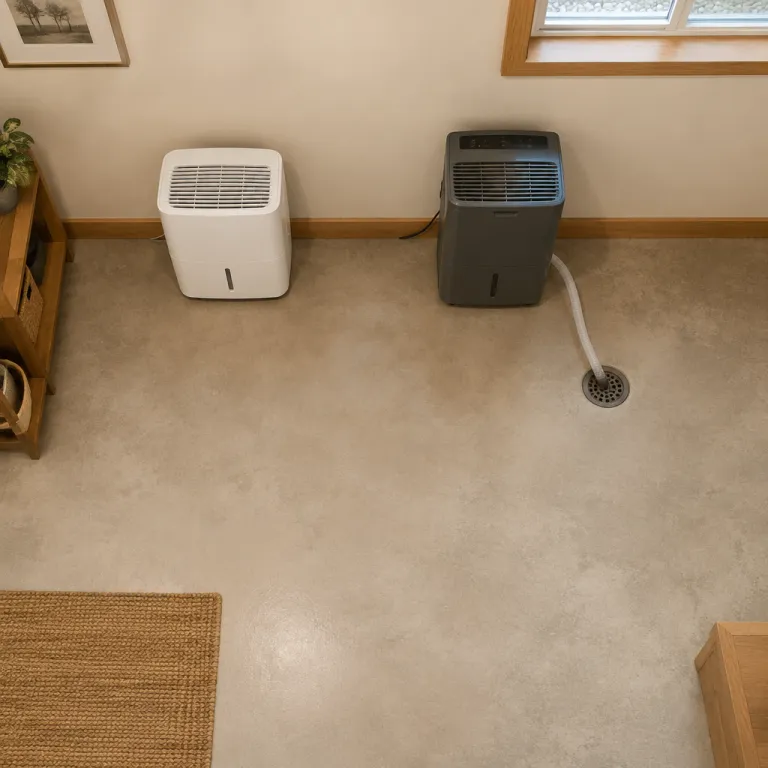
Drainage is the second major decision when shortlisting basement dehumidifiers. Gravity drain through a hose to a floor drain is simple and has few moving parts, but a built in pump lets you move water up to a sink or out a window when no drain exists nearby. For many homeowners, a pump equipped model becomes one of the best choices for basement living spaces because it avoids daily bucket emptying, supports more flexible placement, and reduces the risk of overflow during long wet periods.
Best picks by basement size and layout
Not every basement needs the same hardware, so the most suitable models are grouped by size and layout rather than by brand alone. For a typical large basement with noticeable dampness, the LG PuriCare 50 Pint (often sold as a 50 pint Energy Star model in the PuriCare line) stands out with high airflow, a generous tank, and fast moisture removal. In third party capacity tests it removes roughly 50 pints per day under DOE conditions while drawing about 500 to 600 watts, placing it among the stronger options for homeowners who want quick drying after heavy rain and are comfortable using a gravity drain instead of a pump.
If your basement is large and you prefer flexible drainage, the Midea MAD50PS1WBL (50 Pint with Pump) offers both pump and hose options in a mid range package. This model suits basements that double as hobby rooms or partial living spaces, where you may route the hose to a distant sink without rearranging furniture or shelving. Many buyers see it as one of the most versatile dehumidifiers for evolving basement setups, because the integrated pump lets you reconfigure the room without worrying about floor drain access or bucket capacity.
For finished or smaller basements, the Levoit 25 Pint with Pump (model LVEDH-H251S or LDH-H251S, depending on region) is a strong candidate when you still want features found in higher end units. Its built in pump and quiet operation—typically measured in the mid 40 decibel range on low fan speed—make it suitable for TV corners, home offices, or guest rooms below grade. If you are planning broader smart upgrades for a rental or flexible space, pairing this compact unit with the devices in this guide on the best smart home devices for renters creates a comfortable and connected basement without permanent construction.
Quick comparison of recommended basement dehumidifiers
| Model | DOE capacity (pints/day) | Drainage options | Energy Star | Typical noise (dB) | At a glance |
|---|---|---|---|---|---|
| LG PuriCare 50 Pint | ~50 | Bucket + gravity hose | Yes (varies by sub model) | Approx. 49–51 on low | Pros: strong drying for large basements; Con: no built in pump on many versions. |
| Midea MAD50PS1WBL 50 Pint with Pump | ~50 | Bucket + hose + pump | Yes | Approx. 47–51 on low | Pros: very flexible drainage; Con: pump adds cost and more parts to maintain. |
| Levoit 25 Pint with Pump (LVEDH-H251S) | ~25 | Bucket + hose + pump | Often yes (check label) | Approx. 43–47 on low | Pros: compact and quiet for small finished rooms; Con: undersized for very damp large basements. |
High capacity options for very damp or large basements
Some homes face chronic moisture, and in those cases a standard portable unit may not be enough to protect finishes and stored items. The AlorAir Sentinel HDi90 90 Pint (often marketed as a 90 pint commercial or crawl space dehumidifier) is designed for very large or open basements where a typical 50 pint unit would run nonstop and still struggle. In manufacturer data and independent reviews, its high capacity and strong airflow place it among the more capable choices for basement level spaces that approach whole home coverage or include multiple connected rooms.
Independent measurements list a 65 pint per day removal rate as typical for whole home style units under the DOE 2019 test procedure, and the AlorAir sits in that performance band while still offering features like low temperature operation and automatic hot gas defrost. Those frost management features matter in cooler regions, because coils can ice up when basement air is cold, which reduces efficiency and shortens compressor life. When you compare heavy duty dehumidifiers for use in colder basements, always check for low temperature or defrost modes in the specifications and confirm the minimum operating temperature in the manual.
Noise also becomes important in large multipurpose basements, especially when you combine a home theater, gaming area, and storage in one open zone. If you are planning a media space, it is worth reading this comparison of a home theater projector versus TV for living room cinema while you evaluate humidity control for entertainment rooms. Matching a quieter dehumidifier with the right display technology keeps sound levels comfortable and avoids fan noise drowning out dialogue during movies or game nights.
Key features that separate average and top rated dehumidifiers for basement use
Capacity alone does not define a high quality basement dehumidifier, because features and controls shape daily usability and long term comfort. Smart humidity sensors that maintain a target range between 30 and 50 percent reduce energy waste and keep conditions stable without constant manual adjustment. When you look at better designed models for basement comfort, prioritize units with clear digital controls, automatic restart after power cuts, and multiple fan speeds so you can balance noise, drying power, and overnight operation.
Built in condensate pumps are another major differentiator, especially in basements without a convenient floor drain or sump pit. A pump lets you run a thin hose up to a laundry sink or even out through a window well, which turns intermittent bucket emptying into true set and forget operation. Many of the most popular basement dehumidifiers now combine pumps with continuous drain ports, giving you flexibility if your plumbing changes later or you remodel the space into a more formal living area.
Energy efficiency matters because dehumidifiers often run for long hours during humid seasons. Energy Star certified units cost less to run, and some models reach Energy Star Most Efficient status, which indicates they sit at the top of their class for performance per kilowatt hour. When you are already investing in a strong home network using a reliable Wi Fi router for a large house, it makes sense to choose basement dehumidifiers that also respect your long term energy budget and reduce unnecessary load on your electrical system.
Practical setup tips for top rated dehumidifiers for basement performance
Even the best equipment can underperform if placed poorly or blocked by clutter. Position the unit near the center of the space or close to the main moisture source, leaving at least 20 to 30 centimeters of clearance around the air intake and exhaust. When you install a dehumidifier tight against a wall or behind furniture, airflow drops, circulation becomes uneven, and corners stay damp.
Use a separate hygrometer to verify that your dehumidifier actually maintains the 30 to 50 percent humidity range across the entire basement. Built in sensors read conditions near the unit, which may be drier than far corners or storage rooms, especially in L shaped layouts or spaces with partial walls. If readings vary widely, consider rearranging furniture, adding a small circulation fan, or upgrading to a higher capacity model for full basement coverage and more consistent comfort.
Drainage setup deserves patience, because a poorly routed hose can kink, freeze, or backflow and quietly undo your efforts. When using a gravity drain, keep the hose as short and straight as possible with a steady downward slope to the floor drain or sump. For pump equipped basement installations, secure the hose along joists or walls so vibration does not loosen fittings over time, and periodically confirm that the outlet remains clear of debris.
Maintenance, noise, and long term reliability
Routine care keeps basement dehumidifiers efficient and quiet over many seasons. Clean or replace the air filter every few weeks during heavy use, because dust buildup restricts airflow and forces the compressor to work harder. When filters stay clean, quality units remove more moisture per hour, maintain lower noise levels, and are less likely to overheat.
Inspect the coil area and water bucket channel regularly for slime or mold, especially in very damp basements where standing water is common. A quick wipe with a mild detergent and soft cloth prevents biofilm from forming, which can cause odors and reduce heat exchange efficiency. For pump equipped models, flush the pump line occasionally with clean water to clear sediment, prevent clogs, and keep the check valve moving freely.
Noise ratings measured in decibels help you compare models objectively, particularly if your basement doubles as a living or work space. Units with multiple fan speeds let you run on high after storms, then drop to a quieter setting for everyday background control. A small model can work in a compact room, but in a large basement an undersized unit will run loudly at full power without ever reaching the target humidity, while a correctly sized or slightly larger dehumidifier can cycle off and operate more quietly overall.
Expert guidance and common sizing questions
Choosing among top rated dehumidifiers for basement protection often comes down to a few recurring questions. What pint size is needed for a typical below grade space? For most large or continuously damp basements, a 50 pint dehumidifier is the recommended starting point because it balances strong moisture removal with reasonable energy use in independent lab comparisons. That guideline aligns with results from testing organizations showing that 50 pint units hit a sweet spot between power and efficiency for many family homes.
Is a pump better than gravity drain? In practice, yes for convenience, because it enables easier hose routing and more flexible placement. A pump is especially valuable when your basement lacks a floor drain or when the only drain sits uphill from the ideal dehumidifier location, which is common in finished spaces with partition walls. Many homeowners therefore treat pump equipped models as the most future proof choice for layouts that may change with renovations or furniture moves.
Will efficiency matter? Energy Star certified units cost less to run, and the Energy Star program estimates that qualified dehumidifiers use about 10 to 20 percent less electricity than non certified models of similar capacity. Over several humid seasons, the lower electricity use of efficient basement dehumidifiers can offset part of the purchase price, particularly in regions with higher energy tariffs. When you combine correct sizing, smart controls, and regular maintenance, a quality dehumidifier becomes a long term safeguard for your home’s structure, indoor air quality, and stored belongings.
Key figures for basement dehumidifier performance
- Independent lab tests show that a 50 pint per day dehumidifier is typically recommended for large or continuously damp basements, providing enough capacity to stabilize humidity without constant maximum speed operation.
- Whole home style dehumidifiers often remove around 65 pints of moisture per day under DOE 2019 test conditions, which suits very large or open plan basements that effectively function as an extra floor of living space.
- Maintaining basement relative humidity between 30 and 50 percent significantly reduces the risk of mold growth and musty odors, while also protecting stored items such as cardboard boxes, fabrics, and electronics.
- Energy Star certified dehumidifiers can use around 10 to 20 percent less electricity than non certified models of similar capacity, which lowers running costs during long humid seasons.
- Noise measurements in the 45 to 55 decibel range are common for modern residential dehumidifiers on low to medium fan speeds, which is comparable to a quiet conversation and suitable for finished basements.
FAQ about top rated dehumidifiers for basement use
For most large or consistently damp basements, a 50 pint dehumidifier is the recommended starting point because it balances strong moisture removal with reasonable energy use. Smaller basements or lightly damp spaces may work with a 25 pint unit, while very large or open plan basements often benefit from 65 to 70 pint models. Always consider both floor area and how wet the space feels after rain, including whether puddles or condensation appear on walls.
A built in pump is worthwhile when you do not have a convenient floor drain or when the ideal dehumidifier location is far from existing plumbing. Pump equipped models let you route a thin hose up to a sink or out a window, which eliminates daily bucket emptying. This convenience often makes them the most practical choice among top rated dehumidifiers for basement living areas, especially if you travel frequently or prefer low maintenance systems.
A small dehumidifier can run continuously in a large basement yet still leave humidity above the ideal 50 percent threshold. Oversizing slightly is safer than undersizing, because a more powerful unit can cycle on and off instead of running at full speed all day. If you are unsure, step up one capacity class when choosing among top rated dehumidifiers for basement coverage, or use two smaller units in separate zones for complex layouts.
Energy Star certification indicates that a dehumidifier meets efficiency standards that reduce electricity consumption compared with conventional models. Because dehumidifiers often run for many hours during humid months, the savings accumulate over time and can offset part of the purchase price. When comparing top rated dehumidifiers for basement use, prioritize certified units if you expect heavy seasonal operation or higher local energy costs.
Place the dehumidifier near the center of the basement or close to the main moisture source, leaving clear space around the intake and exhaust for airflow. Avoid pushing the unit into tight corners or behind large furniture, because that traps air and reduces effectiveness. If your basement has multiple rooms, you may need to experiment with placement or consider a higher capacity model for even coverage and fewer damp pockets.
Trusted references
- U.S. Environmental Protection Agency (EPA) – guidance on indoor humidity and mold prevention, including recommended relative humidity ranges.
- Energy Star – efficiency criteria, estimated energy savings, and certified dehumidifier product listings for different capacity classes.
- ASHRAE (American Society of Heating, Refrigerating and Air Conditioning Engineers) – standards on indoor environmental quality, humidity control, and equipment performance benchmarks.