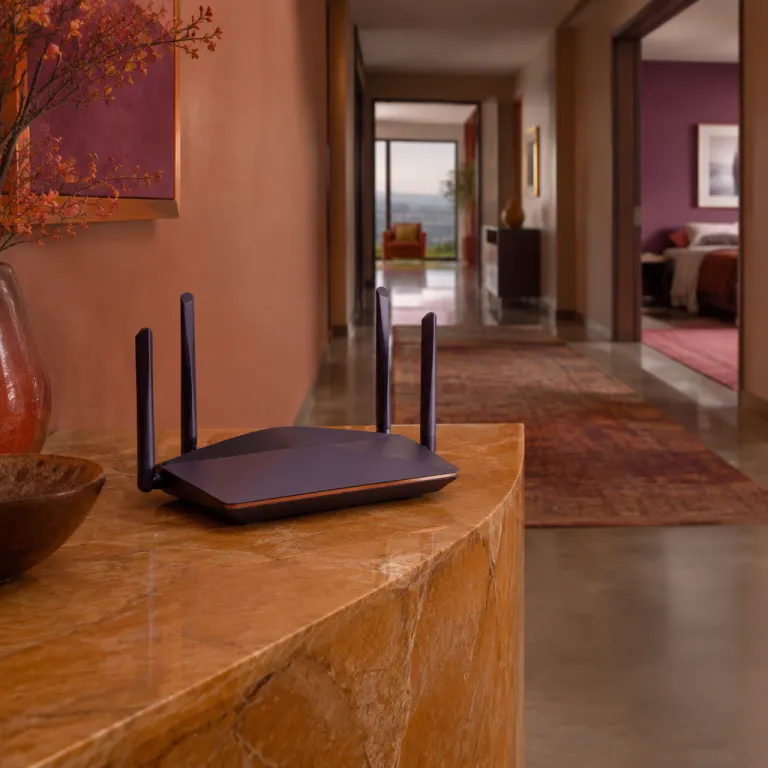
How to choose the best WiFi router for a large house
Choosing the best WiFi router for a large house starts with understanding your layout. A multi floor home with thick brick or concrete walls needs different hardware than a wide single level space with open rooms and fewer obstacles. When you compare options for the best WiFi router for large house coverage, always match manufacturer range claims to your real floor plan and construction materials.
Large houses usually benefit from a mesh WiFi system rather than a single router. Mesh kits use several nodes that talk to each other, so your phone or laptop roams seamlessly while you walk from the living room to the attic office or garden terrace. For many buyers searching for the best WiFi router for large house scenarios, a two or three node mesh system is the most reliable and future proof answer.
Pay close attention to WiFi standards and frequency bands when you shortlist candidates. WiFi 7 mesh systems such as TP Link Deco BE63 or Netgear Orbi 770 offer higher peak speeds and better handling of many devices than older WiFi 5 routers. If you want the best WiFi router for large house streaming and gaming, prioritise tri band models that include a 6 GHz or 6E band to reduce congestion from neighbours.
Internet speed and wired connections matter as much as wireless range. Multi gigabit Ethernet ports, like the four 2.5 Gbps ports on each Deco BE63 unit, let you connect NAS storage, gaming PCs, or a work desktop without bottlenecks. When you evaluate the best WiFi router for large house performance, check that at least one port supports more than 1 Gbps so you can fully use a fast fibre subscription.
Think about how many devices your household uses at the same time. A large family home can easily exceed forty connected devices once you count phones, tablets, TVs, smart speakers, cameras, and appliances. The best WiFi router for large house reliability will handle this load gracefully, keeping video calls stable while someone else streams 4K films and another person downloads large game updates.
Ease of setup and management should not be underestimated. Systems like Eero Pro 7 focus on app guided installation, so even non technical owners can place nodes correctly and adjust parental controls or guest networks. When you compare contenders for the best WiFi router for large house simplicity, look for clear mobile apps, automatic firmware updates, and transparent privacy policies.
Mesh versus single router for whole home coverage
Many shoppers ask whether the best WiFi router for large house coverage is a single powerful router or a mesh kit. For open plan single story homes under roughly 250 square metres, a high end standalone router can sometimes be enough if placed centrally and away from metal cabinets. Once you add extra floors, long corridors, or reinforced concrete walls, a mesh system almost always becomes the smarter choice.
Independent testing from specialist networking reviewers consistently shows that mesh systems outperform single routers in large homes. In recent reviews, tri band WiFi 7 mesh kits maintained strong throughput even at around 15 to 27 metres, where traditional routers dropped sharply. If you want the best WiFi router for large house stability on balconies, garages, or lofts, a three node mesh such as the Netgear Orbi 770 3 pack is far more dependable than one oversized router.
Coverage claims provide a useful starting point but must be interpreted carefully. Netgear rates the Orbi 770 three pack for up to 8,000 square feet, which roughly matches many multi floor suburban houses with gardens. Real world performance varies, so anyone seeking the best WiFi router for large house consistency should still plan node placement around stairwells, hallways, and central rooms rather than extreme corners.
Backhaul design is another key difference between mesh and single routers. Tri band mesh systems reserve one band for node to node communication, which keeps speeds high even when you connect many devices to the satellites. This is why a tri band mesh often feels like the best WiFi router for large house responsiveness, because your phone does not compete with the backhaul for bandwidth.
Some large homes can benefit from wired backhaul, where you connect mesh nodes using Ethernet cables. This approach is ideal in renovated houses that already have structured cabling, and it turns each node into a near full speed access point. If you are serious about the best WiFi router for large house performance, consider models with multiple 2.5 Gbps ports so you can run wired backhaul and still have spare ports for TVs or consoles.
Mesh systems also integrate neatly with broader smart home plans. When you start adding smart plugs, thermostats, and sensors from a smart home starter kit, a stable mesh backbone prevents random disconnections and automation failures. For readers planning a first connected home, a guide such as this smart home starter kit recommendation resource pairs well with choosing the best WiFi router for large house automation and voice control.
Top tested picks for large homes and multi floor layouts
Several specific systems stand out when you look for the best WiFi router for large house coverage based on independent testing. TP Link Deco BE63 is a WiFi 7 tri band mesh kit with four 2.5 Gbps Ethernet ports on each unit, which makes it ideal for homes that mix wired gaming rigs with wireless tablets and laptops. In lab tests that measured speed at distances from roughly 4.5 to 27 metres, Deco BE63 maintained strong throughput and low latency, especially when nodes were placed on separate floors.
Netgear Orbi 770 in a three pack configuration targets large multi floor homes that need up to about 8,000 square feet of coverage. Its dedicated backhaul band helps maintain high speeds between nodes, so your upstairs bedroom can still stream 4K content while someone else works in a basement office. For many families, this balance of range and speed makes Orbi 770 a leading candidate for the best WiFi router for large house scenarios where walls and floors usually kill weaker signals.
ASUS ZenWiFi ET9 offers a strong WiFi 6E alternative for buyers who do not yet own WiFi 7 devices. It uses a tri band design with a 6 GHz band that avoids much of the congestion found on 2.4 and 5 GHz channels in dense neighbourhoods. If you want the best WiFi router for large house value without paying a WiFi 7 premium, ET9 delivers solid coverage and avoids mandatory subscription fees for core features.
Eero Pro 7 focuses on user friendliness and smooth app control. Setup takes only a few minutes per node, and the system automatically optimises channels and power levels based on your environment. For households that prioritise simplicity over manual tweaking, Eero Pro 7 can feel like the best WiFi router for large house reliability because it quietly handles updates and optimisation in the background.
Netgear Orbi 870 sits at the premium end and targets range obsessed buyers. Independent benchmarks from well known tech publications highlight its exceptional long distance throughput, which is valuable when you cannot run Ethernet for backhaul and must rely entirely on wireless links between nodes. In that context, Orbi 870 becomes the best WiFi router for large house owners who need strong signals in detached garages, garden offices, or thick walled attics.
When you compare these systems, align each strength with your own priorities. A resource such as this broader home tech buying guide for best picks can help you weigh long term value, subscription costs, and ecosystem lock in. The best WiFi router for large house use is not always the most expensive model, but the one whose design matches your layout, devices, and tolerance for ongoing fees.
Placement, setup, and optimisation tips for large houses
Even the best WiFi router for large house coverage can underperform if you place it badly. Start by positioning the main router or primary mesh node near the centre of your home, ideally on the middle floor in multi level houses. Avoid tucking it into metal cabinets, behind TVs, or next to thick chimneys, because these obstacles absorb or reflect radio waves and reduce effective range.
Mesh node placement deserves careful planning rather than guesswork. Aim for line of sight or at least minimal obstructions between nodes, and keep them roughly one or two rooms apart so each satellite still receives a strong signal from the previous one. When you tune the best WiFi router for large house performance, it is better to place nodes slightly closer together with excellent backhaul than to stretch them too far and create weak links.
Use your system’s app or web interface to run signal strength tests. Many modern kits show a simple rating for each node, such as good, fair, or poor, which guides you to move a unit a few metres for a big improvement. This kind of feedback loop turns a good mesh kit into the best WiFi router for large house owners who are willing to spend an hour optimising instead of accepting dead zones.
Channel selection and band steering also influence stability. In crowded apartment blocks or dense suburbs, manually choosing less congested 5 GHz channels can reduce interference from neighbours, while enabling automatic band steering helps devices use the most suitable band. When you fine tune the best WiFi router for large house environments, these small adjustments can stabilise video calls and online gaming during peak evening hours.
Do not forget firmware updates and security settings. Enable automatic updates so your router receives performance improvements and security patches without manual checks, and change default admin passwords immediately after installation. A well maintained system remains the best WiFi router for large house safety, protecting your smart locks, cameras, and laptops from known vulnerabilities.
Finally, consider segmenting your network for better organisation and security. Create a guest network for visitors and smart home gadgets, while keeping work laptops and personal phones on a separate main SSID. This simple structure helps the best WiFi router for large house setups maintain performance, because misbehaving devices on the guest network cannot easily disrupt your primary work or study connections.
Matching router features to your devices and internet plan
The best WiFi router for large house use should match both your internet subscription and your devices. If your fibre plan tops out at 500 Mbps, you will not fully exploit a multi gigabit router, although you may still benefit from stronger radios and better range. On the other hand, households with 2.5 Gbps or faster connections need routers with multi gig ports to avoid wasting paid bandwidth.
WiFi 7 adoption is accelerating, but many homes still rely on WiFi 5 and WiFi 6 devices. In that context, a WiFi 6E mesh like ASUS ZenWiFi ET9 can feel like the best WiFi router for large house balance, because it offers a clean 6 GHz band for compatible devices while remaining cost effective. If you already own WiFi 7 phones or laptops, or plan to upgrade soon, then systems such as TP Link Deco BE63 or Eero Pro 7 provide more future proof capacity.
Device count is another critical factor. A large family home with smart TVs in several rooms, multiple consoles, laptops, tablets, and smart appliances can easily exceed fifty active connections. The best WiFi router for large house reliability will advertise support for high device counts and use technologies like OFDMA and MU MIMO to serve many clients simultaneously without noticeable slowdowns.
Consider how you use your network during busy periods. If several people work from home with video calls while others stream films or play online games, quality of service controls become valuable. Routers that let you prioritise work laptops or gaming consoles can feel like the best WiFi router for large house harmony, because they prevent one heavy download from ruining everyone else’s experience.
Smart home and security integrations also matter in modern houses. A stable network is the backbone for reliable security cameras, doorbells, and sensors, and poor WiFi can cause missed alerts or frozen video feeds. When you evaluate the best WiFi router for large house safety, pair your choice with a specialised resource such as this expert home security camera system review guide so that cameras and routers complement each other.
Finally, look at ongoing costs and optional subscriptions. Some ecosystems charge for advanced parental controls, security suites, or historical usage reports, while others include these features without extra fees. The best WiFi router for large house budgets will balance upfront price, subscription expectations, and the real value of any bundled services you are likely to use.
Is WiFi 7 worth it now for large homes ?
Many buyers wonder whether the best WiFi router for large house performance must already support WiFi 7. The answer depends on your current devices and internet speed, as well as how long you plan to keep the system. If you upgrade phones, laptops, and consoles frequently and already pay for a multi gigabit fibre plan, WiFi 7 mesh systems provide clear long term benefits.
WiFi 7 introduces wider channels, improved modulation, and better handling of simultaneous data streams. In practical terms, this means higher peak speeds and more consistent performance when many devices are active, especially in large homes with dozens of clients. For some households, that makes a WiFi 7 mesh the best WiFi router for large house resilience, because it copes better with busy evenings when everyone is online.
However, WiFi 6E remains highly capable for most current devices. If your phones and laptops only support WiFi 6, you will not see the full benefit of WiFi 7 immediately, although you may still enjoy better radios and processing power in newer hardware. In such cases, a strong WiFi 6E mesh can still be the best WiFi router for large house value, especially if priced significantly lower than equivalent WiFi 7 kits.
Independent labs use distance based benchmarks to compare generations fairly. Recent performance tests at around 15 to 27 metres show WiFi 7 mesh systems holding higher throughput than WiFi 6E models, particularly when multiple nodes relay traffic across floors. This evidence supports choosing WiFi 7 when you want the best WiFi router for large house future readiness and expect to add more high bandwidth devices over time.
Expert guidance also helps clarify upgrade timing. In response to a common question, one verified answer states exactly that "Do I need mesh or a single router for a large house?" and another clarifies that "Is WiFi 7 worth it now?" and finally a third adds "How many nodes needed?" which together frame the main decisions for large homes. These concise points underline that mesh usually wins for complex layouts, WiFi 7 is most valuable with multi gig plans or compatible devices, and two to three nodes typically suit 3,000 to 8,000 square feet.
Ultimately, the best WiFi router for large house owners is the one that aligns with their upgrade cycle and budget. If you plan to keep your network gear for many years and expect faster broadband soon, investing in WiFi 7 now can avoid an earlier replacement. If your connection is modest and your devices are older, a well chosen WiFi 6E mesh may deliver nearly the same everyday experience at a lower cost.
Key statistics for WiFi in large homes
- Netgear specifies that the Orbi 770 three pack can cover up to 8,000 square feet, which aligns with many multi floor detached houses and provides a useful benchmark when comparing coverage claims across brands.
- Each TP Link Deco BE63 unit includes four 2.5 Gbps Ethernet ports, giving large homes more flexibility for wired backhaul and high speed wired devices than typical routers that only offer one multi gig port.
- Independent lab testing that measures throughput at distances from roughly 4.5 to 27 metres shows that tri band mesh systems maintain higher speeds than single routers, especially when signals must pass through multiple walls or floors.
- Real world feedback from large households often reports more than forty active devices, highlighting why modern mesh systems emphasise high device counts and advanced multi user technologies to keep performance stable.
- WiFi 7 adoption is accelerating in premium phones and laptops, which means that investing in a WiFi 7 mesh today can extend the useful life of your network hardware as more compatible devices enter the home.
FAQ about choosing the best WiFi router for a large house
Do I need mesh or a single router for a large house ?
Mesh is usually the better choice for multi floor homes, thick walls, or irregular layouts, because several nodes can be placed strategically to eliminate dead zones, while a single router may suffice only in smaller, open plan single story spaces.
Is WiFi 7 worth it if my devices are still on WiFi 6 ?
WiFi 7 brings clear benefits mainly when you have compatible devices or a multi gigabit internet plan, so if your equipment is mostly WiFi 6 and your broadband is under 1 Gbps, a strong WiFi 6E mesh can offer excellent performance without the higher WiFi 7 price.
How many mesh nodes do I need for a large house ?
Most homes between roughly 280 and 740 square metres work well with two or three mesh nodes, with three recommended for complex layouts or heavy usage, while very large or unusually shaped properties may need an extra satellite for full coverage.
Where should I place mesh nodes for the best coverage ?
Place the main node near the centre of the home and position satellites one or two rooms away with as few walls as possible between them, ideally on different floors but roughly aligned vertically to maintain a strong backhaul signal.
Can I mix different brands of routers and mesh nodes ?
Mixing brands is rarely recommended because most mesh features rely on proprietary communication between nodes, so using a single ecosystem ensures seamless roaming, easier management, and more predictable performance across the entire house.