Summary
Analysis score
Average of the criteria rated below
Is the Aerus Air Scrubber Ozone Free worth the money?
Compact duct-mount design with simple controls
Bulb life, catalyst potency, and long-term upkeep
Real-world performance constraints and setup
What the Aerus Air Scrubber Ozone Free actually is
How well it seems to clean the air
Pros
- Whole-home purification via existing HVAC, no units cluttering rooms
- Ozone-free design with UV + patented catalytic ActivePure Technology
- Strong user feedback on cleaner air and allergy/asthma relief when set up correctly
Cons
- Requires HVAC integration, dedicated transformer, and often a professional install
- Catalyst/bulb assembly needs replacement about every two years to stay effective
- Best performance depends on running the blower fan more, which adds energy cost

Specifications
View full product page →| Brand | Aerus |
A small HVAC add‑on with big promises
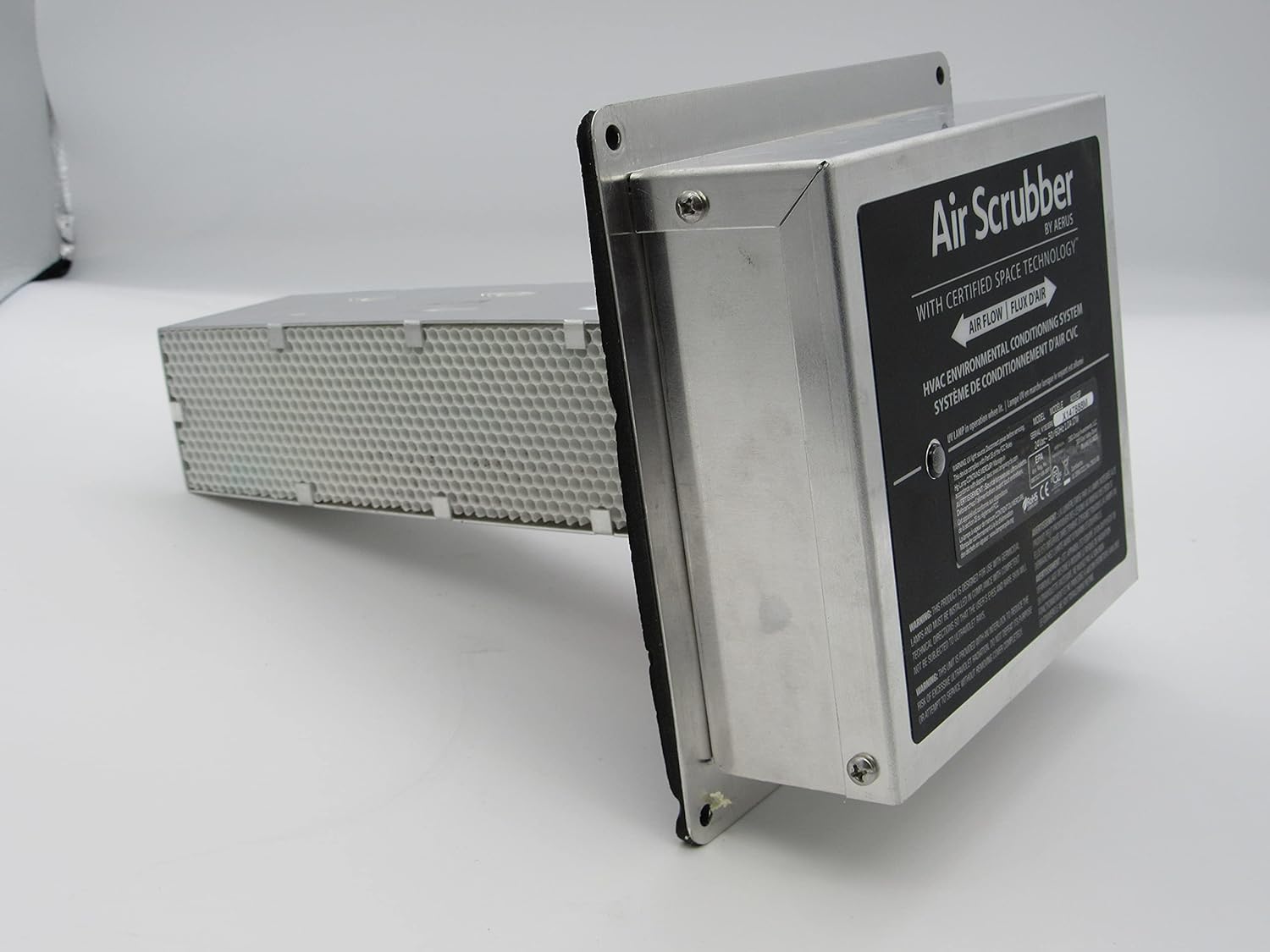
The Aerus Air Scrubber Ozone Free is a duct-mounted UV air purifier designed to work with a central HVAC system rather than as a standalone room unit. It uses a UV lamp combined with a patented catalytic process branded as ActivePure Technology. The idea is simple: install it in your supply plenum, let your furnace or air handler fan run, and it should continuously treat the air moving through your ducts. On paper, it targets people who want better indoor air quality without portable filters sitting in every room.
The published Amazon rating of 4.6/5 suggests buyers are generally satisfied, and several comments use strong wording about cleaner air and easier breathing. One user even calls it a “lifesaver” for their household. Another verified purchaser simply states that the air “smells clean,” which lines up with the goal of a UV + catalytic purifier: reduce odors, mold spores, and certain airborne contaminants that circulate through the system.
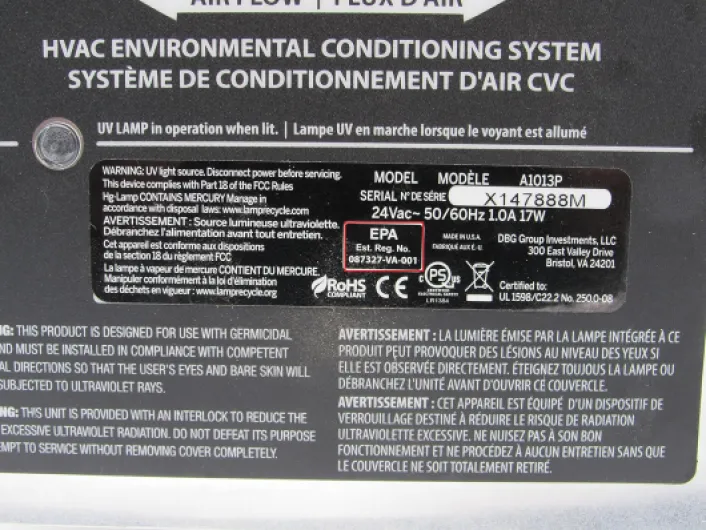
However, this is not a plug‑and‑play tabletop purifier. It’s a 11 x 6.5 x 6.5 inch, 3.17‑pound device meant to be hard‑wired into the HVAC system, with mention in one detailed review that a dedicated 40 VA transformer is recommended. That immediately puts it in the “whole home project” category rather than a casual purchase. You either need to be handy with HVAC electrical work or ready to pay a technician.
In my opinion, the Aerus Air Scrubber Ozone Free positions itself as a long‑term indoor air quality tool for homeowners who already care about filters, humidity control, and proper fan settings. It’s not a magic fix, and even a very enthusiastic reviewer insists it needs bulb changes every two years and continuous fan operation to really shine. So the key question becomes: for the price and the maintenance requirements, does the spec sheet and user feedback make it look like a solid investment, or is it just a fancy UV nightlight in your ductwork?
Is the Aerus Air Scrubber Ozone Free worth the money?
Value is a bit nuanced here because the exact selling price isn’t listed in the data, but the description mentions that many local companies charge over $1000 for this same unit when installed as part of a service package. Buying it yourself and either doing the install or hiring an HVAC tech directly can cut that cost significantly. The seller pitches it as a way to get the same hardware used by contractors, without the big markup. For homeowners already planning HVAC work, that can make financial sense.
You do have to factor in ongoing costs. The detailed reviewer notes that the catalyst/bulb assembly needs replacement every two years for proper performance. So the real cost of ownership is: initial hardware + installation (if you don’t DIY) + a replacement cell every 24 months. On top of that, if you follow the advice to run the blower fan continuously for best air cleaning, you’ll see higher electricity use and potentially a bit more wear on the blower motor. Those are not massive expenses for everyone, but they’re real.
On the benefit side, the feedback from buyers is strongly positive. People mention cleaner-smelling air and noticeable improvements for allergy and asthma sufferers. One person with a family full of respiratory sensitivities says this product “does work” when combined with good filtration and humidity control. If you compare that to the cost of multiple high-end portable HEPA purifiers in different rooms, a single whole-home device integrated into the HVAC system starts to look more reasonable, especially in a larger house.
In my opinion, the Aerus Air Scrubber Ozone Free offers good value for homeowners who: already have central HVAC, are willing to pay for proper installation, and are committed to two-year bulb replacements and longer fan runtimes. For renters, people without ducted systems, or anyone who wants a simple plug-in solution with minimal maintenance, the value is much weaker. In those cases, a quality portable HEPA unit with a clear CADR rating and cheaper filter swaps might be a more straightforward way to spend the same money.
Compact duct-mount design with simple controls
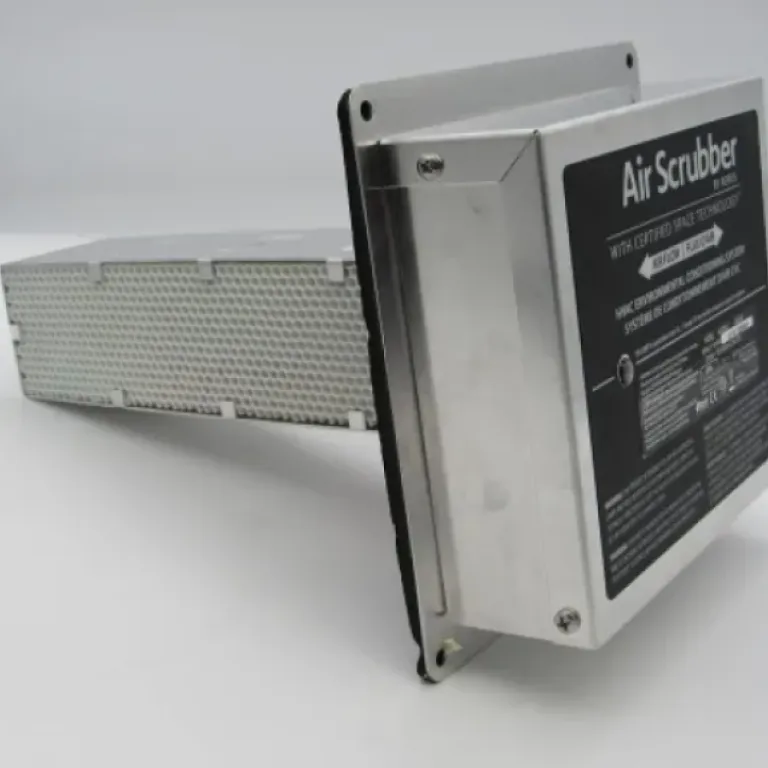
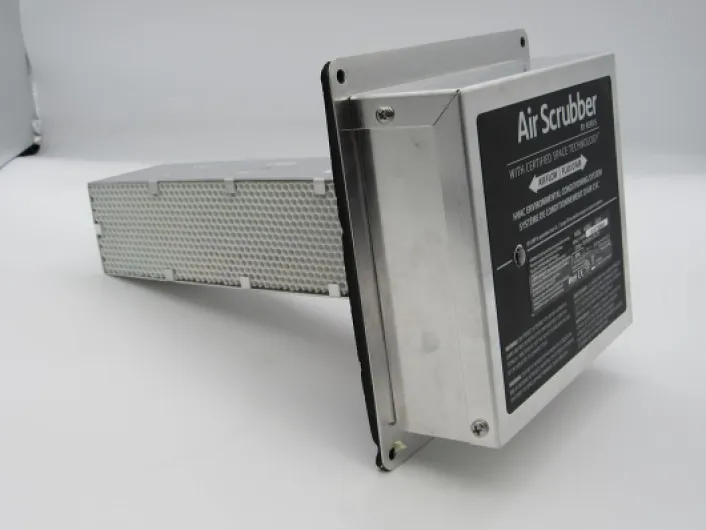
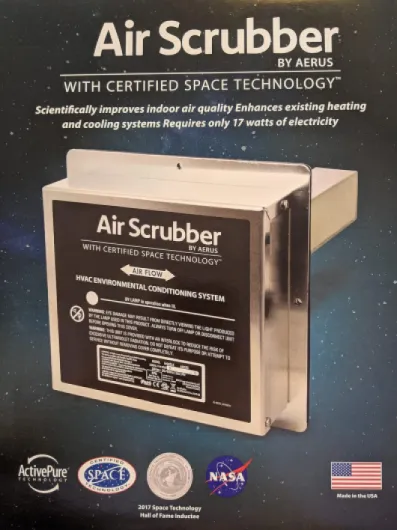
From a design standpoint, the Aerus Air Scrubber Ozone Free is built as a retrofit module for an HVAC system, not something you set on a desk. Its 11 x 6.5 x 6.5‑inch footprint and 3.17‑pound weight suggest a metal housing that’s small enough to cut into standard residential ductwork without major surgery. There’s no mention of fancy aesthetics or visible finishes, which makes sense since it lives inside a mechanical room or in the duct itself, out of sight.
The spec sheet lists the controller type as button control. That implies a straightforward on/off or mode selection interface on the unit, but the main “control” in real life will be the HVAC fan schedule. A knowledgeable reviewer strongly advises running the fan continuously so that air is always passing over the ActivePure cell. In practical terms, the design is built around integration: this purifier is only as active as your blower fan is. If your thermostat keeps the fan on “Auto” with short cycles, you’ll get less total air treatment.
Another design element that shows up in user comments is the power requirement. One experienced installer explains that the unit should have its own dedicated 40 VA transformer rather than piggybacking off the existing furnace transformer, which is often already loaded by the system controls. The fact that this comes up in a review hints that Aerus expects proper HVAC-style wiring, not a casual DIY plug-in job. So while the seller description says it can be installed by a handy homeowner in 30–45 minutes, the overall design clearly assumes some comfort with low-voltage wiring and duct penetration.
In my opinion, the design is functional and purpose-built rather than flashy. The compact size is a plus for tight mechanical spaces, and the simple control approach avoids another app or Wi‑Fi dependency. On the other hand, the lack of built-in airflow sensing or smarter integration means the burden is on the homeowner or installer to set up fan runtimes correctly. For people used to standalone purifiers with visible controls and indicators in each room, this design philosophy will feel more like adding an HVAC accessory than buying a gadget.
Bulb life, catalyst potency, and long-term upkeep
Durability with the Aerus Air Scrubber Ozone Free is less about the metal housing lasting and more about how long the UV lamp and catalyst assembly stay effective. A very detailed review lays this out clearly: the manufacturer recommends replacing the catalyst/bulb assembly every two years. According to that installer, effectiveness “takes a steep nosedive” at that point. In other words, the hardware can keep lighting up, but the active purification performance drops off hard once the catalyst ages and the UV output declines.
That same review explains that if you don’t replace the assembly on schedule, you essentially end up with a glowing light that looks like it’s doing something but isn’t providing meaningful purification anymore. This is a common pattern with UV-based products: they don’t just fail overnight; they slowly become weaker while still powering on. So if you want long-term durability in terms of performance, you have to treat the bulb/catalyst like a consumable item, not a lifetime component.
Electrical durability also comes up. The installer warns that using the existing HVAC transformer instead of a dedicated 40 VA transformer can shorten the life of the bulb assembly and even risk damage to solid-state controls in the unit. That suggests the device is somewhat sensitive to power quality and load sharing. From a durability perspective, it’s a strong argument for following the recommended installation approach rather than cutting corners.
In my opinion, the Aerus Air Scrubber Ozone Free is structurally simple enough that the housing and basic electronics should last years, but the real “life” of the product is locked to that two-year replacement cycle. If you budget for a new catalyst/bulb assembly every 24 months and ensure proper wiring, durability looks reasonable. If you’re the type who installs something and forgets it for a decade, this is not going to deliver consistent long-term results. You’ll still have a device in the duct, but its actual cleansing effect will likely be a fraction of what it was in the first couple of years.
Real-world performance constraints and setup
Performance for this kind of HVAC-mounted UV purifier depends less on raw specs and more on how it’s integrated into the system. There’s no airflow rating or CADR listed, which is normal for duct-mounted devices but does leave a question mark if you like hard numbers. Instead, all the performance clues come from how owners set them up. The long technical review makes a key point: run the HVAC fan all the time. That way, air is constantly being pulled through the ductwork and across the ActivePure cell, instead of only during short heating or cooling cycles.
That same reviewer recommends combining the Air Scrubber with a media filter or electronic air filter. The logic is pretty straightforward: the filter handles particulate removal (dust, pet dander, some biological contaminants), and the Aerus unit focuses on microbial and certain chemical issues via UV and catalytic action. Performance-wise, this two-step approach is more realistic than expecting a single UV device to solve everything. If you already have a decent filter cabinet (AprilAire, Honeywell, Trion, etc.), the Air Scrubber can be seen as an additional layer rather than a replacement.
Another performance factor is the dedicated 40 VA transformer mentioned by the experienced installer. They warn that using the existing furnace transformer can overload the system, potentially shortening the life of the catalyst/bulb assembly and even damaging electronic controls. So optimal performance is not just about air quality; it’s also about electrical stability. If the power supply is marginal, you might see inconsistent operation or premature failures, which obviously undercuts performance over time.
In my opinion, the Aerus Air Scrubber Ozone Free performs best on paper for people who: have a central HVAC system that can run the fan a lot, are willing to wire a proper transformer, and already think in terms of full-house IAQ (filtration + humidity + purification). If you’re in a mild climate where the system rarely runs and you don’t want to use the fan in “On” mode because of energy costs, the effective runtime of the purifier will be limited. In that scenario, a portable HEPA unit in key rooms might give you more tangible day-to-day impact than a duct-mounted device that only sees airflow occasionally.
What the Aerus Air Scrubber Ozone Free actually is
On paper, the Aerus Air Scrubber Ozone Free is a duct-mounted UV air cleaner that relies on a patented catalytic process instead of a traditional replaceable filter. The spec sheet calls out a “Filter Class: UV,” which basically means the core of the system is a UV lamp and catalyst assembly rather than a HEPA cartridge. It is intended to be installed in the supply plenum of your forced-air system so that all conditioned air passes near the ActivePure cell before being distributed through the house.
The unit measures 11 x 6.5 x 6.5 inches and weighs about 3.17 pounds, so it’s relatively compact compared with full-size electronic air cleaners or big media filter cabinets. It uses a simple button control (not a smart app or advanced interface), which fits the idea that once it’s wired to 24V and mounted, you mostly leave it alone. There is no published CADR figure or explicit square-foot coverage number in the data, which is pretty standard for duct-mounted UV products, but it does make direct comparison with portable purifiers a bit tricky.
The standout marketing point is ActivePure Technology, which Aerus pushes hard as a key differentiator. Instead of just zapping particles that pass in front of a UV lamp, the catalytic surface is supposed to create reactive molecules that spread through the ductwork and help neutralize contaminants in the air and on surfaces. Reviews don’t give lab numbers, but several owners with allergy and asthma issues say they feel a clear difference in their homes once the system is running with the blower fan on continuously.
In my view, the product is best understood as one piece of a broader indoor air quality setup. One long, technical review explicitly recommends pairing it with a media filter or electronic filter (e.g., AprilAire, Honeywell, Trion AirBear) and even a whole-home humidifier, instead of relying solely on the Aerus unit. So if you are looking for a single, clearly specified HEPA box with a known CADR, this isn’t it. If you already have ducted HVAC and are okay with a more integrated solution that focuses on ongoing air treatment rather than just particle capture, the Aerus Air Scrubber Ozone Free fits that profile.
How well it seems to clean the air
Effectiveness is where the Aerus Air Scrubber Ozone Free gets the most positive feedback. The Amazon rating sits around 4.6/5, and several short reviews simply say things like “Huge difference in air quality” or “works great air smells clean.” One verified buyer calls it a “lifesaver,” which is obviously subjective but gives a sense of how strongly some owners feel about its impact on breathing comfort and odors. Another review states it’s the “best air cleaner without ozone,” which fits the positioning of this ozone-free version for users who want purification without extra oxidizers.
The most detailed review comes from someone who says they’ve been installing these in homes for over a decade. That person describes a household with mold allergies, allergenic asthma, and severe environmental allergies and claims this product “does work” for them as part of a broader indoor air quality setup. They emphasize that the Air Scrubber should not be seen as a standalone silver bullet but as one component along with media filtration and proper humidity control. That is consistent with how UV and catalytic devices typically behave: they help with microbes and some VOCs, but they don’t physically trap dust the way a HEPA filter does.
On paper, the lack of specific lab metrics—no CADR, no published kill rates with clear conditions in the listing—means you’re relying heavily on brand reputation and user feedback. The ActivePure Technology and patented catalytic process are framed as the main engine behind the results. According to that experienced installer, the device is significantly less effective if the catalyst/bulb assembly is not replaced every two years, because its potency drops sharply after that point. So any perceived effectiveness depends on staying on top of that maintenance schedule and giving it enough fan runtime.
In my opinion, the overall picture is that the Aerus Air Scrubber Ozone Free can be quite effective for households with allergies or odor issues, but only if you treat it as part of a full system: good filtration, continuous or long fan cycles, and timely bulb replacement. If you expect miracles with the fan rarely running, a clogged one-inch filter, and no maintenance for five years, you’re very likely to end up with what that same reviewer jokingly calls “a really cool nightlight in your duct work” rather than a meaningful air cleaner.
Pros
- Whole-home purification via existing HVAC, no units cluttering rooms
- Ozone-free design with UV + patented catalytic ActivePure Technology
- Strong user feedback on cleaner air and allergy/asthma relief when set up correctly
Cons
- Requires HVAC integration, dedicated transformer, and often a professional install
- Catalyst/bulb assembly needs replacement about every two years to stay effective
- Best performance depends on running the blower fan more, which adds energy cost
Conclusion
Analysis score
The Aerus Air Scrubber Ozone Free is a compact, HVAC-integrated UV purifier aimed at people who want whole-home air treatment rather than room-by-room gadgets. It relies on ActivePure Technology and a patented catalytic process, and user feedback is largely positive: cleaner-smelling air, noticeable relief for some allergy and asthma sufferers, and a general sense that it “does what it says” when used correctly. The 4.6/5 Amazon average backs that up.
It’s not a plug-in air cleaner, though. To get real value, you need a central HVAC system, a proper 40 VA transformer, continuous or long fan runtimes, and a willingness to replace the catalyst/bulb assembly every two years. Skipping those steps turns it into an expensive glowing ornament in your ductwork. It also works best as part of a full setup that includes good filtration and, where needed, humidity control.
In my opinion, this product suits homeowners with existing forced-air systems who are serious about indoor air quality and comfortable treating this as a long-term infrastructure upgrade. If you live in a small place without ducts, dislike running the fan continuously, or want a simple device you can move from room to room, you’re better off with a solid portable HEPA purifier. For the right house and owner mindset, though, the Aerus Air Scrubber Ozone Free looks like a solid, ozone-free option for whole-home air treatment.