Summary
Analysis score
Average of the criteria rated below
Is it worth the money compared to alternatives?
Traditional box design with smart touches
Build quality, reliability, and long-term concerns
Noise, efficiency, and smart features in day-to-day use
Specs and features: what this Midea unit actually offers
Cooling and heating: where it shines and where it hits limits
Pros
- Quiet operation for a 12,000 BTU window unit, suitable for bedrooms and home offices
- Inverter compressor with Energy Star rating and CEER 13.3 for better efficiency than basic window ACs
- Multi-season use with cooling, dehumidifier, and supplemental heat plus full smart control (app and voice)
Cons
- Heat pump function limited around 41°F outdoors on many units, not a full cold-climate heating solution
- Firmware and smart features can behave inconsistently between units, especially for defrost/heating logic

Specifications
View full product page →| Brand | Midea |
A window unit trying to replace central air
The Midea 12,000 BTU Smart Inverter Window Air Conditioner with Heat is clearly aiming at people who either don’t have central HVAC or are tired of paying to upgrade it. On paper, it packs a lot into a fairly compact 19.41" x 22.17" x 13.9" box: cooling up to 550 sq ft, a heat pump for shoulder seasons, dehumidifier mode, inverter technology for lower power use, Wi‑Fi, voice control, and a claimed low-noise design. The Amazon listing shows a 4.2/5 average from more than 18,000 reviews, which is a strong signal that it generally does what it says.
Several buyers describe using one or more of these units instead of installing central air in older houses or mobile homes. Comments mention it handling roughly 600 sq ft floors in older homes and even being preferred over central systems for "zone" comfort. At the same time, there are a few harsh reviews, including at least one buyer saying their unit simply did not work at all, which reminds you this is a mass-market appliance, not a premium custom install.
What stands out is the focus on multi-season use and efficiency. The CEER rating of 13.3 and Energy Star certification, plus inverter compressor, put it above basic window units that just blast on/off. Buyers repeatedly highlight quiet operation and lower power draw compared to older units or resistance heaters. However, the heat pump limitations around 41°F and firmware quirks around defrost show that the heating side is not as straightforward as a simple “works anywhere” promise.
In my opinion, this product is best seen as a smart, efficient window unit that can seriously cut cooling costs and handle a good chunk of your heating in milder weather, but not a full replacement for a proper cold-climate heating system. It targets people who are okay with a bit of DIY installation and app setup in exchange for long-term power savings and flexible control.
Is it worth the money compared to alternatives?
The exact price fluctuates, but this Midea 12,000 BTU smart inverter window unit with heat typically sits in the mid-range of window AC pricing. It’s more expensive than bare-bones 12,000 BTU units without inverter or smart features, and cheaper than installing a proper mini-split or central air system. Several reviewers explicitly compare the total cost of one or two of these units (under $1,000 for them) to $10,000–$15,000 quotes for central air in older homes with no existing ductwork. For people in that situation, the value proposition is clear: you give up whole-house integration but gain a much lower upfront cost and still get decent efficiency.
Feature-wise, you’re getting inverter efficiency, Energy Star performance, heating, dehumidifier mode, Wi‑Fi/app control, and voice assistant integration. Many competing window units at similar BTU levels either skip inverter tech, skip heat, or offer only basic remote control. If you actually use the heat pump for shoulder seasons and rely on ECO mode and timers, the unit can potentially pay for itself over time through reduced electricity use versus older non-inverter window units and resistance space heaters. One buyer notes that it uses about as much power as a 1500W space heater but manages to heat larger areas than that heater would, which is exactly the efficiency advantage of a heat pump.
On the negative side, the heating limitation around 41°F and firmware inconsistency reduce the value if you were counting on this as your main winter heat source. In colder climates, you’ll still need another heater for freezing nights, which means this unit’s heat pump is more of a bill-reducer than a full replacement. Also, owning a smart, firmware-dependent appliance means you’re somewhat at the mercy of the manufacturer for updates and app support. One reviewer’s mixed experience with two units on different firmware shows that you might not get identical behavior, which is not ideal when you’re buying multiples for a whole house.
In my opinion, the value is strong if your primary goal is quiet, efficient cooling for a medium to large room or small apartment, with bonus heating in mild weather. If you live in a very hot climate with mild winters, this is a particularly good fit. If you live somewhere with long, cold winters and want one device to handle everything, the value is less clear because you’ll still need to invest in supplemental heat. Compared to other window units, though, the combination of inverter tech, smart controls, and multi-season capability at this price level makes it a solid pick for budget-conscious homeowners, renters (where allowed), and people upgrading from loud, power-hungry older units.
Traditional box design with smart touches
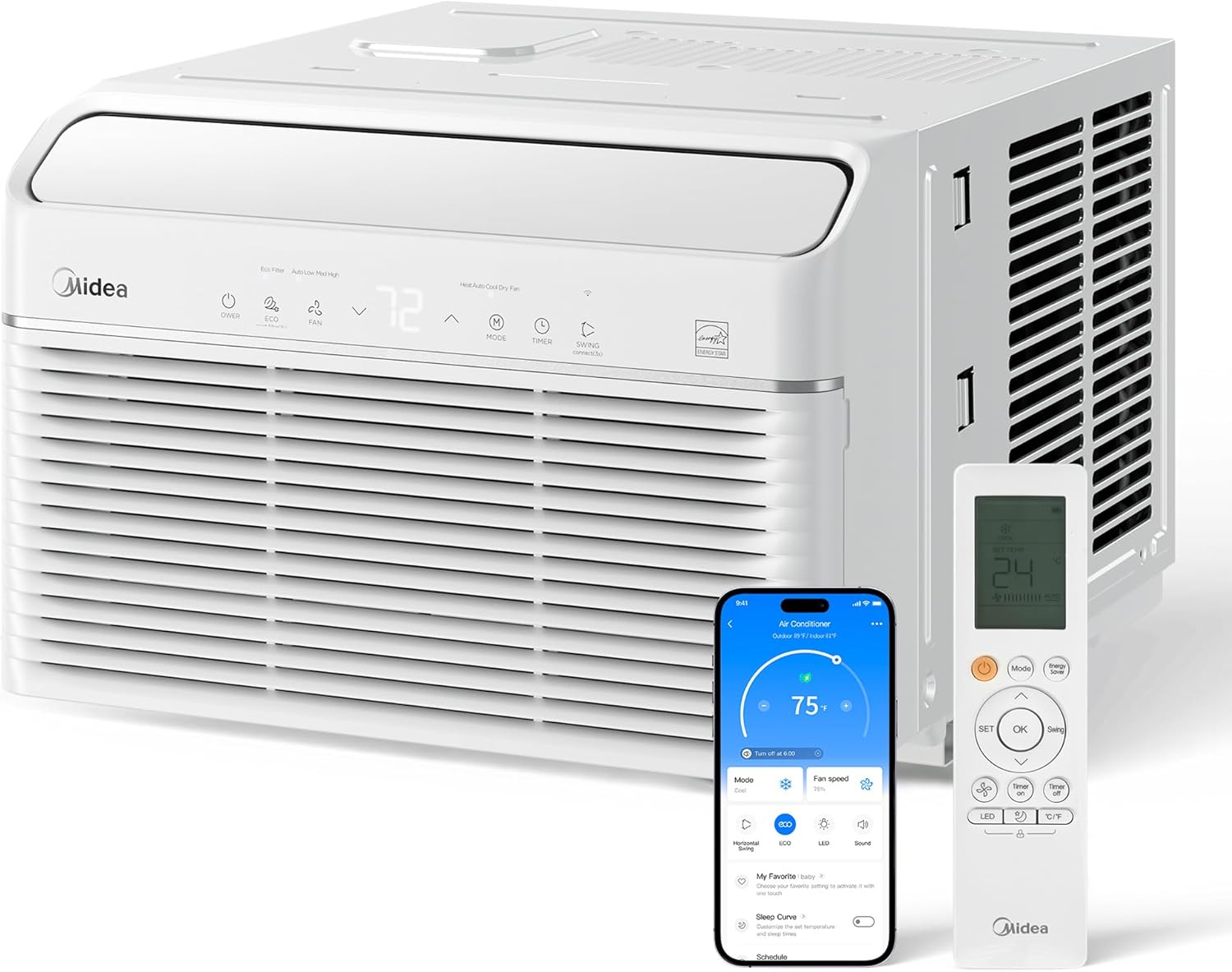
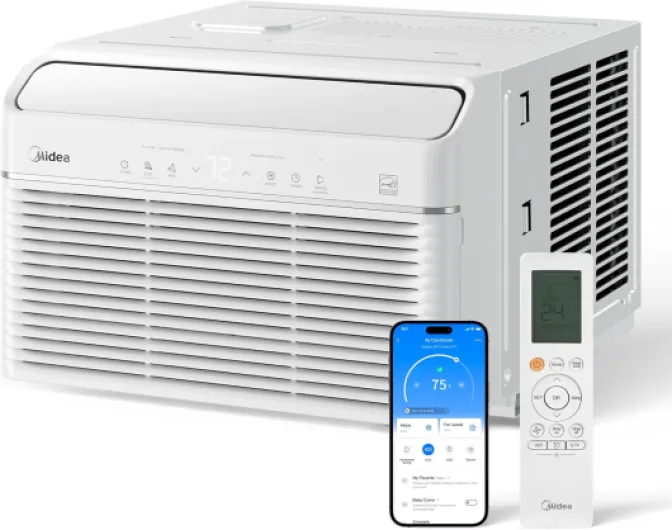
This unit sticks to a classic rectangular window AC form factor: roughly 22.17" deep, 19.41" wide, and 13.9" high, finished in white. It’s built to fit double-hung windows with opening widths from 24" to 38.5" and a minimum clear vertical opening of 14.5". That covers most standard windows in apartments, older houses, and mobile homes. The design includes slide-out side panels and a bottom rail, plus an installation kit with brackets, foam, and hardware. Several reviewers mention that installation is manageable from inside the house with one helper to lift and set the unit in place.
On the front, you get an LED display with electronic buttons for mode, temperature, fan speed, swing, ECO, and timer. The display is straightforward rather than stylish, which in my opinion is perfectly fine for something that usually sits under a window shade. The louvers can be adjusted up and down via the swing button, which helps direct airflow across a room. Some buyers mention using one centrally in a 16x80 mobile home to push air into adjoining rooms, noting that airflow plus open doors is enough to reach kitchen and dining areas.
Design-wise, one recurring comment is that this model is easier to install than Midea’s U-shaped series because there’s no external bracket assembly hanging off the outside wall. That’s important for people on upper floors or those who don’t want to drill into exterior siding. On the other hand, the traditional box shape means more of the compressor noise is inside the window opening compared to the U-shape design, though reviewers still call it comfortably quiet. Some users mention needing to beef up the included weatherstripping around the slide-out panels to seal tiny gaps, which is a standard DIY tweak on many window units.
Overall, the design is pragmatic: nothing flashy, but compact for a 12,000 BTU unit, with clear controls, multiple control options (panel, remote, app, voice), and installation that older or less mobile buyers still manage with minimal help. The weak point is that, like most window units, it relies heavily on your window frame and your care during installation to achieve a good seal and avoid drafts or vibration. For someone expecting plug-and-play central air simplicity, there’s a bit of a learning curve, but for typical DIY users it’s a straightforward design that gets the job done.
Build quality, reliability, and long-term concerns
In terms of build quality, this unit appears to be a fairly standard modern window AC: mostly metal chassis with plastic front and controls, a removable front filter, and the usual slide-out side panels. There’s nothing on the spec sheet that screams heavy-duty commercial build, but nothing that looks flimsy either. The washable filter is easily accessed from the front panel, which buyers appreciate because it makes routine cleaning straightforward and helps maintain performance and efficiency over time.
The overall Amazon rating of 4.2/5 across more than 18,000 reviews suggests that most units run without major issues. Several longish reviews mention using Midea units as primary cooling across entire floors or homes, and planning to buy additional units because of their satisfaction so far. That implies a reasonable level of reliability for at least one to two seasons, though these comments rarely mention multi-year ownership in detail. One Spanish-language review simply notes that it cools a 3x4 meter room well, installs easily, and doesn’t need much maintenance, calling it resistant to weather exposure.
On the flip side, there are some negative experiences. One buyer bluntly states that their product “does not work” and gives it one star. Another detailed review explains firmware-related behavior differences between two seemingly identical units: one received a Wi‑Fi firmware update and now defrosts and heats properly below 40°F, while the other with different firmware still shuts off at low temperatures. This isn’t a classic hardware failure, but it does raise questions about consistency and long-term software support. If your unit never gets that kind of update, you might be stuck with more limited heating performance.
There’s also the standard risk with any window unit: its durability heavily depends on installation and maintenance. Poor sealing can let in moisture and bugs; neglecting to clean the filter or drain can stress the compressor; and constant vibration from a badly supported window frame can lead to rattles or earlier wear. The included 2-year limited warranty is decent but not generous, and you’re still dealing with a relatively complex device (inverter compressor, Wi‑Fi, sensors) in a mid-price package. In my opinion, you shouldn’t expect commercial-grade longevity, but for typical home use with basic care—filter cleaning, yearly check of seals, making sure condensate drains properly—the reliability track record in the reviews looks acceptable. If you value maximum long-term robustness over smart features, a simpler, non-smart unit might be less finicky, but you’d give up some efficiency and convenience.

Noise, efficiency, and smart features in day-to-day use
Two performance aspects come up again and again in the reviews: noise level and power efficiency. Midea advertises operation as low as 45 dBA, while the generic spec line lists 58 dB, likely at higher fan speeds. Buyers who own other brands repeatedly call this unit “very quiet” or “surprisingly quiet,” especially compared to older non-inverter window ACs. One reviewer who also owns a Soleus inverter and a loud Frigidaire unit says the Midea is extremely quiet and would easily be their favorite if not for the early defrost limitation on heating. Another buyer notes the sound is low enough that you can comfortably take Zoom calls, watch TV, or sleep, describing the noise as more like a gentle white noise than a harsh compressor drone.
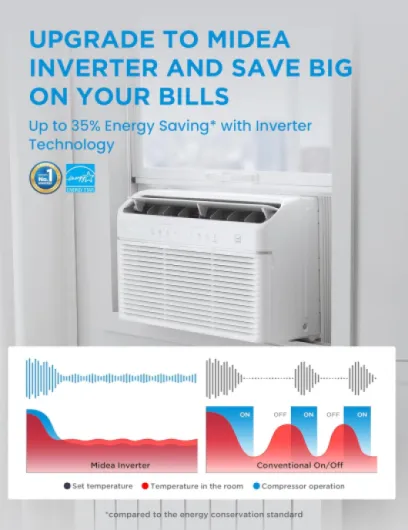
On efficiency, the inverter compressor and CEER 13.3 rating are the main selling points. Midea claims up to 35% energy savings vs the Energy Conservation Standard, and several buyers indirectly confirm lower bills or lower power draw. One reviewer compares the heating power to a 1500W space heater but says it manages to heat more space than you’d expect from that consumption, which fits the general advantage of heat pumps over resistance heaters. Another buyer avoided a $10,000–$15,000 central air install by using two Midea 12,000 BTU units (one U-shaped, one this model) for under $1,000 total, suggesting that even if the units aren’t as efficient as a top-tier central heat pump, the cost-to-performance ratio is strong.
Smart features seem to work decently overall. The unit includes Wi‑Fi, app control via the Midea SmartHome app, and voice control through Alexa and Google Assistant. Reviews mention being able to adjust modes, temperatures, and timers remotely, and in at least one case, the app connection allowed a firmware update that changed the behavior of the heating/defrost logic. That’s a double-edged sword: on one hand, firmware updates can fix issues; on the other, you may have two identical models with different firmware behavior, as one reviewer found when one unit would continue heating and defrosting below 40°F while another with different firmware shut down at the set limit.
In my opinion, performance is the strong suit of this unit if you value quiet, efficient cooling and are comfortable with connected appliances. It’s not flawless: firmware inconsistency and the heating cutoff around 41°F are real constraints. But as a cooling/dehumidifying workhorse with relatively low noise and power draw, it lines up well with the 4.2/5 average rating. If you’re particularly sensitive to noise or want to run AC in a home office or bedroom, this model’s noise profile and inverter operation look like key advantages over cheaper, non-inverter window units that tend to cycle loudly.
Specs and features: what this Midea unit actually offers
On the spec sheet, this Midea model (MAW12HV1CWT) is a 12,000 BTU cooling window air conditioner with an inverter compressor and supplemental heat. The brand advertises it for rooms up to 550 sq ft, which lines up with buyer reports of cooling entire small apartments or single floors of older houses around 600 sq ft, especially when doors are left open. It runs on standard 115V, draws about the power of a typical space heater for heating (as one reviewer notes), and weighs around 58 pounds, which is fairly typical for this size.
The unit supports five modes: Heat, Auto, Cool, Dry (dehumidifier), and Fan. It also offers 3–4 fan speeds (the listing mentions both 3 and 4, which likely means Auto plus three fixed speeds), a 24-hour timer, ECO energy saver mode, and an automatic swing function for up/down louvers. For control, you get front-panel electronic controls, a remote, and Wi‑Fi connectivity through the Midea SmartHome app, plus voice integration with Alexa and Google Assistant. Several reviews mention that all functions can be controlled from the app, which matters if the unit is in a hard-to-reach window.
On the efficiency side, the key figures are CEER 13.3 and Energy Star certification. Midea claims up to 35% energy savings versus the Energy Conservation Standard thanks to the inverter compressor that modulates speed instead of cycling on/off. For noise, marketing copy mentions operation as low as 45 dBA, while the spec table lists 58 dB (likely a high-speed figure). Buyers frequently describe it as “very quiet” or “surprisingly quiet,” especially compared to older non-inverter units.
In my view, the overall feature set is strong for the price bracket this model typically sits in online: smart control, inverter efficiency, multi-season use, and relatively quiet operation. It doesn’t try to be the fancy U-shaped Midea line that isolates the compressor outside the window frame, but reviewers who own both say this traditional form factor is simpler to install and still quiet enough for bedrooms or home offices. The main caveat is the heat pump limitation below 41°F and some firmware quirks one reviewer describes, which makes it less of a universal heater and more of a very efficient solution for mild-to-cool weather.
Cooling and heating: where it shines and where it hits limits
On paper, 12,000 BTU of cooling for up to 550 sq ft is standard for a mid-size window unit, but user stories suggest this Midea model often punches slightly above that rating in real homes. One buyer describes using the U-shaped version to cool an entire 600 sq ft first floor of an older 1910 house, and then using this traditional model on the 600 sq ft second floor, keeping things around the low 70s in summer except for a couple of very hot days. Another buyer in a 16x80 mobile home reports that a single unit in the center effectively cools the living room, kitchen, and dining room, and believes a three-unit setup with smaller BTU versions could cover the whole trailer.
For heating, things are more nuanced. The spec mentions the unit only provides heat pump function when the outdoor temperature is above 41°F. Several reviews confirm that below this point, the unit usually shows a low-temperature error and stops heating. One buyer in particular compares it with other brands: they say a Frigidaire non-inverter heat pump is loud but works even in sub-zero temps thanks to aggressive defrost cycles, while this Midea is much quieter but originally had no effective defrost logic and would simply stop below 41°F. That same reviewer later reports a firmware update over Wi‑Fi that added a defrost cycle, allowing one of their units to keep heating in the mid‑20s °F, but a second, newer unit with different firmware still shuts off around 40°F, so behavior clearly depends on the software version.
There’s also an interesting comment from a buyer in Arkansas using the heat pump over a south-facing concrete porch. They noticed that the concrete absorbs sun during the day and radiates it at night, letting the unit “see” a slightly warmer microclimate and continue heating even when general outdoor air is below 41°F. It’s a clever example of how placement and surroundings can stretch the heating capability, but it also underlines that this is a mild-climate or shoulder-season heater, not a main heat source for harsh winters. Multiple reviewers mention using wood stoves, furnaces, or other heaters when temperatures drop below the unit’s comfort zone.
Cooling effectiveness, on the other hand, gets consistently positive feedback. Buyers say it holds target temperatures, dehumidifies well in humid climates, and keeps upstairs bedrooms “sleepable” even when outdoor temps hit the mid‑80s or higher. In my opinion, if you size it correctly (around 400–550 sq ft) and don’t expect miracles in poorly insulated attics with massive south-facing windows, it should handle cooling duties reliably. For heating, I’d treat it as efficient supplemental heat that can cut your gas or resistance electric use in spring and fall, while planning another solution for deep winter or locations that regularly drop below freezing at night.
Pros
- Quiet operation for a 12,000 BTU window unit, suitable for bedrooms and home offices
- Inverter compressor with Energy Star rating and CEER 13.3 for better efficiency than basic window ACs
- Multi-season use with cooling, dehumidifier, and supplemental heat plus full smart control (app and voice)
Cons
- Heat pump function limited around 41°F outdoors on many units, not a full cold-climate heating solution
- Firmware and smart features can behave inconsistently between units, especially for defrost/heating logic
Conclusion
Analysis score
This Midea 12,000 BTU Smart Inverter window unit positions itself as a quiet, efficient all-rounder for cooling, dehumidifying, and mild-weather heating, and the public feedback largely backs that up. With a 4.2/5 average across more than 18,000 reviews, it clearly satisfies most buyers. The inverter compressor, Energy Star certification, and CEER 13.3 rating mean you’re not just brute-forcing the temperature down; you’re doing it with reasonable power use. Noise levels are another strong point, with many buyers calling it one of the quieter window units they’ve owned—good enough for bedrooms, home offices, and living rooms where loud cycling would be annoying.
The big caveat is heating behavior. As a heat pump, it’s great for shoulder seasons and mild winters, but the advertised 41°F outdoor limit is real for many units. Some users see better performance after firmware updates, but you can’t count on that. In cold climates, you still need a proper heater; this Midea should be seen as supplemental heat that reduces your reliance on more expensive sources, not as your only line of defense against freezing temperatures. There are also the usual risks of smart appliances: firmware quirks, app dependence, and the occasional dud unit, as one-star reviews remind you.
In my opinion, this model is a good fit if you: want to cool 300–550 sq ft efficiently, care about noise, like the idea of app/voice control, and live in a climate where winters are moderate enough that heat pump limitations aren’t a dealbreaker. It’s also attractive for owners of older homes or mobile homes who can’t or don’t want to pay for full central air. People in very cold regions who want a primary heater, or those who hate dealing with apps and firmware, may be better off with a simpler AC plus a dedicated heating system.