Summary
Analysis score
Average of the criteria rated below
Value for money: a lot of zoom and features for a modest budget
Design and handling: DSLR‑style body without the bulk
Battery life and connectivity: decent endurance, modern USB‑C
Build quality and longevity: solid feel but no weather sealing
Image and video performance: strengths and limits of a 1/2.3" superzoom
Specs overview: what the FZ80D actually offers
Pros
- Huge 20–1200mm equivalent 60x optical zoom with effective optical stabilization
- 4K video plus 4K Photo and Post Focus features in a relatively affordable body
- 2.36M‑dot OLED EVF, USB‑C connectivity and Wi‑Fi for remote control and easy sharing
Cons
- Small 1/2.3" sensor limits low‑light performance and depth‑of‑field control
- Fixed rear LCD with no tilt or swivel, which reduces flexibility for tricky angles
- Menu system and feature set can feel complex for beginners until they invest time learning it

Specifications
View full product page →| Brand | Panasonic |
A long‑zoom camera aimed at travelers and beginners
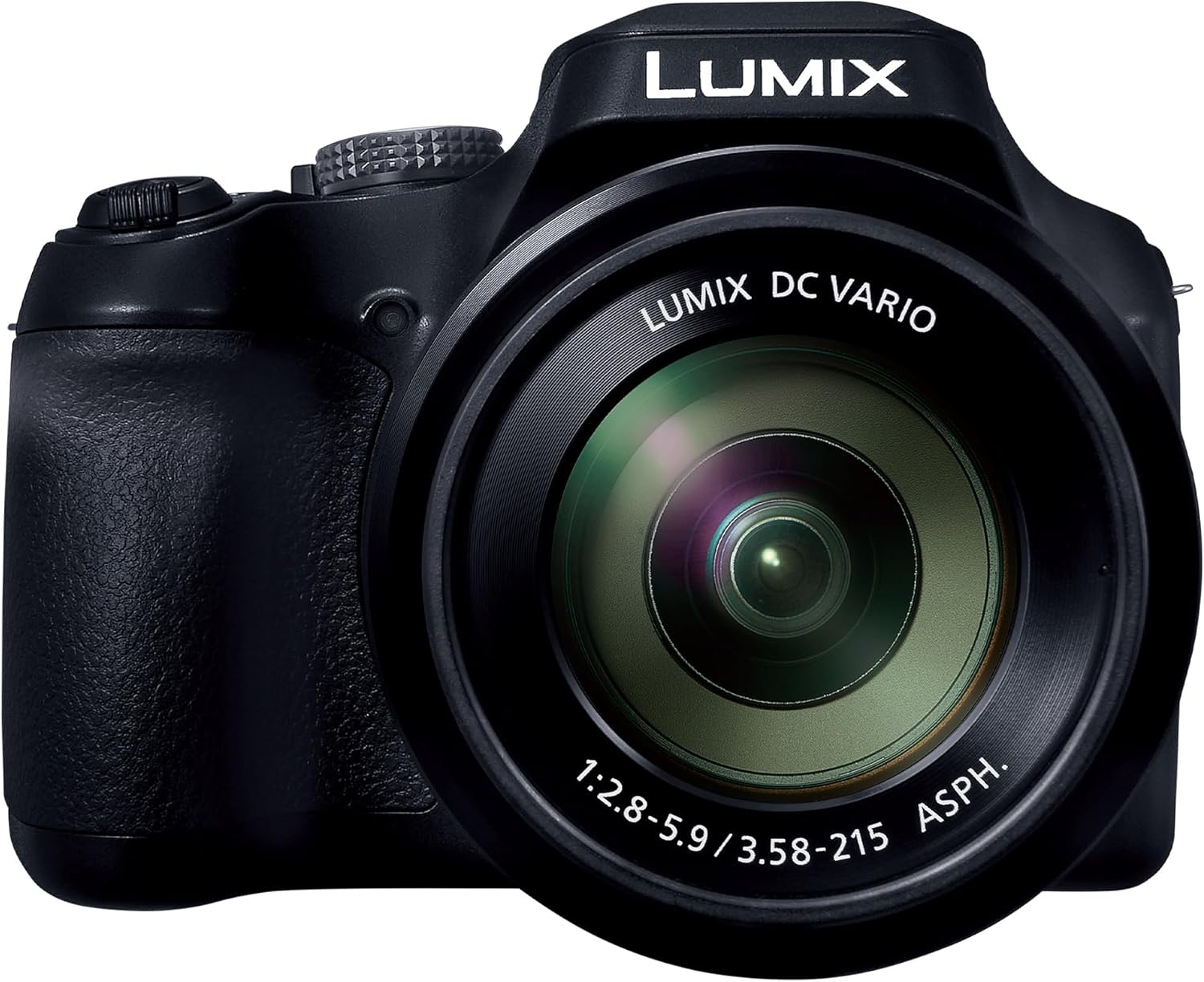
The Panasonic LUMIX FZ80D is a classic bridge camera: a DSLR‑style body with a fixed superzoom lens that tries to cover almost every shooting situation. On paper it targets people who want more reach and control than a smartphone, but who don’t want to carry a bag of lenses. The spec sheet is clear about that: a 20–1200mm equivalent lens with 60x optical zoom, 4K video, and automatic exposure modes for casual use. With a 1/2.3" 18.1 MP MOS sensor and JPEG‑only stills, it stays firmly in the consumer segment rather than the high‑end enthusiast world.
Among the Amazon comments, the overall mood is positive: 4.3/5 from more than 3,700 ratings is a solid indicator that most buyers feel they got what they expected, or a bit more. The most enthusiastic reviews come from people moving up from small compacts or older DSLRs who wanted something lighter, simpler, and cheaper than a full interchangeable‑lens kit. Several buyers describe it as a good "bridge" between phone photography and more serious gear, with enough manual options to learn on without getting lost on day one.
There are, of course, trade‑offs. The small sensor, limited aperture range and JPEG‑only output mean this is not a low‑light monster or a camera for heavy editing in RAW. A few comments highlight the learning curve of Panasonic’s menus and special features like 4K Photo and Post Focus. Others note that depth‑of‑field control is modest compared to a DSLR or mirrorless with fast lenses. In my opinion, that’s expected at this price and format, but it matters if you dream of creamy background blur.
Overall, this looks like a camera built for convenience and reach: wildlife in the park, sports from the stands, travel, family events. It’s not trying to compete with large‑sensor bodies in dynamic range or professional video. If you keep that in mind, the combination of long zoom, optical stabilization, 4K video and a decent electronic viewfinder makes sense for a wide audience, especially beginners and travelers who want one body that “does it all” without complex lens choices.
Value for money: a lot of zoom and features for a modest budget
The exact selling price isn’t listed here, but the way buyers talk about the FZ80D makes its positioning clear: this is a budget‑friendly bridge camera that tries to cram in as much zoom and as many features as possible without entering enthusiast‑level pricing. Several reviewers explicitly mention choosing it over more expensive models like the FZ2500 because they couldn’t justify the higher cost. One person even offset the purchase by selling an older Canon EOS DSLR kit, and still felt they came out ahead in terms of practicality and performance for their current needs.
Looking at what you get on paper, the value argument is straightforward. You have a 20–1200mm equivalent lens with 60x optical zoom, POWER O.I.S. stabilization, 4K video and 4K Photo, Post Focus, a 2.36M‑dot OLED EVF, Wi‑Fi, USB‑C, and a decent 10 fps burst rate. For many photographers, buying even a single 600mm or 800mm telephoto lens for a DSLR or mirrorless system would cost more than this entire camera. That’s why quite a few comments come from people who no longer want to deal with multiple lenses but still want reach for wildlife, sports, or distant details on trips.
Of course, there are trade‑offs that explain the lower price. The small 1/2.3" sensor, lack of RAW in the spec list provided, limited low‑light performance, and absence of a tilting screen are the main ones. Some users also point out that the learning curve is real if you want to squeeze the best out of the camera; this isn’t a magic box that produces perfect photos in every condition with zero effort. In my view, those compromises are acceptable at this level, but they matter if you are already thinking about serious night photography, large prints, or heavy post‑processing.
Overall, the 4.3/5 rating from thousands of ratings suggests that, for the majority of buyers, the balance between price and capability is favorable. People who use it for casual travel, family photos, wildlife watching, and basic video tend to describe it as doing “everything I need it to do and then some.” In my opinion, that sums up the value proposition well: if you want a single relatively compact camera that covers ultra‑wide to super‑telephoto, with 4K video and a good EVF, and you are willing to accept the limits of a small sensor, the FZ80D offers strong value. If you care more about low‑light quality, RAW flexibility, or advanced video features, you’ll probably need to spend more on a larger‑sensor system.
Design and handling: DSLR‑style body without the bulk
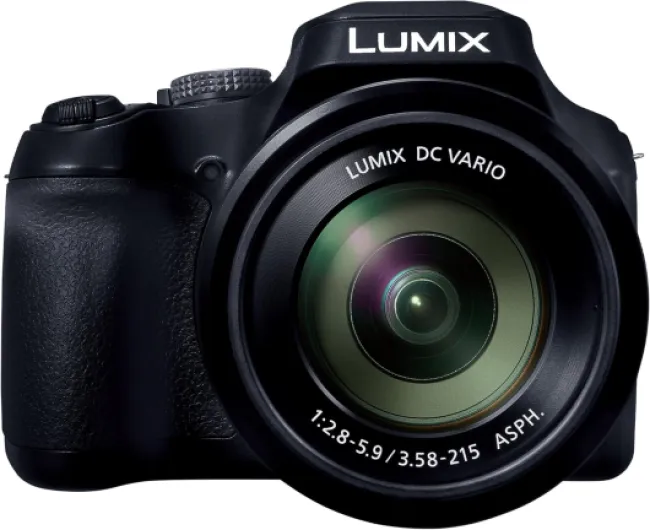
On paper, the FZ80D follows the usual bridge‑camera recipe: a DSLR‑like form factor with a prominent grip, a central electronic viewfinder, and a large zoom barrel that houses the 20–1200mm lens. The weight is listed at about 1.4 lb (a bit over 600 g), and the height is about 5 inches, which puts it in the “substantial but not heavy” category. Several buyers describe it as light and easy to carry when travelling, especially compared with older DSLR kits and multiple lenses. That lines up with the numbers: it’s not pocketable, but it’s manageable for a full day with a strap.
The LCD is a 3‑inch fixed screen with 1.84M dots. Multiple comments mention that they would have liked a tilting or fully articulating screen, particularly for shooting above heads in crowds or for low‑angle compositions. One reviewer explicitly calls the lack of a tilt screen their main complaint. In my opinion, that’s the clearest design compromise here: Panasonic chose a fixed screen to keep costs and complexity down, but anyone used to a flip screen will miss it fairly quickly in travel or event situations.
The EVF, on the other hand, gets good feedback. With 2.36M dots and 0.74x magnification, it is described by the brand as glare‑resistant and clear in bright sunlight. Buyers who mention the viewfinder generally sound satisfied, particularly when shooting at long telephoto focal lengths where bracing the camera to your face helps stability. The camera also includes a hotshoe‑like shape visually, but the provided specs do not list an external flash interface, so expectations should stay modest there.
Usability‑wise, several reviews point out that the menus and mode options can feel overwhelming at first, especially to people coming from basic compacts or phones. Panasonic’s terminology (iA+, 4K Photo, Post Focus, etc.) is a bit different from Canon/Nikon naming, and one buyer mentions watching YouTube tutorials to get comfortable. That said, the presence of a clear iA+ (Intelligent Auto) mode and standard PASM modes means both beginners and learners have a path. In my view, the design philosophy is obvious: a body that looks serious enough to grip securely, with many options tucked into menus, but still usable as a point‑and‑shoot if you leave it in auto.
Battery life and connectivity: decent endurance, modern USB‑C
The exact CIPA battery life figure isn’t stated in the provided specs, but a few user comments give clues. One buyer mentions shooting over 330 images at a hockey game and still having about half the battery left, according to the display. That suggests that in real‑world mixed use, the battery should easily handle a full day of casual stills, especially if you are not recording long 4K video clips. The battery itself is a lithium‑ion pack weighing about 3.68 ounces, and the camera ships with it included, which is not always the case in the lower price brackets.
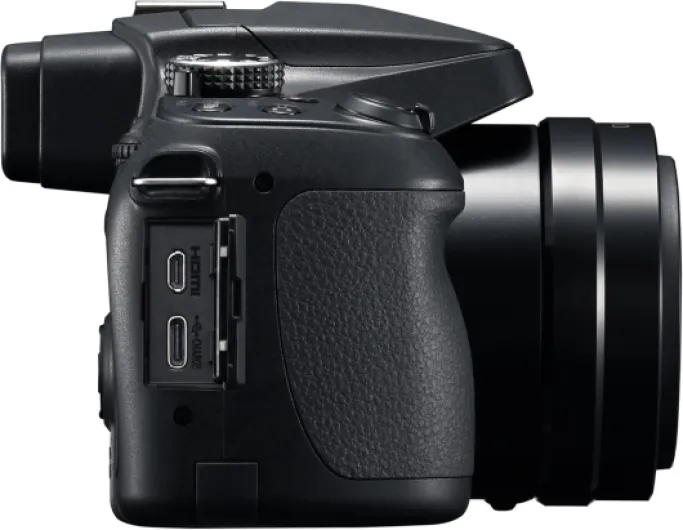
On the charging and data side, the FZ80D benefits from USB‑C connectivity, which is a welcome upgrade compared with older micro‑USB‑based cameras. For most people, that means you can likely use the same cable as for many laptops, tablets or Android phones. The spec sheet lists one USB 2.0 port and indicates USB as the video output as well, so don’t expect HDMI or advanced external monitor setups. This fits the overall consumer positioning: simple charging and data transfer, not a professional rig with multiple outputs.
Wi‑Fi is built in, with compatibility advertised for smartphones and tablets. Several owners talk about using the wireless link to transfer images quickly to a phone, and one review calls it a “doddle” once it’s set up. Others mention that they haven’t yet figured out or used the Wi‑Fi link but plan to. There are also references to operating the camera remotely via an Android phone, which is handy for group shots, self‑portraits, or wildlife where you don’t want to stand right by the camera. In my opinion, this wireless control and transfer is one of the practical advantages over older DSLRs that lacked such integration.
There is no mention of USB‑powered continuous operation or fast‑charging features, so expectations should stay realistic: this is standard consumer‑camera battery behavior, not mirrorless‑flagship endurance. For people planning heavy shooting days or lots of 4K video, a spare battery remains a sensible purchase. Still, given the anecdote of 330+ shots with half capacity left and the generally low number of complaints about battery life in the comments, endurance seems adequate for the intended casual, travel and family audience. The combination of USB‑C and Wi‑Fi adds convenience that many older bridge cameras simply didn’t offer.
Build quality and longevity: solid feel but no weather sealing
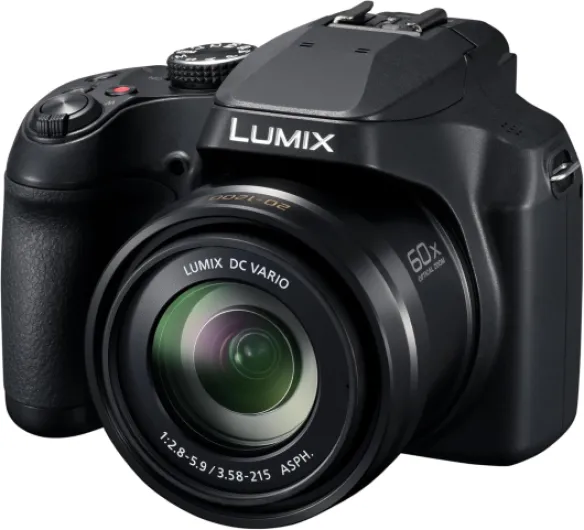
The FZ80D is clearly positioned as a consumer travel camera rather than a rugged or weather‑sealed tool. The spec sheet explicitly notes that it is not water‑resistant, and there is no claim of dust sealing or shock resistance. That means it should be treated with normal care: no heavy rain, no beach sand exposure without protection, and no assumption that it will survive serious drops. For many buyers this is acceptable, since they mainly use it for vacations, casual outdoor walks, and family events rather than extreme environments.
In terms of construction, the body is described by several owners as feeling “solid” despite the relatively low weight of about 1.4 pounds. People coming from compact point‑and‑shoots often note that the camera feels more serious and substantial, while still being light enough to carry all day. There are no widespread reports in the reviews of parts falling off, lens barrels wobbling, or buttons failing early. One reviewer even highlights the smooth extension and retraction of the lens, which is important in a 60x zoom design where mechanical slop would quickly become obvious.
The lens front is threaded for filters, which one buyer appreciates because it allows adding polarizers or ND filters. From a durability standpoint, this also lets cautious users keep a protective filter on to shield the front element from scratches. However, there is no mention of a particularly tough coating or reinforced glass, so a simple UV or clear filter is still a sensible extra for peace of mind. The fixed rear screen is another small plus for durability: fewer moving parts than a fully articulating screen mean one less hinge or ribbon cable to worry about over years of use, even if you lose some flexibility in framing.
Given the 4.3/5 average rating from over 3,700 buyers, it’s notable that durability complaints do not dominate the negative reviews. Most criticisms focus on image quality limits in low light, menu complexity, or missing features like a tilt screen, not on things physically breaking. In my opinion, this points to a build that is adequate for normal use but not designed for harsh treatment. If you are planning to use it heavily for travel, a padded bag and basic care around rain and dust should keep it going for years. Just don’t expect the level of ruggedness that some higher‑end weather‑sealed bodies provide.
Image and video performance: strengths and limits of a 1/2.3" superzoom
The headline performance feature is clearly the 20–1200mm equivalent 60x optical zoom combined with POWER O.I.S. optical stabilization. This gives reach that interchangeable‑lens systems only match with very large, expensive telephoto lenses. Buyers frequently mention using it for birds, wildlife and sports from a distance, and one owner reports shooting a hummingbird at 1/8000 s, freezing the wings thanks to the fast shutter and decent light. Another highlights that the zoom range is more than sufficient for travel, birds and animals, and that image stabilization is smooth if you use the EVF and support the lens properly. On paper, that lines up with the real angle of view spec (as narrow as 1.7° at the long end), which is firmly in the super‑telephoto realm.
The sensor itself is 18.1 MP on a 1/2.3" format, which is roughly the same size as typical compact and older superzoom cameras. That brings two predictable limitations: noise and dynamic range in low light, and limited depth‑of‑field control. A few reviews mention that low‑light performance is “passable” rather than great, and that the camera may misjudge scene type indoors in auto mode, leading to odd exposures. One buyer notes that depth‑of‑field control is nowhere near what you get on a DSLR with a fast prime lens, especially at the wide end where the aperture closes down quickly as you zoom. In my opinion, anyone expecting creamy bokeh at moderate focal lengths will find the spec sheet underwhelming; this is more about reach and convenience than artistic blur.
On the positive side, multiple comments praise the overall sharpness and detail for casual use, especially in good light. One reviewer who compares it to an older Nikon DSLR says it “beats my old Nikon by far at everything” for their everyday needs, once they learned how to use the camera properly and configured it according to recommended settings from online tutorials. That suggests that, within the limits of the small sensor, the lens and processing are competent enough for prints, social media, and viewing on TVs or tablets. The fact that many users stress that images look strong on typical screens reinforces that this is a camera tuned for everyday display rather than pixel‑peeping at 100%.
Video performance gets good remarks too. Several buyers say the 4K video quality and audio are very good for family use and travel, with one noting that 4K clips are limited in length but that 1080p can go on much longer. 4K Photo is appreciated as a way to capture fast action and then extract an 8 MP still. Panasonic’s Post Focus feature also appears in comments as an interesting tool, though more of a bonus than a core workflow. In my view, the performance picture is clear: very strong zoom reach, effective stabilization, competent 4K video, and decent stills in good light, with expected compromises in low light and shallow depth‑of‑field compared with larger‑sensor cameras.
Specs overview: what the FZ80D actually offers
The FZ80D sits in Panasonic’s LUMIX bridge line with a spec sheet that leans heavily on reach and automation. The core is a 1/2.3‑inch MOS sensor with about 18.1 effective megapixels, paired with a fixed 20–1200mm equivalent zoom lens (60x optical). The maximum aperture starts at f/2.8 on the wide end and closes down to f/8, with the long end getting slower in practice, as several buyers indirectly point out when talking about low‑light constraints. ISO goes from 80 to 6400 in expanded mode, which is standard for this sensor size and generation, and continuous shooting is advertised at up to 10 fps, which is decent for casual action.
On the viewing side, Panasonic gives this model a 2.36M‑dot OLED electronic viewfinder with 0.74x magnification (35mm equivalent) and a 3‑inch fixed LCD with about 1.84M dots. There is no tilt or swivel mechanism, and multiple reviewers flag that as one of their only regrets, especially for shooting above crowds or at waist level. Still, an OLED EVF at this resolution in this price bracket is a strong point on paper, especially for bright outdoor conditions where phone screens and basic LCDs can be hard to see.
Video specs are straightforward: 4K (3840p) recording in MP4, with frame rates up to 30p/60p depending on mode, and Full HD for longer clips. Buyers regularly praise the 4K video quality and the practical 4K Photo mode, which lets you pull 8 MP stills from footage. The camera also includes Post Focus, where it records a short focus stack and lets you choose the focus point afterwards. Some reviews mention this as a neat trick more than a daily tool, but it fits the “forgiving and flexible” positioning of the camera.
Connectivity is simple but up to date where it matters: USB‑C for data/charging, USB output for video, and Wi‑Fi for remote control and file transfer to smartphones and tablets. There is one USB port (USB 2.0 spec) and no mention of advanced connectors like headphone or microphone jacks in the provided specs, which suggests this is not aimed at serious vloggers who need audio monitoring. In my opinion, the overall feature set is coherent: lots of zoom, solid EVF, 4K, helpful automation, but limited in sensor size, RAW options, and pro‑level I/O. For the intended casual and travel audience, that trade‑off is logical.
Pros
- Huge 20–1200mm equivalent 60x optical zoom with effective optical stabilization
- 4K video plus 4K Photo and Post Focus features in a relatively affordable body
- 2.36M‑dot OLED EVF, USB‑C connectivity and Wi‑Fi for remote control and easy sharing
Cons
- Small 1/2.3" sensor limits low‑light performance and depth‑of‑field control
- Fixed rear LCD with no tilt or swivel, which reduces flexibility for tricky angles
- Menu system and feature set can feel complex for beginners until they invest time learning it
Conclusion
Analysis score
The Panasonic LUMIX FZ80D comes across as a practical all‑rounder for people who want reach and flexibility without juggling lenses. The 20–1200mm equivalent 60x zoom, POWER O.I.S. stabilization, 4K video, 4K Photo and Post Focus give it a lot of versatility for travel, wildlife, sports from the stands, and family events. The 2.36M‑dot OLED EVF and USB‑C connectivity are strong points in this price segment, and the 4.3/5 average from thousands of Amazon ratings suggests buyers are largely satisfied. For many owners, it has replaced older DSLR kits because it is lighter, simpler, and easier to carry while still delivering sharp, detailed images in good light.
On the downside, the small 1/2.3" sensor and variable aperture mean limited low‑light performance and modest depth‑of‑field control compared with larger‑sensor cameras. The fixed rear screen will frustrate anyone used to tilting displays, and there’s a learning curve to Panasonic’s menu system and special modes. This is not the right choice if you prioritize night photography, heavy post‑processing in RAW, or professional video/audio workflows. In my opinion, the FZ80D is best for beginners and enthusiasts who mainly shoot in decent light, want a single camera that covers almost any focal length they might need, and care more about convenience and reach than about ultimate image quality.