Summary
Analysis score
Average of the criteria rated below
Value for money: what you really get for the price
Compact flip‑screen design aimed at vloggers
Battery life and practicality for a full day of shooting
Build quality and long‑term reliability expectations
Image and video performance: fine for beginners, not a pro tool
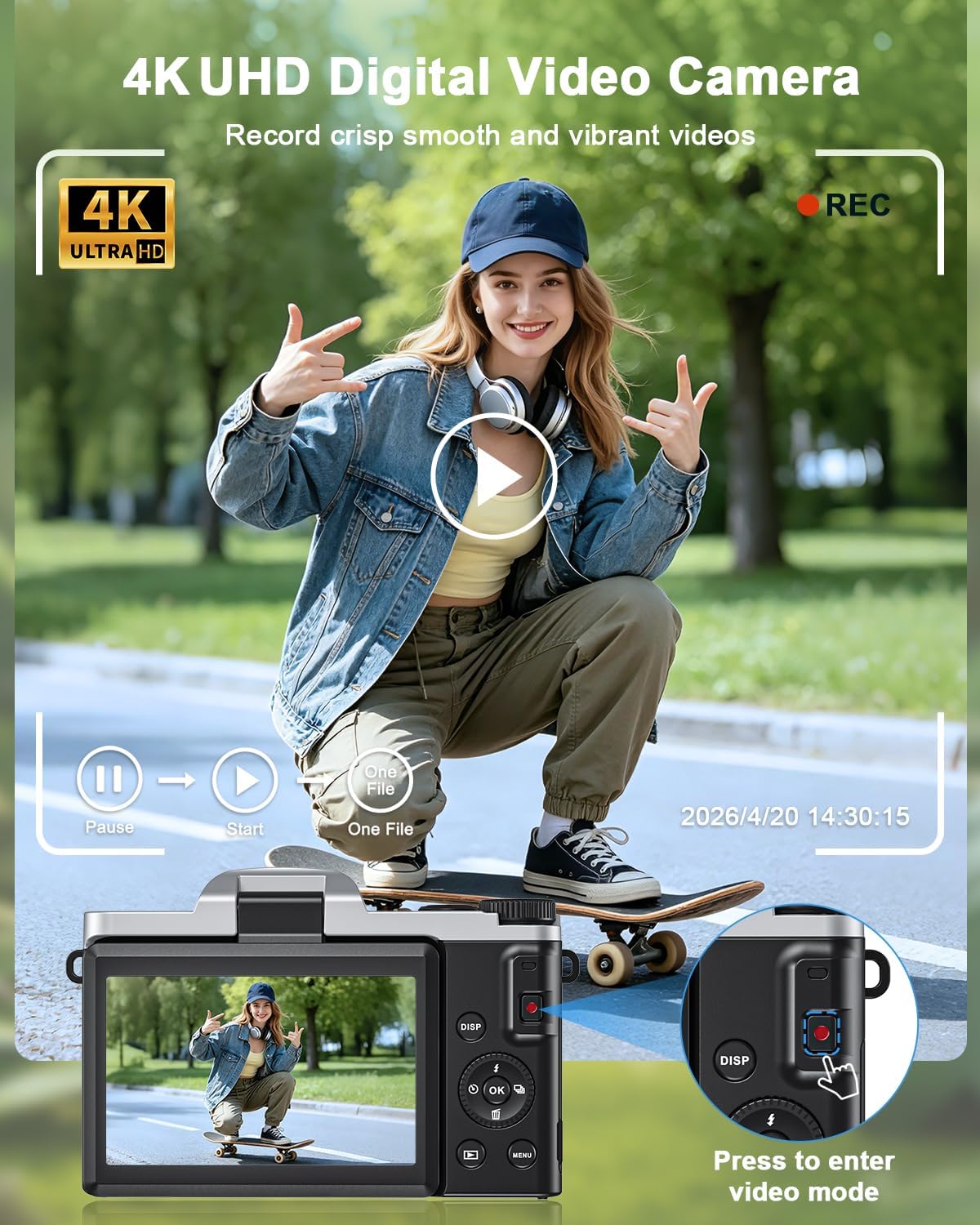
What this Zostuic 4K camera actually offers
Pros
- Complete starter bundle with 32GB card and two rechargeable batteries included
- 4K video, 64MP stills, flip screen and Wi‑Fi remote/app control at a budget price
- Simple, lightweight design that buyers find intuitive for vlogging and everyday use
Cons
- Likely digital zoom and basic stabilization, with limited performance in low light
- Unknown long‑term durability and ecosystem compared to major camera brands

Specifications
View full product page →| Brand | Zostuic |
A budget 4K camera trying to replace your phone
The Zostuic 4K digital camera sits in that growing category of low-cost, all‑in‑one cameras aimed at beginners, vloggers, and people who are tired of shooting everything on a smartphone. On paper, it checks a lot of boxes: 4K video, 64MP photos, Wi‑Fi, autofocus, 16x zoom, a 3‑inch flip screen, and it even comes with a 32GB card and two batteries. With an average rating of 4.7/5 from a few dozen Amazon buyers, it clearly has an audience that feels it gets the job done for the price.
It’s not a camera from a big photography brand, though. Zostuic is a lesser‑known Chinese manufacturer, and that usually means one thing: ambitious spec sheet, aggressive pricing, and some trade‑offs in areas like low‑light quality, long‑term durability, or app polish. The published comments highlight ease of use and image clarity for casual shooting, especially for cooking videos, travel, and family clips. That positions it more as a step up from a phone for specific use cases than as a rival to mirrorless or DSLR gear.
In my opinion, the most interesting angle here is the combo of flip screen + Wi‑Fi + webcam mode at this price level. For someone who wants to start vlogging, record YouTube content, or join video calls with something better than a laptop webcam, it looks like a fairly complete starter package. You don’t need to buy extra batteries or an SD card, and you get basic autofocus plus built‑in flash and digital stabilization.
It’s not perfect, and there are clear limits if you’re picky about image quality, dynamic range, or real optical zoom. But if you look at it as a compact, simple tool for 4K social content and family memories instead of a pro camera, the overall picture, both on spec and in the reviews, is fairly positive. The rest of this analysis focuses on where it shines and where you’re likely to hit its limits in everyday use.
Value for money: what you really get for the price
Even though the exact price isn’t mentioned here, the positioning is very clear: this is a budget 4K compact. It sits high in Amazon’s "All‑in‑One Digital Cameras" ranking and holds a 4.7/5 average from around 65 reviews, which means most buyers feel they got fair value. The bundle is generous: camera, 32GB SD card, two batteries, Wi‑Fi functionality, flip screen, built‑in flash, and a range of shooting modes. If you compare that to entry‑level cameras from major brands, you usually pay more and still have to buy the card and spare battery separately.
The trade‑off is that you’re not getting the refinement or image quality of a branded mirrorless or high‑end compact. The 64MP figure is largely marketing; a smaller, lower‑resolution sensor from a major brand can still outperform it in difficult lighting. Autofocus and stabilization are basic, and the zoom is digital rather than true optical. For someone who plans to crop heavily, shoot a lot at night, or do color‑critical work, this camera would be limiting. But that’s not really the audience Zostuic is going after.
Where the value looks strong is for beginners and casual creators who want a separate camera from their phone without investing hundreds more. The reviews from people using it for cooking vlogs, live streaming, and general family photos are consistently positive about ease of use, image clarity in normal conditions, and the practicality of the included accessories. In my opinion, if your expectations are aligned—4K clips for YouTube or social media, better framing than a phone thanks to the flip screen, and simple Wi‑Fi sharing—the package makes sense.
There are, of course, alternatives: modern smartphones, especially mid‑range and flagship models, already shoot good 4K video with solid stabilization and strong processing. The Zostuic mainly makes sense if you want a dedicated device with a flip screen, webcam mode, and physical controls, or if you don’t want your main phone storage and battery to be eaten by video recording. Looked at that way, the camera lands in a decent sweet spot: not a bargain miracle, but a solid value for a first vlogging and travel camera as long as you accept its clear limitations versus more expensive systems.
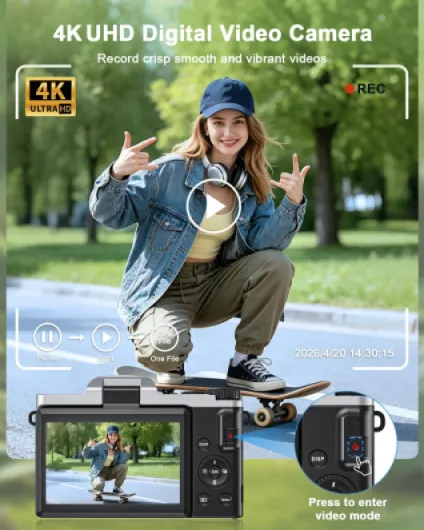
Compact flip‑screen design aimed at vloggers
The design goal here is clear: compact and pocket‑friendly while still looking like a “real” camera. Buyers describe it as lightweight, easy to carry, and simple to set up, which matches what you would expect from an entry‑level compact. The form factor is listed as "compact" and the colorway is basic black, so visually it’s more about staying discreet than making a style statement. This suits travel, family outings, and low‑key vlogging in public where you don’t want to attract too much attention.
The star of the design is the 3‑inch 180° flip screen. For vlogging, this is a must‑have: you can see yourself, check framing, and monitor focus. One reviewer explicitly mentions using it to film cooking videos and appreciating being able to see themselves while moving around the kitchen. An IPS panel usually means decent viewing angles and acceptable brightness indoors; under strong sunlight you should expect the usual struggles of budget LCDs, but there are no specific complaints about the screen in the comments.
The camera integrates a built‑in flash and electronic viewfinder, which is a bit unusual in this price band, though the spec sheet’s wording on the “viewfinder type: electronic” is vague. Realistically, most people will compose on the rear screen. Controls include a mode dial for quick switching between photo, video, and special modes (time‑lapse, slow motion, etc.). Several buyers call it "intuitive" and "easy to use", which suggests the menus and buttons are not overly complex, even for seniors or teens who are new to dedicated cameras.
In my opinion, the design is functional and focused on self‑recording and portability, not on manual photography or pro ergonomics. There’s no mention of a hot shoe for external accessories, weather sealing, or a large grip, so this isn’t aimed at demanding photographers shooting long sessions in tough conditions. But for someone who wants a light, simple device that can sit on a small tripod and film them in 4K with a flip screen, the design choices make sense and line up with the target audience described in the reviews.
Battery life and practicality for a full day of shooting
The camera ships with two lithium‑polymer batteries and markets this as a key advantage for travel and vlogging. There’s no official milliamp‑hour figure listed, and no precise manufacturer claim like "X minutes of 4K recording", so we have to rely on what buyers say. Several comments highlight being pleasantly surprised by battery life and explicitly mention that the two‑battery bundle lets them record longer cooking sessions or daily content without worrying too much about recharging all the time.
On paper, two batteries for a compact 4K camera is a sensible choice. Recording in 4K, using Wi‑Fi, and relying on the flip screen all put a noticeable drain on power. With a single battery, many budget cameras struggle to get through long vlogging sessions. Here, even if each cell isn’t huge, having a spare effectively doubles your usable time. The batteries are also relatively light at 20 grams each, so carrying both in a bag or pocket is easy. For travel, this is a practical setup: shoot with one, charge the other back at the hotel or via power bank if a suitable charger is used.
There’s no detailed breakdown from users on exact runtimes in minutes or number of shots, which is normal for this price range where people are less technical. The main recurring message is that battery anxiety is low for the typical use described (family photos, cooking videos, everyday vlogging). This suggests that for casual creators who shoot a few clips a day rather than multiple hours of continuous 4K, the two‑battery kit is sufficient.
In my opinion, the absence of clear capacity specs and professional runtime numbers is a reminder that this isn’t a workhorse camera for full‑day paid shoots. If you plan to record very long events in 4K, you might need to manage charging carefully or look at models that support USB power delivery and larger batteries. For the target audience—beginners, students, and hobby vloggers—the dual‑battery bundle is a real plus and one of the reasons the camera feels like a complete starter package right out of the box.
Build quality and long‑term reliability expectations
Durability is always a question mark with lesser‑known brands. The manufacturer lists the country of origin as China and positions this model as part of a "Beginner Series", which usually means plastic construction and limited environmental sealing. There’s no claim of weather resistance, dust protection, or rugged materials. So while the camera is likely light and easy to carry, it probably isn’t designed to withstand heavy knocks, rain, or extreme conditions like a pro mirrorless body.
Looking at the published reviews, there are no widespread reports of early failures, cracks, or dead units in the first weeks. Most comments focus on ease of use, video quality, and value rather than complaining about build issues. One buyer notes that the camera "didn’t need much assembling" and was "easy to use", which indirectly suggests that nothing felt loose or badly put together on arrival. However, the total number of reviews is still modest, and they mostly cover short‑term impressions. Long‑term durability over one or two years remains an open question.
The materials are not detailed, but for a compact at this price, you can safely assume plastic body with a basic lens mechanism. That’s not automatically a problem: plastic can handle everyday bumps if used with a bit of care. The main weak points on cheap compacts are usually the flip screen hinge, the battery/SD doors, and the zoom mechanism if it’s motorized. Since there are no repeated complaints about any of these so far, everyday durability for casual home and travel use seems acceptable, as long as the camera is not abused.
In my opinion, if you treat this as a budget tool, use a small protective case, avoid drops, and keep it away from heavy rain or sand, it should hold up reasonably well for its intended use. If you need something to take hiking in bad weather, on construction sites, or in very demanding environments, it makes more sense to pay more for a model with proven ruggedness and weather sealing. Here, the price and specs are the main selling points; durability is likely "good enough" but not the core of the product.
Image and video performance: fine for beginners, not a pro tool
From a performance point of view, the headline specs are 64MP stills and 4K UHD video. Those numbers look strong on a product page, but as usual, megapixels and resolution don’t tell the whole story. A small CMOS sensor with heavy pixel count is likely to produce sharp images in good light, especially for social media and casual prints, but can struggle with noise and dynamic range in darker scenes. The comments that mention "clear and bright" image quality and natural colors are all referring to everyday use: cooking videos, family moments, travel shots. That matches the typical strengths of such cameras: decent daytime performance, less convincing low‑light.
Video wise, several buyers are clearly satisfied with 4K sharpness for vlogging and live streaming. One reviewer specifically notes using it for 4K live streaming and being impressed with the sharp video and responsive autofocus. Another uses it for cooking vlogs and says the anti‑shake helps keep footage smooth while moving around. This suggests that for hand‑held clips and static talking‑head content, the combination of 4K + digital stabilization + autofocus is doing a reasonable job for a budget device.
The camera offers a 16x digital zoom, which is important to interpret correctly. Digital zoom basically crops the image, so the more you zoom, the more you risk losing detail and gaining noise, especially in 4K video. There are no detailed complaints about zoom quality in the reviews, but for anything serious at long focal lengths, a camera with real optical zoom or interchangeable lenses would be preferable. For casual close‑ups and framing tweaks, 16x digital zoom is usable, but you shouldn’t expect the clarity of a dedicated telephoto lens.
Autofocus is another key piece. The specs list automatic AF with face detection and buyers repeatedly mention that autofocus is quick and keeps the image clear without constant hunting in typical scenarios. That said, there’s no information about advanced tracking or low‑light focusing performance, and at this price level it’s safe to assume it will be basic. In my opinion, performance is solid enough for beginners filming in decent light, but if you want top‑tier low‑light quality, fast action tracking, or cinematic dynamic range, you’ll hit the limits of this camera fairly quickly. For TikTok, YouTube intros, family clips, and simple travel logs, though, it appears to perform well enough to satisfy most non‑expert users.
What this Zostuic 4K camera actually offers
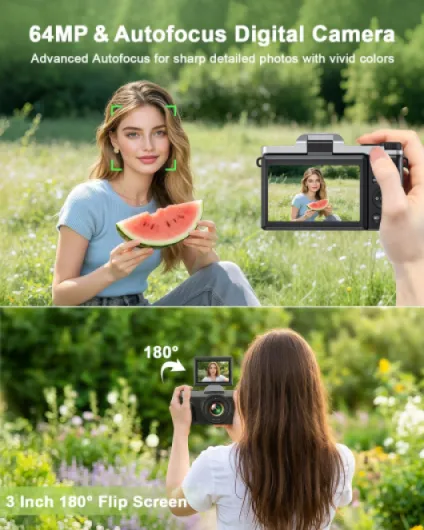
On paper, this model is a compact all‑in‑one camera designed mainly for vlogging and casual photography. It records video up to 4K (3840 x 2160) and captures stills up to 64MP from a CMOS sensor. It uses autofocus (AF‑A) with face detection and smile capture, which should simplify portraits and talking‑head videos, especially for beginners. The lens is listed as 16x zoom, but the spec sheet also says 16x digital zoom, which strongly suggests that the zoom is electronic, not a real optical zoom like on higher‑end cameras.
The screen is a 3‑inch IPS LCD that flips 180°, which is key for vloggers and selfie‑style creators. You can see yourself while filming, frame your shots, and use features like beauty filters and anti‑shake. Shooting modes include slow motion, time‑lapse, continuous shooting, and video pause, which covers most basic creative needs. There’s a built‑in flash for low‑light stills and some basic image stabilization referred to as "anti‑shake". This is very likely digital stabilization, not a sophisticated optical system.
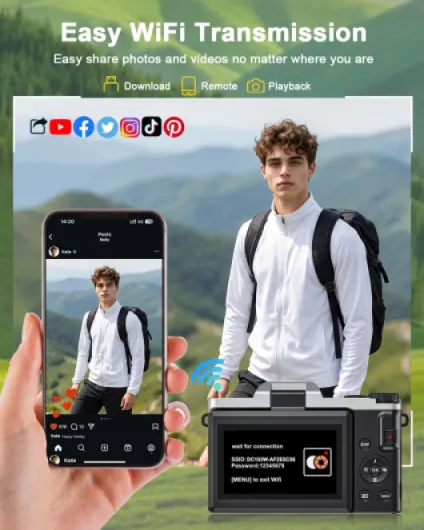
Connectivity is handled via Wi‑Fi and the Viipulse app. According to several comments, buyers use the app to trigger the camera remotely, transfer photos and videos to their phone, and share quickly on social media. The camera can also act as a webcam for live streams or video calls, which a few reviewers explicitly highlight as a strong point for content creators and remote workers. Audio recording is built in, but there’s no clear mention of an external mic input, so you should assume internal mic only.
The sales pitch is very much "ready to go": you get the camera, a 32GB memory card, two lithium‑polymer batteries, and various accessories. In my opinion, that bundle is one of the key reasons people pick it: you don’t need to figure out which card or spare battery to buy. The flip side is that you’re buying into a small, lesser‑known ecosystem, so you shouldn’t expect the same firmware maturity, lens options, or long‑term support as with Canon, Sony, or Panasonic. For beginners, though, the feature list is dense for a budget compact.
Pros
- Complete starter bundle with 32GB card and two rechargeable batteries included
- 4K video, 64MP stills, flip screen and Wi‑Fi remote/app control at a budget price
- Simple, lightweight design that buyers find intuitive for vlogging and everyday use
Cons
- Likely digital zoom and basic stabilization, with limited performance in low light
- Unknown long‑term durability and ecosystem compared to major camera brands
Conclusion
Analysis score
The Zostuic 4K digital camera is basically a starter kit for vlogging and casual photography. You get 4K video, 64MP stills, a 3‑inch flip screen, Wi‑Fi with remote control, webcam mode, and a full bundle including a 32GB card and two batteries. The Amazon comments are largely positive about image clarity in normal light, ease of use, and the practicality of having two batteries for longer recording sessions. For cooking videos, family clips, travel logs, and live streaming at a desk, it looks like it does the job at a reasonable cost.
On the downside, the spec sheet screams "budget": likely plastic construction, digital rather than true optical zoom, basic autofocus and stabilization, and unknown long‑term durability from a lesser‑known brand. If you care about top‑tier low‑light performance, robust weather sealing, or pro‑level autofocus tracking, this isn’t the right tool. A decent smartphone or a more expensive camera from a major brand will still outperform it in demanding situations.
In my opinion, this camera makes sense for beginners, students, and casual creators who want a separate, simple device to film themselves, step up slightly from their phone, and start playing with time‑lapse, slow motion, and 4K uploads without a big investment. People who should skip it: anyone planning to shoot serious paid work, fast sports, or heavy low‑light content, or those who already own a recent mid‑ to high‑end smartphone and are happy shooting handheld. Seen for what it is—a compact, affordable vlogging camera with a generous accessory pack—it offers solid overall value.