Summary
Analysis score
Average of the criteria rated below
Value for money: solid cooling, clear compromises
Compact tower format, heavy body and bright lights
Build, certifications and early‑life reliability
Noise, airflow and real‑world quirks
What the AuraHome 9000 BTU actually offers
Cooling and dehumidifying: does it actually cool the room?
Pros
- Strong cooling for small to medium rooms with 9000 BTU and solid airflow
- Complete feature set for the price: remote, 24-hour timer, dehumidifier, sleep mode, child lock
- Compact footprint with wheels and included window vent kit for sliding windows
Cons
- Fairly loud in real use (around 65 dB), may disturb light sleepers
- Heavy unit (22.5 kg) with only a 12-month warranty and an unknown brand
- Average energy efficiency (A class) and some inconsistencies between marketing claims and actual label

Specifications
View full product page →| Brand | AuraHome |
A compact 9000 BTU unit that’s getting people through heatwaves
The AuraHome Portable Air Conditioner 9000 BTU positions itself as a simple, compact machine aimed at cooling small to medium rooms without any complex installation. On paper it’s a classic 4‑in‑1 unit: cooling, fan, dehumidifier and sleep mode, with a 9000 BTU rating and a quoted room coverage of up to about 20–35 m² (roughly 215 ft²). The average rating sits around 4.4/5 over about forty reviews, which suggests most buyers feel it does the core job: cooling a hot bedroom or office during warmer months.
Several comments describe it as capable of bringing down the temperature of a medium-sized bedroom in roughly ten minutes, which is in line with what you’d expect from 9000 BTU in a well‑vented, closed room. The flip side is clear too: people repeatedly mention that it’s not quiet and it’s not light. At 22.5 kg with a rotary compressor and a single exhaust hose, it behaves like a typical budget portable AC rather than a premium, ultra‑silent model.
On the spec sheet, the unit ticks a few reassuring boxes: R290 refrigerant (more environmentally acceptable than older gases), CE/GS/ROHS/UKCA certifications, a 24‑hour timer, basic digital display and a remote. Nothing fancy, but the essentials are there. Some values (like the quoted 54 dB in the description vs 65 dB on the label, and an odd SEER figure) look inconsistent, and one buyer explicitly calls out that the noise and efficiency labelling are less flattering than the marketing text.
In my opinion, this AuraHome model is a straightforward summer tool: it’s there to cool the room quickly, not to be invisible or ultra‑efficient. If you mainly care about sleeping in a cooler bedroom during a heatwave and you accept fan-like noise, it looks promising. If you’re chasing silence, very low power consumption or polished ergonomics, the compromises become more obvious and you may want to look higher up the range or at fixed systems.
Value for money: solid cooling, clear compromises
The exact price isn’t specified here, but given the specs — 9000 BTU, basic A‑class efficiency, no inverter, single hose and an unknown brand — it’s safe to place the AuraHome in the budget to lower mid‑range of portable air conditioners. In that context, the 4.4/5 average rating from verified purchases is a strong indicator that, for most buyers, the balance between cost and performance is acceptable. People repeatedly say it “does the job well” and call it one of their better purchases for staying comfortable in summer.
Where the value holds up is in the cooling performance per pound spent. You’re getting a unit that can genuinely cool a medium‑sized bedroom relatively fast, includes a remote, timer, dehumidifier function, and comes with a full vent kit. For many households, that’s all that’s needed. The R290 refrigerant and compliance with multiple safety standards are additional positives that you don’t always see clearly advertised on the cheapest no‑name units.
The compromises are clear, though. First, noise: at around 65 dB and with several buyers calling it fairly loud, this is not a good match if you’re highly noise‑sensitive. Second, energy efficiency: one reviewer notes that the energy rating is A rather than the more flattering claims in the description, and the listed SEER figures look off compared with modern high‑efficiency models. Over several summers of heavy use, a more efficient unit could cost less in electricity, even if the purchase price is higher. Third, the brand is not widely known, and the warranty is limited to 12 months, which may matter if you’re worried about long‑term support.
In my opinion, the AuraHome offers good value if your main goal is strong, short‑term cooling comfort on a limited budget and you’re ready to accept noise, some ergonomic quirks and an average efficiency rating. If you want quieter operation, smart features, a longer warranty and better energy performance, you’ll probably have to spend more with a major brand. So it’s a sensible pick for occasional summer use in a bedroom or office, less so for someone planning to run it many hours a day over long periods.
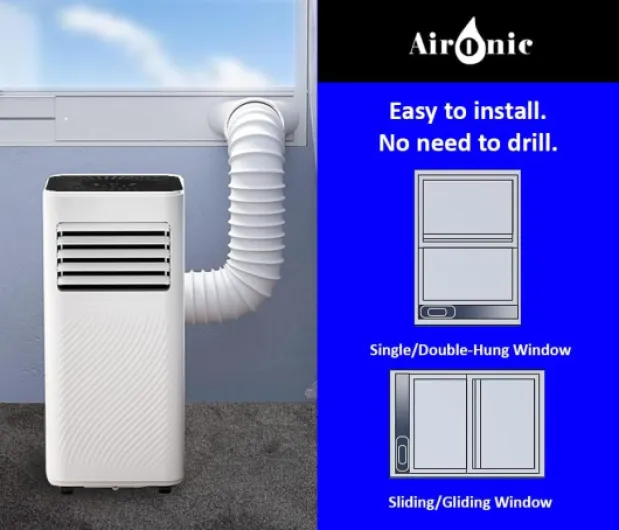
Compact tower format, heavy body and bright lights
The AuraHome unit takes a tall, narrow tower format: 31 cm deep, 31.5 cm wide and 70 cm high. This relatively small footprint is practical in cramped bedrooms where floor space is limited; it can sit in a corner near a window without blocking the whole room. At 22.5 kg, though, it’s not a featherweight. Buyers repeatedly call it “really heavy” and point out that while the caster wheels make it easy to roll across a room, carrying it between floors is another story. So “portable” here mostly means “can be moved around on the same level”.
The casing is classic white plastic with a top‑mounted control panel and front air outlet. Reviews mention that the control buttons on the unit are not very responsive and sometimes need several presses before the command is registered. That’s not a deal‑breaker, since you also have the remote, but it does show that the physical interface is more functional than polished. Another recurring point: the LEDs around the buttons are described as extremely bright in a dark bedroom, to the point that one buyer ended up covering them with a book.
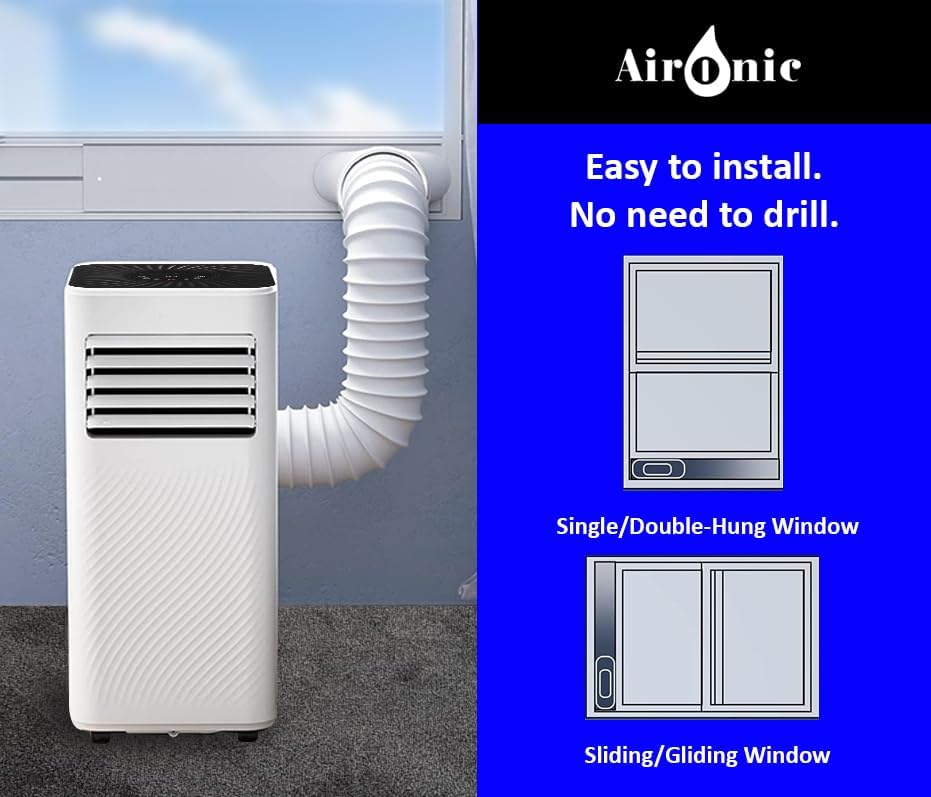
On the back, there’s a small detail that’s actually useful: a plug rest area to store the cable when you roll the unit away. This won’t change your life, but it avoids a loose cable dragging on the floor or getting caught. The supplied window kit is designed primarily for sliding windows, with adjustable panels to fit a range of openings (about 60–91 cm width and 60–70 cm height). Several users say it’s a bit fiddly but workable once you understand how the hose twists and locks into place.
In my opinion, the design is pragmatic, not pretty. It’s compact enough to fit most rooms and neutral enough to blend into the background, but nothing here feels premium. The real downside in terms of design is the combination of weight and bright control LEDs, plus slightly clunky buttons. If you’re planning to leave it in one bedroom all summer, that’s probably acceptable. If you want something you can easily shuttle between rooms every day, the 22.5 kg mass and single top control panel may feel less convenient.
Build, certifications and early‑life reliability
In terms of durability and build quality, there isn’t a flood of long‑term feedback yet, which isn’t surprising for a model that started in 2023. The average rating around 4.4/5 with over forty reviews and no wave of complaints about breakdowns suggests that early‑life reliability is acceptable. Most comments focus more on noise, weight and hose length than on failures or leaks, which is usually a good sign during the first seasons of use.
The spec sheet mentions a GMCC rotary compressor, a type commonly used in many budget and mid‑range air conditioners. This isn’t a high‑end inverter compressor, but it’s a known technology that, if cooled and ventilated correctly, can last several summers. The use of R290 refrigerant is another point: it’s more environmentally friendly than older gases and is standard in newer portable ACs. There’s no mention in the reviews of refrigerant leakage or major component faults, which would typically show up quickly if there were design flaws.
On the structural side, the unit is made of plastic with an aluminium alloy core for the heat exchange components. Buyers do not report flimsiness or broken casters; instead, they mostly talk about how heavy it is, which indirectly implies that the internal components and frame are reasonably solid. The included 12‑month warranty is standard for this price point but not generous. There is no mention of extended warranties or on‑site service, so if something fails after a year, you’re likely on your own.
In my opinion, the AuraHome looks decently robust but unproven in the very long term. The certifications (CE, GS, ERP, ROHS, UKCA) indicate compliance with safety and efficiency norms, but they don’t guarantee longevity. With no strong pattern of failures showing up in the public reviews, I’d expect it to hold up like a typical budget portable AC: fine for several summers if not abused, but not on the same level as premium brands with thicker plastics, better sound insulation and multi‑year warranties. If long‑term reliability is your priority, you might want to factor the one‑year warranty and unknown brand into your decision.

Noise, airflow and real‑world quirks
The performance story here is a mix of solid cooling and noticeable noise. The marketing description mentions a low noise level of ≤54 dB, but one verified buyer points out that the label on the machine itself indicates around 65 dB, and they explicitly state that the noise and energy rating are not as advertised. Other comments back this up indirectly: multiple people describe it as “quite loud” or “fairly loud”, and one says even the lower fan speed is too noisy for comfortable night use if you’re sensitive to sound.
On the airflow side, reviews underline that the unit can push enough cold air to make a room feel significantly cooler in a short time. One buyer mentions that it cooled a “boiling hot” bedroom in under ten minutes, which suggests good air throughput for the size. However, the hose length and installation clearly impact performance. Several users stress that the hose should be kept as short as possible to avoid it radiating heat back into the room, and one person complains that the supplied hose isn’t long enough for their ideal setup and plans to buy a longer one, accepting a likely penalty in efficiency.
The control responsiveness is another small performance quirk. At least one review notes that the temperature setting can be confusing (you may have to press the button twice for the change to register), and the touch buttons on the unit sometimes need repeated presses. The remote, however, seems to mitigate this, as there are no major complaints about it failing to work. There’s also a mention of a custom glass window insert built by a buyer to vent the hose without losing light, which indirectly highlights that the stock window kit, while functional, isn’t perfect for all window types.
From an analytical standpoint, I’d say the AuraHome’s performance is focused on brute cooling power rather than refinement. You get strong airflow and good temperature drop for the power class, but at the cost of higher noise and some ergonomic quirks. For someone who values a cold room more than a quiet one, that’s acceptable. For someone who wants near‑silent, seamless operation and plug‑and‑forget controls, this will feel rough around the edges despite its decent average rating.
What the AuraHome 9000 BTU actually offers
On paper, the AuraHome Portable Air Conditioner 9000 BTU is a 4‑in‑1 appliance: cooling, dehumidifying, simple fan mode and a sleep mode. The cooling power is rated at 9000 BTU with a power draw of about 1005 W, which is fairly typical for this capacity. The manufacturer suggests it’s suitable for spaces of 20–35 m² (they also mention 12–18 m² elsewhere, which is more realistic for strong cooling), and a volume of around 700 cubic feet. Several buyers use it in medium‑sized bedrooms and offices, and the comments largely confirm that this is the right kind of room size.
In terms of functionality, you get: two fan speeds, a 24‑hour timer, digital temperature display, a remote, child lock, water‑full indicator, and a basic sleep mode. The unit also works as a dehumidifier, with a target humidity band of roughly 40–60% in dry mode when conditions are right (it won’t dehumidify if the temperature is below 15 °C or humidity is above 85%). For everyday use, the main interest is being able to set a temperature, leave it on for a set period at night, and control it from bed with the remote.
The kit includes everything needed for a standard temporary installation: single exhaust hose, adapter, window vent kit and drain pipe. Owners highlight that the window kit is better suited to sliding windows, which matches the manufacturer’s claim, and some UK buyers ended up customising their window solution for a cleaner fit. There’s no need for an outdoor unit or professional installer; it’s a plug‑in, vent‑through‑window style device.
In my opinion, the feature set is basic but sufficient for a budget‑minded user. There’s no integrated Wi‑Fi, no app control, no variable‑speed inverter compressor, and the energy efficiency class is only A, not top‑tier. But you do get the main comfort features (timer, remote, multiple modes) and the feedback suggests that, used correctly with a short hose and a mostly closed window, it delivers the cooling performance people expect from this category.
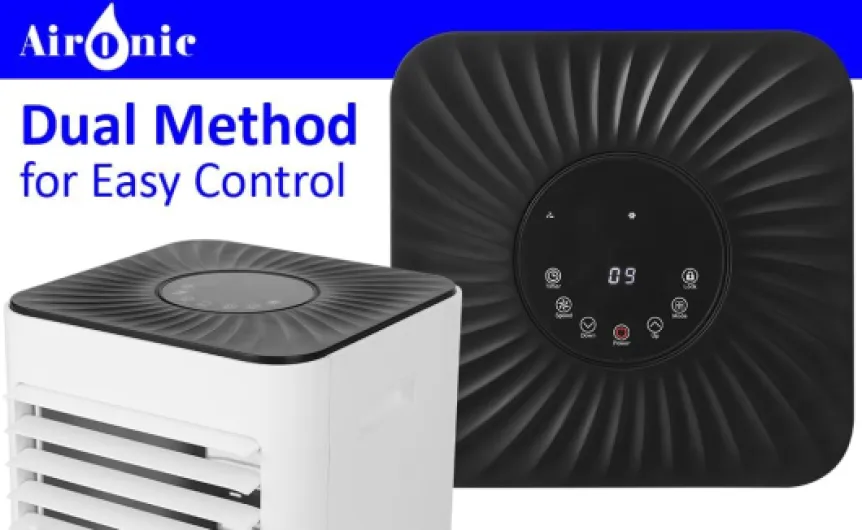
Cooling and dehumidifying: does it actually cool the room?
On the core question — does it cool effectively? — the feedback is largely positive. Several owners say it cools a medium‑sized bedroom “within 10 minutes” or “quickly”, even during hot weather. With 9000 BTU and roughly 1000 W power draw, that’s consistent with what you’d expect if the door is closed, curtains are drawn and the hose is properly vented outside with a decent seal. People who use it in the right room size (think average UK bedroom or small office) generally report a clear drop in temperature and a much more comfortable sleeping environment.
The unit offers three main operating modes that impact effectiveness: cooling, fan and dry. Cooling mode uses the compressor to lower the air temperature and expel hot air through the hose. Fan mode just circulates air at two speeds without cooling, and dry mode focuses on removing moisture to keep humidity around the 40–60% band when conditions allow. This can make a room feel less clammy even if the temperature doesn’t drop dramatically. However, the manufacturer clearly notes that dehumidification won’t work below 15 °C or above 85% humidity, so it’s not a universal fix for every damp situation.
Where the AuraHome seems to struggle a bit is in noise vs effectiveness. To get the strong cooling that users praise, the compressor and fan run at a level that several buyers find fairly loud, especially on the higher fan speed. One reviewer who was otherwise happy with the cooling explicitly warns that even the low fan speed is quite noisy at night. This fits with the official label of around 65 dB, which is similar to a strong desk fan or a conversation, not a whisper‑quiet device.
In my opinion, in terms of pure cooling, this unit is good for its category. It’s not an oversized 12000–14000 BTU monster, but in the right‑sized room it should bring real relief during heatwaves. The trade‑off is that to get that performance you have to accept both the noise and the heat radiated by the hose, which is why buyers insist on keeping the hose as short as possible and sealing the window opening well. If you’re realistic about those constraints, the effectiveness seems to meet or even exceed expectations for a 9000 BTU portable AC.
Pros
- Strong cooling for small to medium rooms with 9000 BTU and solid airflow
- Complete feature set for the price: remote, 24-hour timer, dehumidifier, sleep mode, child lock
- Compact footprint with wheels and included window vent kit for sliding windows
Cons
- Fairly loud in real use (around 65 dB), may disturb light sleepers
- Heavy unit (22.5 kg) with only a 12-month warranty and an unknown brand
- Average energy efficiency (A class) and some inconsistencies between marketing claims and actual label
Conclusion
Analysis score
Looking at the specs and the published reviews, the AuraHome Portable Air Conditioner 9000 BTU comes across as a practical, no‑frills cooling solution for small and medium rooms. It cools effectively for its 9000 BTU rating, with several buyers describing quick temperature drops in typical bedrooms. You get the essential features — remote control, 24‑hour timer, dehumidifier function, child lock — and a complete window vent kit, all in a compact footprint that can sit quietly in a corner (even if the sound it makes is anything but quiet).
The trade‑offs are just as clear: noise around 65 dB, a heavy 22.5 kg body that’s not fun to carry between floors, a basic energy rating, and a user interface that some find a bit clunky with bright LEDs and less‑than‑snappy buttons. The brand isn’t a household name, and the 12‑month warranty is average, not generous. For occasional use during heatwaves, that will be fine; for intensive, long‑term usage, some people might prefer a more established manufacturer with better efficiency and longer support.
In my opinion, this model suits users who mainly want a cooler bedroom or office during hot spells and don’t mind fan‑like noise. If you sleep well with white noise, close the door, keep the hose short and seal the window reasonably, it should significantly improve comfort. On the other hand, if you’re sensitive to noise, plan to run it many hours a day, or put a lot of weight on energy costs and long warranties, looking at higher‑end or fixed systems would make more sense.