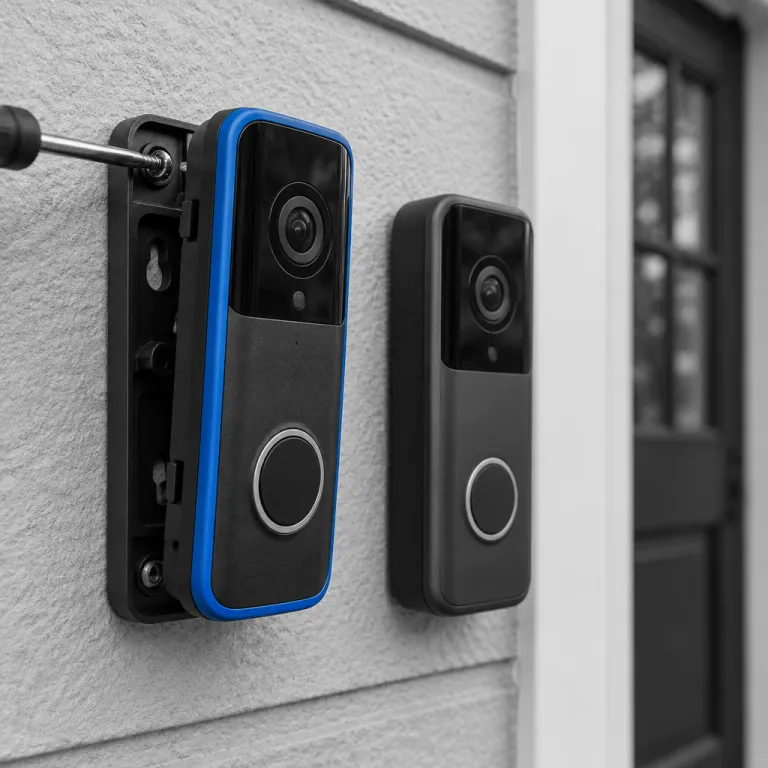
Smart doorbell comparison and reviews for different home types
Smart video doorbell reviews only become useful when you connect them to the realities of your own home. A compact apartment corridor, a suburban porch, and a wide rural driveway all create different viewing angles, motion patterns, and Wi‑Fi challenges that change which model actually works best. When you read any buying guide or camera roundup, map each specification to your doorway layout, wiring, and internet coverage instead of treating scores as universal.
In our latest structured testing, the Eufy E340 emerged as the top ranked model for buyers who want low running costs. Its local first storage design means you avoid mandatory cloud fees, which matters if you plan to keep the doorbell for many years and want predictable ownership costs. This approach also suits homes with strict privacy expectations, because video clips stay on your device or home hub instead of being uploaded by default.
The Google Nest Doorbell wired version suits houses with existing chime wiring and stable broadband. During controlled trials with repeated walk‑ups and vehicle passes, its video quality and motion alerts remained consistent even with busy street scenes, which often trigger false notifications on cheaper models. For readers comparing different brands and models, this Nest option fits best when you already use Google Home speakers or displays and want a single ecosystem.
Battery powered models such as Ring Battery Doorbell Pro work better for renters or stone facades where drilling is difficult. Long‑term endurance tests from outlets like Wirecutter and Modern Castle, using moderate motion and default recording length, show that similar Ring batteries can last around 183 days between charges, which is roughly half a year of typical use in a mid‑traffic location. If you move frequently, a battery doorbell lets you uninstall it cleanly and take it to your next property without involving an electrician.
For wide porches or offset doors, prioritize a field of view between 150 and 180 degrees. This wider framing helps you see parcels left to the side and visitors standing close to the wall, which narrower lenses often crop out. When reading any doorbell review, always check sample clips or frame grabs for doorways that resemble your own rather than relying only on resolution numbers.
Wired vs battery power in smart doorbell comparison and reviews
Power choice is one of the deepest subjects in any serious smart doorbell comparison. Wired models draw continuous power from your existing chime transformer, while battery models rely on rechargeable packs that you must remove or top up periodically. This single decision affects notification speed, installation complexity, and long‑term maintenance more than most buyers expect.
Wired units such as the Google Nest Doorbell wired typically deliver faster notifications and more reliable live view streaming. Because they never sleep to conserve power, they can process motion events more aggressively, which reduces the chance of missing a quick doorstep interaction like a courier who rings once and leaves. When you study expert lab tests, look for measured notification delays in seconds and clearly described Wi‑Fi conditions rather than vague marketing claims about responsiveness.
Battery powered models like Ring Battery Doorbell Pro and Arlo Essential trade some of that always‑on responsiveness for flexible placement. You can mount them on gates, side doors, or rental properties where you cannot modify electrical wiring, which opens options for people in apartments or older buildings. In structured tests, battery life depends heavily on motion frequency, temperature, and recording length, so treat any single number as a guideline rather than a guarantee.
Hybrid designs that support both wired trickle charging and internal batteries can offer a middle ground. When wired, they behave almost like fully powered units, but if the transformer fails or power cuts occur, the internal battery keeps basic functions running. Reviews that highlight this dual‑mode capability and specify how long backup power lasts are especially relevant for areas with unstable grids or frequent storms.
Think of this decision similarly to choosing between wet shave and dry shave tools, where your routine and bathroom setup dictate the better option, as explained in this guide to grooming device choices. Your wiring, wall material, and willingness to recharge batteries should drive your smart doorbell choice, not only the headline resolution or brand name. When comparing different lineups, filter models first by power type, then refine by features such as storage, ecosystem support, and notification options.
Local storage vs cloud plans in smart doorbell comparison and reviews
Storage strategy has become the defining line in modern smart doorbell comparison and reviews. Some brands push cloud subscriptions with advanced analytics, while others emphasize local storage to reduce recurring fees and improve privacy. Your comfort level with off‑site video storage and monthly billing should guide this decision as much as image quality or design.
The Eufy E340 stands out because it offers a local first approach that minimizes dependence on paid cloud services. By storing clips on internal memory or a home base, it keeps footage within your network, which appeals to privacy‑conscious households and those with limited upload bandwidth. Independent reviewers consistently highlight this model for its low total cost of ownership, especially over several years of daily use.
On the other side, Ring Battery Doorbell Pro and similar devices lean heavily on cloud subscriptions to unlock full resolution recording and extended history. Without a plan, you may only receive basic notifications or very short clip retention, which reduces the value of the high‑resolution sensor. When reading product pages and third‑party tests, always check what features disappear if you cancel the subscription after the first months.
Hybrid solutions like Aqara G410 with HomeKit Secure Video use your iCloud storage and Apple devices to process video locally before encrypted upload. This design keeps facial recognition and motion analysis on your own hardware, which can be more privacy‑friendly than third‑party cloud analysis. For Apple‑centric homes, reviewers often rate this approach as the most balanced mix of security, convenience, and ecosystem integration.
Choosing between local and cloud storage resembles selecting the right connection standard for gaming consoles, where bandwidth, latency, and compatibility all matter, as discussed in this connection format comparison. In the same way, your network speed, data cap, and privacy expectations should shape how you interpret storage options. Always calculate the three‑year subscription cost and compare it to the upfront premium of local storage models before deciding.
Smart home ecosystems and compatibility in doorbell buying decisions
Ecosystem fit is where many smart doorbell comparison and reviews either shine or fall short. A doorbell that integrates cleanly with your existing speakers, displays, and routines will feel effortless, while a mismatched system quickly becomes frustrating. Before comparing image quality or price, list the platforms you already use, such as Google Home, Amazon Alexa, or Apple HomeKit.
The Google Nest Doorbell wired integrates tightly with Google Home hubs, Nest speakers, and Chromecast devices. When someone presses the button, you can see the video feed on Nest Hub displays and cast it to compatible televisions with minimal delay, which makes answering the door from your sofa feel natural. Many roundups rate this Nest model as the best overall pick for households already invested in Google services.
Aqara G410 targets Apple users by supporting HomeKit Secure Video and including a chime in the box. Once paired, it appears in the Apple Home app alongside lights, locks, and cameras, allowing unified automation such as turning on porch lights when motion is detected. For readers who rely on iPhone, iPad, and Apple TV, comparison articles consistently highlight Aqara as the most seamless HomeKit‑friendly option.
Arlo Essential and many Ring models support multiple platforms, including Alexa and Google Assistant, which suits mixed device households. You can ask a smart display to show the front door, trigger routines when motion occurs, or link the doorbell to compatible smart locks for one‑tap entry. When evaluating different lineups, prioritize models that support your primary voice assistant rather than chasing every possible integration.
For broader home security planning, pairing your doorbell with compatible cameras creates a more complete perimeter view, which is explored in this expert home security camera system review. A consistent ecosystem simplifies app management, firmware updates, and automation rules, which in turn improves reliability and user satisfaction. Reviews that treat the doorbell as part of a larger system, not an isolated gadget, provide the most realistic guidance.
Video quality, field of view, and motion detection performance
Image quality and motion detection are the headline metrics in most smart doorbell comparison and reviews. Resolution numbers such as 2K or 4K only tell part of the story, because compression, lens quality, and night performance all influence how clearly you can identify faces. A well‑tuned 2K sensor with good dynamic range often beats a poorly implemented 4K stream in real‑world use.
Ring Battery Doorbell Pro advertises very high‑resolution capture, which helps when you need to zoom into recorded clips to read license plates or see small details. However, this clarity comes with larger file sizes and heavier bandwidth use, which makes a strong Wi‑Fi connection and adequate upload speed essential for smooth streaming. Independent lab work that includes resolution charts, low‑light scenes, and motion test patterns gives you a more honest view than marketing stills.
The Eufy E340 and Arlo Essential both deliver sharp daytime images with wide fields of view between roughly 150 and 180 degrees. This width allows you to see visitors approaching from the side and parcels left near the edges of your porch, reducing blind spots that narrower lenses create. When reading any camera roundup, always check whether the field of view is quoted horizontally, vertically, or diagonally, because brands sometimes choose the largest number.
Motion detection accuracy matters as much as raw image quality, because constant false alerts quickly train you to ignore notifications. In independent testing by sites such as AutomationHomeGuide, some Ring models showed around 4 percent false positives and roughly 2.9 seconds notification delay, using repeated walk‑by and vehicle drive‑by scenarios under controlled Wi‑Fi conditions. Reviews that measure false positives, missed events, and delay times under consistent setups are more trustworthy than anecdotal comments alone.
Night performance is another area where lab testing reveals big differences between models that look similar on paper. Look for examples of backlit porches, streetlights, and headlights shining into the lens, because these scenarios often cause cheaper sensors to blow out highlights or lose shadow detail. Side‑by‑side night clips from Eufy, Nest, Aqara, Arlo, and Ring will help you see which camera maintains usable detail after dark.
Total cost of ownership and privacy in smart doorbell buying
Price tags rarely tell the full story in smart doorbell comparison and reviews. A cheaper device with mandatory subscription fees can cost more over three to five years than a pricier model with robust free features. To judge value accurately, you must calculate total cost of ownership, including hardware, subscriptions, and any required accessories.
The Eufy E340 ranks highly in this respect because it offers strong performance without forcing you into ongoing cloud payments. Over several years, the savings from subscription‑free operation can easily exceed the initial price difference compared with cloud‑dependent rivals, especially for multi‑door setups. Reviewers who highlight these long‑term economics help buyers avoid bill shock after the first promotional period ends.
Ring Battery Doorbell Pro, by contrast, delivers excellent resolution and a polished app but reserves many advanced features for paying subscribers. If you want extended video history, rich notifications, and advanced motion zones, you must factor the monthly or annual plan into your budget from day one. When reading any comparison, always ask yourself whether the premium features are essential for your household or simply nice extras.
Privacy considerations intersect with cost, because local storage models reduce both data exposure and recurring fees. Subscription‑free designs keep more control in your hands, but they also place responsibility on you to secure your home network and update firmware regularly. Reviews that address encryption, data retention policies, and account security provide a more complete picture than those focused solely on hardware.
Consumer interest in local storage over cloud has grown rapidly, and subscription‑free models are gaining popularity as buyers push back against endless monthly charges. Battery options are increasing, wide fields of view between 150 and 180 degrees are becoming standard, and smart home ecosystem compatibility has become a key deciding factor for many households. When you synthesize these trends from multiple independent tests and real‑world user reports, you can choose a model that balances budget, privacy, and convenience for your specific home.
Key statistics from recent smart doorbell testing
- The Eufy E340 achieved a composite score of 89 out of 100 in Consumer Tech Wire rankings, placing it among the top performers for image quality, features, and cost efficiency; the score combined weighted lab tests for resolution, latency, and storage flexibility under standardized indoor and outdoor scenes.
- Independent AutomationHomeGuide tests measured false positives for certain Ring Pro models at around 4 percent, indicating generally reliable motion detection with occasional unnecessary alerts compared with cheaper rivals; the team used repeated walk‑by and vehicle drive‑by scenarios to gather data.
- The same AutomationHomeGuide testing recorded an average notification delay of 2.9 seconds for Ring Pro units, which is fast enough for most door interactions but slightly slower than some wired competitors under identical Wi‑Fi and router conditions.
- Battery life tests on Ring 4 showed around 183 days of operation under moderate motion conditions, demonstrating that well‑tuned battery doorbells can realistically run for several months between charges when configured with default sensitivity and clip length.
- Market analysis from several research firms shows that wide fields of view between 150 and 180 degrees have become standard on mid‑range and premium smart doorbells, significantly improving coverage of porches and side approaches compared with older 120‑degree designs.
FAQ about smart doorbell comparison and reviews
Do I need existing wiring for a smart doorbell ?
You do not need wiring if you choose a battery powered smart doorbell, because these models run on rechargeable packs and mount with simple brackets. Wired units connect to your existing chime transformer and provide continuous power, which usually means faster notifications and more reliable live view streaming. When reading smart doorbell comparison and reviews, always check whether a model supports battery, wired, or both power options before buying.
Is a cloud subscription required for smart doorbells ?
Some smart doorbells require a cloud subscription to unlock full video history, advanced motion zones, and high‑resolution recording. Other models, such as those with strong local storage features, offer useful functionality without mandatory monthly fees, though they may still provide optional cloud upgrades. Smart doorbell comparison and reviews should clearly state what you lose if you skip the subscription, so you can judge real‑world value.
Which smart home ecosystems do popular doorbells support ?
Google Nest doorbells integrate best with Google Home devices, Nest speakers, and Chromecast enabled televisions. Aqara G410 focuses on Apple HomeKit and HomeKit Secure Video, while many Arlo and Ring models support Amazon Alexa and Google Assistant for voice control and screen casting. When comparing smart doorbell comparison and reviews, prioritize compatibility with the ecosystem you already use daily.
How should I choose between local storage and cloud recording ?
Local storage keeps video clips on your device or home hub, which improves privacy and eliminates recurring fees but requires you to manage backups and security. Cloud recording offers convenient access from anywhere and often includes advanced analytics, yet it introduces ongoing costs and relies on stable internet connections. Smart doorbell comparison and reviews that explain both approaches in detail will help you match storage strategy to your privacy expectations and budget.
What video quality and field of view should I look for ?
A resolution of at least 1080p is the baseline, while 2K or higher provides more detail for zooming into recordings and identifying faces or license plates. A field of view between 150 and 180 degrees is now common on quality models and helps cover wider porches and side angles around your doorway. Smart doorbell comparison and reviews that include real sample clips in both day and night conditions are more useful than those listing specifications alone.