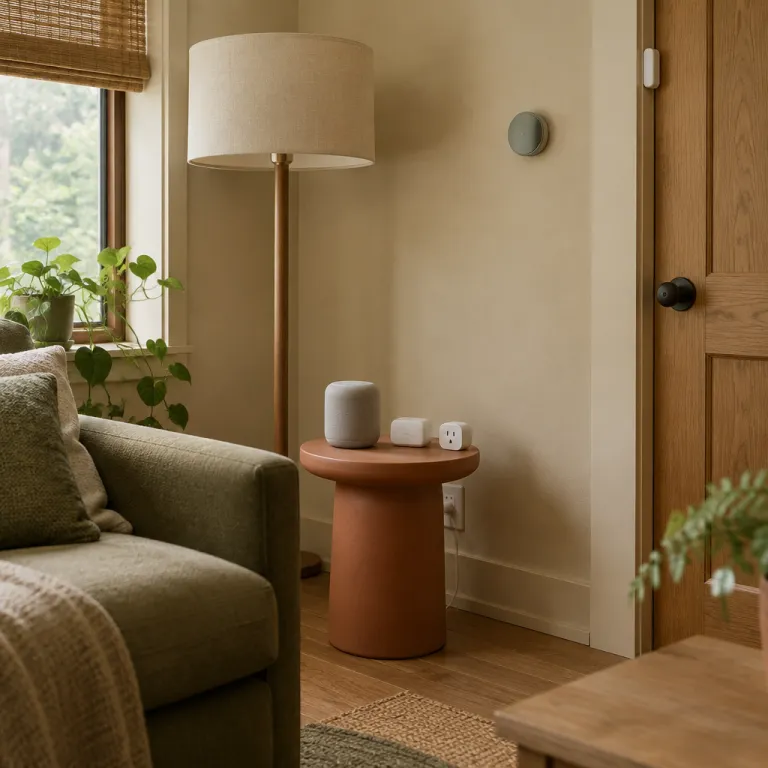
Planning an affordable smart home setup under 500
Building an affordable smart home setup under 500 starts with a clear plan. You need to map your priorities around comfort, security, and energy savings before touching your wallet, because random impulse buys quickly destroy any budget. When you know which rooms matter most and which routines you want to automate, every euro or dollar you spend supports a coherent and genuinely low-cost smart home.
Think of your system as a layered architecture with a core controller at the center. A smart hub or voice assistant such as an Amazon Echo, Google Nest, or Apple HomePod becomes the brain that coordinates lighting, sensors, and security devices in a compact but powerful budget-friendly setup. This hub should support modern wireless standards like Matter, Zigbee, or Z-Wave, because those protocols keep devices responsive while still fitting the constraints of a sub‑$500 starter system.
Before choosing devices, define three to five concrete goals for your home. Typical objectives for a starter smart home include voice-controlled lighting, basic security monitoring, simple climate or energy control, and a few safety sensors for doors or windows. When each purchase is tied to one of these goals, your system feels intentional rather than like a box of random gadgets.
Budget allocation is the next strategic step. For a balanced affordable smart home setup under 500, plan roughly one fifth of the budget for the hub, another fifth for lighting and plugs, a similar portion for security, and the rest for sensors plus either a smart thermostat or a smart lock. This structure keeps your build from being dominated by a single flashy device that leaves the rest of the system underdeveloped.
Answering common doubts early helps you avoid costly mistakes. The question “Can I build a smart home with $500?” has a clear answer in practice: “Yes, core hub plus lighting, security, sensors, thermostat or lock fits under $500.” That statement reflects real-world pricing and proves that a carefully planned entry-level setup is realistic, not just a marketing slogan.
Choosing the right smart hub and ecosystem
The smart hub or voice assistant is the anchor of any affordable smart home setup under 500. This core controller coordinates smart bulbs, plugs, sensors, and security devices so they behave like one system rather than isolated gadgets, which is essential when you want a reliable yet inexpensive installation. Without a capable hub, you end up juggling multiple apps and losing the simplicity that should define a modern connected home.
When comparing hubs, focus on protocol support and local control. Devices that speak Matter, Zigbee, or Z-Wave can often run automations locally, meaning your lights and sensors respond even if the internet drops, which is a big reliability win for any budget-conscious build. Local processing also improves privacy, because fewer commands need to leave your home network while still delivering the convenience you expect from smart technology.
Voice assistants such as Amazon Alexa, Google Assistant, and Apple Siri are more than just speakers. They provide hands-free control of scenes, routines, and individual devices, turning a modest collection of gadgets into a polished smart home that feels premium in daily use. When you can say a single phrase to dim lights, lock the door, and arm a camera, the value of your setup becomes immediately obvious.
Platform choice also affects which accessories you can add later. If you already own an iPhone, a HomePod mini with Matter and Thread support can be a strong hub for an affordable smart home setup under 500, while Android users may prefer a Google Nest Hub or an Echo Show for their central display. As of early 2024, for example, a 3rd‑gen Amazon Echo often sells around $50–$60 during promotions, while a Nest Hub (2nd gen) typically lists near $100, which fits comfortably within a $500 build. In all cases, choosing a hub with built-in Zigbee or Thread reduces the need for extra bridges, which keeps your system tidy and cost effective.
Security-focused buyers should think carefully about smart locks and how they integrate with the hub. A well-chosen smart lock can replace or complement a thermostat as the major upgrade in a starter system, especially when it supports keyless entry, temporary codes, and auto-lock features. For a deeper dive into models, features, and installation tips, consult a dedicated smart lock buying guide for secure seamless access before committing part of your affordable smart home setup under 500 budget.
Hub and ecosystem tradeoffs in one paragraph. Broadly, Amazon Alexa offers the widest device compatibility and frequent discounts, making it attractive for tight budgets but more cloud dependent. Google Home integrates deeply with Android and Google services and excels at voice recognition, yet some advanced automations still feel less mature. Apple HomeKit, especially with a HomePod mini, prioritises privacy and local control but tends to have higher hardware prices and a smaller accessory catalog. Matter support is gradually reducing these differences, but you should still match the ecosystem to the phones, tablets, and services your household already uses.
Smart lighting and plugs that maximise value
Lighting is usually the most visible upgrade in an affordable smart home setup under 500. Swapping a few key bulbs or adding smart plugs can transform how your home feels at night, while still leaving room in the budget for sensors and security in a well-rounded configuration. Because lighting is used every day, it is often the best first step when you start building a connected home on a budget.
Smart bulbs are now available from around 8 USD per lamp for basic white models from brands such as IKEA (typical online pricing as of Q1 2024), which is ideal for a cost-conscious starter kit. At that price, you can equip a living room and bedroom with dimmable bulbs that respond to voice commands, schedules, and motion sensors without exceeding a modest portion of your affordable smart home setup under 500. Colour-changing bulbs cost more, so reserve them for one or two feature lamps where ambience matters most.
Smart plugs are equally powerful in a budget-constrained system. They let you automate existing lamps, fans, and small appliances, effectively extending your affordable smart home setup under 500 to devices that are not natively smart. When you can schedule a plug to cut power to a heater or entertainment system overnight, your home also starts to deliver measurable energy savings.
Compatibility with your chosen hub is critical. Many smart plugs and bulbs now support Matter, which simplifies pairing and keeps your affordable smart home setup under 500 from turning into a compatibility puzzle. If you rely heavily on Alexa, it is worth reviewing a specialised guide such as the best smart plugs for Alexa to ensure each plug integrates cleanly into your ecosystem.
Automation rules bring these devices to life. A simple example for an affordable smart home setup under 500 is linking a motion sensor to hallway lights so they turn on at low brightness after sunset, then off again after a few minutes of no movement. With a few well-designed routines like this, your system feels tailored to your habits rather than just remotely controlled.
Sensors, security cameras, and basic monitoring
Sensors are the silent workhorses of any affordable smart home setup under 500. Motion detectors, door and window contacts, and sometimes leak sensors provide the triggers that make lights, plugs, and alarms react automatically in a cohesive automation system. Without sensors, you are mostly just using voice control, which underutilises the potential of a smart home.
Start with a small set of strategically placed devices. A motion sensor in the hallway, a contact sensor on the main entrance, and perhaps another on a balcony door can already power several useful routines in an affordable smart home setup under 500, such as welcome lighting or notifications when a door is left open. These low-cost sensors integrate easily with hubs that support Zigbee or Z-Wave, which keeps your setup responsive and battery friendly.
Security cameras and video doorbells add visual monitoring. For an affordable smart home setup under 500, look for models that offer local storage on a microSD card or a network video recorder, so you are not forced into expensive monthly subscriptions that undermine the affordability of your smart home. As of early 2024, for instance, popular 1080p indoor cameras from brands like TP‑Link Tapo or Wyze often retail around $30–$40, while basic wired video doorbells can start near $50–$60, which leaves room for other essentials in a $500 plan.
Placement matters more than sheer quantity. One well-positioned camera covering the front door and driveway often delivers more value to an affordable smart home setup under 500 than three poorly placed units that duplicate views. Combine that camera with a door sensor and you can create automations where your system sends a snapshot or notification whenever the door opens unexpectedly.
Privacy should remain a core design principle. Many modern hubs support local processing of motion events and sensor triggers, meaning your affordable smart home setup under 500 can operate even when the internet is down and without constantly sending data to external servers. This local control capability aligns with the broader trend of smart homes becoming more affordable while still respecting user privacy, and it makes your installation feel both modern and responsible.
Thermostats, smart locks, and energy conscious upgrades
Once lighting and basic security are in place, the next layer of an affordable smart home setup under 500 is comfort and energy management. A smart thermostat or a smart lock can be the single largest line item in your budget, so you usually choose one of them as the hero upgrade in a compact system. The right choice depends on whether you value climate control or access control more in your daily routine.
Smart thermostats typically start around 80 USD for entry-level models from mainstream brands (based on widely available pricing in early 2024), which leaves enough room in an affordable smart home setup under 500 for a hub, several bulbs, sensors, and perhaps a basic camera. For example, devices like the Google Nest Thermostat or Amazon Smart Thermostat are often advertised in the $80–$130 range depending on sales, and they learn your schedule, support remote control, and can reduce heating or cooling when nobody is home, which directly improves the long-term value of your investment. Over a few seasons, energy savings can offset a significant portion of the initial device cost.
Smart locks, on the other hand, focus on convenience and security. They allow keyless entry via codes, smartphones, or even fingerprints, and they can automatically lock the door after you leave, which adds peace of mind to an affordable smart home setup under 500. When integrated with your hub, a smart lock can also trigger scenes, such as turning on hallway lights and disarming interior cameras when you unlock the door, making the entire system feel coordinated.
Sales and seasonal promotions are your allies here. Smart locks and thermostats frequently drop in price during major shopping events, which can be the difference between exceeding or respecting the budget for an affordable smart home setup under 500. By timing your purchase, you can secure a higher-tier device while still maintaining the financial discipline that defines a budget build.
Energy monitoring smart plugs are another subtle but powerful upgrade. When you attach them to heaters, dehumidifiers, or entertainment systems, they reveal real consumption patterns and allow you to cut waste, which reinforces the efficiency goals of an affordable smart home setup under 500. Over time, this data-driven approach helps you refine automations so your home is not just convenient but also measurably economical.
Step by step build : from first device to complete system
A structured rollout plan keeps your affordable smart home setup under 500 on track. Instead of buying everything at once, you can build in stages, testing each layer before adding the next, which reduces configuration headaches and protects the budget. This incremental approach also lets you adjust based on real usage rather than assumptions about how you will live with your smart home.
Stage one focuses on the hub and one or two smart bulbs or plugs. Once the hub is configured and you have basic voice control working, you already have the foundation of an affordable smart home setup under 500 that can grow without major redesigns. At this point, you can experiment with simple routines such as scheduled lighting or away mode scenes to understand how your system behaves day to day.
Stage two adds sensors and at least one security device. With motion and door sensors in place, your affordable smart home setup under 500 can react to presence, turning lights on when you enter and off when you leave, while a camera or video doorbell provides visual confirmation of visitors. This is usually the moment when a budget-friendly smart home starts to feel truly smart rather than just remotely controlled.
Stage three introduces either a thermostat or a smart lock, depending on your priorities. Integrating one of these higher-value devices completes the core objectives of an affordable smart home setup under 500: comfort, security, and efficiency. If you choose a lock, remember to revisit your access codes and app permissions regularly so your system remains secure as your household or guests change.
Network reliability underpins every stage. If your Wi‑Fi coverage is weak, even the best devices will feel sluggish, so consider reviewing a specialised wireless mesh Wi‑Fi system guide to ensure your affordable smart home setup under 500 has a stable backbone. As you complete the build, remember that “Do I need a smart hub?” is not just a theoretical question, and the practical answer remains: “Hub simplifies device integrations especially for Zigbee/Matter/local control”, which is exactly what keeps a growing system manageable over time.
Advanced tips, privacy, and avoiding hidden costs
Once the basics are running smoothly, you can refine your affordable smart home setup under 500 with more advanced strategies. One key tactic is to favour devices that support local control, because “Is local control expensive?” has a reassuring answer in practice: “No, local systems under $300 exist using open-source hubs and protocols”. This philosophy keeps your smart home responsive, private, and less dependent on external cloud services.
Automation logic deserves careful attention. Instead of creating dozens of overlapping routines, design a few well-structured scenes that reflect real-life scenarios, such as bedtime, away mode, or movie night, so your affordable smart home setup under 500 remains easy to manage. When each scene coordinates lights, plugs, and sensors intelligently, you get more perceived sophistication from the same hardware, which is exactly what you want in a cost-conscious build.
Subscription creep is another hidden threat. Some cameras, doorbells, and even hubs lock advanced features behind monthly fees, which can quietly turn an affordable smart home setup under 500 into a long-term expense that exceeds your expectations. Before buying, always check which features work without a subscription and prioritise brands that offer strong free tiers or local storage options to preserve the affordability of your smart home.
Firmware updates and security hygiene should not be neglected. Schedule a monthly check to update device software, review app permissions, and remove any unused integrations, which keeps your affordable smart home setup under 500 secure and stable. Using strong, unique passwords and enabling two-factor authentication on your main accounts adds another layer of protection without costing anything, yet significantly strengthens the resilience of your system.
Finally, keep your system modular and flexible. Smart homes evolve quickly, and by choosing standards-based devices and avoiding overly proprietary ecosystems, you ensure that your affordable smart home setup under 500 can accept new gadgets or protocols in the future. This forward-looking mindset means your investment remains relevant for years, rather than becoming obsolete when the next wave of products arrives.
Key statistics for an affordable smart home setup under 500
- Entry-level smart bulbs can cost around 8 USD per unit for basic white models from brands such as IKEA (typical online pricing in early 2024), which allows you to equip multiple rooms with dimmable lighting while still staying within an affordable smart home setup under 500.
- Smart thermostats often start near 80 USD for mainstream entry-level devices (based on widely advertised prices in 2024), leaving enough budget for a hub, several bulbs, sensors, and a basic camera in a carefully planned affordable smart home setup under 500.
- Local control systems using open-source hubs and protocols can be implemented for under 300 USD, which means more than half of a typical affordable smart home setup under 500 can rely on privacy-friendly, locally processed automations.
- A balanced allocation of roughly 20 percent of the budget to the hub, 20 percent to lighting and plugs, 20 percent to security, and the remainder to sensors plus a thermostat or lock helps maintain both functionality and cost control in an affordable smart home setup under 500.
- By combining energy-aware smart plugs with a programmable thermostat, households can often reduce heating and cooling consumption by several percentage points over a season, which gradually offsets part of the initial investment in an affordable smart home setup under 500.
Sample $500 starter budget (illustrative only, based on typical Q1 2024 prices):
| Category | Example items | Approx. cost (USD) |
|---|---|---|
| Hub / voice assistant | Amazon Echo / Google Nest / HomePod mini | $80–$100 |
| Lighting & plugs | 4 smart bulbs + 2 smart plugs | $80–$100 |
| Sensors & basic security | 3 contact sensors + 1 motion sensor + 1 camera | $140–$170 |
| Thermostat or smart lock | Entry-level smart thermostat or deadbolt | $120–$150 |
| Total | Core smart home starter kit | ≈$420–$520 (depending on sales) |
FAQ about building an affordable smart home setup under 500
Can I build a complete smart home with 500 USD ?
Yes, a complete but focused system is realistic at this budget. With careful choices, you can buy a hub, several smart bulbs or plugs, a few sensors, and either a camera or a thermostat while still maintaining an affordable smart home setup under 500. The key is to prioritise core functions such as lighting, basic security, and one comfort upgrade rather than chasing every possible feature.
Do I really need a smart hub for my setup ?
A smart hub is not strictly mandatory, but it is highly recommended. Many Wi‑Fi devices can work directly with voice assistants, yet a hub that supports Zigbee, Z‑Wave, or Matter simplifies integrations and improves reliability in an affordable smart home setup under 500. Over time, the hub reduces app clutter and enables more advanced local automations that cloud-only devices cannot match.
Is local control more expensive than cloud based systems ?
Local control is often comparable in price and sometimes cheaper over the long term. Because “Is local control expensive?” is answered with “No, local systems under $300 exist using open-source hubs and protocols”, you can confidently design an affordable smart home setup under 500 that relies on local processing. Avoiding mandatory subscriptions also protects your budget after the initial purchase.
How should I prioritise devices within a 500 USD budget ?
Start with a hub and a few lighting devices, then add sensors and one security component. Once those are stable, allocate remaining funds to either a smart thermostat or a smart lock to complete your affordable smart home setup under 500. This staged approach ensures you cover daily essentials first while leaving room for at least one premium upgrade.
Can I expand my affordable smart home setup under 500 later ?
Expansion is straightforward if you choose standards-based devices from the beginning. By focusing on Matter, Zigbee, or Z‑Wave compatible products, you keep your affordable smart home setup under 500 flexible enough to accept new bulbs, sensors, or appliances over time. As your needs and budget grow, you can add devices gradually without replacing the core of your system.
TL;DR: building a smart home under $500
Decide on three to five clear goals, then split your budget roughly 20 percent for a hub, 20 percent for lighting and plugs, 20 percent for security, and the rest for sensors plus either a thermostat or a smart lock. Choose an ecosystem (Alexa, Google Home, or Apple Home) that matches your existing phones and services, and favour Matter/Zigbee/Z‑Wave devices with local control and no mandatory subscriptions. Build in stages—hub and lights first, then sensors and security, then comfort upgrades—so you stay under $500 while ending up with a responsive, privacy-conscious smart home that can grow over time.