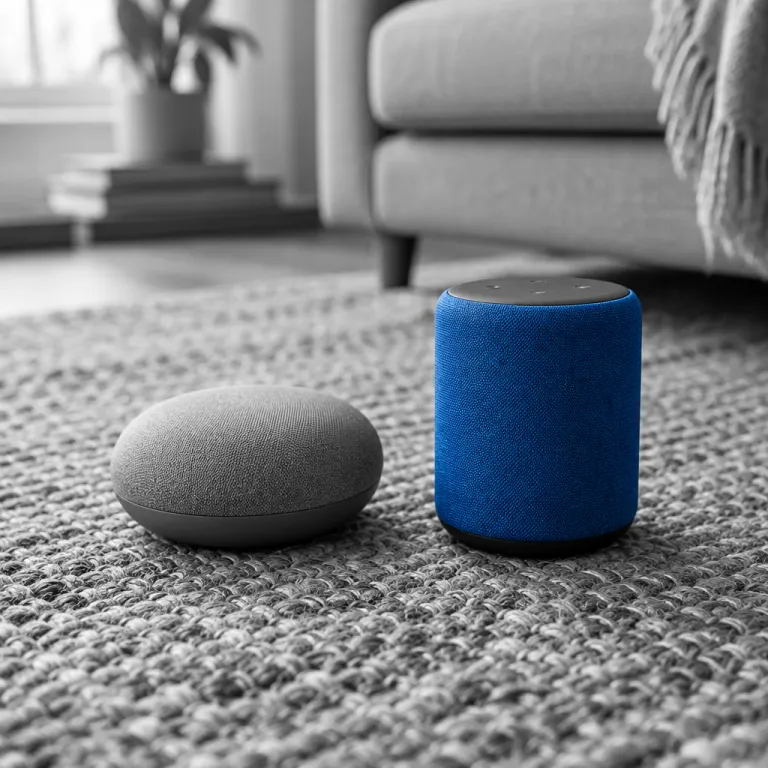
Google Home vs Alexa: voice accuracy and everyday questions
When people compare Google Home vs Alexa, they often start with how reliably each assistant understands spoken requests. In controlled tests and real living rooms, Google Home running Gemini for Home consistently interprets natural speech and complex questions with fewer errors than Amazon Echo devices using the latest Alexa models, especially when accents or background noise are involved. That difference becomes obvious when you rely on your assistant for medication names, calendar queries, or multi step instructions that you do not want to repeat.
Independent benchmarks on brand medication names, such as a study by Klick Health presented at the 2019 Voice Summit, showed Google smart speakers correctly recognizing around 86 percent of drug terms, while Alexa based devices reached about 64 percent under the same conditions. That gap matters if you use voice to check drug interactions, search for health information, or manage reminders for several family members with different prescriptions. When you frame the question as Google Home vs Alexa in terms of pure comprehension, Google’s assistant usually delivers more accurate answers and fewer frustrating misheard commands.
In everyday use, that recognition accuracy translates into smoother routines like “turn off all the downstairs lights and start the dishwasher” or “add oat milk, tomatoes, and rice to my shopping list.” Google Home tends to follow chained commands more reliably, while Alexa sometimes asks for clarification or executes only part of the request. If your priority in the Google Home vs Alexa decision is a conversational assistant that feels closer to talking with a person, Google’s current AI powered approach generally has the edge.
Smart home compatibility: which ecosystem plays nicer with your devices
The next layer in deciding between these two voice platforms is device compatibility across your smart home. Amazon Alexa still offers the broadest smart home hardware support, especially for budget friendly plugs, bulbs, and switches that you find on large marketplaces and in big box stores. Many Echo speakers include built in Zigbee radios, so they can act as hubs for older or simpler devices without needing extra bridges or proprietary gateways.
Google Home leans heavily on Thread and Matter, the newer standards designed to make devices from different brands work together more reliably and securely. Both platforms now support Matter, which means that future smart plugs, thermostats, and sensors should pair more easily regardless of whether you choose Google or Amazon. When you compare Google Home vs Alexa for long term compatibility, Alexa still wins on sheer number of supported devices, while Google looks stronger for a cleaner, more standards driven setup over time.
Think about concrete products you already own or plan to buy, such as Philips Hue lighting, a robot vacuum, or a connected washing machine. Most major brands support both assistants, but some niche devices still launch with Alexa first and add Google integration later, which can delay full voice control on Google Home. If you are building a dense smart home with many low cost accessories, Alexa’s wider ecosystem and hub capabilities can be more cost efficient, similar to how comparing the cost per shave of premium versus budget shavers reveals long term savings in this cost per use analysis of grooming tech.
Integration with Google and Amazon services: where each assistant feels at home
Service integration often decides which smart assistant works better for your household, even more than hardware specs. If you live in Gmail, Google Calendar, Google Maps, and YouTube Music, Google Home with Gemini for Home feels almost seamless, because it taps directly into those services with minimal setup. You can ask it to read your next meeting, adjust travel times based on traffic, or resume a YouTube playlist on your TV with a single command that mirrors how you already use your phone.
Alexa, by contrast, shines when your digital life revolves around Amazon shopping, Audible audiobooks, and Amazon Music. Voice ordering household essentials, tracking packages, and managing Subscribe and Save deliveries feels natural on Echo devices, especially in kitchens and utility rooms where your hands are often busy. When you weigh Google Home vs Alexa for media and shopping, Alexa offers a tighter loop between voice commands and Amazon’s retail ecosystem, while Google Home is stronger for productivity, navigation, and search driven tasks.
Gamers and home cinema fans should also consider how each assistant interacts with consoles, streaming boxes, and displays. Google Home integrates deeply with Chromecast and many Android TV and Google TV sets, while Alexa often appears in soundbars and streaming sticks that support hands free control. If you are already comparing connection standards for consoles, such as in this guide on choosing the right connection for gaming consoles, you will appreciate that both assistants can simplify input switching and volume control, but Google tends to be more consistent with Google TV devices.
Privacy, subscriptions, and long term costs of owning a voice assistant
Many buyers comparing Google Home vs Alexa focus on features and forget long term costs and privacy trade offs. Both platforms now offer advanced AI features that may require subscriptions over time, such as more capable conversational modes, extended cloud storage, or premium security monitoring. That means the sticker price of a smart speaker is only part of the total cost of ownership for your smart home and digital assistant setup.
On privacy, both Google and Amazon provide dashboards where you can review, delete, or disable voice recordings, but their approaches differ slightly in defaults and retention options. You should plan to spend a few minutes in each app after setup, turning off any logging you do not want and tightening permissions for third party skills or actions. When evaluating Google Home vs Alexa for privacy conscious households, the best choice is usually the one whose settings you actually understand and maintain, rather than the one with the most impressive marketing claims.
Cost also includes the smart devices you will add over several years, not just the assistant itself. Alexa’s broader compatibility can reduce the price of each additional plug or sensor, while Google’s focus on Matter and Thread may simplify your network and reduce the need for extra hubs and bridges. If you are timing your purchase around major sales, it is worth reading a detailed breakdown of hidden fees and upsells in home tech deals, such as this analysis of what to buy now and what to skip during big home tech promotions.
Real world scenarios: which assistant fits different types of homes
The most practical way to answer the Google Home vs Alexa question is to map each assistant to real household scenarios. In a small apartment where you mainly want music, timers, and quick questions, a single Google Nest or Echo speaker will cover the basics, so your choice should follow your preferred services. If you already use Spotify and Netflix on multiple platforms, either assistant works, but Google Home may feel more natural if you rely heavily on Android phones, Google Photos, and Google Maps.
In a larger family home with many rooms and mixed devices, Alexa’s wider hardware lineup and third party ecosystem can simplify multi room audio and lighting. You will find more inexpensive Echo compatible speakers, smart plugs, and light switches, which makes it easier to scale from a few devices to dozens without breaking the budget. When you ask which platform is better for a dense, gadget heavy house, Alexa often wins on flexibility and breadth of options, while Google Home wins on conversational intelligence and tight integration with Nest cameras and thermostats.
For tech savvy users who enjoy automation, both platforms support routines that trigger several actions with one phrase, such as “good night” or “leaving home.” Google’s routines tend to be more context aware, using your location and calendar, while Alexa’s routines integrate more deeply with a wide range of smart home brands and custom skills. If you want your assistant to orchestrate complex scenes involving blinds, heating, security, and entertainment, you should list your existing devices first, then revisit the Google Home vs Alexa decision with that compatibility map in hand.
Market trends, reliability, and how to future proof your choice
Market share and long term support also influence which ecosystem is better for a future proof setup. Surveys of smart speaker ownership in the United States, including a Kantar Profiles study cited by industry analysts, show Amazon holding roughly two thirds of the installed base, which encourages more third party developers to build Alexa compatible devices and skills. A larger ecosystem usually means more innovation and experimentation, but it can also create more clutter and inconsistent quality among cheaper accessories.
Google, on the other hand, is investing heavily in Gemini for Home and deeper AI integration across phones, speakers, and displays. That strategy aims to make Google Home the central brain of your digital life, not just a voice remote for lights and music. When you consider Google Home vs Alexa over the next several product cycles, Google’s strength in search, language understanding, and contextual awareness suggests its assistant will keep improving at complex, multi step tasks and follow up questions.
Both assistants now support the Matter standard, which is designed to reduce fragmentation and make devices easier to move between ecosystems. That means you are less locked in than before, because many new smart plugs, bulbs, and sensors will work with both Google Home and Alexa out of the box. To quote the comparative testing directly where relevant: "Which assistant understands voice better?" "Google Home scores higher than Alexa in voice and comprehension accuracy tests." "Which has more compatible smart home devices?" "Alexa supports widest device compatibility including Zigbee; Google covers Thread and Matter well." "Which is better if I use Google services already?" "Google Home integrates deeply with Gmail, Calendar, Nest and Google apps." Those statements capture the core trade off you should weigh when deciding which platform will anchor your home for years.
Key statistics for choosing between Google Home and Alexa
- Amazon smart speakers account for about 66 percent of smart speaker ownership in the United States, based on a Kantar Profiles survey cited in multiple market reports, which explains why many accessory makers prioritize Alexa compatibility first.
- In comparative tests of brand medication name comprehension, such as the Klick Health study presented at Voice Summit 2019, Google speakers correctly understood around 86 percent of names, while Alexa devices reached about 64 percent, highlighting Google Home’s advantage in complex voice recognition tasks.
- Both Google Home and Alexa now support the Matter standard, which is designed to make cross brand smart home devices easier to set up and control from either ecosystem over the coming product generations.
- Many Echo speakers include built in Zigbee radios, allowing them to act as hubs for compatible bulbs and sensors without extra hardware, which can reduce the total cost of a large Alexa based smart home.
- Google Home integrates natively with Gmail, Google Calendar, Google Maps, and Nest devices, which can significantly reduce friction for users who already rely on those services daily for work and personal organization.
FAQ about Google Home vs Alexa
Which assistant understands voice commands more accurately?
Comparative tests show that Google Home generally understands natural language and complex terms more accurately than Alexa, especially for medication names and multi step questions. That advantage comes from Google’s strength in search and language models, which power Gemini for Home and related services. If you prioritize reliable recognition in noisy rooms or with varied accents, Google Home is usually the safer choice.
Which platform supports more smart home devices?
Alexa currently supports the widest range of smart home devices, including many budget friendly accessories and Zigbee based products. Google Home covers Thread and Matter very well, which is ideal for newer devices designed around these standards and for users who want a streamlined network. For maximum choice among existing gadgets, Alexa has the edge, while Google looks strong for future Matter based ecosystems.
Is Google Home better if I already use Google services?
Yes, Google Home integrates deeply with Gmail, Google Calendar, Google Maps, and Nest cameras and thermostats. That tight integration allows you to manage schedules, navigation, and home monitoring with fewer app switches and simpler voice commands that mirror how you already use Google services. If your phone, email, and cloud storage are already on Google, staying within that ecosystem usually delivers a smoother experience.
Which assistant is more cost effective over time?
Alexa can be more cost effective for large smart homes because many low cost devices support it and some Echo speakers double as Zigbee hubs. Google Home may reduce complexity and extra hub purchases when you focus on Matter and Thread devices, which can offset higher individual device prices in some setups. The best approach is to map your planned devices and compare total system cost, not just the price of the speakers.
Can I switch from one ecosystem to the other later?
Thanks to Matter support on both platforms, many new smart home devices can be controlled by either Google Home or Alexa. You can even run both assistants in the same home, assigning different rooms or tasks to each, such as Alexa in the kitchen and Google in an office. However, routines, voice profiles, and service integrations do not transfer automatically, so switching still requires some manual reconfiguration and a bit of patience.